NASA Space Act Agreements Face New Limits | AVIATION WEEK.
Arrrgh…not satisfied with gutting the commercial access program by funding it at ~50% they are now putting on the iron shackles.
NASA Space Act Agreements Face New Limits | AVIATION WEEK.
Arrrgh…not satisfied with gutting the commercial access program by funding it at ~50% they are now putting on the iron shackles.
Airships to Orbit?. A wonderfully alternate approacnovelist has come up a few times in scifi.

In, Through, and Beyond Saturn’s Rings
Image Credit: Cassini Imaging Team, ISS, JPL, ESA, NASA
Explanation: A fourth moon is visible on the above image if you look hard enough. First — and farthest in the background — is Titan, the largest moon of Saturn and one of the larger moons in the Solar System. The dark feature across the top of this perpetually cloudy world is the north polar hood. The next most obvious moon is bright Dione, visible in the foreground, complete with craters and long ice cliffs. Jutting in from the left are several of Saturn’s expansive rings, including Saturn’s A ring featuring the dark Encke Gap. On the far right, just outside the rings, is Pandora, a moon only 80-kilometers across that helps shepherd Saturn’s F ring. The fourth moon? If you look closely in the Encke Gap you’ll find a speck that is actually Pan. Although one of Saturn’s smallest moons at 35-kilometers across, Pan is massive enough to help keep the Encke gap relatively free of ring particles.
As you’ll note in the side bar one of my favorite sites is APOD Astronomical Picture Of the Day, the above picture from Saturn is from the APOD. the single largest segment of memory on my iPad is devoted to these pictures. I understand that a human’s limited senses would not see these views but they still haunt me with their beauty and inaccesibility. Here is wonder and beauty we cannot destroy.
Have to admit I’m a mite disappointed in humanity right now…hence the mooning over moons. We have a huge amount of capability and mountains of resources at our finger tips but we seem to have lost the magic sauce of leadership. I don’t know if we (humans) are going through a phase change right now or just hitting a rough patch or perhaps we have reached Lemming Stage (too many people period and some deep programming sets us at a metaphorical run towards the nearest metaphorical cliff.) I hope it’s no LS just a rough spot in the singularity….whatever that turns out to be.
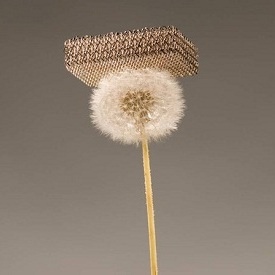
Saw this in PCMag but it references sources I can’t get to. Very cool fabricated structure using advanced processing tools. And yes it’s a real picture not PhotoShopped.

A United Launch Alliance Atlas V rocket carrying NASA’s Mars Science Laboratory (MSL) Curiosity rover lifts off from Launch Complex 41 at Cape Canaveral Air Force Station in Cape Canaveral, Fla., Saturday, Nov. 26, 2011. The rocket will deliver a science laboratory to Mars to study potential habitable environments on the planet. (AP Photo/Terry Renna)

Graphic of the Mars Science Laboratory, an elite six-wheeled vehicle powered by nuclear fuel, is scheduled to launch at 10:02 am (1502 GMT) from Cape Canaveral Air Force Station in Florida atop an Atlas V rocket
The size of a compact car, nuclear powered, autonomous guidance, what’s not to geek love? Of course it’s a full press design very low fault tolerant landing system, albeit really cool, and probably warranted to work for years…exact opposite of the last two plucky cheap little explorers we sent. So I have to hope all goes well. This is not likely to be repeated for a decade if it goes thump.
Good luck Curiosity, let’s just hope you’re no cat.
This article at space.com reviews some studies that indicate the potential for life supporting energy transport in Europa’s ice shell/ocean/core !!!
Short hop test very cool video

Over at Baen Books the second Beating Decline monograph, dealing with the new high tech realms. Ground war, Space and Cyberwar/Borderless War. Has some interesting insights on systems tested in Iraq and ‘Stan that I had not heard but make sense. Here is the 1st post.

Power Sat Concept
IAA says Space Based Grid Pwer Generation is a realistic prospect in 30 years, which actually says today because it would take that long to build the infrastructure to make it real.
Interesting article looking at the state of the regulatory state bell weather (California.)
 This World and Others