Dual use technology MOPs up?

20120304-200859.jpg

A DUAL-USE technology is one that has both civilian and military applications. Enriching uranium is a good example. A country may legitimately do so to fuel power stations. Or it may do so illegitimately to arm undeclared nuclear weapons. Few, however, would think of concrete as a dual-use technology. But it can be. And one country—as it happens, one that is very interested in enriching uranium—is also good at making what is known as “ultra-high performance concrete” (UHPC).
Iran is an earthquake zone, so its engineers have developed some of the toughest building materials in the world. Such materials could also be used to protect hidden nuclear installations from the artificial equivalent of small earthquakes, namely bunker-busting bombs.

The above quote is from this wonderful Economist article, read it, as always clear prose, useful info well presented and minimal spin (&despite what some say that’s about as good as it gets spin wise if you want to explain/make a point.). It’s actually of general interest if you are interested in Civil Engineering or modern buildings and structures.
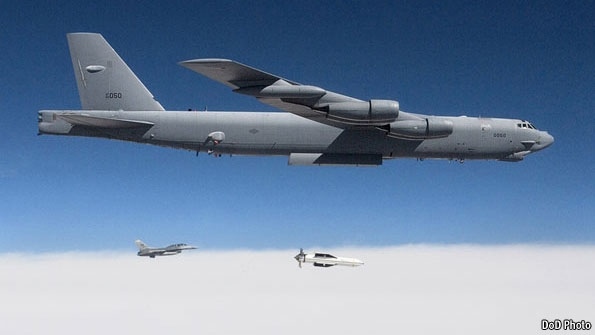
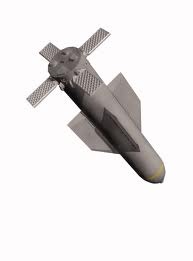
The point is that the US and others have been working on bunker busting for decades. The Massive Ordinance Penetrator shown dropping from a B52 above and in more detail below are the king of the hill right now.

20120304-202352.jpg

20120304-202404.jpg
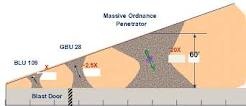
Their reason for existence right now is to hold Iran’s nuclear bunkers at risk. The MOP is supposed to penetrate up to 200 ft of concrete:

20120304-202951.jpg
The problem is that the work of Iranian engineers on tough concrete could mop up the MOP. The Iranians have added metal nano fibers and particles as well as fairly ordinary metallic, plastic and ceramic, whiskers, flakes etc to the mix to toughen the concrete in various ways. This work is being done to save lives world wide, including the US since it’s focus is on Earthquake damage reduction. But this is a wonderful example of dual use since exactly the same technology could make future bunkers all but impregnable to conventional weapons, which big as it is the MOP still is.
Bottom line if the best of the best tech were used they might get 6 or more times the strength and testing has shown just doubling concrete strength reduces penetration by more than half!
This is not good news and probably explains this:
Congress ‘Urgently’ Approves $82 Million To Improve Its Biggest Bunker-Buster
Despite this:
The 30,000-lb Massive Ordnance Penetrator Bomb Works So Well It Earned A Rare Honor
It would seem we may soon get a chance to see if the Iranians were smart enough to use the super concrete vs if our super bunker busters can slam, blast, burrow their way in. There is also the question of corruption, in a vastly corrupt civil society using expensive concrete which probably looks like any other concrete is an invitation for shaving. Many is the time when a fortress has fallen because of under spec materials. Also you have the long term espionage and internal strife driven sabotage the story is that bunkers for Nazi super Vengeance weapons were sabotaged by the addition of small amounts of sugar to the mix drastically weakening it.
This would all be a wonderful background for a comedic farce, if so many people’s lives were not at risk.

Enough said….

20120304-210218.jpg

Skeet Shoot

20120304-095701.jpg
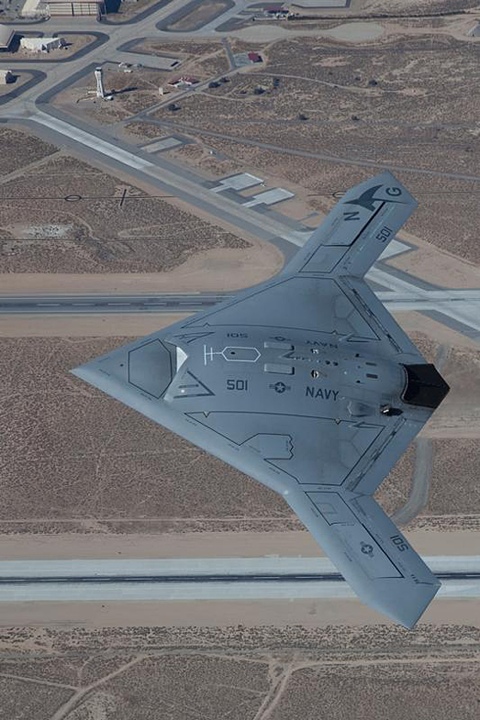
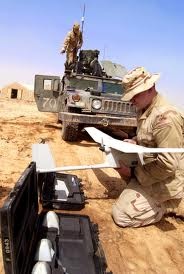
This piece on StratPage rather says it all. It’s kind of interesting, aircraft become more ‘efficient’ in a technical sense of cargo(including fuel/power)/weight as they grow larger…it’s mostly about geometric effects of volume vs. surface area. There is also a tendency to focus on endurance in drones for obvious reasons, which in air vehicles means slow and relatively large wing spans. Consequently the ‘low threat’ generation of UAV’s are all about the same in regards to vulnerability. But the next generation, Quadopters, UCAVs, Avenger, etc, are all higher performance, trading something away for more performance, and will be significantly less vulnerable.
And let’s be clear the first generation were all about experimentation with the basics, not about high intensity combat ops. If you look at a lot of the manned platforms in service, survival in combat has not been a big driver for the last decade.

20120304-095810.jpg

The Future of War

The future of war is taking form all around and it is not a vision of super battleships and death rays, though they may exist in infinitesimal numbers the real fighting will be done by tiny groups of specialists (SOCOM, the SEALs and an array of similar highly trained, expensively equipped and lethally effective troops.) Weapons like one discussed in Wired recently, a Proposed program to develop a missile capable of hitting and destroying small targets like SUV’s (60 miles away) that can be fired from another SUV.

SUV being unloaded from a C-17

There is a bit of spy v spy in this and the Wired article is a bit ironic in tone but the truth is this is the future, and in most ways it will continue the trend of things getting better for the majority of humans, it will kill its target without killing hundreds of others and could lead to a ‘decapitation’ strike where the warmaker is taken out of the picture so peace can find a way.  And of course it will be misused, and ill-used and those of good heart and hope will deplore it all.

Of course the use of discrete platforms is nothing new, the recent tragedy in Africa involved a U28.  This is a single engine utility turboprop, built by Pilatus and used all over the world but very intensively in Africa where its low cost of acquisition and operation along with the high reliability of the single turboprop airframe make it highly coveted.  You can think of an SUV as being in the same vein really.

Pilatus, U28

Of course drones will be a big part of future war, though how big and how are interesting questions. If both sides are aggressive users of technology with combat hackers or the like as well as jammers, radio direction finding/ranging and guys (and gals) with skeet shooting guns and skills it should get ‘interesting.’

Here’s a piece of drone related news where things got ‘interesting’ for some bystanders when a crashed drone was given the coup de grâce by one of its robotic compatriots.

Syria Bleeds while Russia, China and Iran Sneer

20120213-071455.jpg

The Syrian rebellion continues apace. As usual StatPage has a good running review of what is known militarily. It’s interesting that the Assad regime appears confident that the Arab League will not go to war over this but while I used to agree it looks like the League may in fact take some action. Let’s hope so for the last several days the Syrian security forces have been indiscriminately bombarding sections of Homs, or even worse, targeting aid stations and markets.

BRAVO: Red Tails, Everyone should see It!!!

Red Tails Broadsheet

Saw this movie with my son today (Sunday 22nd Jan).  This is like Saving Private Ryan a watershed war movie.  It is fabulous to watch, the characters are realistic and well played so you care, the story telling is deft, there is no complexity her but that’s not the point.  It is an uplifting story of brave men (all types of bravery) trying to do the best they can and winning on more than one level.    

I will warn you that I do not go to movies to learn history, neither do I go to them to learn philosophy of life lessons, I go to be entertained.  And most movie critics these days appear to be operating in a different plane and writing for each other not the folks in the real world. 

The biggest problem I have had with many war movies up until recent time is technical.  All the compromises that had to be made to make any large scale war movie and my inability to look past ‘minor’ issues like US M48’s used in The Battle of the Bulge to represent German Tigers/Panthers. 

Red Tails shows that modern technology and good film making are beyond this, the setting is viscerally real throughout, providing a rich background canvas that the people and the action can play out in. Absolutely fabulous aircraft scenes throughout.  When the only thing I could gripe about is that sometimes they made some of the ground sets look too old and worn I should just shut up…. and the mud and basic layout etc were again exquisitely done. 

The men (and it really is all about men the only female character though sweetly played is only a set piece) are well played, it might have been biased for modern tastes but they came off as real, the relatively clean cut, slightly less demon ridden people of a simpler day men who were playing their part in two wars.  One with bullets and one with hearts and minds. 

This movie was rated very highly by the public and moderately low by the critics.  The explanation I have for that is that the Critics cannot stand a movie that puts the bigotry of the time in the proper context.  It was so obviously a constant drain on the men but it was the background to their lives, the constant slights many unconscious rather than direct attacks.  I am very sure many critics wanted a movie that wallowed in the bigotry and hatred a bleak look at the dark hearts of men (we don’t need that, know all about it.)    Instead what is here is a simply fabulous war movie about men I grew to care about that made its point about the utter stupidity of bigotry by positive rather than negative example.

Bravo Lucasfilm, George Lucas, Industrial Light & Magic, and of course the writers, director and actors.

Study of the Syrian Rebellion–update and some broader context

This is an update of the earlier Syrian post. I think these two pieces supplement and bring up to date the ISW paper. First an article on the violence in Syria, which if compared to the white paper seems to show a continuing not accelerating level of violence. The bombings in Damascus would also appear to be part of a continuous ark rather than some large step, though I remain skeptical about who bears responsibility. The other Strapage article is a short discussion about the dueling use of orphans in sectarian violence, these boys and men grew up under awful circumstances and they tend to be easily turned into ruthless fighters. Another article the other day referenced the same socio-economic background for the Iranian Baij irregulars.

The Struggle for Syria in 2011 | Institute for the Study of War.

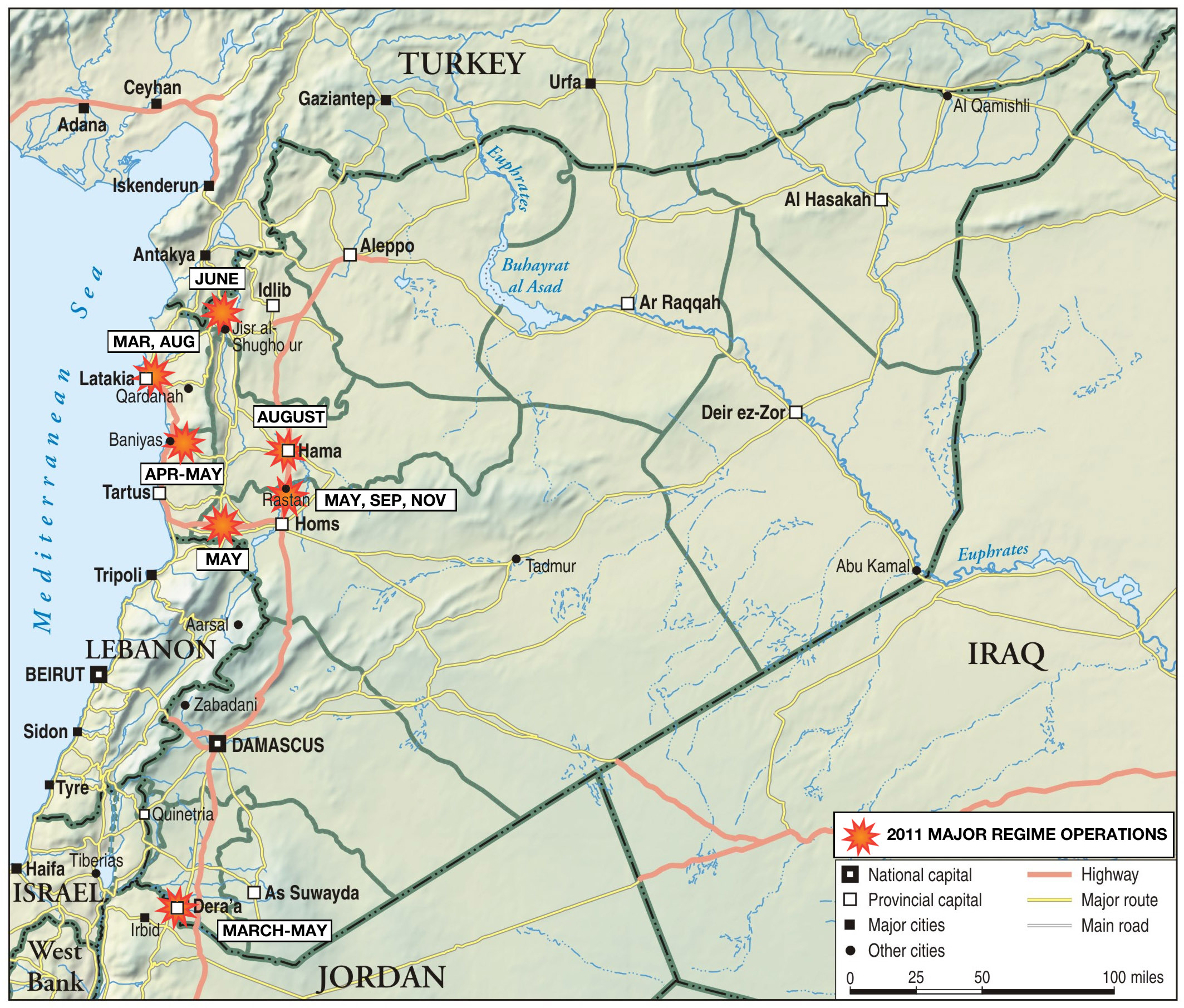
The scale of unrest in Syria has made it impossible for the regime’s security forces to simultaneously garrison all of the country’s key terrain. The regime has maintained control over Syria’s armed forces, despite limited defections. Therefore, the regime’s strategy has been to maneuver elite forces to key centers of unrest and conduct large clearance operations, using selective brutality in an effort to end the crisis.

The regime successfully suppressed demonstrations in Dera’a, where the protests began in March 2011, by conducting aggressive clearance operations. This allowed the regime to focus resources elsewhere as the conflict progressed.

Homs has become the conflict’s center of gravity because of its strategic location and its frequent sectarian violence. The regime attempted to quash Homs’ dissent in May, but emergencies elsewhere in Syria diverted attention and resources. By the time the security forces refocused on Homs in September, peaceful demonstrations had given way to armed resistance.

Despite large demonstrations in Damascus’ northeast and southwest suburbs, the regime’s security presence and targeting campaign has successfully prevented demonstrations from overrunning downtown Damascus. The size of the pro-regime population in Damascus has also contributed to dampening unrest in the capital. From the beginning of the uprising, the regime has deliberately consolidated its control over the Alawite homeland of Syria’s coastal region. Clearance operations in Latakia, Baniyas, and Tel Kalakh targeted Sunni enclaves and shored up regime lines of communication

From the Paper, a breakdown of the ethno religious makeup of the Syrian Populaion

From the Paper, the distribution of the ethno religious groups in Syria
From ArticleFrom the Paper, Gov’t Operations this year

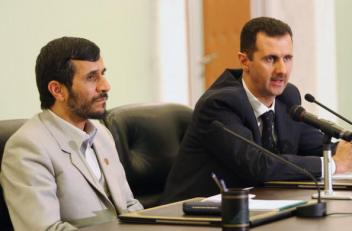
Richard Fernandez at the Belmont Club pointed out this paper and has a very good analysis of it and some other bits, such as this, 58 Foreign Policy Analysts are urging Obama to act regarding Syria. And the article has an interesting lead in picture…

Our Favorite Middle Eastern Leaders

Getty Image/ Our Favorite Middle Eastern Leaders

Now the problem is, which is more important for us to do keep our powder dry ready to deal with Iran, Ahmadinejad (in gray) or do we use assets and energy on Syria, Assad (dark blue) which is the more important world issue? Hands down, right now it would seem that Iran’s nuclear weapons and delivery system development is. Whereas sad Syria is suffering the agonies of realizing that the Dear Leader, is wasting the majority of its subjects potential and that the only way to change that is to change the leadership.

Now some are asking why can’t we ‘do a Libia’ and I think the argument is that both the socio/economic and military situations are far more complex in Syria, the bad guy and his military are not utterly incompetent and the rebels are dispersed and often ambivalent about the use of violence. I think that the maps and the text show that the majority of the Military Potential of the Anti Assad camp have not become engaged.

  • What happens if Iraq blows up as we go in and blow up Syria, and then we really do have to do something about Iran.
  • Is it possible the Kurd, Shia, Sunni ethno religious cocktail goes cablooey.
  • What if the Kurds get the bit in their tenth regarding a Kurdistan stretching across their ethnic foot print (Turkey, Syria, Iraq and I think Iran)Do the Shia try for Shiastan…and that means bits of Shiadom on the other side of the Sunni Crescent in Iraq and Syria.
  • Do the Sunni go for an Emirate partnered with Saudi Arabia et.al.

Things could really go to hell…and they may be on their way already regardless of what we or the west in general want.

DoD Buzz | The Iran problem

DoD Buzz | The Iran problem.

The problem with Iran is that there is nothing we can do about it as the article below points out.  Short of all out war we are not going to make the situation any better proliferation wise and almost any other option at least leaves open the opportunity for long termsolutions.

The article points to a think tank paper arguing (rightly I think) that Deterrence like that used vs. the USSR is the most realistic option but it requires constant vigilance and a very credible threat on our side.  Maintaining such a credible threat is not cheap, has to be part of the grand strategy and force structure of the US.  The issue is, is the current administration up to the job of planning that grand strategy? Is the US up to sustaining another deterrent axis and the costs associated,  the article highlights the (largely artificial) stresses even the limited missile shield for Europe is causing with Russia.

One interesting thing about this is that all the Wests attempts to halt proliferation have in the end come to nought, the worst of the worst are going to get the nuc’s, unless we provide an almost blanket assurance that we will avenge any first use then at least one more tier of nuc powers will emerge.

It’s also of some ironic interest that it was the US’s perfection of smart weapons and limited war tactics that could be seen as driving this nuc arms race.  We should remember that at one time or another we saw nucs as the cheap counter weapon to the Russian horde .  These smallish countries now see nuc’s as the cheap counter to folks with deep pockets and smarter magazines.