
We Handed Them the Market

Related video: Range Anxiety — The Unreal Reality


I’ve been involved with EV power and propulsion for much of the last 30 years. My latest stint was at Wolfspeed, developing SiC power modules for EVs and fast chargers. When the EV market stalled and the company went into Chapter 11, I was among the people who lost their jobs.

I still think EVs are the right direction. I don’t own one. That’s not a contradiction, it’s the actual story, and the video above is where I work through it.

The short version: range anxiety was always overblown for most drivers, and the auto makers never built the product mix that met the needs of the broad market. Now the industry is driving hard away from EVs, especially in the US, and that’s just wrong-headed. The video closes on that but doesn’t dig into why. This post does.


The Part That Stings

While the US was arguing about mandates and turning the issue into clickbait, China was engineering.

BYD is selling comfortable, adequate-range EVs in the $15–20K range. That’s the vehicle that moves the majority of buyers. Not the Cybertruck, not the F-150 Lightning, not the Rivian. A practical car at a price most people can actually consider.

We handed them that market. Not through malice or conspiracy, but through a combination of policy that optimized for the wrong things and an industry that focused on protecting its margins.

The policy pushed hard for EV adoption with mandates, subsidies, timelines. Some of that pressure was probably warranted. The market would have gotten there on its own, but the question of when and at whose expense was real. The intervention accelerated some things. What it didn’t do was direct the industry toward the product that would actually move the needle for most buyers.

The industry copied Tesla’s playbook; premium vehicles, long range, performance, high price points. That was the wrong lesson. Tesla used that model to fund the manufacturing and infrastructure investment that actually mattered. Everyone else just took the margin and stopped there.

The charger network made the same error I described in a previous video: build for the metric that looks good in the grant report, not the outcome that matters to the driver. 97% uptime. 71% charging success rate. Two different measurements, only one of which tells you whether the thing worked.


Why Big Auto Isn’t Saving Itself

I always loathed the heavy-handed government push on EVs and what I read as gaslighting on the rationale. Mandates handed down by people who had never looked at a cost model. Timelines written by committees that had no idea what it actually takes to retool a supply chain or build an infrastructure.

At the same time, I think some intervention was warranted. Not because the market was wrong about EVs, but because the market was optimizing for the next quarter. And the externalities of the status quo were landing on people who weren’t in the pricing model.

Intervention at scale creates dependencies. The industry made bets premised on the government backstop continuing. When the political environment shifted, those bets didn’t just look bad, they collapsed. And the response has been to drive hard back toward gasoline, as if that solves anything.

US old-line auto companies have been struggling for decades, and the reasons are structural. They’re trapped by regulatory capture and built-in costs that make adaptation nearly impossible.

Start at the sales end. Their dealer networks are regulated state by state, which makes wholesale change all but impossible. Safety regulations run through a system where insurers push regulators to require improvements that the industry develops partly because those improvements push up vehicle margins. Manufacturing plants are at their core decades old, and the capital they represent sits on the books, write it down and you impair the balance sheet. Design is path dependent by habit and incentive: most changes are incremental tweaks to last year’s platform because that’s easy, cheap, and legible to accounting.

And the margin structure makes it worse. Bill-of-material cost for a vehicle increases slowly with size and content. Market value is largely bling-dependent. So the incentive always points toward large, well-fitted vehicles where the spread is widest, and away from the small practical vehicle where there’s almost none.

Meanwhile, the manufacturing model has already been cracked. A new generation of EV makers proved you can build at scale in the US, turn a profit, and drive down the cost curve without the legacy overhead strangling the old players. Big Auto is watching that happen and still can’t follow, because the legacy network isn’t just a cost problem, it’s a constraint on every decision they make.

Moving back to gasoline doesn’t fix any of this. It may help sales volume near-term, but fewer and fewer buyers are willing to pay up for big iron, and as the recent spike in gas prices reminded everyone, the cost of operating a gas vehicle is not as predictable as it felt a few years ago.

The wholesale abandonment of EVs is as wrong-headed as the mandates-first push that preceded it. You’re walking away from the future as it’s getting its feet under it, and you’re not fixing your actual problems in the process.

Different direction, same failure mode: optimizing for the political moment rather than the real problem.


What I Expect to Happen

The market will keep sorting this out despite the policy environment, not because of it.

Amazon is sponsoring the Slate, a small electric truck aimed squarely at the price point where the volume is. Ford is talking about smaller, value-forward platforms. The product mix gaps are starting to fill in, and the players doing it understand they have to meet buyers where they are, which is around $20K for a vehicle that’s good enough and built around what EVs actually do well.

BYD is a harder question. It was built on the back of Chinese state support and practices that wouldn’t survive scrutiny elsewhere, but that doesn’t change what it demonstrates: a level of technical maturity across product fit, design, and manufacturing that very few other automakers can match. Tariffs and regulatory barriers will slow it down. They won’t hold permanently. Some form of that capability will find its way into the US market, and when it does it will accelerate the shakeout that’s already coming for Big Auto.

Charging infrastructure will improve in the corridors where the economics support it and stay thin everywhere else, and that’s how it should work. Where it’s thin, the economics will eventually pull in local investors, the same way any other service infrastructure fills in. It won’t be fast, but it will happen.

The transition will come, just slower and more expensively than it had to be. The destination is probably the same. The cost of getting there is substantially higher, and much of the value being created will go to manufacturers who aren’t American. That’s the envelope effect of all the intervention and counter-intervention stacked on top of each other.

The engineers mostly knew it was going to be complicated. Technical change at a social scale always is. The complicated part is rarely the technology.


Mark Harris is a systems and mechanical engineer, recovering from a career in EV power electronics, and the author of Stranded in the Stars (Book One, The Sea of Suns Trilogy). He writes about engineering, technology, and the creative life at This World and Others. The Unretired Engineer is on YouTube at https://www.youtube.com/@Scifiengineer-09
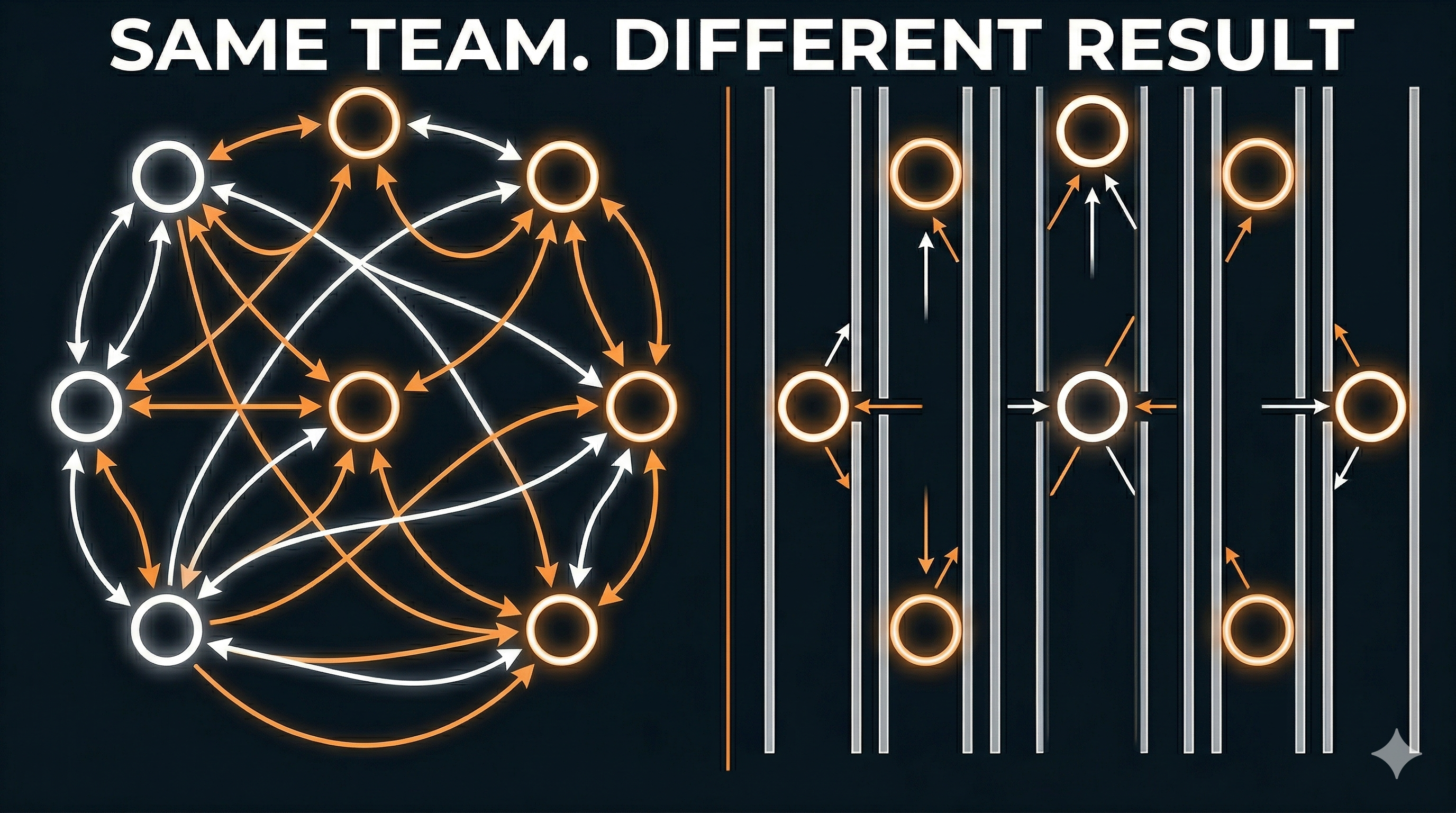
Dismantling Silos: A Path to Agile Engineering

Boundaries are necessary. That’s not the argument.

Every engineering project starts with bounding — what you’re solving, what the solution has to do, what’s out of scope. Without that, you’re not engineering, you’re wandering. The boundary is how you make the problem solvable.

The modern corporation learned the same lesson at scale. Adam Smith’s insight wasn’t complicated: split work into elements, run them in parallel, and you can deliver what no individual craftsman ever could. From Renaissance capital markets to the factory floor to the aerospace prime contractor, that logic held. Boundaries enabled scale.

When I joined the workforce in 1982, the logic was still holding — and you could feel why. I had a notebook and an HP calculator. A shared secretary supported the division manager, and before any report left the building it needed sign-off from both my branch manager and his. Not bureaucratic obstruction — that was the information architecture. Reports were dense, slow, and gatekept because they had to be. Management structure existed in large part to curate that flow — to compress what mattered, pass it up the chain, and keep the organization pointed in the right direction. The stovepipe wasn’t a bug. It was load-bearing.

Between 1982 and 2002 two things happened simultaneously that should have changed the equation. First, information handling exploded. The PC, networks, sensors — generating and moving information became cheap and fast. Second, process culture arrived. The US had watched the Japanese manufacturing renaissance and brought back a set of ideas about quality and process that got bolted onto the existing corporate hierarchy. At exactly the moment when individual engineers could span across an organization and get at information directly, the process culture locked the structure down harder.

The result in many companies: more capability to move information, less permission to use it. The stovepipes stayed. The rationale quietly expired.

I ran three programs across my career that show the delta. At SatCon on the AIPM program — Advanced Integrated Power Module, a DOE/Navy cost-share — I was simultaneously program manager and lead engineer, spanning manufacturing, electrical design, mechanical design, and simulation. We went from concept to demonstrated production-ready modules in three years on a modest budget. That approach, the sub-module test-before-integrate architecture we developed, is now standard inside automotive power electronics. Tesla uses a version of it.

At DRS, working with Allison Transmission on an integrated generator for military vehicles, we built a successful solution and demonstrated it to the Army. General officers asked why they couldn’t have more. It took ten years for the technology to gain traction — not because the engineering was wrong, but because the organizational and procurement structure couldn’t move.

At Wolfspeed, deep stovepipes. Marketing, sales, test engineering, module design, device fabrication — separate organizations, separate priorities, separate permission structures. Getting a new product from concept to release meant handing information off at each boundary and then jawboning it forward, because you couldn’t do their job for them and they had to queue the work against their own priorities. Fifteen products out the door. Every one of them harder than it needed to be.

The stovepipes were there to protect quality. They also stopped momentum.

What’s changed now isn’t the human desire to span boundaries — engineers have always wanted to do that. What’s changed is that the tools exist to actually do it. Companies that have built their information architecture from scratch rather than inheriting it — the Teslas, the newer defense tech firms — have demonstrated what happens when low-level actors have access to the full context of what the organization knows. Engineers and technicians can interrogate data, surface patterns, propose action. The information that used to require a management layer to curate is available directly. The span of control moves down the org chart.

For incumbent organizations with data already siloed, this is genuinely hard. The stovepipes aren’t just structural — they’re also where the institutional knowledge lives, and dismantling them requires executives who are willing to accept that the curation function they’ve been performing can be partially replaced. That’s not a technical problem. It’s a political one.

Christensen’s Innovator’s Dilemma describes what happens to incumbents who don’t solve it. A smaller firm with narrower scope but faster movement finds a niche. The niche gets cheaper and easier to serve. The incumbent can’t see it clearly because their whole architecture is optimized for something else. The niche expands. You know the rest.

The boundary isn’t the problem. Bounding a problem is still part of the engineering job. The question is whether, once the problem is bounded and the work begins, you’re working inside a structure that moves — or one that fills up and waits to overflow into the next pipe.

While many organizations are ‘implementing AI’ most are not working through the changes from first principles and often implementing all or nothing. The ones that don’t get around to making sure they break the stovepipes logically are going to run out of time.


This post accompanies the video Why Stovepipe Organizations Stop Working — The Unretired Engineer, April 2026.

The Problem With AI Answers Is That They’re Almost Right

AI slop isn’t obvious. That’s what makes it dangerous.

If an AI gave you complete nonsense, you’d catch it. The problem is when it gives you something fluent, confident, and “mostly” correct — with a flaw buried in the middle that you’ll only find if you already know the answer.

That’s the thing about AI as a research tool: it will give you the consensus view, coherently expressed, at the level of resolution that the training data supports. Where the training data is thin, ambiguous, or where real expertise requires distinguishing between things that *look* similar but aren’t — that’s where it fails. And it fails confidently.

Even when you use the deep research tools there are problems. When I was developing some content for my YouTube channel, The Unretired Engineer I ran into this doing research on Wolfspeed’s financial situation and the SiC power electronics market. I asked a deep research tool to pull together an analysis. What came back looked thorough. The problem was that it took a lot of information that had gone out about the future of the fab and future plans for markets and conflated them with what had happened and what was likely to happen in the near future.

To someone without a background with Wolfspeed and the real status of the SiC, the analysis would have read as authoritative. It wasn’t. It had serious timing errors delivered with confidence. I knew it was wrong because I’d spent years in that space. If I hadn’t, I might have taken it as written.

The fix isn’t to stop using it. The fix is to put yourself into it.

When I work with AI on my engineering writing, or on the physics underlying my novels, I’m not asking it to do the thinking. I’m using my domain knowledge to steer it, to catch the near-misses, and to push it past the consensus into territory where the expertise actually matters. The AI amplifies what I bring. Without that, it’s just averaging.

Use it as a tool. But know what it can’t know — and that’s usually the thing that matters most.


https://youtube.com/shorts/mbmKm_JcHQ0?feature=share

Mark Harris is a system and mechanical engineer and the author of “Stranded in the Stars” (Book One, The Sea of Suns Trilogy), available now on [Amazon](https://www.amazon.com/Stranded-Stars-M-Harris-ebook/dp/B0GT123PLP)
 

The Engineer’ Return to the Keyboard

Optimization, Systems, and Storytelling: Why I’m Back

It has been a while—twenty years by some counts—since I first sat down to bridge the gap between “This World” of high-tech engineering and the “Others” I build in my fiction.

For four decades, my world was defined by electronic packaging, power electronics, and project engineering for EVs in both the commercial and defense sectors. I’ve spent my time in the trenches of “Dilbert’s world,” working the real details that make everything from electromagnetic guns to nuclear electric space probes real. But as any engineer knows, a system is only as good as its last optimization.

During those 40-plus years, I was an intermittent author of fiction and science fiction, though at times the projects I worked on felt like fiction as well.

At 68, I was “unretired.” (You can see the genesis of this in my YouTube video, EVs Ate My Job.) Through my channel, The Unretired Engineer, I explore how a lifetime of technical rigor applies to the modern world. Now, I am bringing that same focus back to this blog and my novels. Writing is, after all, the ultimate engineering challenge: building a world from scratch that doesn’t collapse under the weight of its own physics.

What to Expect Moving Forward:

Technical Deep Dives: The “how-to” behind the tech in my books, like the propulsion systems in The Sea of Suns.

The Editing Trench: Updates on my current copy-editing passes for The Sea of Suns and the structural work on Under Siege.

System Reflections: Thoughts on remote work, optimization theory, and the reality of a 40-year career.

World Reflections: Perspectives on technology, civilization, and war based on four decades of study.

The Workshop: Occasional updates on making with wood, resin, and whatever else I’m tinkering with.

I’m no longer just “tinkering.” I’m building. Whether you followed me here from YouTube or found my work on Smashwords, I’m glad you’re part of the system.

Let’s see what we can build next.

The Unretired Engineer

Time


Enrique Zafra

Time is fundamental, it is much of what ‘being’ is about. It is central to reality. It is central to our lived experience, it is central to our hopes and dreams. But as central as it is, it is still an enigma.

Time is a knotty problem for physics, metaphysics, philosophy, religion, something fundamental to our existence and experience but for thousands of years and billions of person hours of contemplation and analysis it escapes understanding. Like others down the centuries I find that the more I think about it the harder to grasp it becomes.

Pragmatically there is only the local now, a few moments from the past and a glance into the future. Practically there is the Past and the Future, now is just a transition from one to the other.

What is time? It seems like it is about change, and times arrow is provided by entropy, the slow winding down of the universe.

Existence, the now, is only the Plank Time instant. What stitches the universe together are memory(enabled by change) and imagination (enabled by memory.)

One option of quantum physics says that it is the conscious mind that ‘collapses’ the probability function to one reality. In that view it is our mind-memory that provides a crashing rock against which universal potentiality breaks into reality. Is it us, stitching together the universe?

Why do we talk about timespace? Because time has no meaning without space and space no meaning without time. Imagine an infinite cube of arbitrary complexity. Without time nothing about it has any meaning. You cannot travel from one point to another, there is no energy, because no movement, nothing can move, because movement is about change of location and that has no meaning with no time. Equally, without space, time has no meaning, there is nothing to change, one could say something can endure or wind down but without space for that to occur it has no meaning.

So we ‘live’ in timespace that we instantiate and make objective. It is still real in that the physics of it are fixed (probably) but is it possible that it is our (or other consciousnesses) that take possibility and harden it to reality and inflate the universe around us, out to the limits of our questing minds?

Maybe….

Grumpy elders…

Not much more to say there. Other than everything I hear about what Elizabeth II has indicated publicly, is what I would expect from the grandest of ladies, polite and deflecting rather than the hard right to the chops the little bitches both deserve.

My personal weekend grumpy gripe is the shit show from the idioechelon’s of the DoD about mean things that Tucker Carlson says.

The operational uniformed men and women in the services and the working level folks in the DoD are 99.999% good folks. But unfortunately in this day and age the fraction that works its way to the top is the dregs not the cream.

Do Not Trust DoD! DoD is Asshole!

And

I worked in one of the Navy Industrially Funded Facilities for 15+ years before the assholes in industry finally paid congress enough to get them to shut down those generators of expertise and providers of reasonable cost special projects. I got a PhD level training in technology and the management of technology working on electronics and packaging at NAC, the Naval Avionics Facility, of fond memory.

Do not trust Congress! Congress is Asshole!

Interesting Fuel Cell + Ship Tech

Why the Shipping Industry Is Betting Big on Ammonia
Ammonia engines and fuel cells could slash carbon emissions
Article in IEEE Spectrum MCKIBILLO

There’s a lot to like about ammonia. This colorless fuel emits no carbon dioxide when burned. It’s abundant and common, and it can be made using renewable electricity, water, and air. Both fuel cells and internal combustion engines can use it. Unlike hydrogen, it doesn’t have to be stored in high-pressure tanks or cryogenic dewars. And it has 10 times the energy density of a lithium-ion battery.

So there is always a fly in the ointment of this sort of story…

Manufacturers and engineers must overcome key technical hurdles and safety issues in the design of ammonia engines and fuel cells. Port operators and fuel suppliers must build vast “bunkering” infrastructure so ships can fill ammonia tanks wherever they dock. And energy companies and governments will need to invest heavily in solar, wind, and other renewable-energy capacity to produce enough green ammonia for thousands of ships. Globally, ships consume an estimated 300 million tons of marine fuels every year. Given that ammonia’s energy density is half that of diesel, ammonia producers would need to provide twice as much liquid ammonia, and ships will need to accommodate larger storage tanks, potentially eating into cargo space.

So to fully replace oil you need 600 million tons, all produced artificially in new chemical plants. And then there is the ‘pungent’ odor and its solubility in water where it produces a strong alkaline Ph, the fact that it can cause breathing problems etc etc etc.

Not saying it is not an interesting approach but I really have to wonder how acceptable this would be. This seems like a question of ‘what kind of hell are you willing to accept to reduce CO2’ when the reality is that there are a lot of other things to do first and a lot better future directions to take. I like the idea of the age of windjammers returning…as in the last post.

Cheers

Marine Tech is getting Interesting…

Stena Bulk concept “could be as impactful as containerization”

Not so much for the wings + Wind Turbines + Solar Cells but because it is not one hull but Seven (7!) each one of those sub sections is essentially a barge with a rugged locking mechanism that creates a rigid sea going hull once engaged. This way the crew and propulsion section can drop off and pick up sections either all or one or two as they make their rounds and the expensive bit gets much more use as well as being smaller and less expensive, probably safer as well.

Stena Bulk concept with main ‘sails’ retracted

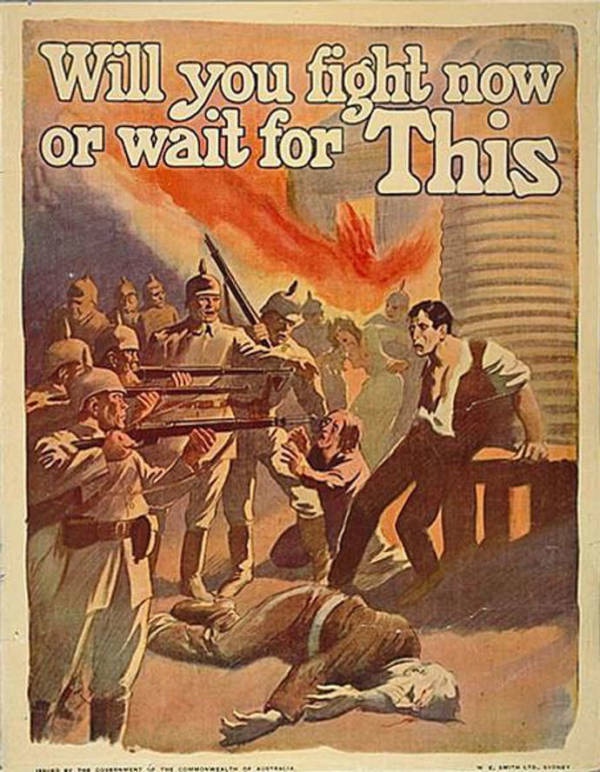
What is Propaganda…is it different from Fake News?…and when is it good?

World War I Posters That Reveal The Roots Of Modern Propaganda
By All That’s Interesting
Published December 26, 2016
Updated July 10, 2019
These World War 1 propaganda posters courtesy of the U.S. government provide a fascinating look at the America of a century ago in the midst of the Great War.

Propaganda is the more or less systematic effort to manipulate other people’s beliefs, attitudes, or actions by means of symbols (words, gestures, banners, monuments, music, clothing, insignia, hairstyles, designs on coins and postage stamps, and so forth). Deliberateness and a relatively heavy emphasis on manipulation distinguish propaganda from casual conversation or the free and easy exchange of ideas. Propagandists have a specified goal or set of goals. To achieve these, they deliberately select facts, arguments, and displays of symbols and present them in ways they think will have the most effect. To maximize effect, they may omit or distort pertinent facts or simply lie, and they may try to divert the attention of the reactors (the people they are trying to sway) from everything but their own propaganda

Britannica.Com on propoganda

If you spend a little time absorbing this definition, which I have no quarrels with, you realize that what has been called Fake News IS largely propaganda. And it IS what the US main ‘news’ channels have been practicing either somewhat accidentally or wholly on purpose for the last four + years. They have been sliding this way for decades, but it has slid down the slippery slope to this end state quickly over the last few. (Read my post on the Slippery Slope…Looking at this topic I realize this fits into that type of situation where the Slippery Slope IS real, all of the actors are in the game and the rational observers have no impact on the discussion AT ALL.)

Is propaganda ever appropriate? I can’t tell. I want to say NO not just ‘no’ but HELL NO. But I also see how difficult it is to get everyone on the same page and can see that in general if there is a societal good that can be defined as good then making sure everyone is on board is also Good.

But….a big one.

I think that with the internet and the explosion of ‘near news’ outlets propaganda and its bastard child fake news, become a very bad thing, an evil. Everyone learns about propaganda and they get a sense that in the right hands it is good, in the wrong hands evil. So it becomes something of a standard tool, because most of us sees ourselves as ‘one of the goodies.’

The problem is that all sides of an argument get a say. And the general populace do not have any deep sense of the reality of the situation, the nuances etc. If you are generally democrat you see mostly democratic outlets. If Republican, only that line. While some resources have centrist voices, they always shade one way or the other, and many outlets are purposefully hard over. One sides group gets propagandized into believing their trope. The other side…the other trope.

So as Scott Adams points out you get two radically different views of the same events. To the point that the objective reality is not even in view of those Propagandized. Take the Capital Intrusion, one side, clearly nonviolent non threatening, good people protesting an at least murky election. Other side clearly violent, threatening, evil people trying to overturn a fair election.

In this war of propaganda the sides are purposefully pushed apart because the two sides cannot allow ‘their’ segment to wander. They rationalize deleting and spinning evidence because it is not important and muddles the message.

But…but…but…Journalism!

Journalism has always had an element of propaganda. Yes there was a period when it was portrayed as noble to present just the facts but the reality was this was at best a hope and and worst cover. The same schools essentially TEACH propaganda methodology as part of the general curriculum. Again in one view to inoculate the innocent learner against it, in the alternate view because there are a lot of jobs in public relations and advertising (commercial propaganda) as well as in government (propaganda straight up though usually for neutral topics.)

And….”If it bleeds it leads”…news of any kind is a business. Yes you can point to billionaire liberals propping up various operations. But at the end of the day news is a good way of turning a billionaire into a millionaire over time. The operation has to support itself or it cannot last long. What Fox showed was that you could get an audience by bending the news in a certain way and feeding them ‘red meat.’ They tried (mostly succeeded) in a combination of pretty clearly factual reporting and pretty clearly politicized editorial content though you were left to guess which was which. What a lot of the other operations couldn’t really afford to do was the factual reporting. Editorializing everything with a left bend…but left the audience to believe they were giving ‘just the facts.’ And probably excusing themselves by closing their senses to the much more complex nuanced reality…Though it is not clear most of those smiles even have a clue that such a thing exists.

Sigh…and so it goes…have not watched TV/Video news in years, probably never will again, despise its superficiality and bias. Even the talk shows are uselessly one sided these days, making the whole realm a danger to the Republic rather than the safety valve it was supposed to be.