The Physics Produced the Ship

The Dagger Design

Most fictional spacecraft are designed backwards. The writer decides what the ship needs to do dramatically, then invents a reason it can do that. The result is technology that serves the plot. Which is fine, until you need it to do something different in book three, at which point you quietly bend the rules and hope no one notices.

Engineers don’t do that. Not because we’re more disciplined — because we can’t. You don’t change the spec because the schedule is tight. You re-examine the architecture or you live with the constraint.

That instinct, applied to fiction, produces something different.


The principal auxiliary warship in the Sea of Suns universe is called a Dagger. Here’s how it got its name — and it wasn’t because I thought “dagger” sounded good.

The Transit system — the FTL drive in this universe — works through a rail. The rail is a linear gravity generator that manipulates quantum foam to open a wormhole large enough for the ship to pass through. The rail controls volume you can push through: the more mass you want to move between stars, the more rails you need. Compute controls speed: the transit step is a calculation, and the faster you want to step, the more computing capacity you need.

That trade-off isn’t decoration. It’s the architecture.

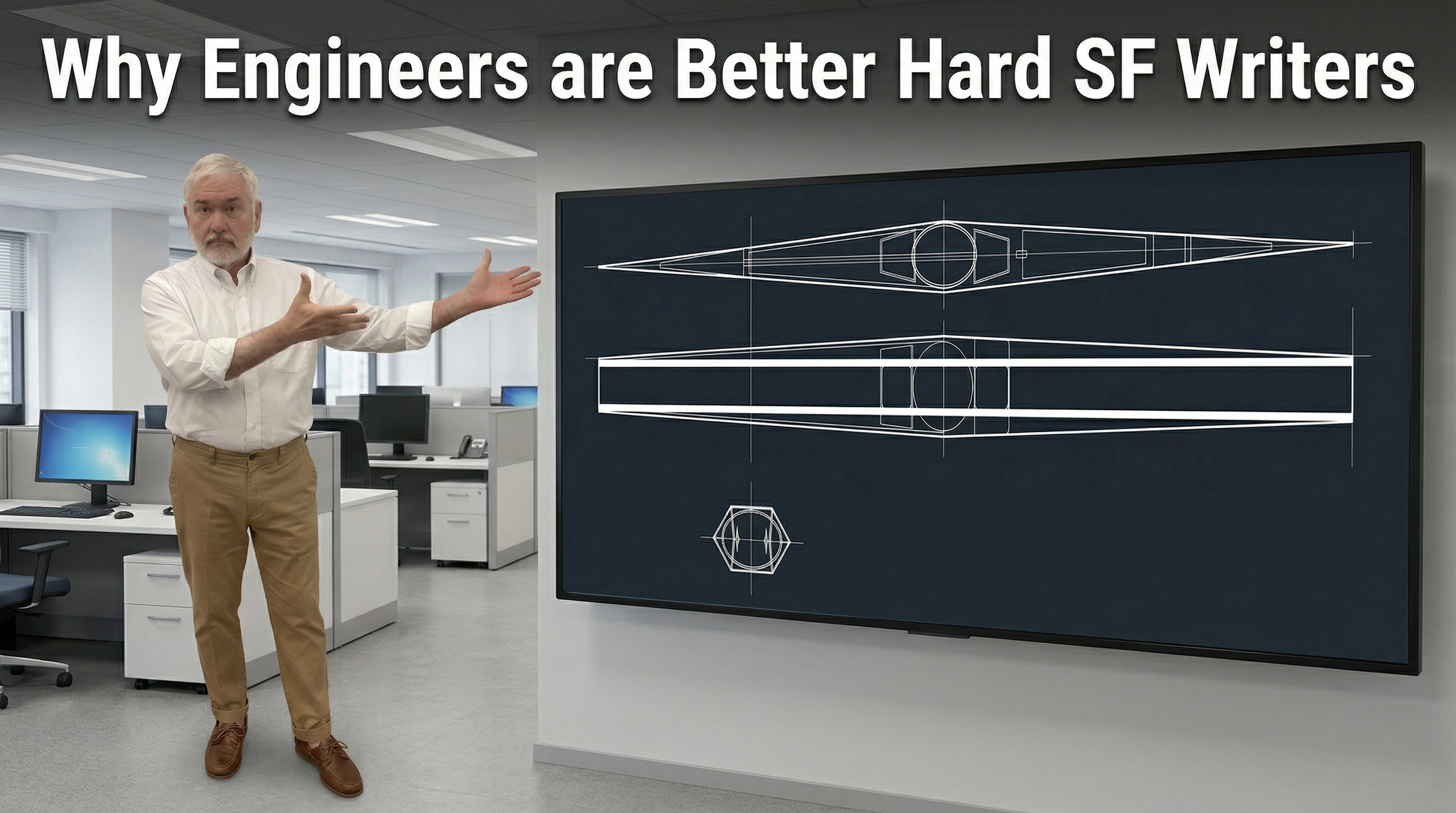
An auxiliary warship needs to be fast. In this universe, fast means compute capacity. Compute capacity takes up volume inside the vessel. So a fast warship is, almost by definition, a ship that has traded its interior for processors. Twin rails — enough to move a meaningful crew and weapons load — with almost every remaining cubic metre given over to compute. Crew of two to five on a thousand-foot vessel. Not much else aboard.

Now you have a ship that’s fast, carries almost no cargo, and spends all its operational time in real space. Real space means it’s detectable. A detectable warship needs stealth. The most effective passive stealth for a vessel in this universe is minimising cross-section — flat surfaces, minimal radar return. You sheath the hull in flat panels that force the profile into a long, slender blade shape.

The name isn’t metaphor. It’s a description of what the physics produced.

I didn’t design a cool warship and retrofit a justification. The constraints generated the vessel, and then the vessel generated scenes I hadn’t planned, because once you know what a Dagger can and can’t do, certain tactical situations become inevitable.


That’s the engineer’s advantage in hard SF, and it’s not what most people think it is.

It’s not technical accuracy. You’ve invented the technology — accuracy isn’t really the point. It’s that engineering training gives you a specific habit of mind: ask what the constraints produce, not what you need them to produce. Follow the logic. Let the system build itself.

When the system is honest, the world it generates is consistent without effort, because everything follows from the same rules. The Dagger’s tactical role, its crew size, its limitations, the scenarios it enables — none of that required invention. It came out of the trade-off.

The reader doesn’t need to understand the Transit physics to feel that the Dagger is real. They just need to encounter it behaving consistently with itself across the whole story. That consistency is what creates the texture that makes a fictional universe feel inhabited rather than constructed.

Thirty years of engineering taught me that coherent systems generate their own logic. Turns out that works in fiction too.


Why Engineers Write Better Hard SF is on The Unretired Engineer YouTube channel —

Stranded in the Stars, Book One of the Sea of Suns Trilogy, is available on Kindle. The Dagger appears early and often. https://www.amazon.com/Stranded-Stars-M-Harris-ebook/dp/B0GT123PLP

The Engineer’ Return to the Keyboard

Optimization, Systems, and Storytelling: Why I’m Back

It has been a while—twenty years by some counts—since I first sat down to bridge the gap between “This World” of high-tech engineering and the “Others” I build in my fiction.

For four decades, my world was defined by electronic packaging, power electronics, and project engineering for EVs in both the commercial and defense sectors. I’ve spent my time in the trenches of “Dilbert’s world,” working the real details that make everything from electromagnetic guns to nuclear electric space probes real. But as any engineer knows, a system is only as good as its last optimization.

During those 40-plus years, I was an intermittent author of fiction and science fiction, though at times the projects I worked on felt like fiction as well.

At 68, I was “unretired.” (You can see the genesis of this in my YouTube video, EVs Ate My Job.) Through my channel, The Unretired Engineer, I explore how a lifetime of technical rigor applies to the modern world. Now, I am bringing that same focus back to this blog and my novels. Writing is, after all, the ultimate engineering challenge: building a world from scratch that doesn’t collapse under the weight of its own physics.

What to Expect Moving Forward:

Technical Deep Dives: The “how-to” behind the tech in my books, like the propulsion systems in The Sea of Suns.

The Editing Trench: Updates on my current copy-editing passes for The Sea of Suns and the structural work on Under Siege.

System Reflections: Thoughts on remote work, optimization theory, and the reality of a 40-year career.

World Reflections: Perspectives on technology, civilization, and war based on four decades of study.

The Workshop: Occasional updates on making with wood, resin, and whatever else I’m tinkering with.

I’m no longer just “tinkering.” I’m building. Whether you followed me here from YouTube or found my work on Smashwords, I’m glad you’re part of the system.

Let’s see what we can build next.

National Novel Writing Month…

If you follow me and glance over ThisWoldAndOthers you will realize, I hope, that I write SciFi, not for a living but for relaxation and as an outlet. I have mentioned NaNoWriMo before but forgot to mention it this year, just in case someone passing by might be interested but not know about it. November is/was the month and I have participated in (and become a winner once more!)

National Novel Writing Month (NaNoWriMo) is a fun, seat-of-your-pants approach to creative writing. On November 1, participants begin working towards the goal of writing a 50,000-word novel by 11:59 p.m. on November 30. Valuing enthusiasm, determination, and a deadline, NaNoWriMo is for anyone who has ever thought fleetingly about writing a novel. Here’s a little more about how it all works.

National Novel Writing Month is also a 501(c)(3) nonprofit that believes your story matters. You know how writing makes the world a more creative, vibrant place. Through NaNoWriMo—as well as our Young Writers Program, the Come Write In program, and Camp NaNoWriMo—we work hard to empower and encourage that vibrant creativity around the world. We can’t do it without writers like you.

NaNoWriMo 2012 at a Glance

341,375 participants started the month as auto mechanics, out-of-work actors, and middle school English teachers. They walked away novelists.

648 volunteer Municipal Liaisons guided 586 regions on six continents.

82,554 students and educators created worlds with the Young Writers Program.

615 libraries opened their doors to novelists through the Come Write In program.

And in 2013, 44,919 Campers participated in Camp NaNoWriMo’s online writing retreat.

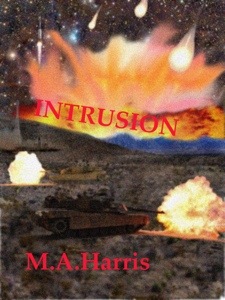
The novels not done even at 50k+ words its about 1/2 way, but here is the draft cover….and synopsis…20131201-100915.jpg

War of the Worlds?

It’s a Black Swan event, a disaster no one was looking for, despite decades of discussion. A killer asteroid slingshots around the sun and is heading straight for the heart of the US.

A desperate shot with an experimental space plane and obsolete nation killer bomb may save the day. Except worse turns to weird when it becomes obvious that the incoming hundred thousand tons is not an asteroid but a derelict starship.

Weird turns to near certain war when the ‘derelict’ starts spinning out landing craft, does the President destroy it, do the aliens come in peace?

The story of the men and woman who get to put the answers together and live…if they survive…with the consequences.

20131201-100934.jpg

iPad next?

The iPad is the premier tablet and it’s probably nearly the perfect size and weight for its form factor.  That’s not to say that within the form factor there is no room for improvement. A screen that takes up most of the face should be a near term target, as should an auxiliary screen on the back face that provides bright light reading and low power / speed interactivity for those who don’t live indoors all the time.  To support the iPad as a companion device, multi level security is a growing need.

Make the bezel the same on the iPad as minimal as possible (get rid of the push button) push the screen out to the edge, don’t change the shell size. This with continued pixel densification will put the screen on another level altogether.  Make thumb and palm detection native and intelligent enough to enable me to rest my palm on the screen and write with a stylus as if the screen were regular paper.

Put an eInk reader panel on the back to enable the display of text and graphic art, this will enable high light low power reading applications and some other limited visual bandwidth applications such as phone etc. (This will be accomplished with a smart cover but it would be cool if it were integral with the iPad.)

The radio suite & battery life along with the camera, face time, GPS, and other built in sensors are probably good enough not to call for increases in size weight, but neither should they be decremented.

The iPad is far to big a part of many people’s eLives to leave to the pitiful protection it has today.  We need multi level security, enable me to turn the iPad on as if there is no security for consuming web pages, playing games, and using certain apps.  But for other functions use face recognition, symbolic coding other than a number pad, voice recognition, retina image recognition and even finger print recognition in combination to protect various levels of data in the unit.

Enable cyber security with one or more over watch processors that is not linked to the outside world for some level of checking to make sure that the tablet has not been compromised.   A version of this ‘chip’ may be linked to a secure remote system (short-range) so businesses or organizations can disable certain functions of the iPad remotely to make sure that pictures, audio, or other data cannot be put into memory without authorization.  This Big Brother functionality is a bit daunting but at least the over watch processor is probably going to be needed.  The full BB may be an external attachment and not integral so one can shed it easily….

Ike

Eisenhower National Historic Site

Ike and the Generals
By Evan Thomas Published December 16, 2012FoxNews.com

I like Ike more every time I read about him, I seems to me that he may well be the most under rated president of the modern era.  Many will say that he’s remembered for his glory in WWII and that this has covered up the fact that he was past it when it came time to be president and just yucked and golfed his way through eight years with no real threats.  And yet its was this period in the 50’s that was probably the most risky insofar as the chances of nuclear war went, because of Soviet Military Weakness and US Military Arrogance.  Evan Thomas’ argument is that Ike bluffed both sides into quiescence by essentially posing an all or nothing threat over everyone’s head.

Warning, my interpretation of what I’ve read in the above article and elsewhere:  Why would he have had to hold something over the head of his own generals?  Because they had developed their own power base (military industrial complex, remember) and were if not out of control, then out to control the narrative regarding the Red menace and the solution to said menace.  Ike realized that he did not have enough direct control over his generals to stop an accidental or ‘accidental’ escalation from taking place.  So he put forth a strategy of massive retaliation and pulled US forces back to positions where they were not in direct confrontation.  He then supported the technology that would give the president the best and most immediate information about the enemies capabilities and to some extent intentions (spy planes, spy satellites, the NSA etc) so he and future presidents would have the tools to keep the generals flights of fancy (missile gap, bomber gap, etc) in check.   He also started the process of professionalization of the nuclear triad that essentially created a grand strategy / strategic viewpoint that made it harder for high-octane hot heads like Le May etc to become threats to peace and human survival.

NaNoWriMo 2012, water under the bridge and other thoughts…

So obviously I dropped the ball on NaNoWriMo 2012, and I started out doing so well with all the best intentions.   However with a daughter’s wedding and thanksgiving to survive and real work requiring attention so we can continue to pay the bills (not to mention a semi major home construction project gone a lot over schedule) I just ran out of the mental and chronological resources to ‘get-er-done’ as it were.

Catching the Watcher is not done-fore however I have continued to work on it though at a lot slower rate.  Its now upwards of 40K words and (I think) roughly half done, hopefully I can wrap it up sometime in January.

So obviously I am not a ‘real’ blogger either  … real life intervened and I heeded the call.  Despite all my toys and channels of access I still could not find it in me to even put a few thoughts down, post a picture, etc.   Maybe I should blame it on the new iPad with its beguilingly sharp yet tiny text and butter smooth reaction to my every touch, along with the strikingly fast LTE link and up-rated WiFi.  But then again I can do all sorts of blogging from the iPad so it should really be an enabler of more doing not more slacking off.

I could blame it all on others or on my own failures as a person.  But the fact is that life is impossible to regulate.  There is only one me on this thread of time from past to future and a practical infinity of other threads are bustling against me at the wave front of now.  To change frames, the water is flowing under my bridge and it will never come back.  But its good to watch it slide past every once in a while and realize that in no possible world can I ever realistically aspire to perfection, let alone reach it, but in aspiring to do the best I can with the now I have, I at least make progress in a direction I get to call ‘right’ as in right for me and the world as I understand it.

Let’s think about this

I hate to add to the the conspiracy theorist’s trope but think about this; if President Obama were re-elected then impeached…President Biden! That should send a shudder down anyone moderately anything’s spine

So is the main-stream-media in its largely subconscious protection of the president on the cluster-f__k spiraling around the Benghazi attack figuring no one in their right mind would prosecute / impeach Obama if Biden would end up in the oval office?

Don’t get me wrong VP Biden’s probably reasonably smart and competent in the right environment (like his boss) but he’d most likely back the most rabidly reactionary liberal, union, tax and spend policies available because he believes those are the right policies and he’s much more of a doctrinaire warrior than Obama + he’d pretty much know he was toast come the next election.

Upshot? Get out the vote, vote the competent and reasonable Romney in as POTUS. Then if Obama really did leave our people to die, even if he thought it was ‘the right thing to do’ at the time we make sure he never holds another office of public trust..

‘Just sayin’

Space

From the word source section at Dictionary.Com

  • c.1300, “an area, extent, expanse, lapse of time,” aphetic of O.Fr. espace, from L. spatium “room, area, distance, stretch of time,” of unknown origin.
  • Astronomical sense of “stellar depths” is first recorded 1667 in “Paradise Lost.”
  • “Space isn’t remote at all. It’s only an hour’s drive away if your car could go straight upwards.” [Sir Fred Hoyle, “London Observer,” 1979]
  • Typographical sense is attested from 1676
  • (typewriter space bar is from 1888).
  • Space age is attested from 1946;
  • spacewalk is from 1965.

Many compounds first appeared in science fiction and speculative writing, e.g.

  • spaceship (1894, “Journey in Other Worlds”);
  • spacesuit (1920);
  • spacecraft (1930, “Scientific American”); space travel (1931);
  • space station (1936, “Rockets Through Space”); spaceman (1942, “Thrilling Wonder Stories;”
  • earlier it (spaceman) meant “journalist paid by the length of his copy,” 1892).
  • Spacious is attested from 1382.
  • 1703, “to arrange at set intervals,” from space (n.). Meaning “to be in a state of drug-induced euphoria” is recorded from 1968.
  • Space cadet “eccentric person disconnected with reality” (often implying an intimacy with hallucinogenic drugs) is a 1960s phrase, probably traceable
  • to 1950s U.S. sci-fi television program “Tom Corbett, Space Cadet,” which was watched by many children who dreamed of growing up to be one and succeeded.

I was born the year and month that Sputnik was blasted into orbit and so I grew up dreaming of the great rockets roaring into space.  My dreams died a little with the end of the Apollo era and a little more with every year of the space shuttle and ISS travesties that followed.  Not because of the actors in the piece but because of the dead hand of bureaucratic-management-executive risk aversion that could be seen crushing the glory out of the endeavor.  It was only the glorious optical archive that is Hubbles legacy that kept a dream alive, a dream rekindled with Faster Better Cheaper and the Mars flurry and then blown to full flame in the last few years with Space X, Virgin Galactic, Bigelow, Orbital, and more.