Point to point sub orbital

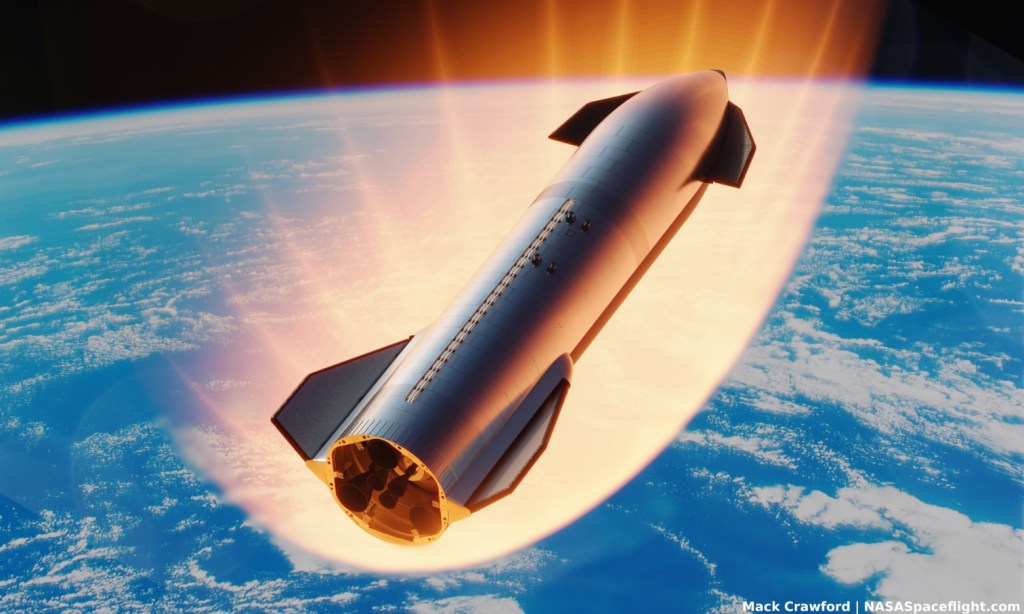
Preparing for “Earth to Earth” space travel and a competition with supersonic airliners From NASASpaceFlight.Com an important and fun source on space activity all around the world not just NASA/US

So this seems crazy but in all honesty it has actually been a thing for a long time. It is mentioned in a lot of sixties/seventies SF not focused on space flight. It was seriously studied several times as a sort of replacement for parachute insertion of military force. And like most of those sorts of efforts there was a commercial concept to support the technology since the folks in the defense industry understood that military programs cannot support a robust industry on its own.

Just look at nuclear power, there was a reason that nuclear power stations evolved as the Navy came to realize they wanted nuclear ships. And there is a reason that small aircraft carriers and non nuclear submarines are anathema to certain parts of the Naval establishment. They know that if non nuclear CVs and SSs became common the industry required to support the nuclear fleet would become unaffordable.

https://thehighfrontier.blog/2016/03/20/straight-back-down-to-earth-a-history-of-the-vertical-takeoffvertical-landing-rocket-part-1/

People have already talked about the DoD buying Starships and using them as bombers / hypersonic weapons platforms. This is just turning the model above around.

Back in medieval times freighters and warships were the same thing, they just tacked on some fighting platforms and went at it with bows, crossbows, catapults, swords, etc. Even the Vikings probably started out as traders though always ready to ‘raise the black flag and slit a few throats’ if that looked like the right business strategy.

Anyway…sorry for the side commentary, it’s evening and I had a good dinner so I’m wandering a bit.

So, again anyway…if you look at it, a craft like the Starship, which has the performance as a single stage vehicle to haul 100 tons 10,000 miles in less than an hour has some attraction on its face….but in reality?

  • To my mind the most value dense time sensitive cargo is people but that’s years out at the least.
  • In the meantime are there cargos that are so time sensitive that something like a starship might make sense?
    • Couriered documents. Maybe
    • Mail. Does not seem like it.
    • Medical supplies only if the ship could land almost anywhere and take off again.
    • High value tech like chips? Maybe but 100 tons is overkill.
    • In fact most of the above are not 100 ton class cargos and frequency and flexibility of landing seem critical.

So dead on arrival? No there are customers who might pay for a a limited 100 ton capability. I think it would need to be anywhere in the world which is more than 10,000 miles but is probably within the capability of a modified Starship with more fuel and less cargo…or maybe an extended tank Starship could do 100 tons out to 18,000 miles (my wag of anywhere in the world from anywhere in the world.)

A somewhat smaller starship could do 10 tons 18,000 miles and probably land at just about any port or airfield as long as you can supply LOx and LNG, which is not that uncommon.

Go back to the start. If you burn a couple of hundred tons of LOx/LNG what is the cost? Does it make economic sense? Is it safe, is it going to be acceptable?

  • Economics:
    • LOx/LNG are in the same $/ton range as Jet fuel, you are burning a couple of times the fuel since you have to haul up the oxidizer with you and pay for that as well so say 4x the fuel bill.
    • The hull is in line with a modern airline.
    • If you can do a trip a day or so with support costs in the same range as a jet, it would appear to me that for the right cargo you could make it work.
  • Is it safe?
    • Well not right now but once the tech is wrung out ?? I think so.
    • the big difference is much higher energies than a jet.
    • But…your exposure time is a fraction of that of a jet over the same range. Accidents in mid flight are rare but generally lead to complete loss. Exposure time is probably the most important difference…advantage Point to Point
    • Ok so the major threat time is when you are near the ground around take off and landing, Those are shorter for the Point to Pointer.
    • And to me the difference in energy involved is immaterial…dead is dead and most of the time accidents of any magnitude in those phases are not survivable.
    • Accidents on the runway often have survivors but that is eliminated in the Point to Point case…up and down…no in between…
  • Acceptable?
    • Only time will tell, my guess is YES.
    • It will be a bit like the glamor days of the early airliners I would expect point to point for certain segments to be a real elite punch card
    • Especially as near earth space becomes an exotic but achievable location.

Exciting times indeed.

Observation re. Sunburst Hack

An act of cyberwar is usually not like a bomb, which causes immediate, well-understood damage. Rather, it is more like a cancer – it’s slow to detect, difficult to eradicate, and it causes ongoing and significant damage over a long period of time. Here are five points that cybersecurity experts – the oncologists in the cancer analogy – can make with what’s known so far.

The Sunburst hack was massive and devastating – 5 observations from a cybersecurity expert by Paulo Shakarian From The Conversation

Description of who, how, what at least in general terms and a thoughtful overview of how to start thinking about the impact and meaning.

To me this attack seems just part of the reality we live in. As discussed in Modes of War, this is one of the modern modes that are more about gains and pains than blood and gore. This sort of strike, ignored and multiplied, could bring a nation down and given the context of reality today, direct kinetic action is highly unlikely.

SpaceX and COVID 19 Relief

Sunrise at Boca Chica, SN9 on Launch Mount B being readied for the test campaign. Thanks to Mary and all the gang for keeping me sane.

So one of the things that has kept me a little bit sane this last 9 months is SpaceX, Starship, and 24 Falcon launches… All I have to say is WOW and thank you Elon!

I’m in the periphery of the electric car business and have been for over twenty years now. The only thing that made me a believer was Tesla.

I’ve been watching space since I sat in front of the telly as Armstrong stepped off the lunar lander. The first time I believed that the final frontier finally within grasp was watching SpaceX doggedly pursuing landing Falcon boosters.

I’ve been a big believer in sub surface transportation, in particular for cargo and rapid medium distance, since high school! And the first time I saw it really taken seriously was Elon’s Boring Company.

It is really hard to think of another great innovator who had such a broad impact in the world. Brunel maybe (Victorian England) Edison, Tesla, Marconi, the Wrights, Sikorsky, Johnson…they all did great things only Brunel had as broad as Elon Musk. Maybe some of the other engineer entrepreneurs of the 1850’s to 1950’s working in what would become industrial powerhouses might have been similar but a different time and public culture hid them…maybe it’s just that Elon’s working today and as a geek I gravitate to him and the search engines feed my observer bias.

Track Points lower price point Precision Guided Firearms

IMG_1043.JPG
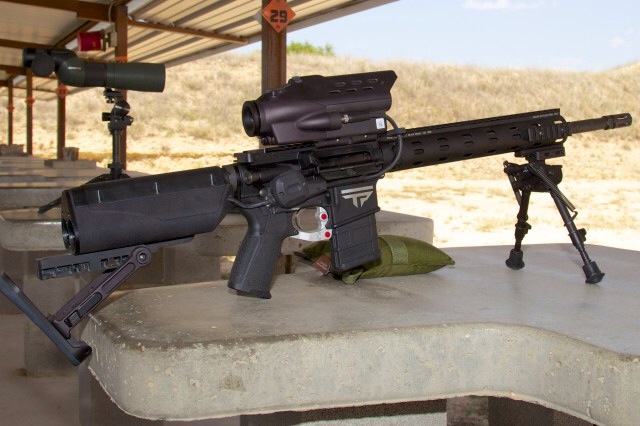
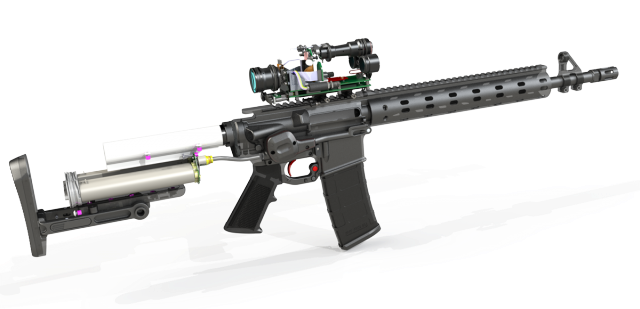
So again ars Technica has a great article on Track Points latest products, $10,000 AR15 class weapons with their tracking/guidance package.

This is a remarkable technology and if I wanted to hunt it’s one I’d consider since you’re much more likely to get a clean kill.

These weapon’s make almost anyone a one shot one kill marksman, eroding a little the ‘advantage’ of a professional and increasing my concerns regarding their use in politically motivated murder.

The use of the weapon wit a remote sight also increases my concern in this area though the existing versions are heavy very expensive and near useless at short range.

However those disadvantages will rapidly dwindle, the technology is not that complex and I can see many bells and whistles I would work in over time.

In the not to distant future advanced combat forces will be using this and derived technology on all of their firearms, the battlefield will become deadlier and counter measures, operational, tactical and technical will be deployed.

Some in the political arena will want this tech banned, they may succeed in the short run. Some may demand it become mandatory, with the development of a human target recognition element and over ride…an expansion of the smart gun push.

But for now, it’s a cool use of technology by some pretty savvy guys and it’ll be fascinating to see where it goes.
IMG_1042.PNG

iPad Next

Still waiting for the next iPad. Having used an iPad from its second year on I have decided that it really, really needs an update in the usage department.

What do I mean?
I really have tried to use my iPad to take notes and to do real work, I have a blue tooth keyboard but it requires a table for me to use and is one more item to carry.  Really one needs pen, audio as well as keyboard input, and to be honest I would like keyboard and mouse input because the damn screen is not as easy to interact with as a mouse for heavy writing/editing.

For note taking I worked with just a stylus with several note taker apps but the poor wrist rejection and poor accuracy of the stylus make the payoff poor given the effort it takes to use well.  I bought the Jot blue tooth stylus and its accuracy is absolutely abysmal and the ‘feel’ of the hard nib on glass just sucks.

My little Moleskin note-book is better than the iPad.  It would seem to me that one could create a very useful iPhone size note pad if the screen were a little draggy like pen on paper and the accuracy of the stylus was as good a pen on paper.

There has been commentary about tablet sales topping out, especially iPad sales.  I think that’s because a lot of people who thought they could use the iPad or equivalent as a more general computing tool have slid back to using it as a consumption device and that makes the cost of these high-end devices too high.

To pick up more users and re-energize those of us who have found ourselves slipping into a reader only mode the iPad needs to replace the note pad.  That means the useable surface needs to expand to something more like 8.5 x 11 and it needs to have a high accuracy high feel-quality stylus. Letting the Surface Pro 3 and the Galaxy Tab S go without a strong response will slide the iPad into a lesser position and let MS retain and perhaps expand its Business core. It could even kill the iPad Air sales entirely since for a pure reader the iPad mini is a better deal.

So I hope the rumour of a larger iPad is right and that it has the technology required for a high accuracy high  ‘feel-quality’ stylus.  Even better if they can do this on the iPad mini and iPhone I would expect them to be leading the pack again.

This is not to say that the non stylus start of the iPad was wrong or that the capacitive touch interface should fade.  You do not always have or want the stylus or pen, and learning the new touch interface was important but as the market matures and the users understand how they do and could use devices their wants/needs expand.  And as the Galaxy and the Surface demonstrate to some degree the stylus/pen is a needed adjunct.

One thought here, sapphire might be a very good material for the right type of ‘pen’ sensor, hard enough to allow one to use a metallic tip perhaps?


I gotta say it: The iPhamily refresh I want…

Have to say that the finger print sensor on the iPhone 5s is really a great idea and somewhat unobvious.   As always it was the quality of integration and superior tech selection that gave it the Apple imprimatur.20130911-121516.jpgNow we have a projected 4.5 – 4. 9 in iPhone 6 and possibly an iPhone max at 6 in, and iPad max (Pro?) at 12.9 in.  This is the Samsung version of innovation not Apples.

One of the things about the Apple sparked smartphone race is the well noted but sometimes missed integration of an absolutely crazy (by standards of 6 years ago) set of sensors in every unit.  The iPhone and its genetic descendants are sensor rich platforms that software, skins and blivets modify for an uncountable number of applications.

Apple has identified a key (and missed it with the 5c) people want ease of use, ruggedness, power and flexibility so they can personalize their technological jewel and use it to enhance their life.

SO?

Follow the logic:  Make it more general purpose, more flexibile, more rugged, more capable, easier to skin, easier to add plivets to, while staying bullet proof.

Sizes:   I would think about the iPhone/pad Family:  4″, 4.5″, 6″, 7.9″, 9.8″ and 12.8

Screen size:  I think apple needs to push the screen to the edge and around the edges of the frame [on the smaller models] at least on one side, to enable side scan and programmable side switches.

Physical buttons: Minimize, three in total all programmable though one will need a hard wired on/off/reset function.

Physical buttons, the center finger print sensor [an iconic item that got its start with the iPod. ] :  Bury it under the face and make it part of the functional screen, or make a cutout in the screen for it   [that would be a real game changer style wise and make the tech maximalists scream bloody murder. [Do it for the front camera and speakers and some would go up in spontaneous fireballs.]

Radio:  Every unit should have WiFi and Phone / Data functionality built in.  Work with the pipe suppliers to get them to do what they should want to do, enable the use of Phone/Data flexibly so people get hooked.

Protection:  The smaller units should have a sapphire screen to add even more ruggedness.

Cameras:  Apple, keep up the good work, quality over quantity and work with the guys who want to add specialist lenses to provide more and more camera functionality. The two cameras in the iPhone are key, critical tools in its bag.  I love photos, love cameras but they are doomed to become a relatively rare specialist device.

Speakers: Need to be better, stereo, along with stereo microphones to add acoustic sensing to the repertoire.  Maybe one should put the speakers on the face?

Inductive charging: not in already, really?  Understood its bulky but its needed for the next level of rugged etc.

Waterproof….ehe…the question is how to do the speaker connection (assuming inductive charging) I think one can make the connector waterproof and I don’t think its a problem unless you get salt water in it, in which case some kind of sensor to make sure its not leaking current. [I think that the audio jack is going to last a lot longer than maybe it should.  But I will hope Blue Tooth makes cable-less headphones the standard in 5 years or less.]

Oh well, guess I will wait to see where Apple goes, I hope they see their premier post PC tool the way I do.  Maybe they have even better ideas, we can always hope.