
Historical Perspective and Narrative

20120221-220832.jpg

Walter Russell Mead’s blog serial Beyond Blue, currently at #5, Jobs, Jobs, Jobs (from which the pictures in this piece come) is a fascinating monograph putting the changes our society/economy is going through into perspective. Dr. Mead’s explanation goes back to the 19th century:

In the 19th century, government promoted the rise of the family farm, selling cheaply and ultimately giving away millions of acres of farmland, and promoting the rise of railroads (which could carry the produce of western farms to world markets). In the 20th century the government promoted the rise of large, stable corporate employers that offered armies of white and blue collar employees lifetime employment and a bevy of benefits.

And later this:

Currently, the American legal and regulatory system is set up to bind as many people to employers as possible. The government wants you to be a wage slave and sets up a regulatory framework that keeps as many of us as possible yoked to bosses and management. The IRS doesn’t like the self-employed, fearing they many conceal income. Banks and credit card companies view such people with suspicion, and it is notoriously difficult for start ups and part time enterprises to have access to formal finance. Many services are hard for the self-employed to get on terms like those made available to employees of large corporations: from health insurance to retirement planning, many things are harder and more expensive for the self-employed. The payroll tax system is brutal: the self-employed pay both the employer and employee halves of Social Security and Medicare taxes, almost 20 percent of income and likely to go higher. Many cities will tack on unincorporated business taxes, mass transit taxes, and other interesting feudal exactions and dues.

The gov’t used(s) the current ‘Blue Model’ in some senses as a social damping mechanism because it provides for a more hierarchical top down command system (of interest in the Cold War climate of the 50’s to80’s) while also providing a relatively efficient economy and outlets for frustration from the masses. This model has worked since the collapse of the 19th century model….the great depression…but itself is now becoming unstable/unaffordable in its turn because it requires too much command and control.

Too much how? Well now that a high percentage (all high value) workers have been amplified by basic literacy, information systems and other technology, they are capable of much more than the drudge work they used to perform at the command of a ‘supervisor’ and demand / need more autonomy. Many organizations accommodate and move on and up. Others keep the older structure or some bastardized version and sink into the muck. Companies that almost have to operate in the old mode because they deliver one sort of highly regulated good or another, get radically more expensive compared to near peers operating outside the penumbra of regulation and lose relevance and competitiveness at a steadily increasing speed. Look at the post office, once the epitome of efficiency.
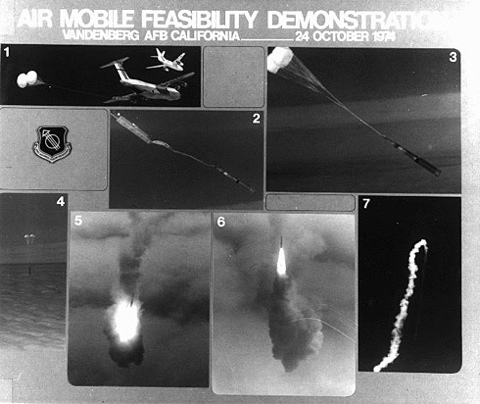

From Defense Tech

20120218-215324.jpg
This reminder of fun times past, though one wonders about the prayers of the C5 pilot prior to ignition. I remember seeing this as one of the options explored for the Peacekeeper ICBM follow on to The Minuteman. Must admit that it seems pretty crazy cost wise and if you kept them on the ground most of the time little different from the bomber force. Maybe it made some sense, fly as close to the border as you want then toss in at a shallow angle, mixing up the attack as it were. Of course by the time this was really feasible, there was no point…and history seems to say that much of this kind of thinking was wasted time and energy, the BOOGEYMAN, was only ever a boogeyman, and probably more worried about what we might do to him than what he could do to us.

New and abused

This StratPage article on the LCSs is very good, but has a negative tone that is disappointing.  As the article notes with a bit of hyperbole the LCS is a pretty radical break with the past, LCS 2, Independence being by far the more radical and perhaps deserving of the hyperbole.  Where has our patience gone, whenever something radically new is tried there are problems and with LCS even with LCS 2 the problems seem relatively minor in the big picture.  Also the fact that LCS went from concept to hulls in the water in less than a decade is tribute to sensible expectation setting on the part of the Admiral(s) who have pushed this family forward.  Though tying hull and weapon system together may make sense for the battleships (carriers and cruisers of our age) it makes small craft too expensive and obsolescent before launch. 

The Radical Sister

LCS 2 Independence The Radical Sister

The trimaran LCS 2 is essentially all aluminum built by Austral (relocated Australian fast ferry company.) She was launched later and has had a lot more or at least more serious issues than her fraternal sister LCS 1.  Most pictures of Independence are either slow speed or docked, far fewer deployment pictures than of LCS 1.  This should have been expected (and was by most) when you have this radical a departure its bound to collect a lot of baggage.   But the ship has a huge flight deck and is highly stable in rough weather, as well as being fast.   In the end its possible the Independence will be the more successful sister, though it’s just as likely that both will be considered successful but better at certain missions than the other.  
 By the way the concept of a trimaran warship was originally raised by the Royal Navy and as above the builder is an Australian company experienced in building catamaran ferries (which have had their own issues.) Who says the US doesn’t take good ideas from abroad?
Just as a matter of interest I had the honor of getting a tour of the LCS3 the Freedoms sister ship Fort Worth at her builder Marintte Marine.  The ship has huge empty spaces but the ‘fixed’ facilities are pretty tight . The bridges of these ships remind one more of something out of a Star Trek movie than a WWII flick. 
And while the hull is the size of a WWII destroyer they are (when geared up for the mission) vastly more lethal the crew size is more in line with a WWII PT boat than the Tin Cans of yore. 
The idea behind LCS is for a capable craft that is available in the numbers needed for dealing with busy coastal waters. These are the modern equivalent of the Gunboats of the nineteenth century. They are not the modern cruiser (called destroyers) battleships (called cruisers) or battleliners (carriers.)  These ships are the corvettes, the torpedo boat destroyer, the frigate, of today and with their vast flexibility and high power they will most likely find uses far beyond those envisaged today.


 Mark

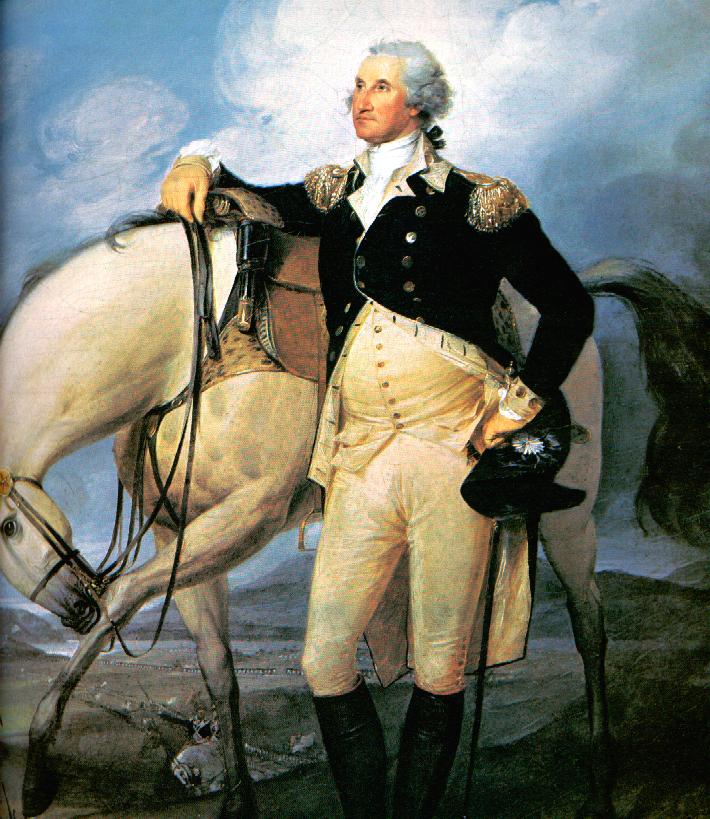
George Washington, A Human for the Ages

George Washington Circa 1782

Labour to keep alive in your breast that little spark of celestial fire, called conscience.

GEORGE WASHINGTON, Rules of Behavior

A man’s intentions should be allowed in some respects to plead for his actions.

 WASHINGTON, letter to the Speaker of the House of Burgesses, Dec 1756

There is a Destiny which has the control of our actions, not to be resisted by the strongest efforts of Human Nature.

GEORGE WASHINGTON, letter to Mrs. George William Fairfax, Sep. 12, 1758

I shall not be deprived … of a comfort in the worst event, if I retain a consciousness of having acted to the best of my judgment.

GEORGE WASHINGTON, letter to Colonel Bassett, Jun. 19, 1775

It is with pleasure I receive reproof, when reproof is due, because no person can be readier to accuse me, than I am to acknowledge an error, when I am guilty of one; nor more desirous of atoning for a crime, when I am sensible of having committed it.

GEORGE WASHINGTON, letter to Governor Dinwiddie, Aug. 27, 1757

Some quotes to think about in these days of chaos that are also potent with opportunities for renewal and change, they are words of a human as true today as then.  The man who spoke or wrote them would not recognize the world of  today.   Those living today might have the same trouble with the world twenty years hence,  but the quotes will be as true then as they are now and were in the eighteenth century.