If you know we’re in trouble but can’t quite figure out why? Adam Garfinkle at American Interest has a key

Great Primer on why bureaucratic / regulatory purgatory has descended on our heads in this blog post at the American Interest site.

America’s political institutions are so fouled up at both the politics/decision-making and the bureaucratic/administrative levels that one can actually make a plausible case that all the variance we are trying to account for lives here. One can make this case regardless of political affinities, too. Liberals argue that our economic situation, touched off by the financial collapse of autumn 2008, is all the fault of anti-government, market-fundamentalist types obsessed with deregulation. Conservatives argue that our economic situation is what it is because we are hopelessly in debt thanks to the futile and counterproductive meliorist entitlement policies of bleeding-heart liberals who invariably care more about intentions than outcomes. Both are partly right, but also partly wrong or, better, incomplete, in their analysis—which brings us to part three, next time.

Couple of updates, Alan’s post really starts here with Section 1 which provides background, that points back to Walter Russell Meade’s The Collapse of the Blue Model series I’ve posted about earlier.  Read it all, Alan says much more clearly and with more background what I have tried to say in various small ways for almost a year now.

The system is systematically broken, it has become so broken that it is self reinforcing and is pointing the nose of the ship of state down, harder and harder as we try to fix it.

China’s Maturing Modern Navy

20120907-204311.jpg

The Chinese Navy ( sometimes still called the PLAN/People’s Liberation Army Navy/) appears to have finished it’s experimentation~development with their premier surface combatant, the medium DDG 052C/D producing a rough equivalent of the western Aegis (at least in their boosters eyes.) the ship very obviously follows western design concepts but appears to be a very competent design, at least from “it’s likely right if it ‘looks’ Good metric,” though the radar and computer part of the system are probably not that good, yet. This good article in the Diplomat discusses this and its implications in some detail.

Not Everything that President Obama has done is wrong…and by the way he hasn’t shut down a lot of things that President Bush started either

There are far too many conservatives of various flavors who seem to have gotten lost in their own narratives. Fortunately we have some smart conservatives watching out for the overspill.
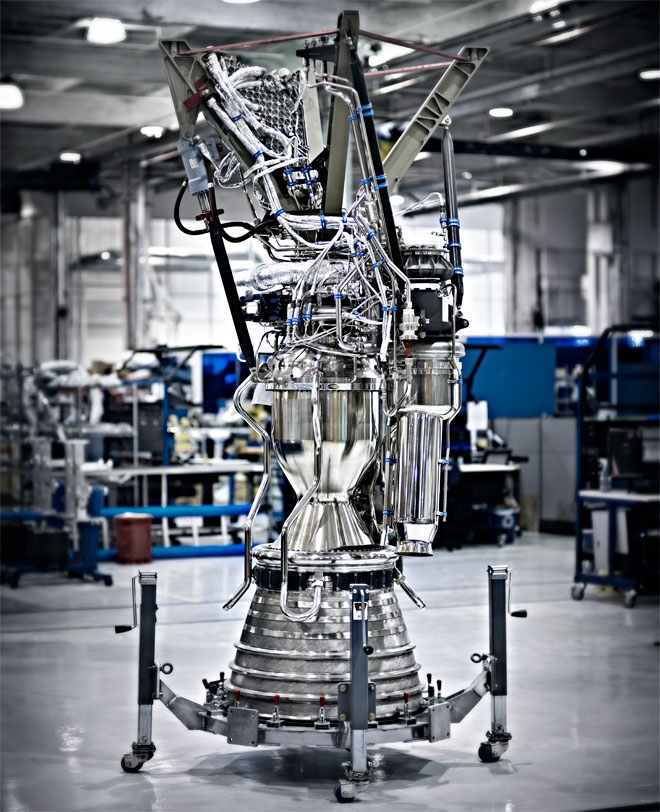
This is an excellent piece by Rand Simberg of Transterrestrial Musings blowing away a rather ignorant rant against NASA’s Space Station Commercial Access plans, which by the way is going well and attracting a huge amount of investment by pure play commercial space entrepreneurs.
I believe that what we are seeing today is what the first generation science fiction writers of the 30’s to 50’s predicted, it’s just taken a whole lot longer because the technology they thought would allow us to blast off (atomic energy) was shut down due to fears, founded and unfounded.  It has taken us five decades to develop technologies that enable us to get to space inexpensively (in relative terms) burning tons of liquefied oxygen and kerosene.in what are essentially tightly controlled explosions.

Blue Model and it’s replacement…better not less

Walter Russell Mead at his usual level of clear thinking:

As good quality education and health care become more expensive, it becomes harder for society to provide these goods to those who cannot provide them out of their own earnings. The development of a good $10,000 bachelor program would do more for low and lower middle income families than doubling the size of all student loan programs. Generally speaking, anything that makes education cheaper and easier — shifting from a “time served” model to a skills learned model for awarding qualifications and degrees, breaking the guild monopolies through accreditation and other systems so that more institutions can compete in the market — will make society less blue, but make the poor better off.