From The ENGINEER: Bumble Bee Drones at War

The rise of the micro air vehicle
13 June 2013 | By Jon Excell
Read more: http://www.theengineer.co.uk/in-depth/the-rise-of-the-micro-air-vehicle/1016519.article#ixzz2XeLGHbVs
20130629-191151.jpg
20130629-191200.jpg

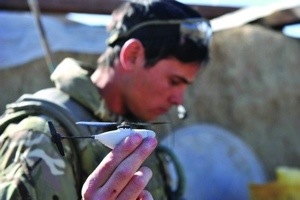
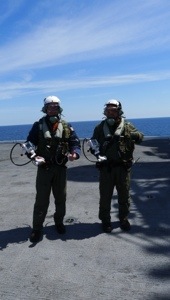
A soldier of The Queen’s Royal Lancers launches a Black Hornet, Nano UAV from a compound in Afghanistan during Operation QALB.

…one of the compelling advantages over larger surveillance UAVs such as the Reaper is that the system can ‘be tasked in a matter of seconds’, whereas a reaper might take half an hour to arrive at the scene.

…Prox Dynamics’ CEO and founder Petter Muren told The Engineer that the technology that appears on the PD100 is considerably more advanced than anything that would be found on a remote-controlled aircraft. The motors, servos and sensors are, he said, smaller and more efficient. The radio-link is more advanced, the system has fully integrated GPS, as well an autopilot system, and is far more robust.

And the beat, wing beat, goes on…
20130629-192043.jpg
20130629-192051.jpg20130629-192058.jpg

From The ENGINEER // What a Beauty! A Bugatti designed aircraft could soon fly

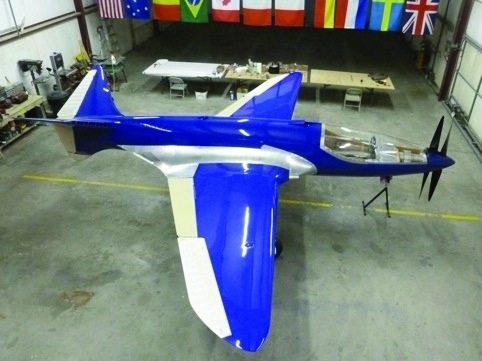
The ENGINEER :In the wings: recreating the Bugatti 100P
20130629-184925.jpg20130629-184939.jpgAlmost eighty years ago aircraft design was still more art than science and what science there was revolved around slide rules and mechanical, even human, calculators, but they took chances and pushed boundaries.

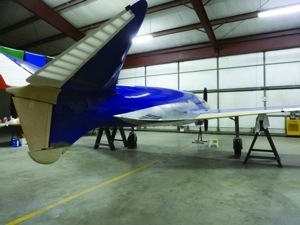
This aircraft used the period’s (late ’30’s early ’40’s) advanced composite, plywood, made of hardwood and balsa wood as well as sophisticated aerodynamics to achieve a remarkable projected performance, 500 MPH, at a time when 300 was fighter fast. This aircraft had a cooling system similar to the breakthrough one in the P51 mustang, a half decade earlier, and the composites were used in the famous British strike bomber the Mosquito, also a half decade later. But the original of this remarkable aircraft never flew, being shipped out of the path of the oncoming Nazi army and ending up as decayed parts in the Experimental Aircraft Associations museum in Oshkosh WI. Now a team of enthusiasts are building a replica they expect to fly soon.

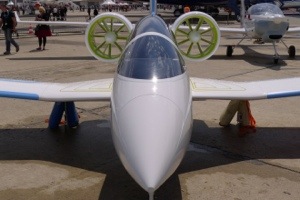
EADS eFan electric training aircraft

From: http://www.wired.com/autopia/2013/06/e-fan-electric-airplane20130619-072229.jpgA tiny ducted fan aircraft, only about 40 hp and it can do aerobatics, 1 hour touring around or about 30 min of loops etc.

People still say that battery technology is throttling eTech but I see huge amounts of work based an nano tech, material tech, graphene / carbon tech, etc which points to continued significant improvements in battery energy density etc for many years to come. Along with the rapid improvement in light strong structures, much of it fueled by carbon fibre technology, the improvements in electric propulsion, electronics, sensors, etc one wonders if the Jetsons are really all that far off…

Wired // Pilates PC-24 Jet Set Roughing it…next they’ll pu floats on it

20130523-204928.jpg

Pilatus Aircraft has been producing airplanes since the 1940s, but the Swiss firm’s newest model, the PC-24, is its first jet. Pilatus didn’t want to just be another jet maker. Instead, the company borrowed from its very successful single-engine turboprop, the PC-12, to create a jet that can do everything conventional business jets can do and fly in and out of relatively short, unpaved runways. Oh, and it has a big cargo door as well.

A short piece at Wired…not a real airplane yet, the above is one hell of a rendering. Pilatus’ world trotting PC-12 is the air ambulance of choice in the nether regions of the world…it’s also a preferred discrete ride for SOCom, one wonders what they will do with the PC-24?

A world (at sea ) of difference

20130516-194752.jpg
20130516-194802.jpg
20130516-194818.jpg
20130516-194826.jpg
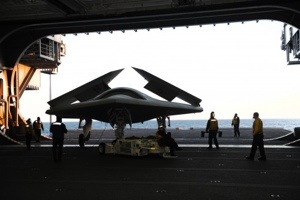
as in many engineering projects the Navy’s UCAV X-47B flight testing and carrier qual seems to have suddenly jumped from baby steps to hyper speed.

Navy officers are very clear on a distinction between the Navy and the Air Force, which insists on talking about remotely piloted aircraft: Navy “unmanned air systems” have operators, not pilots. Of course, the Navy hasn’t been forced to divert a large number of qualified pilots into UAVs, as the USAF has been (Predators and Reapers are the USAF’s second-largest pilot force after the F-16), and will not have to do so for a long time. But the fact remains that flying a UAV with a stick and rudder or any semblance thereof is (to quote an Airbus guy’s comment on the Boeing 777’s back-driven yoke) like putting a steering wheel on a horse. “Pilot” is a bit of a misnomer.
Speaking of pilots, the Navy’s attitude towards adopting the X-47B’s automatic landing technology for manned operations is quite positive. The potential benefits — less wear and tear on airframes and less training time for the air group, along with improved safety — are substantial.

Read more at: http://www.aviationweek.com/Blogs
Wired has a different set of thoughts and more questions here. Wired sometimes seems to confuse the world of war with the world of tech and the world in general with the blue coasts of the US but they do a good job of tracking the tech and monitoring for hubris.

DARPA Finaly got the X51 to successfully ride its wave

20130503-204016.jpg

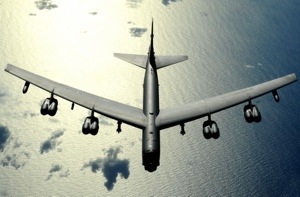
Tucked under the B-52H’s port wing, the X-51A is pictured prior to launch on May 1

At www.aviationweek.com

The U.S. Air Force has released new details of the record-breaking hypersonic test flight conducted by the Boeing-built X-51A Waverider demonstrator on May 1. The diminutive scramjet-powered vehicle achieved a blistering Mach 5.1, covering 230 naut. miles in just over six minutes (240 seconds!) over the Point Mugu Naval Air Warfare Center Sea Range in the Pacific.

This technology could be the next breakthrough for space booster technology…next as in ten to twenty years. In the meantime it could fuel a new arms race in rapid strike weapons. This is not a US first move, the Russians, Australians, the Europeans, maybe even the Chinese have been leading in this speed regime up to this point.

NASA may support SST x-plane

20130503-201749.jpg

An artist’s concept shows Lockheed Martin’s low-boom supersonic airliner. (Courtesy: NASA)
At www.flightglobal.com
Science and resultant technology may well have made Low Boom supersonic flight practical. A 100 to 150 passenger aircraft could fly NY to LA in something like 2 hours, making one day two way coast to coast trips a practical comfortable reality for premium passengers. This has been impossible because of the glass breaking, cattle disturbing sonic boom, but now aerodynamics and aircraft technology have shown a road forward.

With the ending of NASA’s last ‘five year plan’ on ultra efficient airliners, money will be available to build a scale but largish (fighter sized I’d guess) x-plane to make test flights provingthe boom mitigating design techniques. This sounds like a great idea, the sort of thing that NASA should be doing, has been doing, quietly, since its founding as NACA all those decades ago.

Galactic Virgin Rockets Away!

20130429-215041.jpg
Love the Logo-shot! The space ship’s pretty simple really, it’s biggest downside would seem to be no fly around capacity if one misses the runway line up, but 1) how often does that happen theses days? 2) if theirs any juice left in the oxidizer tank a short burn would do the trick. Anyone know the plan: depend on getting it right every time or lighting ‘er up for the go-round?

20130429-215802.jpg

US Air Force = ‘hollow force’ ?

20130414-134725.jpg

20130414-134734.jpg

20130414-134746.jpg

20130414-134756.jpg

20130414-134813.jpg

20130414-134821.jpg

20130414-134831.jpg

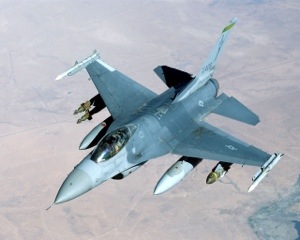
This article on the USAirForce in The American Interest is part of a series, incomplete as of this writing, on the US Armed Forces, and the road forward in this period of draw back and draw down. The ones on the Army and Marines are worthy and insightful but don’t get to the nitty gritty level required for me at least. While this AF article could be argued to be in the same vein I think it’s stronger and that may be because the technology and mission of the AF are very tightly interwoven making it simpler to see the overall threat.

The argument is that the AF has been all but static in the past 20+ years since Desert Storm. That a combination of victors-hubris along with techno-hubris and perhaps political ineptness have left us with a hollow force at the sharp end. The AF is arguably all over its technological mission in support of communication, reconnaissance, threat detection, navigation, etc, and has been shown to be king of battle in low intensity conflict (a turnaround of epic proportions from Vietnam.) But this camouflages the fact that if we had to do Desert Storm against a foe withe the modern equivalent of Saddam’s air defenses we would suffer vastly higher casualty rates, to the point of perhaps not being able to dominate the air space to anything like the same degree, perhaps pushing us back to an earlier era’s loss ratio’s.

There is a call to back the F35 and the NGB (next gen bomber) which I agree with since all other platforms are wearing and aging out (aging out happens as old tech ( particularly electronic and electromechanical) gets impossibly expensive to support because the devices and materials used are obsolete and no longer available sometimes even illegal due to toxicity or country of origin.)

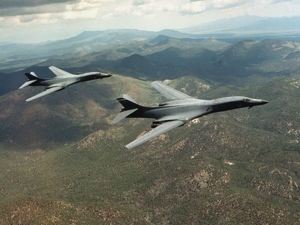
I’m not bought in on the hollowness, yet. Yes the AF / DoD bolloxed the F35 and its now causing the above wear/age issue but does it matter? The first wave B2, B1 and cruise and strike missiles from B52’s etc would take down any known threat’s air defenses long enough for the channel to be cauterized by strike aircraft and special forces…which is what happened in DS. Yes some might have ability to hang tough with fighters, for a few hours, yes some might have backup lines and reserves, but having them and using them are two very different propositions once the AF is in their backfield.

What about a peer / near peer you ask? What peer / near peer I ask? Not NorK NorK, not Iran, not Russia or China either…a limited war against either is essentially the scenario above. Anything more in those two cases and sheer area would provide a huge force multiplier on their side. Thats ignoring the fact that both are serious nuclear powers and serious world diplomatic players who we are Never Going to War With directly until nuclear weapons are off the table…though of course you have to game the doomsday scenarios…but in those cases the war can never expected to be winnable or lovable in a conventional way.