Design, fab, test, iterate…. NASA gets 3D Printing’s advantages

Ars techica: NASA test-fires 3D printed rocket parts: low cost, high power innovation
Propulsion engineers focus on R&D and pushing new tech into private industry.20130828-222007.jpg

A 3D-printed injector plate delivers 20,000 lbs of thrust in a hot-fire test on August 22.
NASA

Fidelity is an issue with 3D printed parts, even using advanced techniques like DMLS. (direct metal laser sintering) Greg Barnett, the lead propulsion engineer on the project, … “The surface is a little rougher,” he explained; however, those variations are within a consistent range and can be compensated for in the design. …

The test results on the 3D printed components have been extremely positive; Barnett and Williams told Ars that the 3D printed injector is equivalent in performance to the traditional machined one. The next step is to move on to an injector with more elements, which will mean testing with more power.

3D printing—or “additive manufacturing,” as it’s called when you get industrial like this—is seen by NASA as a vital way to keep rocket component development costs down. In a lot of ways, the ability to rapidly prototype via DMLS harkens back to the Apollo-era development method of fast physical iteration. Rather than spending a tremendous amount of time performing deep, computer-based analyses of rocket components, NASA can rough in a design and then print and test a component within hours or days.

The deep analysis and simulation tools are still available and still used, but the months- or years-long physical manufacturing time is drastically reduced. This gives engineers the flexibility to design and build in the most optimal fashion. They can use complex software analysis where necessary, but they don’t have to rely solely on computer modeling.

In the days of Apollo, NASA operated with effectively unlimited funding, which it used to create a nation-wide army of contractors with tremendous manufacturing capabilities. Design-by-iteration was feasible because there was so much design going on. These days, the picture is entirely different. “It’s almost a cultural issue,” explained Williams, “where a part can cost so much, you get into what I call ‘analysis paralysis.'” Without additive manufacturing, prototype rocket parts that can withstand actual hot-firing can cost so much and take so long to produce that when you finally get a physical component to test, you’re already hoping the tests show that it’s perfect—otherwise it would take too long to redesign. With additive manufacturing, that paralysis goes away, and engineers can iterate as needed on actual physical components.

Ingenuity unleashed, development accelerated, designs simplified…the power of 3D printing.

Someone got carried away with their QuadRotor project! Gas Electric Propulsion and battle gray!

AWST Ares Blog: New Ways To Fly by Bill Sweetman
20130818-210217.jpg

New at AUVSI was a variation on the quadcopter from Latitude Engineering of Tucson – the hybrid quadrotor, or possibly octorotor. A piston engine drives a generator, turning four electrically powered rotors (on the prototype). The next generation vehicle, weighing 60 lb, will have eight lift rotors installed in pairs, above and below the booms. Latitude says that three of the latter vehicles have been ordered by Naval Air Systems Command for a test program.

MIT’s Spidery Lego, The Future of large scale 3D ‘Printing’ by little Maker-Bots

When you think about it we’re built up from billions of smaller common modules with a lot of minor variations, why shouldn’t our infrastructure be the same?

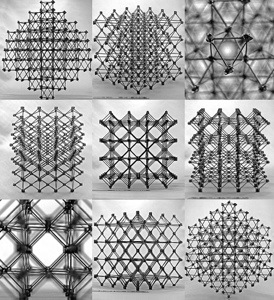
MIT researchers have developed a lightweight structure whose tiny blocks can be snapped together much like the bricks of a child’s construction toy. The new material, the researchers say, could revolutionize the assembly of airplanes, spacecraft, and even larger structures, such as dikes and levees.

20130816-173029.jpg

Assemblies of the cellular composite material are seen from different perspectives, showing the repeating “cuboct” lattice structure, made from many identical flat cross-shaped pieces.
PHOTO COURTESY OF KENNETH CHEUNG

20130816-190438.jpg

Credit: © CC-BY-NC-SA Kenneth C. Cheung

20130816-185751.jpg

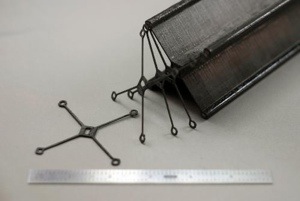
Part production for reversibly-assembled cellular composite materials, slicing from stock produced by a multiplexed fiber winding method. Credit: CC-BY-NC-SA Kenneth C. Cheung

20130816-190034.jpg

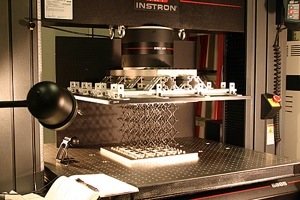
Test apparatus with reversibly-assembled cellular composite materials. Credit: © CC-BY-NC-SA Kenneth C. Cheung

If you can’t tell that last picture is a load cell, an instrument for applying precisely controlled loads to CRUSH YOUR ENEM…. uh, I mean… test the strength of a part or structure.

Read more at:MIT
or at:PhysOrg
or at: 3Ders

Obviously the MIT press piece is the base, but the others each have a little different insight.

First F1 speed demons now Excavators!

20130719-094708.jpg

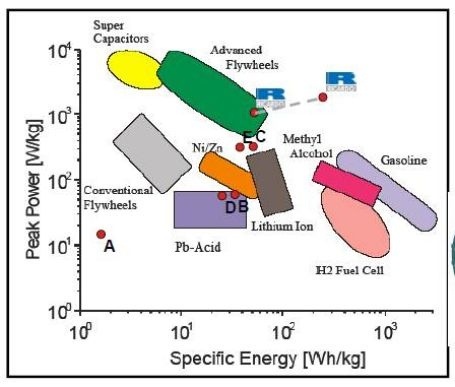
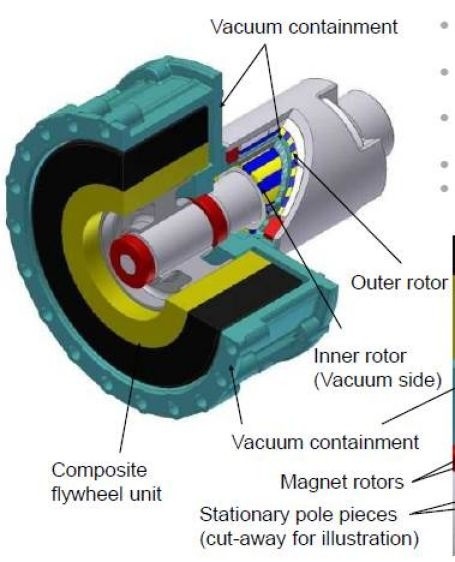
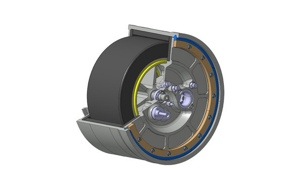
Ricardo innovated the basic flywheel in a number of ways. The flywheel is hermetically sealed in a container, with a sealed-for-life vacuum, transmitting power through a magnetic gear drive. They use high-speed rolling elements with a composite flywheel unit that allows the system to spin up to 60,000 rpm. The vacuum environment means low losses due to air friction. The demonstration system stores 0.25 kW·h and delivers maximum torque of 28 N·m (20.6 lb·ft) as measured at the flywheel. The company noted that is working on three storage units rated at 0.055 kW·h, 0.25 kW·h, and 1.25 kW·h.

Read more at : SAE : Ricardo sees a future in flywheel hybrid excavators20130719-095913.jpg

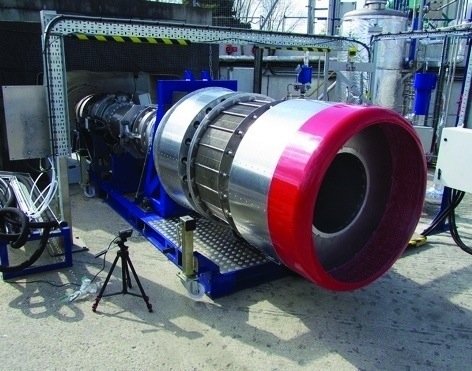
The Williams F1 team, however, developed a novel flywheel-electric system with a flywheel tied to a motor-generator. The flywheel is the energy storage system rather than electro-chemical battery. The race team has formed a subsidiary called Williams Hybrid Power to try and commercialize the system. Williams has now formed a consortium with Ricardo, Torotrac, Land Rover and several other companies for a demonstration project to evaluate its system as well as a flywheel magnetic system from Ricardo in commercial applications. The goal is to develop an on-the-road system for under £1000 ($2,000). The new KinerStor demonstration project is partially funded by the UK government through the technology strategy board.

More at: http://green.autoblog.com/2009/11/25/ricardo-and-williams-team-on-kinerstor-flywheel-hybrid-demonstra/20130719-095213.jpg20130719-095219.jpg20130719-095646.jpgSome background from a 2011 Economist article

England takes a bet on Space

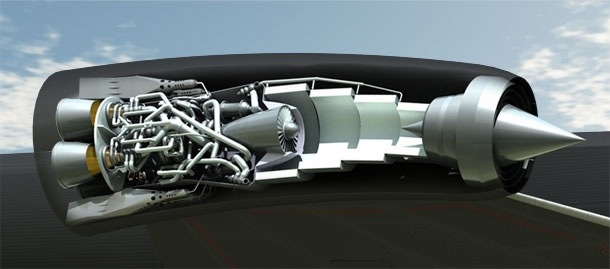
The Sabre air breathing rocket and the Skylon single stage to orbit craft grow more real with time. We should all remember that England was a hot bed of jet engine development in the early years and is still a leader (Rolls Royce.)20130719-091933.jpg20130719-091947.jpg20130719-091955.jpg

The announcement late last month that the Chancellor, George Osborne, is planning to put a chunk of the country’s meagre resources for capital expenditure behind a British project to develop a revolutionary jet engine for a reusable space plane, suggests the government has high hopes of the space engineering sector.
….
The Chancellor’s interest in Skylon centres on the hybrid air-breathing rocket engine, known as SABRE, which would power it into orbit in a single stage. The engine relies on an entirely new pre-cooling technology that allows it to function at extremely high speeds, at plus Mach 5. The project has no competitor. If successful it would offer a uniquely lightweight and therefore more affordable means of reaching space. It has already completed a series of tests and the next stage is to build a full-scale prototype.

Read more: The Engineer : Career opportunities in the UK space sector
Also the company developing the tech: Reaction Engines 20130719-093143.jpg

Kick it Beyond the Moon

MIT TR: Kickstarter Campaign Wants to Send Tiny Satellites out of Earth Orbit20130718-203920.jpg
Space loaf: This artist’s rendering shows a three-unit CubeSat with a propulsion unit.

A mini-satellite, no bigger than a loaf of bread, could push itself out of Earth’s orbit as soon as next year if a crowdfunding campaign to support development of a diminutive propulsion system succeeds. If such small spacecraft can be made to operate far from Earth, they could one day make inexpensive expeditions to asteroids, Mars, and beyond.

Now that’s neat, the ion thruster is pretty crude and tech leaders doubt it will work, but things ‘scale’ oddly, a honeybee can only fly because at it’s scale air is much more viscous…sticky…than we experience it. So it’s possible this simple small relatively short lived little exploring skiff will sail. And just think, if we can flip out these tiny surveyors to asteroids and comets for this sort of investment the haul of new knowledge will be huge.

Building with wood on a Major Scale

20130622-180708.jpgShiver me timbers. Architects plan wood skyscraper for resident life
Jun 21, 2013 by Nancy Owano

The wooden skyscraper is gaining attention as “green” news because of the wood factor proposed. A number of points in wood’s favor: C. F. Møller’s team noted how timber production releases less carbon dioxide than steel or concrete production, at a time where construction accounts for 30 to 40 percent of the world’s carbon dioxide generated from humans. Concrete and steel command a large part of the market, but wood-supporters note that wood is a lightweight, renewable material that can bear heavy loads in relation to its weight.

In general, the word “wood” makes some people nervous because of fears of fire. Architects who favor wood, however, argue that wood is safer than other types of building materials and can be more fire resistant than both steel and concrete. Earlier this year, an article in the Toronto Sun took note of what Geoff Triggs, building code consultants expert, had to say about the use of wood in high-rise construction. Rather than using small two-by-fours super-compressed mass timber is used to make very large panels. The compressed lumber is as strong as concrete but lighter. The compression process creates dense wood blocks that are difficult to burn.

Read more at: http://phys.org/news/2013-06-timbers-architects-wood-skyscraper-resident.html#jCp