Andy Weir’s Genius in Project Hail Mary

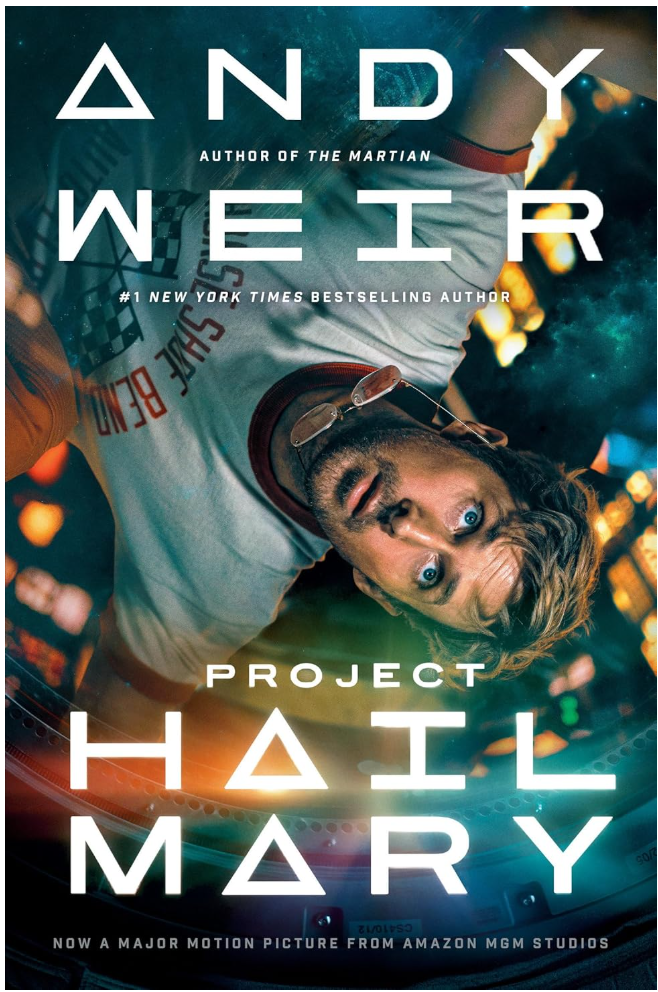
Andy Weir has a rare gift: he writes ordinary people — genuinely, recognizably ordinary — who have a skill that is also recognizable, and then puts them in situations where their one extraordinary competence is the only thing standing between them and death (in the case of Project Hail Mary, the extinction of the Human race.) The heroism is quiet and technical and you could almost believe that you could do that in the right circumstances.

You believe it because he’s made you believe in the person first. I saw the movie. I read the book years ago. Both are excellent, and the movie is one of the most faithful book-to-screen adaptations in recent memory.

Like The Martian before it, the film sticks closely to the book in both thesis and spirit. That fidelity matters: both stories rely on the reader/viewer trusting that the protagonist’s problem-solving is real, not movie-magic. Break that contract and the whole thing collapses. Weir earns it on the page; the filmmakers preserved it on screen.

The one genuine gap between novel and film is interior monologue. Novels handle internal states naturally; movies almost cannot. But Weir constructs scenes that externalize internal conflict visually — and those translate superbly.

A couple of minor side arcs from the book are absent, and I think those were wise cuts. They deepened the protagonist on the page but would have felt excessive at feature length.

One thread that bothered me in the book and still bugs me in the movie: Ryland Grace is pulled into the program because in his post-doctoral research he had proposed that alien life does not require water and carbon — and had defended that position to a career-ending degree. When the AstroPhage is first discovered it appears very alien, so Grace is brought in for initial analysis. He then finds it’s made of the same materials as Earth life — which undercuts his entire reason for being there and threatens to sideline him. That it doesn’t is a good twist; go see the movie or read the book for how it resolves.

Here’s where my engineering brain creates further friction. The AstroPhage’s energy density is extraordinary, and the novel acknowledges this and hand-waves it away. I cannot see how any life form built on biology similar to our own could handle those energy levels — it feels bolted in, even if it probably wasn’t. Similarly, Rocky — the alien Grace meets at the target sun — turns out to be exactly what Grace originally proposed: a non-water/carbon life form, which feels a little convenient in vindicating him.

There are complaints about Rocky delivering a specific thematic point about first contact and communication. My view is the opposite (other than the niggle above) that whole piece is brilliantly on point and there would not have been much of a story without it.

None of that diminishes what Weir achieves. He takes relatable people with very human quirks and puts them in situations where they have to fight to survive — and we root for them completely. And here i put the very alien Rocky in the bucket of people…he is about the best alien I have seen in a move ever. I wish I were half the author he is, and I say that as someone who is trying. Project Hail Mary is the rare book where you finish it and immediately want someone else to read it so you can talk about it. The movie earns the same feeling. Go see it.
The Problem With AI Answers Is That They’re Almost Right

AI slop isn’t obvious. That’s what makes it dangerous.

If an AI gave you complete nonsense, you’d catch it. The problem is when it gives you something fluent, confident, and “mostly” correct — with a flaw buried in the middle that you’ll only find if you already know the answer.

That’s the thing about AI as a research tool: it will give you the consensus view, coherently expressed, at the level of resolution that the training data supports. Where the training data is thin, ambiguous, or where real expertise requires distinguishing between things that *look* similar but aren’t — that’s where it fails. And it fails confidently.

Even when you use the deep research tools there are problems. When I was developing some content for my YouTube channel, The Unretired Engineer I ran into this doing research on Wolfspeed’s financial situation and the SiC power electronics market. I asked a deep research tool to pull together an analysis. What came back looked thorough. The problem was that it took a lot of information that had gone out about the future of the fab and future plans for markets and conflated them with what had happened and what was likely to happen in the near future.

To someone without a background with Wolfspeed and the real status of the SiC, the analysis would have read as authoritative. It wasn’t. It had serious timing errors delivered with confidence. I knew it was wrong because I’d spent years in that space. If I hadn’t, I might have taken it as written.

The fix isn’t to stop using it. The fix is to put yourself into it.

When I work with AI on my engineering writing, or on the physics underlying my novels, I’m not asking it to do the thinking. I’m using my domain knowledge to steer it, to catch the near-misses, and to push it past the consensus into territory where the expertise actually matters. The AI amplifies what I bring. Without that, it’s just averaging.

Use it as a tool. But know what it can’t know — and that’s usually the thing that matters most.


https://youtube.com/shorts/mbmKm_JcHQ0?feature=share

Mark Harris is a system and mechanical engineer and the author of “Stranded in the Stars” (Book One, The Sea of Suns Trilogy), available now on [Amazon](https://www.amazon.com/Stranded-Stars-M-Harris-ebook/dp/B0GT123PLP)
 

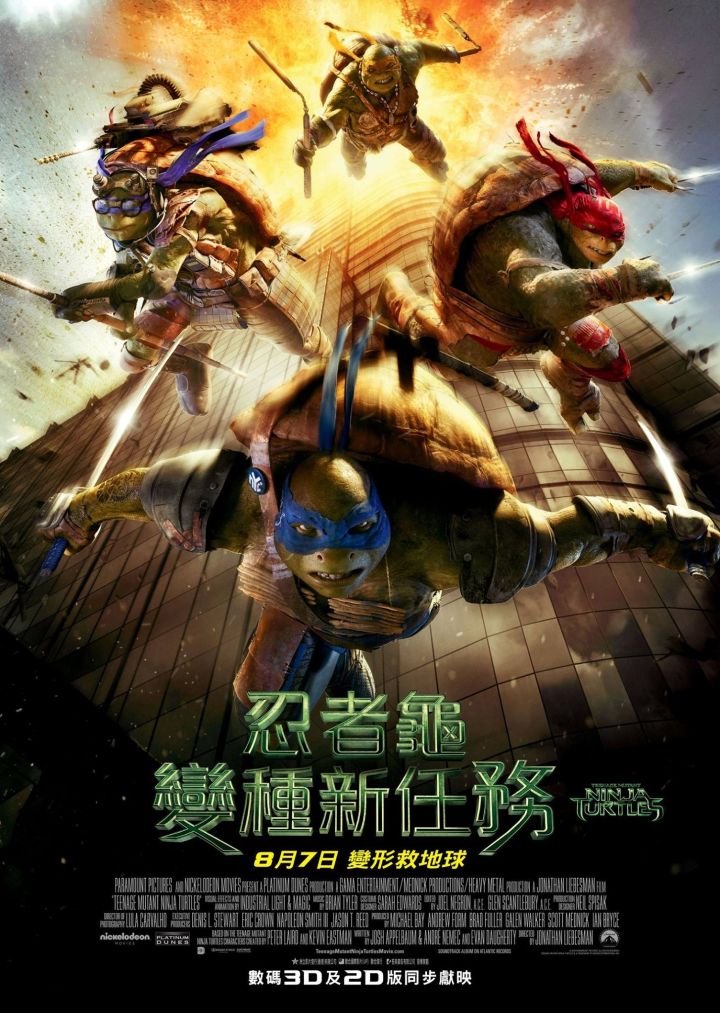
Mutant Ninja Turtles 2014

teenage_mutant_ninja_turtles_ver14_xxlg-720x1013OK so Rotten Tomatoes gives it a grilling but its a fun movie and pretty well done.  I’d be lying if I say its worth full price or 3D, but cor a matinee, which is all I and my son go to, its…well…fun.    It gets the tone right, neither too campy or too serious and the characters are, uh, well what can you say about a near seven foot, bipedal rat and turtles? The characters have to have lay it on thick personalities that was the way they always have been.  The TNMT’s are fun loving reasonably serious young guys.  The bad guys are villains with goons what can you add?  Megan Fox’s character is central, and she held the movie together.   Her O’Neal is not a shrinking violet, victim or Mz KickAss, for the plot she had to be a bit pig headed and very naive, but she was well cast and played it well.

We’d certainly go and see a sequel if it’s done as well and doesn’t have much competition.


Guardians of the Galaxy, go and see it!

hr_Guardians_of_the_Galaxy_film posterSo Marvel’s Guardians of the Galaxy is a fun movie.  If you want a fun afternoon or night out, go a see it, you’ll laugh and be amazed.  I love Groot and Rocket Raccoon the two CGI characters shown  in their own movie poster below.

There are many who are over the top about this movie, I think because it could have been awful and isn’t.  There is something about the movie that makes me hold back from saying Fantastic, but it is very, very good. There may be other things playing in, but  the pace was too frenetic the cutting too staccato for me to fully enjoy.   Also a lot of characters seemed to intimate some link to a deeper story that we didn’t get to see. An introductory movie set in a deep universe like Marvel’s may be prone to this and my ‘author’s bump’ maybe too sensitive to these things but these ‘issues’ kept me from getting as deeply engrossed as I did in Edge of Tomorrow and some of the other Marvel films.

But its a fun movie, go and root for Groot, Rocket and their pets.


grootrocketraccoon1


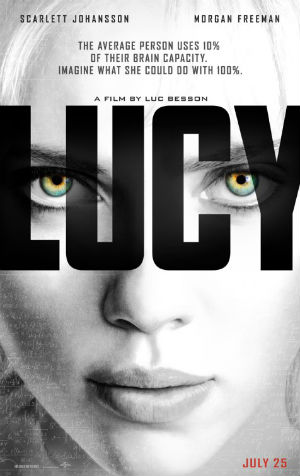
Lucy the Movie

Lucy_(2014_film)_posterLucy is a disappointing movie. That is not to say it is awful, but I could not argue with someone who said that it was awful.  For me the movie started out very well and was watchable throughout but it left me feeling like I had seen a Hollywood Horror, not the child of the Luc Besson, director of the movie The Fifth Element.   The movie feels like it was cut short.  Started out on a path like, if a bit less out there than, TFE but then got chopped short.  It as if the script was written around a very tight plot but instead of spending time fleshing out the story and the characters it was decided to just get something out the door as cheaply and quickly as possible.  I suppose that Johansson or others were not available for the time Besson needed to do a TFE like work.   Whatever it was this is a very disappointing movie, mainly because it had great potential.

The details:  the violence is what some called ‘over the top’ but unfortunately it’s what I call pseudo realistic; Lucy starts out as a believable type…and ends equally believable but without an audience leading transition ; while the Lucy UberHuman [LUH]is believable I think a more relate-able version was possible ; the LUH’s abilities are fantastical, over the top, a creepier, more understated version was  possible ; the plot is ultra simple and while the plot holes are there they don’t derail the movie ; [SPOILER ALERT] the bad guys are workmanlike if a bit too Bond-Goon-Squadish, but I really really wanted to evil surgeon from the early scenes to get terminated with prejudice ; the end is utterly anticlimactic the ‘happy’ ending wasn’t cheery and had no punch, the LUH metastasizes to another plane leaving behind the USB key fob to the universe, the confused boy toy police guy gets a text message from the beyond and the world goes on…meh.

Details of the details:

LUH’s creation: The crap about the utilization of the human brain was good as a way of thinking about human capacity but its scientific bunk, which spoiled the movie a bit for me.  The drug was TFE Beeson over the top (as was its introduction) but its derivation and supposed affect were not very convincing.  I’d have bought a material that increases intelligence by accelerating and reorganizing the brain, but requires constant new fill-ups or the user becomes a vegetable, it’s the first of a new family of bio-nanotech human enhancement drugs the Chinese mob has stolen, one vial of the stuff could infect hundreds or thousands, who would all become vegetables if they cannot get the fix… a trope matrix that could have been much more scary.

Violence:  I think that LUH had to use violence she had no time to explain.  The emotionless LUH had no compunction about using it which was funny the first time but troubling with no context.  Also the violence was too risk free, humans react to violence, modern training makes us hesitate but there are many among us who would react almost instinctively.  LUH did to some extent explain herself to the surgeon but the hole here was their reaction to her and the lack of a police response in the time it took to take out the bag etc…A couple of soliloquies or appologetic explanations to victims (even dead ones) would have helped and could even have been funny….

Emotionless: Emotions are chemical and triggered by autonomous systems, LUH could suppress them…believable.  But I lost any real human interest in the whole story when I knew she was essentially a machine with a hard stop use by date.  The appearance of the hurting, frightened, grieving old Lucy would not have been hard or out of place, her goodbye to her mother was only part of what should have been a thread through to the end.

LUH powers: Telekinesis, really? Mental control of electronics plays into my idea for LUH abilities but its just magical crap with the trope used.  With ability to control her physiology, and ultra fast processing she could have senses and reactions and strength way beyond the norm, and would have needed to eat like a horse (that was consistent in a way) she might be able to exude skin oils or pheromones with powerful effects, could heal herself fast, maybe even read minds if in contact with the target, etc, etc.  These effects and her having to think her way out of dead ends would have supported the simple story line.  The magical powers she exhibited should have been part of a movie with more complexity / depth in other areas, where those powers play are a way to keep the story moving fast….here they just truncated this already too simple movie.

Bad Guys: OK pretty good in a Bond Villain Goon Squad sort of way but still.  And what about the evil surgeon? he really needed his own poetic if gory end.

The ending:  A more effective ending would have been failure…the bad guys kill her, the bad guy’s die, maybe science guy and boy toy survive to grieve Lucy’s death.  Then maybe a hint that she did not fail but that she had made sure that the bad guys got sucked in and destroyed while the drug or whatever that created LUH will be treated like a mixture of nuclear weapon and Ebola.


Wired : Space photo of the day

20130720-092106.jpg

This image emphasizes the beautiful rays of Qi Baishi, in the top of the image. The crater was named for the Chinese painter, Qi Baishi, known for his whimsical watercolors. The extensive rays of the crater mimic such whimsicality, extending far from the impact, exposing new material across the scene. The bright ray system indicates that Qi Baishi is relatively young, compared to other visible features. Notice the lack of rays extending from the west of the crater. This asymmetry indicates that the impactor struck at a relatively low incidence angle from the west.

This image was acquired as a targeted high-resolution 11-color image set. Acquiring 11-color targets is a new campaign that began in March 2013 and that utilizes all of the WAC’s 11 narrow-band color filters. Because of the large data volume involved, only features of special scientific interest are targeted for imaging in all 11 colors.

More at: Wired : Colorful Mercury Rays