Space

20111130-230822.jpg

In, Through, and Beyond Saturn’s Rings

Image Credit: Cassini Imaging Team, ISS, JPL, ESA, NASA

Explanation: A fourth moon is visible on the above image if you look hard enough. First — and farthest in the background — is Titan, the largest moon of Saturn and one of the larger moons in the Solar System. The dark feature across the top of this perpetually cloudy world is the north polar hood. The next most obvious moon is bright Dione, visible in the foreground, complete with craters and long ice cliffs. Jutting in from the left are several of Saturn’s expansive rings, including Saturn’s A ring featuring the dark Encke Gap. On the far right, just outside the rings, is Pandora, a moon only 80-kilometers across that helps shepherd Saturn’s F ring. The fourth moon? If you look closely in the Encke Gap you’ll find a speck that is actually Pan. Although one of Saturn’s smallest moons at 35-kilometers across, Pan is massive enough to help keep the Encke gap relatively free of ring particles.

As you’ll note in the side bar one of my favorite sites is APOD Astronomical Picture Of the Day, the above picture from Saturn is from the APOD. the single largest segment of memory on my iPad is devoted to these pictures. I understand that a human’s limited senses would not see these views but they still haunt me with their beauty and inaccesibility. Here is wonder and beauty we cannot destroy.

Have to admit I’m a mite disappointed in humanity right now…hence the mooning over moons. We have a huge amount of capability and mountains of resources at our finger tips but we seem to have lost the magic sauce of leadership. I don’t know if we (humans) are going through a phase change right now or just hitting a rough patch or perhaps we have reached Lemming Stage (too many people period and some deep programming sets us at a metaphorical run towards the nearest metaphorical cliff.) I hope it’s no LS just a rough spot in the singularity….whatever that turns out to be.

Good luck Curiosity, let’s just hope you’re no cat.

20111126-230755.jpg

A United Launch Alliance Atlas V rocket carrying NASA’s Mars Science Laboratory (MSL) Curiosity rover lifts off from Launch Complex 41 at Cape Canaveral Air Force Station in Cape Canaveral, Fla., Saturday, Nov. 26, 2011. The rocket will deliver a science laboratory to Mars to study potential habitable environments on the planet. (AP Photo/Terry Renna)

20111126-231408.jpg

Graphic of the Mars Science Laboratory, an elite six-wheeled vehicle powered by nuclear fuel, is scheduled to launch at 10:02 am (1502 GMT) from Cape Canaveral Air Force Station in Florida atop an Atlas V rocket

The size of a compact car, nuclear powered, autonomous guidance, what’s not to geek love? Of course it’s a full press design very low fault tolerant landing system, albeit really cool, and probably warranted to work for years…exact opposite of the last two plucky cheap little explorers we sent. So I have to hope all goes well. This is not likely to be repeated for a decade if it goes thump.

Good luck Curiosity, let’s just hope you’re no cat.

SpaceX costs , and some remote observations…

Elon Musk in this update post is very publicly making the point that while his wealth enabled him to ‘launch’ SpaceX the prices they are charging are ‘real’ and sustainable over the long run not subsidized.  Seems that he is proving that when you are talking about certain classes of product America is still the leader, you just can’t carry old infrastructure, including old thinking, along for the ride. 

Had a look at Blue Origin’s website and their factory, the thing that strikes me about all of the eSpace companies is that they are quite modest in size, set up for clean, smooth, flexible manufacturing and have a modest work force. I assume that they have developed a significant network of supporting suppliers, small and large and do only key operations in house.   

They are using modern tools and techniques, informed by a huge legacy of knowledge and the tools that the legacy has created.  This is the sort of thing that America is very good at, it requires motivated people working in trust based teams, with accountability, bull headedness, hard headedness, willingness to fail and a refusal to let the risk of, or even the actuality of failure, to get in the way of progress.  Small entrepreneurial companies are infinitely better at this that big ones. Especially big ones with any ties to the gov’t/mil world and its utter aversion to risk or failure.

Minor Planets (all the stuff that isn’t one of the eight (no longer nine since Pluto got dissed)

The Minor Planet Center web site, a Smithsonian Operation, so pretty serious stuff, lots of info, just a scan of the lists could alter your view of the local environs we live in.  1200 plus potential dangerous asteroids….known and in the inner system today, tens of thousands of other bodies out there, ready to play interplanetary billiards if something really hairy this way came.  But mainly a very good resource for serious thought, serious business like eSpace objectives for mining, and for not so serious ventures such as SciFi.

Combo view from the fly by

A combo shows a sequence of images of the Lutetia asteroid at various distances before the closest approach of the Rosetta spacecraft in 2010. A rare opportunity to observe an asteroid at close quarters has unveiled a remarkable rock that seems to be a precursor of a planet, astronomers reported on Thursday.

So I found the article with the above picture (click through) fascinating,  dealing with an asteroid that got a fly by last year by Rosetta (ESA Spacecraft.)  “The astronomers calculate Lutetia to be 121 kilometres (75 miles) long, 101 kms (63 miles) tall and 75 kilometres (47 miles) wide.”  “Lutetia’s high density, at 3,400 kilos per cubic metre (212 pounds per cubic foot), its large size and its ancient surface make it different from any other asteroid studied so far, the studies said.”

This is Eros the first asteroid to be visited, “34.4×11.2×11.2 km in size 34.4×11.2×11.2 km in size” “Mean density 2.67±0.03 g/cm³ ”  or about 2670 kilos per cubic meter.

Eros Montage from Wikipedia...approximatly real color

 Below is Temple,  a comet visited by two spacecraft.  “Mean density 0.62 g/cm³ ”  or 620 kilos per meter.

Annotated images of Tempel 1 from two spacecraft.

Comparison of From Wikipedia: Deep Impact and Stardust photos of a smooth elevated feature on the surface of the nucleus showing recession of icy cliffs at the margins

 With this information it becomes obvious that the make up of the minor worlds is much more diverse than had begun to be thought.   Eros is pretty dense but still probably filled with voids, obviously Temple is pretty much a rubble pile, which astronomers think is true of other bodies. 

So Lutetia is too dense to be a rock pile or even void filled, it has to be as solid as a planet, they think it’s a left over planetesimal from the early creation of the solar system.   The only way it can be as dense as it is, is if it went through a molten phase. Given that a shell even a ‘few’ miles thick of rock provide a good insulator it is apparently possible that Lutetia has a molten core. 

Does that mean there could be differentiated materials in that crunchy coating?  It seems to be an obvious target for mining, where there is pretty much zero risk of cave ins.  What are the odds of a good distribution of useful materials for the space industrial infrastructure?   This may or may not be a valid mining target, but it points out some things to think about.


Why 5 Years?

‘Musk has a great point.’ when doing projections, part of my job, I know that I ‘should’ be able to project a couple of years into the future with at least some expectation of being close, but after 18 months you know it’ll be wrong. You can forecast five years out in general terms based on ‘momentum’ but you know that all you are doing is a version of ‘Moores Law’ which is more a market roadmap than anything else. This is more about tech-base support than anything else, and a form of jobs program, one that is needed at some level. But maybe a bit more flexible approach can be found.

20111025-075022.jpg

Not saying ULA is doing anything wrong, this is just old style mindsets setting policy.

Move along, nothing original to see here…. but maybe some interesting links..

As Russel Mead at Via Meadia writes to great effect the Great Loon, the Duck of Death is dead

And here is Russel Mead’s interesting take on protests etc.  A very insightful piece that hit home once more regarding something that puzzled me… ” There was a time long ago when political protest really mattered.  The Vietnam protests didn’t end the war (and didn’t keep Nixon from carrying 49 states against George McGovern in 1972), but they helped end the draft.  The civil rights movement led to some of the most profound social changes this country has ever seen.  Before that, there were labor and suffragette marches…”     ” But these days the old style protests remind me of political conventions: empty and pointless (though noisy and publicized) rituals.  “  And he draws a comparison to the conventions.  Once the conventions were important, before mass media and instant communications, but now they are just rituals the politic druidic class still hold.  In the old days a mass rally meant something, life for the working class was twice todays and wages closer to subsistence, and brutality was expected of the police, going to a rally meant something. Today it’s not much more than a smelly holiday.  Not to say that there aren’t some grievances and suffering…but OWS is more theater than struggle.   And then Amity Shales had this to say about what these folks want, vs what they need.

I am never going to be the blog-media-news miner that Instapundit is.  Here is the latest on the SLS fiasco from Rand Simberg, the Space Launch System is a works program, yes well paid and aerospace is effective economic multiplier but the money could be spent to so much better effect!

(edits, still not getting all of this right the first time)

Reuse, respin, start-from, even salvage: how is this bad?

20111017-171748.jpg

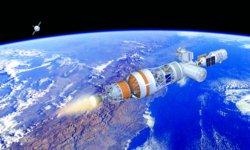
A concept to boost parts of the ISS either into Lunar orbit or to one of the Lagrange points. One negative comment pointed out the ISS requires a lot of support. Well there is no reason you can’t resupply and crew as needed instead of full time. The point here would be reuse of a facility that is already in orbit ( $aving in the tens of millions to billions in the process) and by that point would have fulfilled it’s original purpose (however vague that was.)

20111017-171804.jpg

Boeing is getting crap for suggesting the X-37 could be used as is, scaled up, or scaled and crewed. How can it be a bad idea to take a successful aerospace-craft as the basis of future growth. The original X-37 was intended for just this sort of scaling. O.K. it being Boeing does worry me, a little, but they have the scale, resources, focus (maybe) and balls (probably) to do this. My main concern is the crowding out of smaller eSpace players. But the eSpace crowd appear to have gotten their climbing claws dug in and seem to be on a flight path of their own. As long as BigB is climbing as well as, not instead of, I think we’re good.