
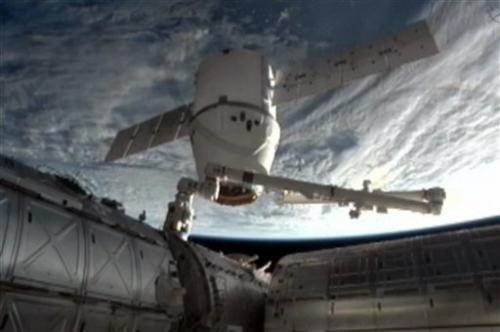
The Dragon Returns!
Reply

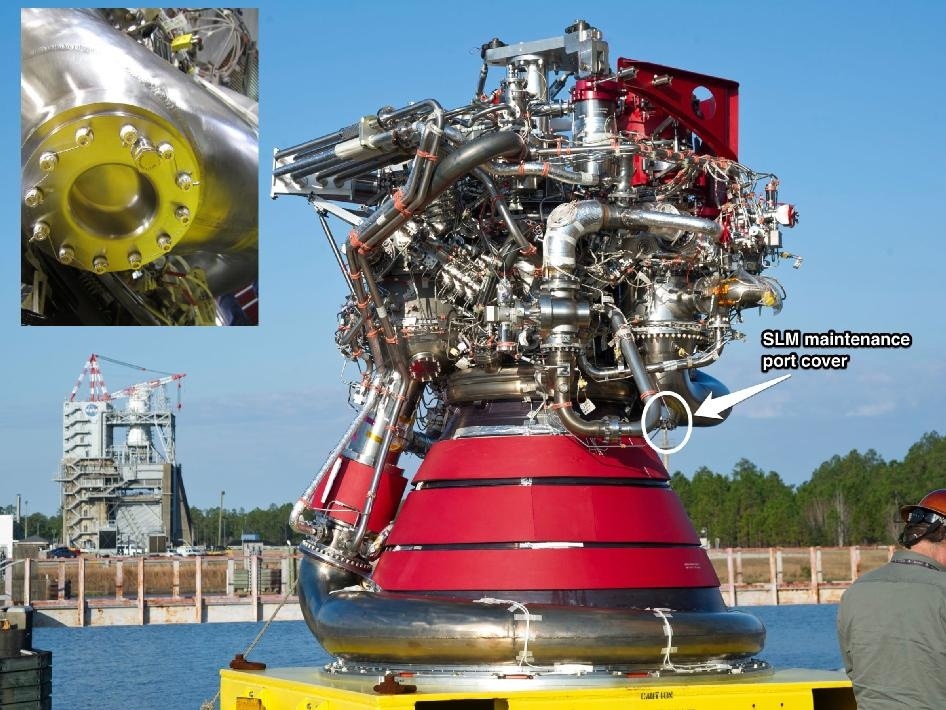
The J-2X engine before installation at the Stennis Space Center. Credit: NASA/SSC
Cool tech at NASA cutting manufacturing time from 9 months to 9 days. This is for the STS Senatorial(pork) Transportation System that I’ve no love for but proving tech like this is one of the ways that government R&D tax dollars provide broad value since success is not squirreled away as a trade secret.

Article in wired but others as well ultra cool use the knowledge, vision, wisdom of those who come to do.

From Phys.org website a Kickstarter project for a scaleable pulsed plasma propulsion system. How hot is that?
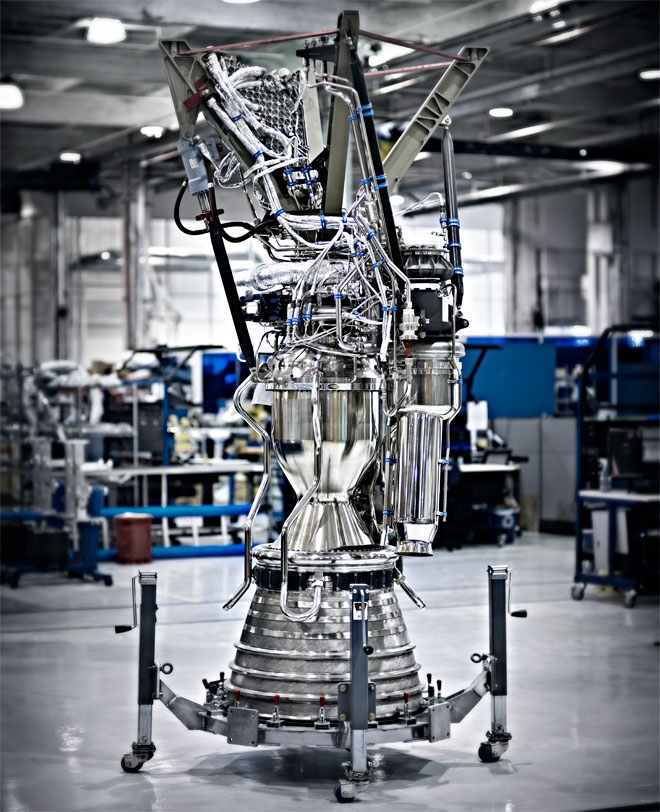
A Merlin engine
Photo: Art Streiber
Wired
There are far too many conservatives of various flavors who seem to have gotten lost in their own narratives. Fortunately we have some smart conservatives watching out for the overspill.
This is an excellent piece by Rand Simberg of Transterrestrial Musings blowing away a rather ignorant rant against NASA’s Space Station Commercial Access plans, which by the way is going well and attracting a huge amount of investment by pure play commercial space entrepreneurs.
I believe that what we are seeing today is what the first generation science fiction writers of the 30’s to 50’s predicted, it’s just taken a whole lot longer because the technology they thought would allow us to blast off (atomic energy) was shut down due to fears, founded and unfounded. It has taken us five decades to develop technologies that enable us to get to space inexpensively (in relative terms) burning tons of liquefied oxygen and kerosene.in what are essentially tightly controlled explosions.
Article in USA TODAY on the commercial crew access program. A good recap of the politics and status without taking sides at least not overtly.
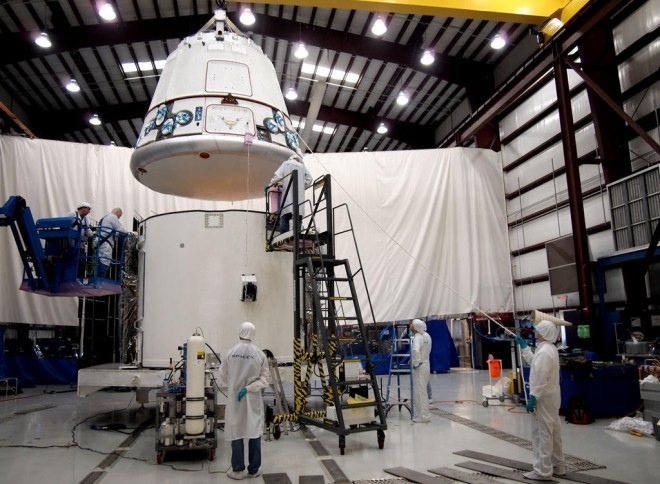
The picture below was part of this article about Space X’s intentions to develop a better launch abort system using the integrated rocket system on the Dragon Capsule.

The cool thing about this is that the old system was horribly wasteful and a danger in itself. This is the old and still standard way (from Wikipedia) a shot of the Apollo system under test, and that was just a larger version of what was on Mercury.

This is called a Tractor system, and it pulls the capsule off the booster in case of disaster. The rocket motor is attached to a shell which attaches to the base of the capsule protecting the capsule in case of rocket ignition. But for a successful, even survivable mission, now you have to discard the abort system during boost. And it’s an expensive and heavy piece of gear tossed in the sea. Even the Orion exploration vehicle, part of the SLS uses the same expensive and wasteful system.
Space X will make the rocket motors part of the Dragon, firing from the skirt area as you can kind of see in the picture at the top. This rocket motor will Push the capsule off the booster. It can also become part of the landing system, the intent is to make the Dragon a mixed mode lander, decelerating using rockets, heat shield, then parachute but finally landing under rocket power, this will allow for pin point landing in some reasonably remote and safe spot on land instead of at sea. In fact the Russians have used a rocket ‘cushion’ system for landing their capsules forever, but the Dragon will be a real landing system, not just a cushion.
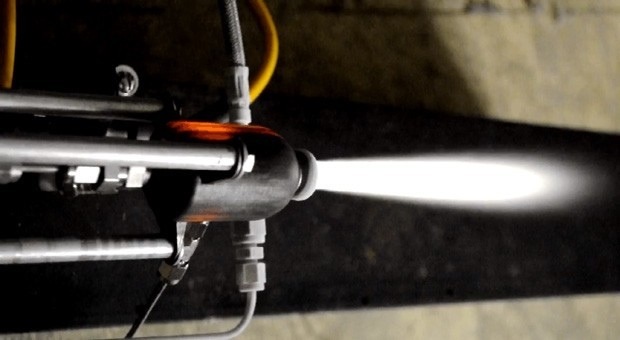
Below the Draco Rocket under test, and here the article in Wired that does a good job of explaining what’s going on in the picture. There is also video at Wired so enjoy.

Draco Rocket Test



 This World and Others