Smart lighting idea…but in some ways it’s back to the future…

20131106-233028.jpg

This diagram shows how the University of Cincinnati’s SmartLight can direct sunlight from the outside of a building (far right) to the inner part of a building and to a centralized harvesting- and energy-storage hub (far left). Credit: Anton Harfmann, U?
Read more at: http://phys.org/news/2013-11-smartlight-bright-idea-revolution-interior.html#jCp

Very cool but think about this, a century ago buildings had tall ceilings transoms, etc to duct light and air around, then we invented air conditioning and electric lights…and we got lazy. Sounds like the naked monkeys at it again.

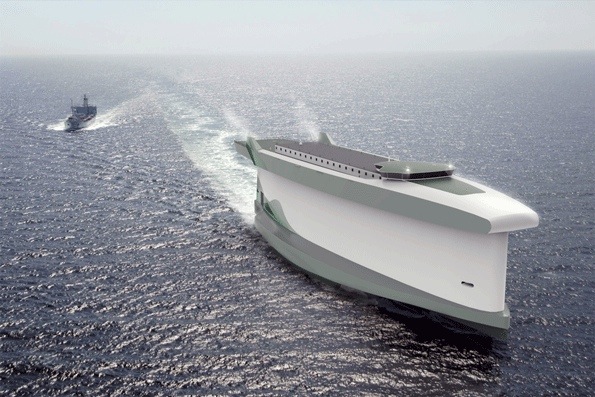
Interesting, a wind jammer for the 21st century

20131105-191412.jpg

The Norwegian Vindskip design from Lade AS uses a specially shaped hull to capture the wind and convert it into forward motion.

Natural gas fired Gas Turbines to get wind speed on the right ‘quarter’ and the combined wind speed provides a boost to get up to 60% fuel savings. All very well till you get in a real blow, it does look like it’ll be a bit of a handful in bad weather, it has big stabilizers like a sailing yacht so maybe it’ll work…anyway it’ll be a figment of computer simulation sthen tank testing for a few years yet.

SpaceX, first try at a return much closer to a success than a failure!

20131016-220849.jpg

Falcon 9 first stage burns an engine during a controlled descent to the Pacific Ocean. (Credit: SpaceX)

20131016-220619.jpg

Falcon 9 first stage in a controlled descent toward the Pacific Ocean. At this point, the stage was about 3 meters (9.8 feet) above the water. (Credit: SpaceX)

“SpaceX then lit the center engine for a single engine burn. That relight also went well, however we exceeded the roll control authority of the attitude control thrusters. This particular stage was not equipped with landing gear which could have helped stabilize the stage like fins would on an aircraft. The stage ended up spinning to a degree that was greater than we could control with the gas thrusters on board and ultimately we hit the water relatively hard.

from the picture above it looks like it came pretty damn close! WOW!

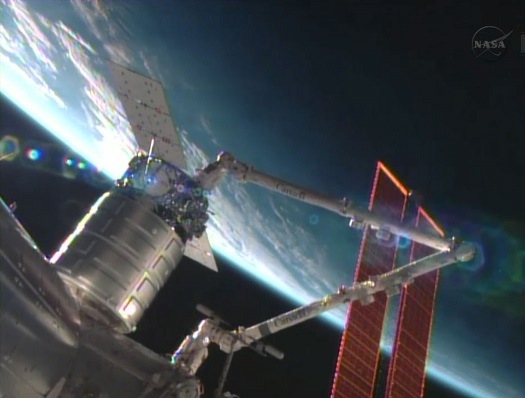
Cygnus docking signals another major eSpace success on the same day!

20130929-165531.jpg20130929-165546.jpg20130929-165557.jpg

An Orbital Sciences Cygnus cargo ship reached the International Space Station early Sunday and was captured by the lab’s robot arm. The successful rendezvous marked a major milestone for NASA and a program to fund development of commercial cargo carries to replace capacity lost with the space shuttle’s retirement. (Credit: NASA TV)

WIRED | Gig-ing, the next economy

20130917-191617.jpgThe Gig Economy: The Force That Could Save the American Worker? BY MICHA KAUFMAN, 09.17.13

Back to the future, the steady job ‘created’ by Henry Ford and his cohort will fade from center stage after about a century of centrality, making economists’ jobs even harder. My belief that this is already happening and is part (probably a tiny part) of the official jobless recovery problem.

Antimatter in space flight relevant quantities in 5 years!? Hot stuff!

AUGUST 30, 2013 Care of: Carnival of Space #317Billionaire Peter Thiel funds Positron Dynamics who are developing a 10 microgram per week antimatter factory

For planetary, early interstellar precursor and simple omniplanetary applications, ACMF (antimatter catalyzed fusion) exhibits the best performance. The reference case of a 1-year human round-trip mission to Jupiter with a 10 to 100 metric ton (mT) payload requires an antimatter quantity of 1 to 10 micrograms (μg). It appears as though this requirement could drop into the 1 to 10 ng range for payloads consistent with unmanned, planetary missions.

So fuel for a trip to Jupiter (in one year!) every week.

Spiders in Space! SpiderFab, a fabulous NASA initiative

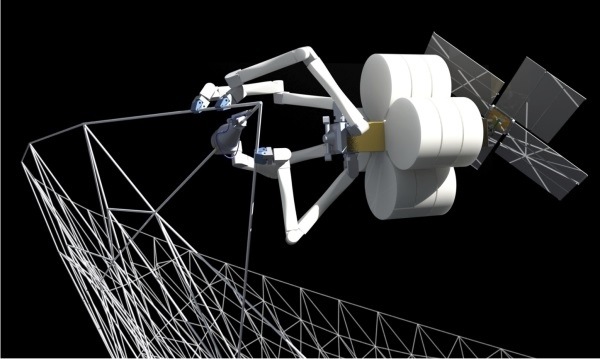
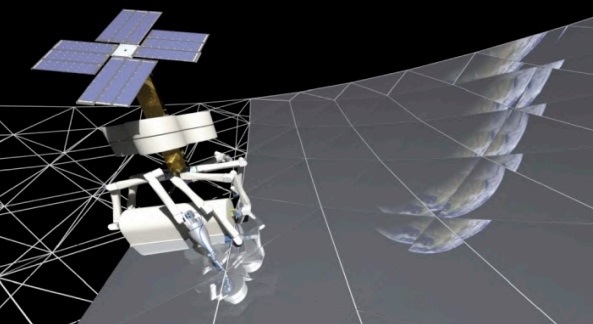
3ders.org a great 3 D printing site has this up…..TUI, a space technology development company based in Bothell, WA is currently developing “SpiderFab” to provide order-of-magnitude packing- and mass- efficiency improvements over current deployable structures and enables construction of kilometer-scale apertures within current launch vehicle capabilities.
20130830-101220.jpg20130830-101230.jpg
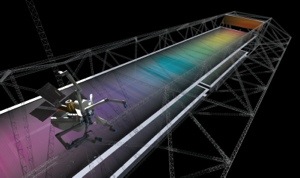
Trusselator
20130830-101401.jpg20130830-101411.jpg

SpiderFab project (credit: Tethers.com)

Go NASA!

Here is the TUI SpiderFab site

And remember this, Lego for the MIT set20130830-102928.jpg20130830-102946.jpg

Sometimes you’ve got to do it yourself to get it right…

Google is laying the groundwork to build its own self-driving car—without a major auto manufacturer as partner
By Christopher Mims August 23, 201320130825-123815.jpgGoogle Ventures reportedly invests $250 million in Uber By Jacob Kastrenakes on August 23, 2013
Just think……

The Tesla Model S Is So Safe It Broke the Crash-Testing Gear
BY DAMON LAVRINC 08.20.1320130825-123928.jpgTesla California sales beat Chrysler, Volvo, Cadillac, other big names
Electric car maker snatches 12 percent of luxury sports category in first half of 2013.
by Lee Hutchinson – Aug 23 201320130825-124049.jpg Will the success of Tesla’s Model S speed along a $35k model with a 200-mile range?
By Amir Iliaifar — August 13, 2013

Autonomous electric taxi’s ( call them Charles) can (like a regular taxi) drop off and pick up at the curb, dense pack park, and get a range extending charge…or go pick up another fare, while the original call is shopping, chatting, exercising, etc. They make a huge amount of sense for two user demographics, the elderly who are still able to get around but perhaps are no longer safe drivers or even more likely don’t want to or cannot justify owning a personal vehicle. Second, the urbanite non driver of whom their are many, Charles provides the same service the hordes of yellow taxis do today, with reduced emissions and probably cost along with improved safety. Charles can also provide a vastly more personalized limo type service to elder home clusters in the ‘burbs. Even for suburbanites Charles makes a one car or no car life style thinkable.