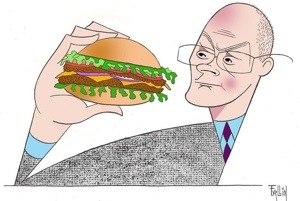
The world Often confuses plebiscites with democracy, as if the two were synonymous.

Democracy’s Dog Days by Victor Davis Hanson. August 26th, 2013

We all want democracy to thrive and flourish, but can it?

The Obama administration was quite pleased that the anti-democratic Mohamed Morsi and his Muslim Brotherhood had come to power through a single plebiscite. That confidence required a great deal of moral blindness, both of the present and past.

Like other once-elected authoritarians who believe that democracy is similar to a bus route — in the words of Mr. Erdogan of Turkey, once you get to your stop, you get off — Morsi had no intention of fostering the sort of consensual institutions so necessary for republican government. Almost immediately he gave a de facto green light to cleanse the government of his opponents, to Islamicize a once largely secular society, and to persecute religious minorities.

. It appears that the Turkish Erdogan government and the Islamic Brotherhood utterly hoodwinked the US State Department and Obama into believing a rather threadbare lie, about their support of broad base elective government.

But more basically, only fools believe that good government is simply about elections. We spout ‘democracy!’ and yet our own nation is a republic not a pure democracy and is vastly better off because of that difference. You have to believe in government by and for the people before plebiscites, elections, voting, matter much. Our nation has evolved towards more direct elections over centuries, decades, years, and it is clear some of this is good, but even in our highly stable elective system it is not clear all direct ‘democracy’ is good

US Bureaucrat’s are (largely) neither stupid or venal, their bosses, our Politicians on the other hand….

Bad Mandates
Francis Fukuyama at The American Interest

Bureaucratic dysfunctions can almost always be traced back to a badly-conceived mandate from the political principal to the bureaucratic agent, which prevents the agent from exercising an appropriate degree of autonomous judgment.
.
.
.
Under our system of government, private individuals are given standing in the courts to force agencies to implement laws. If local officials thought wheelchair ramps didn’t make sense, they would face a blizzard of lawsuits like the ones described by Loyola and Epstein, where a single individual named Theodore Pinnock forced every mom-and-pop store in little Julian, California to remodel their facilities to accommodate his wheelchair. So the problem here is not excessive autonomy, it’s complete lack of autonomy in complying with a senseless legislative mandate that takes no account of the need for discretionary tradeoffs against competing goods.

And why does the bureaucracy grow, because the politicians give it more, and more and more, to do….

Privacy IS Important! Without it Trust Withers and We Fester

WSJ: What We Lose if We Give Up Privacy
A civil libertarian reflects on the dangers of the surveillance state. By PEGGY NOONAN

READ IT ALL!
20130817-085410.jpg

Martin Kozlowski

I have to extract a lot of the piece, it discusses the issues much better than I can:

What is privacy? Why should we want to hold onto it? Why is it important, necessary, precious?

Is it just some prissy relic of the pretechnological past?

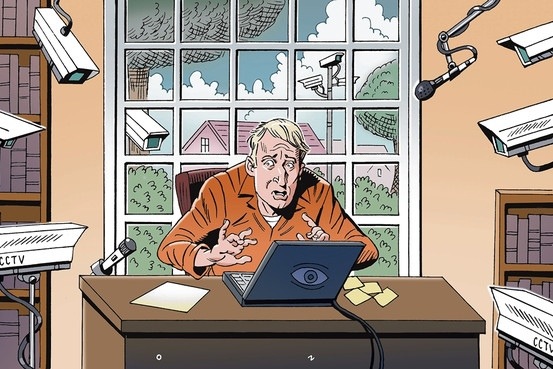
We talk about this now because of Edward Snowden, the National Security Agency revelations, and new fears that we are operating, all of us, within what has become or is becoming a massive surveillance state. They log your calls here, they can listen in, they can read your emails. They keep the data in mammoth machines that contain a huge collection of information about you and yours. This of course is in pursuit of a laudable goal, security in the age of terror.

Is it excessive? It certainly appears to be. Does that matter? Yes. Among other reasons: The end of the expectation that citizens’ communications are and will remain private will probably change us as a people, and a country.
***
Among the pertinent definitions of privacy from the Oxford English Dictionary: “freedom from disturbance or intrusion,” “intended only for the use of a particular person or persons,” belonging to “the property of a particular person.” Also: “confidential, not to be disclosed to others.” Among others, the OED quotes the playwright Arthur Miller, describing the McCarthy era: “Conscience was no longer a private matter but one of state administration.”

Privacy is connected to personhood. It has to do with intimate things—the innards of your head and heart, the workings of your mind—and the boundary between those things and the world outside.

A loss of the expectation of privacy in communications is a loss of something personal and intimate, and it will have broader implications. That is the view of Nat Hentoff, the great journalist and civil libertarian. He is 88 now and on fire on the issue of privacy. “The media has awakened,” he told me. “Congress has awakened, to some extent.” Both are beginning to realize “that there are particular constitutional liberty rights that [Americans] have that distinguish them from all other people, and one of them is privacy.”

Mr. Hentoff sees excessive government surveillance as violative of the Fourth Amendment, which protects “the right of the people to be secure in their persons, houses, papers, and effects, against unreasonable searches and seizures” and requires that warrants be issued only “upon probable cause . . . particularly describing the place to be searched, and the persons or things to be seized.”

But Mr. Hentoff sees the surveillance state as a threat to free speech, too. About a year ago he went up to Harvard to speak to a class. He asked, he recalled: “How many of you realize the connection between what’s happening with the Fourth Amendment with the First Amendment?” He told the students that if citizens don’t have basic privacies—firm protections against the search and seizure of your private communications, for instance—they will be left feeling “threatened.” This will make citizens increasingly concerned “about what they say, and they do, and they think.” It will have the effect of constricting freedom of expression. Americans will become careful about what they say that can be misunderstood or misinterpreted, and then too careful about what they say that can be understood. The inevitable end of surveillance is self-censorship.

All of a sudden, the room became quiet. “These were bright kids, interested, concerned, but they hadn’t made an obvious connection about who we are as a people.” We are “free citizens in a self-governing republic.”
.
.
.
Mr. Hentoff’s second point: An entrenched surveillance state will change and distort the balance that allows free government to function successfully. Broad and intrusive surveillance will, definitively, put government in charge. But a republic only works, Mr. Hentoff notes, if public officials know that they—and the government itself—answer to the citizens. It doesn’t work, and is distorted, if the citizens must answer to the government. And that will happen more and more if the government knows—and you know—that the government has something, or some things, on you. “The bad thing is you no longer have the one thing we’re supposed to have as Americans living in a self-governing republic,” Mr. Hentoff said. “The people we elect are not your bosses, they are responsible to us.” They must answer to us. But if they increasingly control our privacy, “suddenly they’re in charge if they know what you’re thinking.”
.
.
.
What of those who say, “I have nothing to fear, I don’t do anything wrong”? Mr. Hentoff suggests that’s a false sense of security. “When you have this amount of privacy invasion put into these huge data banks, who knows what will come out?” Or can be made to come out through misunderstanding the data, or finagling, or mischief of one sort or another. “People say, ‘Well I’ve done nothing wrong so why should I worry?’ But that’s too easy a way to get out of what is in our history—constant attempts to try to change who we are as Americans.” Asked about those attempts, he mentions the Alien and Sedition Acts of 1798, the Red Scare of the 1920s and the McCarthy era. Those times and incidents, he says, were more than specific scandals or news stories, they were attempts to change our nature as a people.

Then there is a paragraph were I may part ways in degree if not philosophy…

What of those who say they don’t care what the federal government does as long as it keeps us safe? The threat of terrorism is real, Mr. Hentoff acknowledges. Al Qaeda is still here, its networks are growing. But you have to be careful about who’s running U.S. intelligence and U.S. security, and they have to be fully versed in and obey constitutional guarantees. “There has to be somebody supervising them who knows what’s right. . . . Terrorism is not going to go away. But we need someone in charge of the whole apparatus who has read the Constitution.”

That ‘someone’ in charge and a faint subtext that there is some level of relaxation of the constitution that may be valid bothers me more than a little.

Advances in technology constantly up the ability of what government can do. Its technological expertise will only become deeper and broader. “They think they’re getting to how you think. The technology is such that with the masses of databases, then privacy will get even weaker.”

Mr. Hentoff notes that J. Edgar Hoover didn’t have all this technology. “He would be so envious of what NSA can do.”

As above, it is going to get easier to dive deeper, MINORITY REPORT posited ESP for preempting crime. It’s not impossible that soon technology could do the same thing…with the same problem that some minority of the ‘targets’ would never have acted on the urges, ideas, or impulses that got them preemptively targeted…indeed we are undoubtedly killing ‘innocent”terrorists’ today, some who might have turned away if they had not been evaporated.

The terrorists have won if they twist us into some distorted remnant of ourselves or worst themselves. And one of the things they hate most about us and understand the least is our assumption of trust…I trust that another may be different, think different, have faith different from me and mine but I trust them (within reason) to hold certain things dear…

Consequently I’m a bit troubled by any assumption that we need some huge and empowered organization that is cut out of the normal mechanisms of governing. Yes we have to have to use these tools but if they cannot be used without violating basic rights one of which is an assumption of innocence, then they should be used in the main to figure out how they can be defeated so others cannot use them against us, and their own people…

I do not understand the fear that drives so much of this, the US stands astride the world and yet we do not rule. Instead we cry at others pain and try to do the ‘best thing’ we can, often to the detriment of ‘the easy thing’ or even ‘the only thing.’

OK the ‘intelligentsia’ (or demagogues, ideologues) across the rest of the world often deride us, let them, it not us trying to emigrate there. OK other places do ‘this,’ ‘that’ or ‘the other’ better, we copy the best and ignore the rest, and none of those ideas would work as well broadly across a geography and citizenry as richly diverse as ours!

WSJ || Sequester is bad medicine But the only medicine for now

20130812-155542.jpgLove the cartoon, yay WSJ!

WSJ OPINIONAugust 11, 2013, 6:18 p.m. The Budget Sequester Is a Success
The Obama spending blitz is over and the deficit is heading below 4% of GDP

This is about the only way we’re going to cut budgets in this environment, I think it is unrealistic to expect congress to manage its way out of this given the inability to horse trade and really sock it to any constituency, given the rules of the game as played today. The big remaining problem is the locked in promises inherent in the big ticket entitlements.

Captains Journal || Counterinsurgency Cops … An ugly trend spawned by war-action porn and misplaced priorities

20130812-091007.jpgOregon Dept. Transportation
Captains Journal || Counterinsurgency Cops (hat tip Instapundit)
This is grim reading, not because the ‘news’ is new but because it puts it in an a societal-political context that says its most likely an accelerating trend. Though perhaps self limiting since the abuses such as Swatting, stupid mistakes, and utterly inappropriate response will eventually cause a backlash, but that could take decades.

Look at the utterly predictable results of the of get tough on crime cycle ( ‘three strikes,’ ‘mandatory minimum sentences,’ ‘federalization ,’ ‘punitive confiscation,’and ‘layering,’) has had; unsustainable prison population, increasing numbers of utterly harmless pseudo criminals behind bars for years, turning rowdy youths into hardened criminals or near non persons, etc.

Now decades of a ‘war on drugs,’ war on this, war on that, failed progressive policies, knee jerk conservative reactions, increasing control of policy by the actors with fingers in the game (public service unions, prosecutors, activists, local politicos, etc) etc, has left us with a crushing burden of law, regulation, tax, and in general government infrastructure…

We saw this happen with the original prohibition, then people were smart and aware enough to realize the ‘cure’ was a feel good bandaid that drove the rot deeper.

This sort of crap: no tolerance, prohibition, cover your ass, take no chances (and that is what this sort of behavior is, in a POLICE force for crying out loud!) degrades the very society it is purporting to support, eroding the penumbra of trust and lawful-ness that our society has depended on to be the most productive and dynamic in the world.

The above is even more worrying when taken in the appropriate context of the surveillance state + anti terrorism infrastructure post 9/11. The original impetus was understandable, the respons well intentioned, sometimes noble, but out of proportion (the American habit of overwhelming firepower) to the original problem which was misdiagnosed, misunderstood, and/or fearfully/willfully overblown. Now we have huge infrastructure in place that is apparently doing nothing…and folks, usually with some level of good intention, want to make use of all that ‘stuff.’

Megan McArdle // Property Forfeiture laws, license to steal?

Bloomberg// Megan McArdle // How the Lone Star State Legalized Highway Robbery
I think the title’s perhaps Acela corridor biased but the issue is real, very, very, real and localizing it is a dis service, this is a problem all over the US and one of the reasons we should fear the surveillance state.

Fences MAY improve neighbors but Walls, however ‘great,’ DO NOT

20130713-174112.jpgThe Atlantic: The Great Wall of Texas: How the U.S. Is Repeating One of History’s Great Blunders
Great little piece, good use of references to Rome, China and Great Britain’s Empire. The title is a bit ExcelaCorridor sneering but that’s the editors fault. I am proud to have been born in Britain and be a Naturalized US citizen. I’m also a wonk-geek-nerd-intellectual-libertarian I think the sealing of the border is fantasy/pandering/bunk, a channel for more neo graft cronyism.

We need immigration reform and border security but in a nation the size of the US, physical barriers are a boondoggle. Reform immigration and border security becomes easier since the vast huge immense majority of folks coming will want to come through the check points and follow the rules. The guys out in the desert, at sea or in the booneys looking to cross without being checked will be much easier to spot.

Too complex an issue you say? Not so say I:

  • 3 types of entry visas, you to apply in person, provide a little information, name, age, place of birth, current residence, phone/cell phone/eMail address, one or two people of some repute who will vouch for you ( if you apply for citizenship up front it’s a bit more complicated, see below.)
  • Visitor: One year, do anything you want, report your location via web when you move, pay taxes, work if you want using your visa # in lieu of SSN. SocialSecurity/WorkersComp ‘fees’ held in accounts with no interest, returned to you as lump sum after you exit and apply for it through US consulate in your country of citizenship. Subject to immediate deportation on conviction of a felony, if you are incarcerated in the US in full you are still subject to deportation. You can convert to a work visa or ask for a citizenship review at any time. If you overstay without upgrading it is an automatic felony and deportation, you are not a citizen though basic constitutional law applies you do not get trial by jury.
  • Work: unlimited stay, once a year report your location in person at any government office state or federal, use your visa number in lieu of a SSN pay all taxes. SS, MC, etc, fees go in a holding account with no interest, convert to regular SS, MC if you retire in the US or if you become citizen, otherwise returned to you as lump sum after you exit and apply for it through US consulate in your country of citizenship. Subject to immediate deportation on conviction of a felony, if you are incarcerated in the US in full you are not subject to deportation. You are not a citizen though basic constitutional law applies you do not get trial by jury regarding deportation. Time on a work visa does not lead to citizenship, you can ask for a citizenship review at any time.
  • Citizenship: you can ask for a citizenship review at any time, when applying for a visa in your country of origin or once in the US. Once approved for a citizenship track visa you are still effectively on a working visa but after seven years you can apply for citizenship and after a second review (same process as the first one) you will be approved for naturalization. The process is fee based and administrative, you will pay a fee for a background check to be carried out by US Immigration not a contractor. A US state or federal judge will be chosen at random in your state of residence, to review your case and approve disapprove. You can apply more than once, after a one year wait, you always pay the fee. If you object to a negative ruling you can pay for a court hearing with another Judge and a lawyer from immigration (two hours of J&L, a one hour hearing and a letter response, Yes/No), you can have a lawyer as well at your own expense, only one review a year. Have to be eighteen to ask for citizenship in your own right. A minor less than 12 becomes a citizen if one or both parents become one and ask for it. A minor over 12 cannot become a citizen until he/she is eighteen but if one or both parents have become naturalized citizens in that interim the child can ask for and immediately receive citizenship as long as they pass the administrative hurdle
So what about large number of illegals in the US, what have you done to discourage illegals:

  1. make it illegal to be in the us without a valid visa#
  2. Most folks come to work and want to be treated fairly, as a legal you have most of the protections of a citizen
  3. Those already in the US will be able to apply for a work visa and will have limited immunity since it is currently not illegal to be in the US without a visa. However you will be required to return to your country of origin ( or if you are a refugee apply for asylum ) before you can apply for citizenship track
  4. require employers to use eVerify for SSN, Visa#, for employees or contractors, make the system extremely simple to use. For example: as an employer or employers agent, you enter your number, it flashes your picture on the screen and the employee taps in his/her number and their picture flashes up, you hit confirm, you are done.
  5. failure to eVerify is subject to stiff fines and public shaming

What about quotas, dumping, the hoards who will flood in, all those aliens? You wail…and let’s get this right this what helps give zombie flicks their grist these days….

  • I would get rid of quotas fo awile and see what happens, but keep the quotas for those coming by boat or plane if you must but simply enforce the visa at the land boarders
  • no this won’t stop all the tramping across the boarder but will make it much less prevalent and industrialized
  • most immigrants come to work and plan on going home, it was more than a decade before my parent’s realized they didn’t want to go back, and it was near run a few times
  • Immigrants (other than a tiny fraction of a sliver) want to make a better life for themselves
  • if they stay it is to make America their home and a better place for their children
  • make it easier to come and go and you will find the flow goes both ways
  • population growth drives economic growth, US natural pop. growth is nearing zero even with lots of youngish immigrant, more would be better for us not worse
I’m not sure why a law implementing the above takes more than five to ten pages, the regulation details will be much longer that’s what bureaucracies are for, but with a simple law comes simple administration. In general a WVisa holder should be treated as a US citizen get rid of layers of special rules make it easy to comply, make it worth complying. But over all – KISS – keep it small and simple…

ViaMeadia // The Miracles Wrought by Price Transparency

Read more at: The Miracles Wrought by Price Transparency

A surgery center in Oklahoma has started a bidding war by offering drastically lower prices than other providers and posting them online. The center describes itself as “free-market loving”—an unorthodox but welcome branding for a health care provider. The evidence of its success, however, is eye-popping. Where some hospitals charge more than $16,000 for a breast biopsy, Oklahoma Surgery Center charges $3, 500, according to a local Oklahoma news station. And that’s just one of many impressive examples.

Read more at: IndyStar: Abdul: Why our health-care system needs a single-payer – you

The recent move by the Obama administration to delay implementation of the employer mandate portion of the Affordable Care Act means this is the perfect time to have a grown-up discussion about how we deliver health care in this country. As a free market-conservative, social-libertarian political pundit, I am convinced more than ever that it is time in this country for a single-payer health care system.

Get rid of employer ‘health insurance’ go with health savings plans and catastrophic medical insurance AND PUBLISHED PRICING then we at least know what the real price is and stop paying for so many empty suites…

On a very related note, at least in my mind: There is a great debate about the collapse of the demand for lawyers and the issues with ‘Higher Ed’ payoff vs price in general outside of core STEM. But as a practicing engineer, business development type I have to tell you that one of the most pernicious problems in today’s world is an over supply of pure play MBA’s, business school PhD’s, Operations consultants, etc, etc, et-bloody-cettera. I’m not saying that the tech types know all, do all, but when they are ignored the company ( practice, clinic,….. ) in which they work becomes a zombie…and as we all know zombies can win in the short run, even proliferate, but in the end they either rot out or pull down the society (economy) around them.

The American Interest // Egypt, we have no idea…

The American Interest /July 1, 2013 / Adam Garfinkle / Abdel Fattah al-Sisi—Memorize That Name
Read more at: http://blogs.the-american-interest.com/garfinkle/2013/07/01/note-to-clueless-msm-types-abdel-fattah-al-sisi-memorize-that-name/#sthash.aMzX3wZw.dpuf
Lots of deep insight for those who want it, along with a bit of ‘I told yo so.’

This was an interesting passage and a key to why this whole region is so utterly foreign to many of us who wish for better things:

Years ago a clever and truth-telling fellow named David Lamb devised what he called the IBM syndrome to describe political culture in Egypt and the Arab world. The “I” stands for “inshallah“, may God will it: in other words, fatalism. The “B” stands for “bokr“—tomorrow morning, or just tomorrow: suggestive of an extremely elastic, pre-modern perception of time, vaguely akin to some uses of the Spanish word mañana. The “M” stands for “malesh“, which is untranslatable, but which kind of means “whatever”, “never mind” or “fagetaboutit”: not my job, someone else will take care of it, or not, who cares? What difference does it make?

It is also a bit frightening to realize that there are examples of this sort of mindset in ‘the west’ and that it’s a plague…