Better Pharmaceutical Manufacturing via Continuous Processing | MIT Technology Review

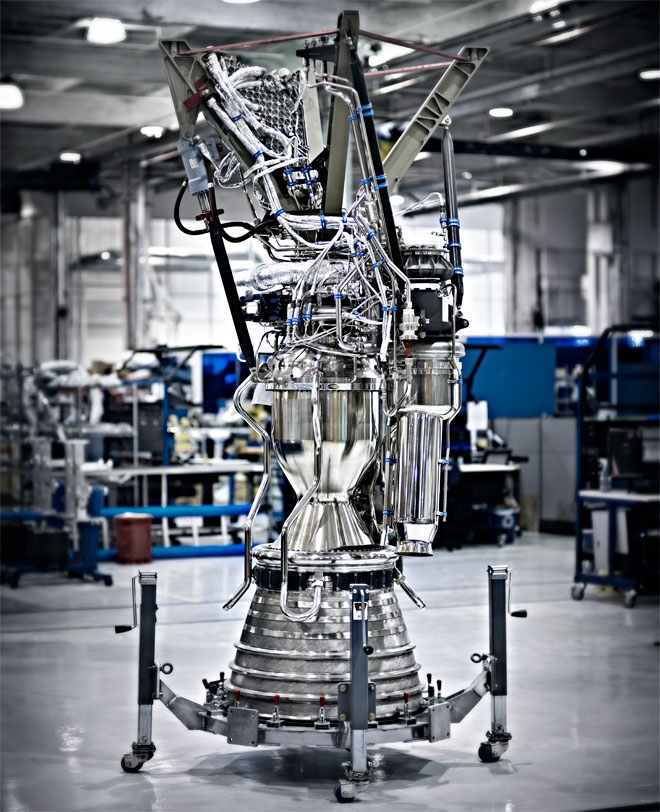
Better chemistry: To produce drugs in a continuous-manufacturing method, MIT engineers had to develop several new pieces of equipment, including this reactor, which enabled a faster reaction and eliminated the need for a toxic solvent.

This is a big breakthrough, this is part of the maker revolution though a long way from maker bot.  In the long run such a system can be miniaturized and stocked with a range of precursors which will allow a single system to produce any number of different drugs on demand. In the early days such systems will be huge and hugely expensive but will make drug exploration exponentially quicker and less expensive. In the long-term the system makes the whole pharmaceutical infrastructure we have today obsolete…except that it will probably increase the need for scientists, physicians specializing in individualized medicine, etc, etc. Old jobs go away new ones come on-line. And the new ones will generally be much more about the outer edges of technology and the connection between people and between people and their machines, instead of embedding people as cogs in the machines.

The article is pretty high level but a good quick read on the topic.

The Apple Machine

I think there is some weariness in regards to apple product intros these days, I sense that the press (in general { there have been folks who’ve kind’a felt this way for a while}) is actually beginning to feel a bit used by Apple (and they are probably right though they only have themselves to blame.)  I feel the same way though I totally blame the press for not having the guts, smarts and knowledge to branch out more generally into tech reporting, there are vast areas of technology that are poorly covered and even ignored because they are boring old tech.  Much of this old tech is boring because no one reports on it and promotes it like Apple promotes their products…making it easy for the press to hang on like lampreys.

Apple uses the press as an advertising amplifier, its one of the things that the other tech companies have either lost or never had the ability to do.  It costs a lot to be a showman but it pays back, however its probably impossibly hard to quantify the cost or the payback to a financial guy before you go and do it.  Jobs knew what he was doing and how to do it in his bones, and inculcated it in the bones of his legacy but the MBA’s hate anything that is not quantifiable…this aborts new ‘Apples.’  But even at Apple, without Jobs, there is a good chance that the MBA’s will chip away at the Apple marketing/sales/advertising/etc machine in the name of profits and kill the goose that lays the golden eggs.

Sea Star indeed

Dornier Seastar CD2, developed by the son of the original Dornier and the grandson is now looking for venture capitalists to build it in the US.  Designed for the Baltic and Oceania as a utility small airliner to provide access to islands and sections of islands with no airport but lots of water access.  Normal 9 passenger 2 crew, up to 12 passengers.  The latest seaplane designed in the world…hopefully not the last.  Seaplanes are always beautiful in their functional ugliness and romantic (as in day dreaming of adventure) by nature.

And Back to Space | APOD | A Ghost in Cepheus

20121031-135420.jpg
VdB 152: A Ghost in Cepheus

Image Credit & Copyright: Stephen Leshin

Explanation: Described as a “dusty curtain” or “ghostly apparition”, mysterious reflection nebula VdB 152 really is very faint. Far from your neighborhood on this Halloween Night, the cosmic phantom is nearly 1,400 light-years away. Also catalogued as Ced 201, it lies along the northern Milky Way in the royal constellation Cepheus. Near the edge of a large molecular cloud, pockets of interstellar dust in the region block light from background stars or scatter light from the embedded bright star giving parts of the nebula a characteristic blue color. Ultraviolet light from the star is also thought to cause a dim reddish luminescence in the nebular dust. Though stars do form in molecular clouds, this star seems to have only accidentally wandered into the area, as its measured velocity through space is very different from the cloud’s velocity. This deep telescopic image of the region spans about 7 light-years.

Apple’s iPad mini, its a steal…

There are arguments that Apples pricing power is limited and that the cost of making a premium small pad like the mini is something like 200 meaning that they break even at somewhere between 250 and 300 considering distribution and profit.  There were arguments for a 250ish (essentially subsidized) and 300ish (bare profit.)  Whereas the base 330 (ok 329 but don’t get me started on the last 9 pricing phenomenon!!) supposedly provides Apple with its traditional high profit margin.

Now this seems to beg the question how do these folks really know Apples costs?  Yes its a public company but to be honest there are a lot of details hidden in the financials that are really hard to parse. Apple is highly profitable but it also has very high costs relative to its competitors who are either one shot wonders or whose HW / OS work is subsidized by a primary line business which the machine; Google-Nexus tab, Amazon-Kindle, Barnes&Noble-Nook, are important marketing&sales outlets, not fundamental products as products…as much as some chattering set blowhards try to conflate the business models.

The iPad mini is something of a steal, if 200 is the cost of a good 7 in screened plastic housed small pad .  Why do I say this?:

  1. The above machine might have a higher resolution…but to be honest resolution is not the end of the matter, it enhances a screen, makes a small screen look better,  ut it does not solve the problem that you have to hold a smaller screen closer or display less info to make it readable at all.  And when you are a mature adult the eyes are not so good no more…so a 7.9 screen 40% greater area with the same resolution is (probably) a better deal.  And now one has to light up 40% more area so the battery has to have a bit more capacity, etc.
  2. The system has all the sensors including the reasonably good front and backside cameras of the bigger brother, which none of the smaller competitors match.
  3. It also offers a decent processor chip that has proven its chops on other machines making it a smooth and reliable operator
  4. It’s almost as light and compact as some of its smaller rivals because Apple traded bezel for screen to make it ‘handable’ and thus much more of a reading machine in competition with the near pure readers.
  5. It has universally praised design and build standard and remarkable ruggedness (that’s a projection obviously.)
  6. It has the AppStore infrastructure &
  7. It seamlessly integrates with all the other iGizmos from Apple (of which my family has many.)
  8. It’s a good size and capability set for children with their smaller fingers, lower strength, sharper eyes, etc.
  9. At 329 its a better deal for the K-12 educational market and oh by the way its big brother and the rest offer a grown up infrastructure for teachers.
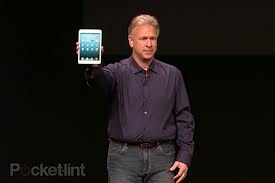
I’m certainly going to buy one and it won’t be a low-end unit, though I will also in the near future buy one of the new-new-iPads, with the understanding that its possible if not likely that Apple will upgrade the product again in 6 months.

Why is Apple doing this? It wants to dominate the space in most people’s minds like it dominates the smart phone, standard tablet, one piece desktop, and ultra-portable markets. It has moved sharply into these markets (which were not at the time particularly active) and dominated with yearly product refreshes of significance reinforced with a masterful media circus strategy.  They are late to the game in the small pad market having at first seen it as a value only market, they stayed out till they figured out how to roll it up into the Apple iOs business, which I think they have as explained above.

New Post 1 iPad First

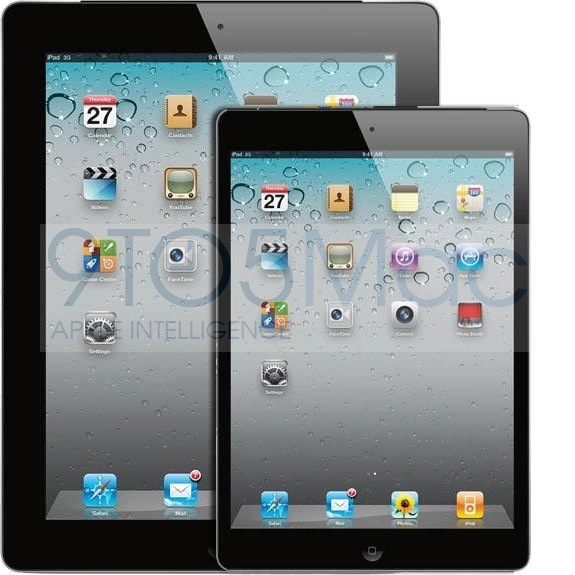
iPad Mini Breakout ideas that seem really unlikely:

  1. It should have 2 (two) screens, one on the back in e-ink for pure reading and the regular one of the front for all the other things one does with an iPad. The reading screen should be able to run when the front screen and the radios are all shut down due to low battery power.
  2. It should have the same screen ratio as the iPhone 5 making it newer and svelte. 

Two worst decisions the new management could have made:

  1. offer the Mini as a Touch Maxi, i.e. without 4G
  2. cheapen it by taking out bluetooth or the higher memory options

What I expect:

  1. iPad 2 resolution machine with retina pixel size.
  2. iPad 2 cpu and gpu maybe a bit better
  3. Light with narrower side bezel, making it look like a large iPod Touch
  4. A very inexpensive basic unit but a pretty much fully rigged top end model that will offer compact footprint as competition
  5. iPhone 4 level camera on the back or better (Apple has realized that they have the point and shoot market at this point.)
  6. iPad 2 will be phased out