Air Force Mini Shuttle the future Swiss army knife of space

20111206-181440.jpg

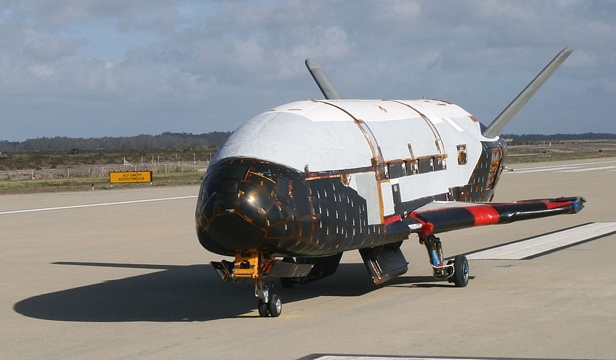
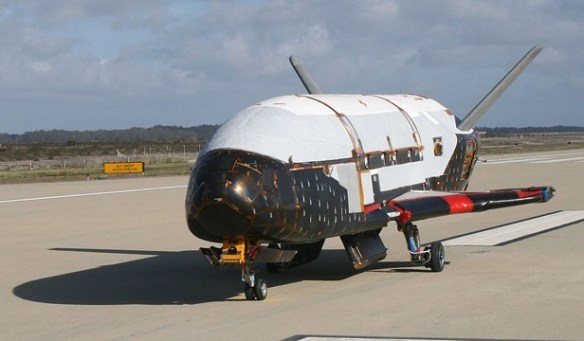
In a testing procedure, the X-37B Orbital Test Vehicle taxis on the flightline in June 2009 at Vandenberg AFB, Calif

The Air Forces X37B autonomous mini shuttle has proven a great success. The first prototype orbiting for 9 months and then returning safely. The second unit is currently at 10+ months. Also the craft have shown that they are very maneuverable in orbit and very hard to keep track of from the ground even by pretty sophisticated observers. Now The AF is talking about an X37C that could carry six passengers. But it would still be autonomous, i.e. the passengers are passengers not pilots. To me that is probably a rather weak cover/secondary use. Most of the craft would spend most of their lives with no passengers, doing an array of important tasks. I think the AF like s the idea of a more ‘drone’ like operating profile, multi use(refuel, recovery, small launch, medium duration observation, etc) able to upgrade, lower orbit so less massive ‘optics’ for any class of objective. This would be the true space fighter, not a combat vehicle, but a platform that can do almost anything almost anywhere (in orbit) on very short notice without giving away the mission just by its shape/launch orbit.

Of course they need to lose the expensive aeroshell, it was necessary I assume to keep from having to do something even more expensive with the Boosters control laws, but it sure looks expensive, and for the six person version would get pretty bulky. Of course a 6 person crew though the same as the shuttle does not mean a shuttle scale vehicle, Shuttle was a mixed cargo freight hauler most of its size was for cargo I don’t the X37C will be much more than 2x maybe 3x the size of the diminutive 29ft X37B.

20111206-183825.jpg

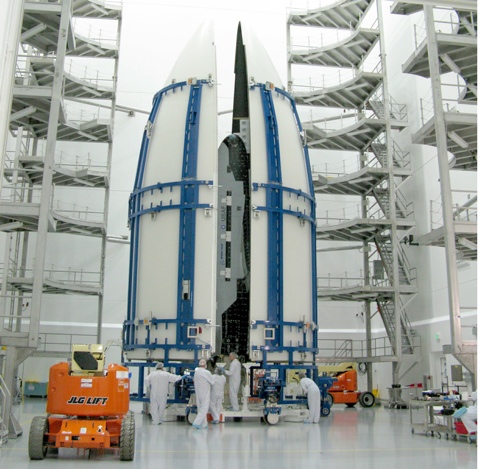
The US Air Force X-37B Orbital Test Vehicle during encapsulation within the United Launch Alliance Atlas V 5-meter fairing Feb. 8, 2011, at Astrotech in Titusville, Fla. The fairing protects and carries the OTV into space.

The wheel first and still evolving

20111204-131556.jpg
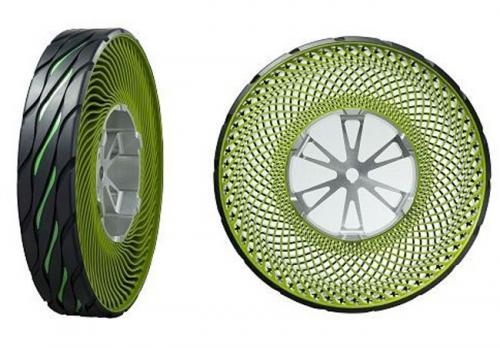
The Bridgestone man at work looks cool and has some advantages, like no punctures.

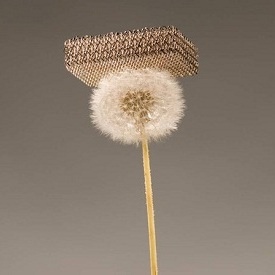
The spokes are made of reusable thermoplastic resin. In design, interest is drawn toward the thermoplastic fins, staggered so that connections to the hub and the rim do not torque and there is no structural breakdown. The tires’ resin spokes radiate from rim to tread. They curve to the left and right to support vehicle loads.

But one wonders about delamination at speed, effects of dirt and grime etc. But eventually this looks likely to come, their looking at light weight low speed applications first. If we ever see them on r ace cars we’ll know the technology is almost ready for prime time. Michelin and Yokohama have been working on ‘airless’ tires for years as well.

Also in the world of the wheel, another Michelin tech lead:

20111204-132829.jpg

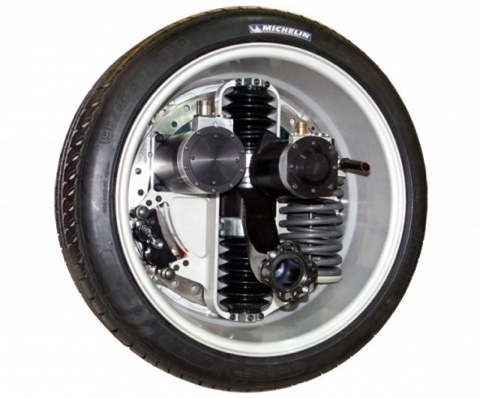
Each Michelin in-wheel motor weighs 42 kilogram (95 pound) and includes a 30 Kilowatt water-cooled drive motor of a similar size to a conventional starter motor. The motor has a spur gear that drives a rind gear on the hub. A second electric motor operates the active suspension via a gear rack and pinion that effectively replaces the normal hydraulic shock absorber (no news on if they are used as regenerative shocks). There is also a coil spring to hold the static load of the car and a small outer rotor disc brake. The wheel motor is attached to the vehicle chassis by a single lower control arm suspension arrangement.

The advantage here is that every wheel station on the car is identical, just programmed to be right front vs. left rear, no heavy suspension elements in the body so a simpler/rugged/lighter cargo tub for the fragile humans. This was the concept that GM touted when they were head over ass in love with fuel cells and the ‘skateboard’ that eventually faded away to make way for the Volt.

Ink Jet electronics progress

Ink-Jet Printed Graphene Electronics

Okay this brings back memories, as a young engineer I supported-oversaw ManTech R&D on ink jet printing of electronic circuits and the development of ink tech. Different time, place, technology but still cool and promising especially for the US I think the center of custom/additive manufacturing.

To get the geek juices flowing in any ManTech junkies here is the abstract:

We demonstrate ink-jet printing as a viable method for large area fabrication of graphene devices. We produce a graphene-based ink by liquid phase exfoliation of graphite in N-Methylpyrrolidone. We use it to print thin-film transistors, with mobilities up to~95cm^2V^(-1)s(-1), as well as transparent and conductive patterns, with~80 % transmittance and~30kOhm/sq sheet resistance. This paves the way to all-printed, flexible and transparent graphene devices on arbitrary substrates

This Still Trips My Sense of Wonder

New Samsung Galaxy Nexus Android/Google Phone

20111127-152750.jpg

GPS, an accelerometer, gyroscope, digital compass, proximity and light sensors, and a barometer round out the main sensors. A 5-megapixel camera with autofocus and a single LED flash – capable of 1080p 30fps video recording – is on the back, while 1.3-megapixel camera for up to 720p video calls is on the front, above the display. A multi-color notification light hides in the Nexus’ chin.

Very good article in SlashGear online Magazine I stumbled across.

HiTech & HiCost why the AirForce can’t afford itself

20111127-141612.jpg
A very good post on Strat Page regarding the F22 and the cost of upgrades, original program and maintenance. It concludes with these two paragraphs which I think clearly state the problem.

New technology gives a weapon, especially an aircraft, an edge in combat. But since World War II, most military technology has been developed in peacetime conditions. This means it is more than twice as expensive, as there is no wartime urgency to overcome bureaucratic inertia (and emphasis on covering your ass, which is very time consuming and expensive) and hesitation (because you don’t have a war going on to settle disputes over what will work best). Developing this new technology takes longer in peacetime, which also raises the cost, and fewer units of a new weapon are produced (driving up the amount of development cost each weapon will have to carry.) If several hundred B-2s were produced under wartime conditions, each aircraft would have probably cost $200 million, or less. In other words, a tenth of what it actually cost. Same deal with the mythical $35 million F-22, or any other high tech weapon.

Other nations have adapted more effectively to peacetime development conditions. But the United States has the largest amount of peacetime military research and development, and this has created a unique military/industry/media/political atmosphere that drives costs up to the point where voters, politicians and the media will no longer support them.