A few chemicals and a microwave and see what you get

Zapping raw materials in a microwave oven and drying the resulting solution produces a black powder (top) made of hexagonal bismuth telluride nanoplates (bottom).

High-efficiency thermoelectric materials could lead to new types of cooling systems, and new ways to scavenge waste heat for electricity. Researchers at Rensselaer Polytechnic Institute in Troy, New York, have now developed an easy, inexpensive process to make such materials.

The materials made by the RPI team already perform as well as those on the market, and the new process, which involves zapping chemicals in a microwave oven, offers room for improvement. “We haven’t even optimized the process yet,” says Ganpati Ramanath, a materials science and engineering professor at RPI. “We’re confident that we can increase the efficiency further.”

What caught my eye here is that the material is a form of nano particulate, its produced in an evidently very simple process and it has a very high efficiency.  This type of technology as the article notes could have a great number of applications.  In a car one could conceive of replacing the mechanically driven alternator with something like this or supplementing it, this would essentially be using waste heat to provide electricity and would increase gas mileage.  There are many other places where heat scavenging would make sense and have an impact if the materials and system were cheap enough.  This goes back to a fundamental issue, energy efficiency costs money and if the cost of burning a tiny fraction more fuel over the life of the system (which can add up to biggish $) is less than the energy scavenging equipment then the equipment will not be installed unless the added cost is passed on to someone. 


Algae to the rescue

Green tea: Joule Energy's SolarConverter turns carbon dioxide and sunlight into ethanol fuel at a pilot plant in Leander, Texas.

 Technology Review| Photosynthesis Fuel Company Gets a Large Investment:  Joule Unlimited will build a production plant for turning sunlight and CO2 into liquid fuels.

The company is combining many technologies to move to direct creation of biofuel precursor liquids.  The algae is similar to that others are experimenting with but excrete the molecules into the water instead of retaining inside the cells.  This way the harvesting ‘only’ entails fractionating the liquid from the flow.  The bioreactors are essentially double panel windows with the algae filled liquid flowing inside.  The water gets CO2 from a power plant which scrubs it out of the plant effluents and one guesses that in cooler climates the water could be warmed in the cooling cycle of the same power plant so the system could operate year round.

The company calculates that their system can produce a great deal more, more easily refined biofuel precursor liquids than the alternates. Which mostly involve growing various kinds of plants and then converting them to biofuels in either chemical or bio reactors.

Skynet it’s not yet, but one has to wonder…

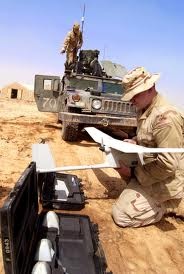
Police Drone...
Skynet’s distant ancestor

The fact of the matter is that this, like so many other things, is coming.  I used to laugh at some ‘SciFi-ish’ cartoons for their depiction of flying drone/droid/robo cops, but then I’ve never been any better at predicting the future than most other engineers, we always dive way too deep into the details far too quickly unless we have something keeping our head out of the water long enough to figure out if we are in the ocean, sea, lake, pond, swamp or whirlpool. 

But there is the issue of privacy and the increasing ability of ‘the system’ to keep track of citizens 24/7/365.  Save a few puppies and a kid or so and we’re all for giving up a little bit of something for increased safety.  But at what cost, and have ‘we’ ever considered that we may be being manipulated?…..Anyway….

This post by Babbage at the Economist covers the ground pretty thoroughly, at least for the near term.  I think the killer app here is the comment about replacing choppers which cost a couple of million up to operate along with expensive maintenance and aircrew tails. Smaller police forces will be able to have an air contingent and big forces will have a lot of these things (hopefully replacing most if not all the choppers, which are IMO a waste of taxpayer money.)
 
UAV’s , particularly like the one in the picture have a lot of advantages they :
  • can fly in a wider weather window than crewed craft.
  • are harder to see and hear
  • can land and sit/monitor for long periods
  • could operate 24 hours with rotating crews or units
  • can travel ‘as the crow flies’ instead of around buildings, fences, traffic etc
That’s in the near term, 2-3 years, what about the middle Future (4-7 years)?:
  • Wide area surveillance from solar powered (maybe a SolarSaurs?) high altitude platforms.
  • Add ‘Gorgon’s Stare’ technology, constant surveilance with roll back capability.
  • UAV’s the size of a bird it could follow a perp under cover.
  • UAV’s that can launch a smaller pursuit drone with a TAZER ?…a bit like this
  • What about a humingbird UAV?

And as you add those capabilities my libertarian hackles go up more and more.  None of the above should be given by a free citizenry to a gov’t that is actively growing and actively misusing its powers or taking advantage of congressional stupidity.

…Maybe I’d be happier if…..I had the right to pot one of the little puckers if it was over my property without my permission?  Hey it would create a new market, for home ultra short range anti aircraft systems!  Maybe these guys would have a head start?

Creative destruction in it’s meme’s

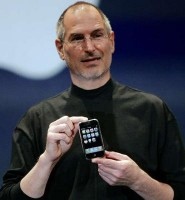
20120110-232657.jpg Steve Jobs, our Guttenburg, RIP

VodkaPundit, via Instapundit, has a very good point to bear in mind in this the season of CES(RIP?)

When jobs came back to Apple he brought a self operational version of Creative Destruction, the dynamic heart of real capitalism we saw at work in the late eighties to early oughts, the idea that products, product lines even companies do not, should not, live forever but be overtaken by better solutions.

The iPhones 5 years old, it seems reasonable to think there is something next and no reason for it not to be targeted at eventually gobbling the iPhone as we know it.

What set of features would you build into a new personal product that might change the world?

Mirasol the Butterfly Wing Display

Mirasol Color eReader display

I had heard about this technology several times over the years and had not realized that Qualcomm had commercialized it and is actually selling some units though they have not yet had a big ‘insertion’ win as like Nook, Kindle or the like.  Unfortunately the first application the Kybo Reader is disappointing and if Qualcomm is not careful it could relegate the technology however good, to backwater.

Mirasol is like eInk a micro machine reflective display and not an emitter of light like an LCD, AMOLED even a plasma display is.  The early insight that lead to the Mirasol is that the ‘scales’ on the wings of a butterfly get their vivid colors from an optical ‘trick’ rather than from brute coloration. The scales are very thin and essentially colorless, made of that basic creep bug shell stuff, chitin. The scales are made up of layers of transparent chitin of varying thickness.  Light passes through the first layer and is selectively reflected because the thickness of the layers creates an optical cavity that selectively reflects light of a certain frequency while absorbing other frequencies. 

Official description Here:  Mirasol is made up of millions of pits with reflective bottoms with a multi layer thin-film ‘scale’ floating in the pit.  The pit is a form of capacitor that can be positively or negatively charged, in one state the ‘scale’ floats to a position where the pit is a light trap, so it looks black, in the other state the ‘scale’ floats to a position where it reflects Red, Green or Blue very strongly.  While changing charge state takes energy once changed there is all but no power demand.  The ‘floating’ up and down is over a very short distance and happens very quickly, so you can create a video image with the technology, even in video mode its much less energy intensive than an LCD.

Since it is reflective not emitting it is sunlight readable, in fact like a book the brighter the light the better.  It’s an efficient reflector so it’s actually quite readable in dim light and would need only a modest book light to make it readable in the dark.  This may make it marginally less compatible with capacitive touch screens, but its possible that other technologies will replace the capacitive screen (I hope) like this interesting concept that turns any surface into a multi-touch interface.

This technology seems ideal for an eReader like the Nook Color that is not intended as a full function tablet but wants to be more the an eReader (eInk really sucks at anything other than page rendition) though it’s quite possible the technology will come on gangbusters for all portables if the technology is really as good as it purports.

Who is Qualcomm and why does it seem strange for them to be in this business?  Qualcomm is the company that developed the CDMA (code division multi access)technology used in many phones today, as well as related technologies and has managed to leverage that into one of the significant if somewhat odd players of the mobile tech.  For many years they were pushing the PCA phones, the first digital microcell technology that disrupted the old analog cell phone monopolists.  THough they started on the digital side eventually they got into the business of designing the chip set for the radio in the phones. I believe it was Qualcomm that effectively proved that SiGe and even pure Si could compete with GaAs chips for the high performance radio frequency parts.  Especially when they showed that they could integrate the radio on a single chip and eventually on the chip with the digital parts. They were an early SOC (system on a chip) player.  Now they license the ARM technology used in most smart phones and they build one of the competitors in the tablet and smartphone processor offerings.  The work on Radio frequency devices gave them experience in MEMS (micro electro mechanical systems) which is the manufacturing technology behind Mirasol.  I would imagine that they see a long-term synergy between all these pieces, they essentially build the complete electronic kit set (including smart screen) that a OEM (original equipment manufacturer ) can put in a custom case with their choice of battery and interface thus providing the ability for and OEM to have highly distinctive product without having to have the expensive engineering resources required to design custom electronic ‘guts’ of their custom (semi custom really) product. 

Its a bit like Chrysler designing a car kit, the sub frame, engine, suspension, transmission, electric and electronic systems that some custom builder then can take and design a shell around, making it into a sedan, hatchback, coupé, minivan, pickup truck, delivery van, taxi etc….which come to think of it is how many car companies work these days with ‘platforms.’

Sorry used to play in these waters a bit, and still find the technology and business fascinating, Qualcomm is an interesting success story who flies under the radar most of the time.  I think the are like a company I work with today, they feel that constant PR flack barrage some companies put out are more about ego and stock price massaging than anything else, while being both a waste of money and potentially self-defeating by giving away too much information and setting the participants up for a fall.

Future of Computing…Circa 2012…..

20111228-224416.jpg
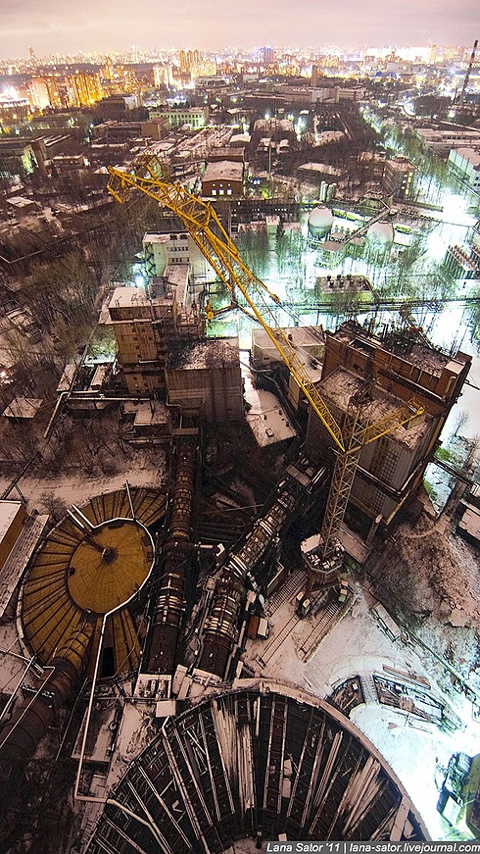
Just eye-candy from APODnothing to do with computing

Several article/posts at PCMag.com that paint interesting picture of the near future. This one by M. Miller in Forward Thinking discusses next generation chips, tablet chips but also the direction of all chips. At the latest AMD chip conference

…strongly pushing the idea that the future of microprocessors will not be just traditional CPUs, or even the combination of CPUs and graphics processors (GPUs), but instead will consist of all sorts of “heterogeneous” processor cores working together.

In the article there were a couple of interesting tidbits….the doubling in speed with ~doubling of transistors per area faded over the last few years, one of the things driving multi core. Also today’s high end pocketable units have rough equivalency with 2001 supercomputers. Memory and peripheral speed obviously hit that raw performance as well as non optimized development environment.

Then this piece also under Future Thinking, discussing the direction of LCD and AMOELD and related technologies, there are several others not mentioned but this article is a good discussion of the near term mass production technologies.

Then there is an end of 2011 discussion by Tim Bajarin on the coming of Hybrid tablets, something like a Mac Air with a separable screen ~ tablet. I use my iPad (like right now) for a lot of light to medium duty tasks I once had to use my laptop, I sometimes use a Bluetooth keyboard (though not right now.) Can some one could come up with an ultrabook class laptop with enough additional functionality to make the added cost worth it? TB says he thinks WI 8 might be a leader, could be but iOS seems muscular enough….except maybe multi windowing…we’ll have to see.