Saber Rattling Down, way down, South

So once more the Argentinian gov’t is talking, blustering, about the Malvinas and generally making themselves irritating to all right thinking (Tory) Englishmen. This short article from DIQ, one of the several excellent military info/show groups based in the UK (who needs spies when you have Janes and these guys?), was eye opening.

As the 30th anniversary of the Falklands War arrives over the horizon like a rather fearsome storm cloud, the media hysteria in both countries is slowly building to a fever pitch. The British media, going through a periodic bout of jingoism, is awash with scaremongering over the state of the island’s defences; while the Argentine media is dominated by heated debate about the ‘militarisation’ of the islands and British imperialism. As this author has already discussed, the frequent articles released by men such as Admiral Sandy Woodward warning of the immense military vulnerability of the islands have very little grounding in reality. The military balance in the South Atlantic is very strongly rooted in the favour of the UK and this is unlikely to change in the near future. Of arguably much greater significance to the Falklands debate are the political and economic factors that dominate the current tensions. As will be shown there is neither the political will nor the economic capability for Argentina to attempt any kind of military action against the islands.

Okay so the Brits stole the islands for a coaling station a century and a half ago, get over it for crying out loud. Okay so there’s oil there I’m sure the UK will work a win win deal, they’re almost as good at that as they are at winning wars. Thumping the drums of war seems a way of life for the Argentine’s vacuous Gov’ts it’s a way of distracting attention from the Gov’ts many failures. An article in AWST (aviation Week and Space Technology) last week discussed the technical, tactical and professional aspects of such a face down and thee fact is that even a senescent UK military could take down the Argentines with little trouble.

But in the long run the economic war outlined in the DIQ article is more threatening, though unlikely to cause any short term change. The fact is that the islanders like their life,and the Brits will protect their own. In the short term oil and gas may even make the island grow, but if the recent past is an indication the islands youth will move away and unless something draws new blood back eventually there will be a ghost town and the Brits will withdraw voluntarily.

Democracy is an Outcome not an Input….

In this months The American Interest is a fascinating perspective article that like any profoundly effective piece opens ones mind to a better way of thinking about a topic, in this case democracy and the ‘liberal societies.’   The Cultural Contradictions of Democracy    The main threats to democracy lie within liberal societies themselves. by Vladislav Inozemtsev

Its more of a monograph than an article, it’s talking to the reader about taking a different perspective on a whole classes of issues. In short as my title says Democracy historically emerges after life, liberty and the pursuit of happiness have already emerged within a society not before.  Also he points out that liberal (in the old sense of societal and economic freedoms) societies emerged in homogenous and élite societies and then democracy was implemented to create a stable and responsive gov’t that would last.  Only later as the rule of law, freedom of speech and assembly, equality before the law, became ingrained, and the polis became generally literate and self-reliant did the right to vote become general.

But as the right to vote became general its strength became debased.  As the right to vote was given to many without a strong tie to the society it became more and more populist and a tool of those able to manipulate it.  

Some societies have developed that are quite ‘liberal’ in the old and robust meaning of the world without democracy (Singapore is one example.)

Many societies have developed democratic trappings but they are not at all liberal (Russia is one example)

Some societies have had democratic trappings dropped on them and then have started to tear themselves apart because there is no homogenous polis, (Iraq, many of the African states)

If you are at all interested in the topic read the article, its one of those pieces that opens the mind to a better perspective that might lead to insights of importance.  unfortunately its all too likely that the right people won’t get the message…


Another Celebrity Seeker…and the Apple Culture

As far as I can see the whole mess with Mike Daisey is the common American confusion between celebrity and profundity.  The Wikipedia entry above starts out :

“Mike Daisey (born 1976) is an American monologist, author, and actor best known for his full-length extemporaneous monologues…”

And that sums it up, he’s not a reporter, does not purport to be one and yet his monologuing is taken as a serious expose of Apple’s factories in China.  The whole problem is that NPR got confused about what they had, it was in some ways not even Daisey’s fault…until he denied any fault as with so many things today, “..it wasn’t the break in it was the coverup…” inept spinning.

Now Apple knows that its old core and even its younger adherents are biased to the progressive/lefty “down with capitalism” side.  Apple is also forced to build their products in China these days, they could not keep their products in the painfully but not prohibitively expensive category otherwise.  They will not purposely turn a blind eye to abuses at their Chinese factories, especially as they know that they are likely to depend on Chinese customers for a lot of growth in the not too distant future.  

Victor Russell Mead at Via Media has the best overall take on the Daisey mess, I won’t go into it any more.

However thinking about Apple and China does bring up other issues about manufacturing and the outsourcing of said.  Two Questions of Apple: 

  1. The iPad, iPhone, iPod are all flat, sandwich build products, why not automate the production and do it in the US?
  2. Aren’t you  afraid of giving your products intellectual property to the Chinese, who have quite blatantly set about appropriating everything they can from anyone with good ideas?

And the answer is the same in both case.  Apple has an extremely short product cycle most of the time and tries to keep their products under wraps until the last second. They use a very deep supplier base on the Asian shore to the fullest extent, the parts are cheaper and more available there, and Apple parcels the parts out so its hard for their competitors to figure out what’s coming until the last month or so before introduction.  Final assembly of many gadgets is the most labor intensive part of the process and the hardest to automate, it can be done but if you are only going to build the product for a couple of years then completely rejigger why put the capital into a fixed site?  And its the Social IP of how you design and proof out a product like the iPad in a very short time that is the secret sauce as much as anything else.  And that IP the IP of the Apple way, the Apple Corporate Society, that gives them the edge, and its not one that anyone can copy easily.  The whole infrastructure of design spin, parting out, having multiple products at various levels of development at one time, and staying mum, that keeps Apple ahead, their competitor’s head’s spinning and the Apple paparazzi merrily dancing in trail.

DefenseTech calls it a Bomb Truck

20120311-204543.jpg
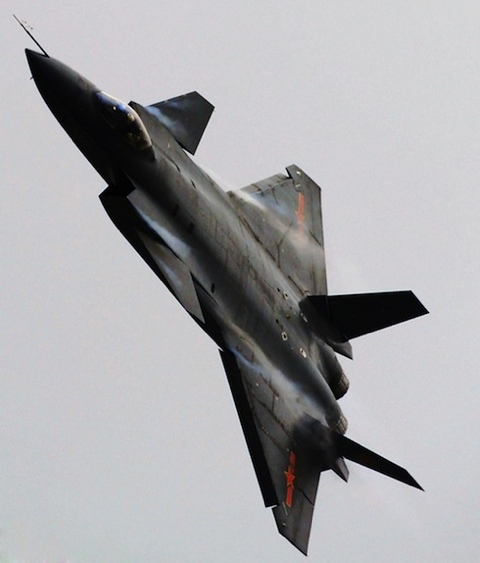
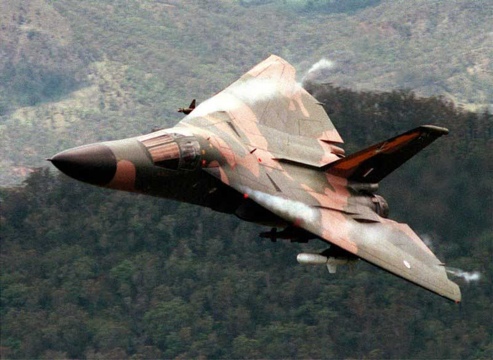
DefenseTech has some Chinese eye candy regarding the large and apparently powerful J-20 in development / trials. They call the aircraft a bomb truck and that seems likely, the analogy to th 70’s vintage FB-111 seems apt.
20120311-205744.jpg
These aircraft are the conceptual descendants of WWII aircraft like the Mosquito.

20120311-205757.jpg
The thing I find peculiar is how open the Chinese are about the testing of the J-20 it’s like a reality TV show. One part of me wants to say the Chinese know everyone will be spying anyway, to reduce the tension, just go ahead and let the pictures be taken, bask in the glow of self righteousness, and the fact you’re saving money. And at the end of the day why does one care, the real secret sauce is deeply buried in the materials and internal details and is not readily apparent on the surface anyway…The other part wonders what’s really going on in some distant corner of the country.

The Army really needs to ‘cool it’s jets'(calm down in the lingo of the ‘Gray Lensman’)

In the NDIA’s National Defense magazine’s blog there is a post: Don’t Rush to Buy New Vehicles, Army and Marine Corps Warned

The traditional approach to updating U.S. military hardware — spending years and billions of dollars on next-generation designs — is no longer working for the Army and the Marine Corps as they seek replacements for their combat vehicles.

——

One reason for the military to hold off on buying new vehicles is that there are no technological silver bullets to make military trucks, tanks and personnel carriers less vulnerable to enemy weapons, …. Adversaries can acquire and deploy antitank weapons and roadside bombs much faster and at far less cost than the U.S. military can build countermeasures and survivable vehicles,

——

It’s not clear that the Army or the Marine Corps can “get out of this box,” Outspending the enemy in this case is a losing battle. … “Adversaries’ use of guided weapons, relatively cheap and rapidly fielded anti-armor weapons … threatens to increase significantly the costs incurred by U.S. ground troops in accomplishing their assigned missions,”

——

The Army’s procurement bureaucracy is still reeling from the failure of its $200 Future Combat Systems. Although the follow-on program, the Ground Combat Vehicle, is far more modest, it is not clear that it (will) offer a substantial technological boost compared to existing vehicles

——-

Army buyers might still be somewhat (IMO are totally) deluded by the thinking that doomed the Future Combat Systems. At the time, FCS officials touted the program for its advanced information network, which would give commanders an instant view of the battlefield and allow them to see the enemy without being detected.

After the termination of FCS, the Army continued the push for an advanced communications network, which is now billed as the services number-one modernization priority. The problem, … is that the Army still assumes it can deploy a network at will. “The assumption is that we are operating in a permissive environment … that once we set up the network, nobody is going to tear it down,”

——
We have operated in a permissive environment, electronically and even threat wise for the past decade at least. We have also operated in a nation building civil war environment in urban, suburban environment. Even in the ‘Stan the military faces an enemy with limited access to weapons beyond RPGs and IEDs but these have proven the Bradley is no longer viable and driven us to develop armored modestly off road vehicles like the Stryker DVH, MATV, and MAXPRO MRAP.

These vehicles use existing technology and are enough over designed to allow for evolution. They are too heavy for the Army and USMC but the effort put into the ‘light weight’ replacement the JLTV Family has already cost huge amounts and the only way the Army/USMC kept the program was mandating a weight(26,000lb), cost ($250,000 ea) and protection (MAXPRO equivalent) and letting everything else float or be a special kit. The program has been a feeding trough for the Mil-Ind-Bandit-complex for several years not for truck builders supported by the Army funding some high end components. In fact the truck builders and high end suppliers have been funding their own pragmatic tech programs based on industrial/commercial insights that in the end the Army and USMC have bought.

Recently a couple of high ups in the acquisition corps said they’ve been meeting the soldiers needs and all the grief about Comanche, Crusader, JLTV EDM, EFV, FCS, etc is all noise. Bull-crap!

Once it might have had some truth, the Army/USMC did projects to build tech and keep design experience honed. Much of the money went to top grade suppliers of engines, suspensions, transmissions, the primes never intended the vehicles to go to production, everyone learnt and had tech on the shelf. Those days are gone.

These days the programs are too tightly focused and the programs are ‘mapped’ to lead to production. So the top tier suppliers go for them, often get more than one ‘team’ funded and develop futuristic Advanced Development Models, designed to highly refined specs that require essentially custom components. To keep their engineering teams fed they keep most of the work in house and over-ride input from the lower tier suppliers they do use. The specifications are too specific and often contradictory, open to interpretation, and all too often evolving. Money swirls down the toilet by the bushel. New management comes in, new ‘baselines’ established more money flushed and eventually the program collapses. Little of the technology is of use elsewhere.

The world class suppliers all largely ignore Army programs because they have spent too much money on programs that are ill conceived and almost bound to fail. Where the automotive industry does work on gov’t programs they try to focus on programs with clear near term needs, like the highly successful, Stryker, MATV, and later MRAPS.

At the end of the day we’ll be better off letting things settle out while we fund evolutionary and component technologies. The thousands of bright young officers coming back from Iraq and the ‘Stan need to settle in, study the world, history and the potential for tightly-constrained battlespaces, they’ll be the ones to figure out what comes next, not the old guard who claim they’re ‘just fine…’

“Quantum Biology and the Puzzle…” quantum WHAT?

More fascinating stuff from Technology Review | Quantum Biology and the Puzzle of Coherence

Quantum processes shouldn’t survive in hot, wet biological systems and yet a growing body of evidence suggests they do. Now physicists think they know how

This is mind blowing, I’ve thought for some time that quantum effects play a role in life but this says that they are pervasive, and possibly usable in the engineering sense, if so this could well open up another road forward in a vast array of fields of development. very cool, very exciting!

At the end of the day it seems to me that a majority of the human race could be set to work investigating and developing useful ways of using the science we are opening up without making a dent in the amount of such work for the foreseeable future. What we lack is enough trained and willing minds to address the world not opportunities to exploit. The problem is that a vast majority of the human race are not a whole lot better educated / socialized (this is as true of at least a significant number of americans as it is of chinese far workers) than a late medieval peasant and the infrastructure of the world is in the same sad state. I can only hope that the great uplifting that has been going on since the beginning of the British Industrial Revolution continues long enough to get us through the coming knot hole.

20120306-202829.jpg

Health insurance, over, under or miss Regulated? HI Monograph

The Hoover Institute’s Defining Ideas often has thoughtful, rational topic pieces, like this great one: The Car Insurance Model, by Scott W. Atlas that discusses Health Insurance. All I can say is read it, it essentially lays out an argument that health insurance state regulated is miss regulated and even monopolistic in many areas and before we try the monstrous over regulation layer on top we should look to insure at the county wide level. The state regulators should be the ombudsmen for the people not the lapdog rent providers of the insurance industry they seem these days. He also advocates high deductible insurance and Health Savings Accounts.

Now he does argue against forcing insurers to insure everyone at the same rate for the same coverage. Here I am a lot less certain, maybe because I am overweight, and no longer young, once smoked, etc. I agree that age and perhaps gender should be factors but the more specific you get the less useful insurance becomes (at the extremes {which a totally unregulated totally privacy devoid world of the near future might enable} the only coverage you could get would be for random acts of god…’so sorry to hear about that lightning bolt hitting you, good thing you’re not a cowboy or golfer, we don’t cover lightning strikes on cowboys or golfers without a special rider from Lloyds.’)

But that’s a niggle, basically the argument is the system as is, is broken but fixable with rational, simple changes, let’s start there before layering in more Regulation and gov’t oversight.

Bradley, son of Bradley, GCV, Pillaging the Colonies…?

From StratPage: A Quiet Farewell For the M-2 Bradley

March 5, 2012: One of the little-known casualties of the Iraq war was the American M-2 Bradley IFV (Infantry Fighting Vehicle). Five years ago the U.S. Army stopped using the M-2 in combat. By then it was clear that the enemy was intent on using mines and roadside bombs in a big way and the M-1 tank, Stryker, and MRAP vehicles were much better able to handle these blast weapons than the M-2.

Bradley BUSK probably I

Bradley BUSK probably I

Bradley BUSK possibly a II

Bradley BUSK possibly a II

The pictures above are from before that quiet withdrawal showing variations of the Bradley Urban Survival Kit BUSK. Compare this with images of the Bradley from the ‘Gulf War’ below:

Bradley in the Gulf War

Bradley in the Gulf War

Bradley moving through ruind Iraqui RG unit

Bradley moving through ruined Iraqi RG unit

And then this picture of a Bradley from the halcyon days when worries about swarms of Soviet tanks were just beginning to seem like a bad dream:

Bradley probably in Germany in the '80s

Bradley probably in Germany in the '80s

The US Army in WWII started out with light, medium and heavy tanks, anti tank vehicles and infantry carriers.  This evolved through the 50s and 60s to the Main Battle Tank and the IFV (infantry combat vehicle.) The theory being that the tanks do the running around in front of the enemy getting hammered on with the IFV keeping up with but behind the tanks, hiding when the explosions got too loud and close.

The Army wants its armored-taxi/multi-use-chassis to be as mobile as the tank, carry a squad of infantry, a heavy anti tank weapon, an infantry support weapon, weigh half as much as the tank and be able to survive getting hit by medium calibre weapons. Rather too many metrics to trade off successfully.

Which explains why the Abrams M1 tank is successful (probably destined to be around till circa 2050…and may be the last ‘true’ tank ever) while the Bradley is essentially heading for the scrap pile?  The answer is Armor and Power

M1A2SEP 72 tons | 1500hp        versus            M2 w/BUSK ~38 tons | 400

The ‘tank lite’ nature of the Bradley IFV with the added attraction of its soft gooey center of infantry, has always made them most valuable as far forward as possible, further forward in the battle than ‘safe.’ By the time of the Gulf War they had already been added armor, in the GW they did well, but in Iraq they suffered badly then more and more protection was added. Soon the vehicle was way over weight and because an IFV is a very ‘tight’ design there is no way to increase power.  The Army ended up with a vehicle that is too heavy to move and too lightly protected to survive.

The Israelis’ have been on the leading edge of modern armored combat for most of their nation’s history.  Their main battle tank design is focused on crew survivability and it can actually carry a couple of extra soldiers for scouting work.  The Israeli’s have made IFVs out of old tanks with their turrets removed, not only because they don’t have money to burn but because it made sense, the heavy armor and high power to weight ratio of these vehicles made them much better close companions to main battle tanks than ‘purpose built’ IFVs. 
The US army saw this in the combat reports from the last mess in The Lebanon, where the Israelis used the old converted vehicles as well as the more purpose built Namer IFVs.   This and our own experience in the Gulf War, Iraq War and Afghanistan, drew the USArmy towards a much more heavily armored (and more powerful) vehicle the GCV (ground combat vehicle.)  unfortunately the first iteration of the GCV when priced out by the Military Industrial Bandits was way too expensive for the Army and a more restrained requirement was developed.   Which results in this….(read that last with a disgusted tone.)

BAE GCV Candidate

BAE GCV Candidate

BAE GCV Candidate

BAE GCV Candidate

A couple of recent image from BAE ( the current defense company incarnation for the group who were responsible for the Bradley) showing their latest GCV concept.  This is a typical piece of post realism crap from our defense establishment.  Its a hybrid electric vehicle, which failed to the tune of billions burning in FCS and is useless on an armored vehicle.  It uses an active defeat systems for a lot of its protection (the little Dalek like warts on its ass.)    And yet with a tracked suspension system one moderate IED will render this billion dollar baby dead in its tracks (pun intended.) In  a sim its probably extremely good at what it is designed to do, protect the gooey middle and trundle around at some reasonable speed. But the thing has to be fragile as hell, its rather narrow between the eyes and tall so it won’t be able to do side slopes anywhere like the tortoise like MI can etc etc.

This is what happens when you reach the end of the technological road and don’t know where to go. The tank may not be dead but its bastard son the IFV is.  My advice to the Army is find another route before you blow more billions on this turkey.

And BAE the current turkey presenter….used to be British Aerospace. Is this the Crown’s way of getting back at the Colonies for that cold seawater tea episode?