Iran-3 tidbits and some commentary…

Iran, a troubling country, as Persia it dominated troublemaking for the Hellenes and the Romans, though Alexander the Great among other Hellenes ground it down a couple of times. That piece of the world has a long history and has a right to be proud and annoyed when abused which it has been but at the end of the day it is a small backwater that could and should be able to grow to regain much of its glory in the new world but as with most other islamic dominated countries it seems to be unable to slip the bonds of a mindset that is more focused on the past and in some ways on revenge, than on the future and finding ways to let the past lay.

An update on the loss of the Beast of Kandahar (RQ-170 Stealth Drone)

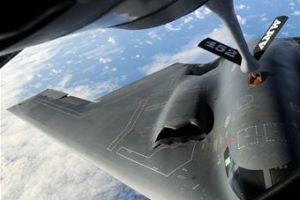
December 21, 2011: On December 8th Iran displayed what appeared to be an American RQ-170 jet powered UAV, which they claimed had landed intact in Iran two weeks earlier. Iran claimed they had hijacked the control signals for the RQ-170 and landed it themselves. This seemed highly unlikely but not impossible. Experts on Iranian military immediately suspected something else. First, the Iranians are constantly lying about their military exploits, especially when it comes to developing new weapons and technology. This is apparently done mainly for propaganda as satellite photos never show more than a few prototypes of these wonder-weapons. Then many Americans familiar with the RQ-170 carefully studied the pictures of the “captured” RQ-170 and immediately suspected something was off. For one thing, the RQ-170 shown was the right size and shape but the wrong color. Not just a different color from that seen on many photos of the RQ-170s in Afghanistan but also a color unknown in American military service. A closer examination of the Iranian RQ-170 photos indicated that the Iranians had reassembled an RQ-170 that had crashed and broken into three or more pieces. Then the Iranians apparently gave the UAV a new paint job (which was obvious to anyone seeing those photos.)

This is another piece about Iran, and its road to hell

Iran is turning into more of a military than a religious dictatorship. That was made clear when a government official revealed that half of government employees now belong to the Basij (the reservist organization of the Revolutionary Guard, the separate armed forces of the clerics running the government) . This was deliberate. Since the late 1990s the Basij has been establishing units in schools for children of all ages. Using games, toys, and popular children’s activities the kids are indoctrinated into Basij ideology (radical Islam, including the joys of being a suicide bomber). The Basij recruiters have found that their best prospects are from poor or broken families (including orphans). This was the Nazi and Soviet experience. The Romanian communist government did best at this with their secret police (the Securitati) forming much feared units of these orphans. Recruits were selected young and raised to be remorseless and savage operatives. Called “young wolves”, these operatives could be depended on to do anything for the cause. Iran is always looking for plain clothes agents who can terrorize reform minded students and civilians in general. In the last few years, more and more of these Basij operatives, now adults, have been leading the fight against reform minded Iranians, or overseas as agents of Quds. Since Basij is largely a part-time operation many members have a full time government job.

Obama Moves Toward War With Iran

In a recent interview with CBS news anchor Scott Pelley, Panetta said “the United States does not want Iran to develop a nuclear weapon. That’s a red line for us”. He continued: “We will take whatever steps are necessary to stop them”. A nuclear Iran is “unacceptable”.  When US secretaries talk about “whatever steps are necessary” they are not usually talking about holding one more meeting of the sanctions committee.  They are thinking shock and awe rather than cookies and tea.

Panetta said the Iranians could have a bomb in a year or less; we’ve heard this before. The point is, Washington doesn’t believe the mullahs have stopped building. Unless that changes, the Obama administration is headed toward war with Iran, quite possibly before November of 2012.

OK, I don’t know if I agree with Dr. Meade, I’ve argued more from impression than anything else that there is no appetite in the world for an Iranian war.   But in fact the Saudi’s and the other Gulf Arabs want the suckers taken down before they get nukes.  There is also a lot to be said for the fact that until Iran is put back on a reasonable path Iraq is unlikely to remain stable.  Also the Iranians are the backers of the main troublemakers in Syria and around Israel.  An argument could be made that Iran was always a worse problem that Iraq but that taking out Iraq was easier and it was hoped would make Iran behave itself.  Taking Iraq also took down a potential flanking enemy.  Now with major forces in Afghanistan on one side of Iran and our naval forces on the other there is at least some military realism to taking Iran down.

  • Israel has nukes
  • Pakistan has nukes and is perhaps as likely to proliferate as Iran
  • NK has nukes and is a worse proliferator than anyone else
  • Syria tried to get nukes
  • Libia tried to get nukes
  • Any marginally competent state with an industrial sector can ‘do nukes’ if they get the materials.
  • Would going in and blowing up the Iranian Nuclear program solve anything? ( And I do mean going in, I do not see any way of avoiding putting troops, probably a lot, on the ground to make sure those facilities are blown to dust.) Does this stop proliferation in its tracks or is it a slippery slope? 
  • Pakistan, NK, Iran, Isreal, Syria, Lybia….Each case utterly different and circumstances do matter, hard lines in the sand are rarely possible to draw and live with. 
  • But will others see the take down of Iran (if it happened) as a sign not to go nuclear or as a sign that they should press forward as quickly and quietly as possible.
  • We would have to establish the Obama Doctrine, “we will take down anyone who is going for nuclear weapons”   Could we make it stick?

Then of course there all the mysterious ‘accidents’ occurring in Iran, is there a covert war going on already?  I am not convinced but I have to say that it seems highly possible.  If so the Iranians aren’t doing well.  The thing that stops me being convinced is that the Iranians aren’t squealing about it and or going all out for retaliatory strikes (see the article above on militarization of Iranian gov’t.) Now its possible that with the tracking tools we have now and in some ways a fairly fine mesh filter for folks coming out of that part of the world we have been able to stop anything, and maybe I hope that’s true.  

To be honest I would almost rather its just the Iranian’s paying the price for turning away from technical competency for some (invisible to me) religious gain, our spooks being that efficient puts one in mind of all sorts of conspiracy theories.


 

Amity Shlaes vs Krugman

Aside

This piece by Amity Shlaes on Bloomberg is an interesting defense of austerity as a way out of recession, depression, it shows that historically austerity can work well and there is no reason to think that it will not work today.  Given our problems this strengthens my feeling that austerity (and cutting gov’t and its entitlements sharply) is the way forward.

DoD Buzz | The Iran problem

DoD Buzz | The Iran problem.

The problem with Iran is that there is nothing we can do about it as the article below points out.  Short of all out war we are not going to make the situation any better proliferation wise and almost any other option at least leaves open the opportunity for long termsolutions.

The article points to a think tank paper arguing (rightly I think) that Deterrence like that used vs. the USSR is the most realistic option but it requires constant vigilance and a very credible threat on our side.  Maintaining such a credible threat is not cheap, has to be part of the grand strategy and force structure of the US.  The issue is, is the current administration up to the job of planning that grand strategy? Is the US up to sustaining another deterrent axis and the costs associated,  the article highlights the (largely artificial) stresses even the limited missile shield for Europe is causing with Russia.

One interesting thing about this is that all the Wests attempts to halt proliferation have in the end come to nought, the worst of the worst are going to get the nuc’s, unless we provide an almost blanket assurance that we will avenge any first use then at least one more tier of nuc powers will emerge.

It’s also of some ironic interest that it was the US’s perfection of smart weapons and limited war tactics that could be seen as driving this nuc arms race.  We should remember that at one time or another we saw nucs as the cheap counter weapon to the Russian horde .  These smallish countries now see nuc’s as the cheap counter to folks with deep pockets and smarter magazines.

The wheel first and still evolving

20111204-131556.jpg
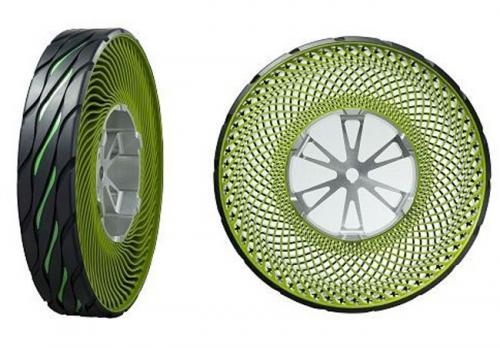
The Bridgestone man at work looks cool and has some advantages, like no punctures.

The spokes are made of reusable thermoplastic resin. In design, interest is drawn toward the thermoplastic fins, staggered so that connections to the hub and the rim do not torque and there is no structural breakdown. The tires’ resin spokes radiate from rim to tread. They curve to the left and right to support vehicle loads.

But one wonders about delamination at speed, effects of dirt and grime etc. But eventually this looks likely to come, their looking at light weight low speed applications first. If we ever see them on r ace cars we’ll know the technology is almost ready for prime time. Michelin and Yokohama have been working on ‘airless’ tires for years as well.

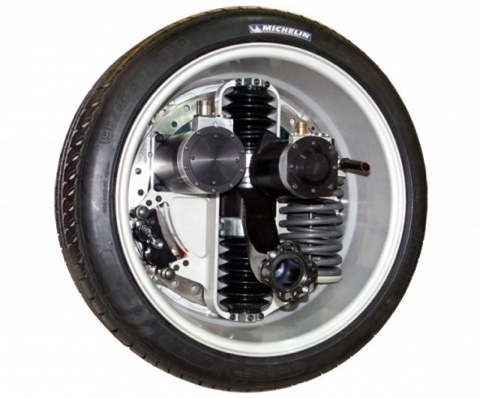
Also in the world of the wheel, another Michelin tech lead:

20111204-132829.jpg

Each Michelin in-wheel motor weighs 42 kilogram (95 pound) and includes a 30 Kilowatt water-cooled drive motor of a similar size to a conventional starter motor. The motor has a spur gear that drives a rind gear on the hub. A second electric motor operates the active suspension via a gear rack and pinion that effectively replaces the normal hydraulic shock absorber (no news on if they are used as regenerative shocks). There is also a coil spring to hold the static load of the car and a small outer rotor disc brake. The wheel motor is attached to the vehicle chassis by a single lower control arm suspension arrangement.

The advantage here is that every wheel station on the car is identical, just programmed to be right front vs. left rear, no heavy suspension elements in the body so a simpler/rugged/lighter cargo tub for the fragile humans. This was the concept that GM touted when they were head over ass in love with fuel cells and the ‘skateboard’ that eventually faded away to make way for the Volt.

Ink Jet electronics progress

Ink-Jet Printed Graphene Electronics

Okay this brings back memories, as a young engineer I supported-oversaw ManTech R&D on ink jet printing of electronic circuits and the development of ink tech. Different time, place, technology but still cool and promising especially for the US I think the center of custom/additive manufacturing.

To get the geek juices flowing in any ManTech junkies here is the abstract:

We demonstrate ink-jet printing as a viable method for large area fabrication of graphene devices. We produce a graphene-based ink by liquid phase exfoliation of graphite in N-Methylpyrrolidone. We use it to print thin-film transistors, with mobilities up to~95cm^2V^(-1)s(-1), as well as transparent and conductive patterns, with~80 % transmittance and~30kOhm/sq sheet resistance. This paves the way to all-printed, flexible and transparent graphene devices on arbitrary substrates

Minor Planets (all the stuff that isn’t one of the eight (no longer nine since Pluto got dissed)

The Minor Planet Center web site, a Smithsonian Operation, so pretty serious stuff, lots of info, just a scan of the lists could alter your view of the local environs we live in.  1200 plus potential dangerous asteroids….known and in the inner system today, tens of thousands of other bodies out there, ready to play interplanetary billiards if something really hairy this way came.  But mainly a very good resource for serious thought, serious business like eSpace objectives for mining, and for not so serious ventures such as SciFi.

Combo view from the fly by

A combo shows a sequence of images of the Lutetia asteroid at various distances before the closest approach of the Rosetta spacecraft in 2010. A rare opportunity to observe an asteroid at close quarters has unveiled a remarkable rock that seems to be a precursor of a planet, astronomers reported on Thursday.

So I found the article with the above picture (click through) fascinating,  dealing with an asteroid that got a fly by last year by Rosetta (ESA Spacecraft.)  “The astronomers calculate Lutetia to be 121 kilometres (75 miles) long, 101 kms (63 miles) tall and 75 kilometres (47 miles) wide.”  “Lutetia’s high density, at 3,400 kilos per cubic metre (212 pounds per cubic foot), its large size and its ancient surface make it different from any other asteroid studied so far, the studies said.”

This is Eros the first asteroid to be visited, “34.4×11.2×11.2 km in size 34.4×11.2×11.2 km in size” “Mean density 2.67±0.03 g/cm³ ”  or about 2670 kilos per cubic meter.

Eros Montage from Wikipedia...approximatly real color

 Below is Temple,  a comet visited by two spacecraft.  “Mean density 0.62 g/cm³ ”  or 620 kilos per meter.

Annotated images of Tempel 1 from two spacecraft.

Comparison of From Wikipedia: Deep Impact and Stardust photos of a smooth elevated feature on the surface of the nucleus showing recession of icy cliffs at the margins

 With this information it becomes obvious that the make up of the minor worlds is much more diverse than had begun to be thought.   Eros is pretty dense but still probably filled with voids, obviously Temple is pretty much a rubble pile, which astronomers think is true of other bodies. 

So Lutetia is too dense to be a rock pile or even void filled, it has to be as solid as a planet, they think it’s a left over planetesimal from the early creation of the solar system.   The only way it can be as dense as it is, is if it went through a molten phase. Given that a shell even a ‘few’ miles thick of rock provide a good insulator it is apparently possible that Lutetia has a molten core. 

Does that mean there could be differentiated materials in that crunchy coating?  It seems to be an obvious target for mining, where there is pretty much zero risk of cave ins.  What are the odds of a good distribution of useful materials for the space industrial infrastructure?   This may or may not be a valid mining target, but it points out some things to think about.