Unknown's avatar

About Sci Fi Engineer

Husband Father Writer Engineer

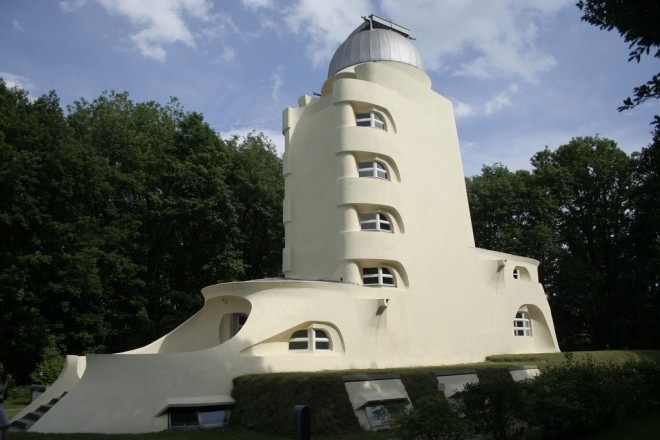
Wired BotW // Einstein Tower, Potsdam, Germany

20130524-101427.jpg

Einstein Tower, Potsdam, Germany
The 1920s-era Einstein Tower was built to prove one of general relativity’s predictions — that gravity would cause a shift in the sun’s spectrum. Although it never succeeded, it was one of Germany’s most important observatories for many years, up until its partial destruction during WWII. A fan of Einstein, architect Erich Mendelsohn molded concrete into graceful curves to evoke Einstein’s theories. Located at the Astrophysikalisches Institut Potsdam, the observatory is still in use as a solar observatory, though it splits time as a tourist attraction as well. The tower is skewered by a 1.5-meter solar telescope that visualizes solar magnetic fields and their location within sunspots.

Amazing what you can do with concrete, this sort of thing ought to be easier with 3D printing tech….

Wired // Pilates PC-24 Jet Set Roughing it…next they’ll pu floats on it

20130523-204928.jpg

Pilatus Aircraft has been producing airplanes since the 1940s, but the Swiss firm’s newest model, the PC-24, is its first jet. Pilatus didn’t want to just be another jet maker. Instead, the company borrowed from its very successful single-engine turboprop, the PC-12, to create a jet that can do everything conventional business jets can do and fly in and out of relatively short, unpaved runways. Oh, and it has a big cargo door as well.

A short piece at Wired…not a real airplane yet, the above is one hell of a rendering. Pilatus’ world trotting PC-12 is the air ambulance of choice in the nether regions of the world…it’s also a preferred discrete ride for SOCom, one wonders what they will do with the PC-24?

Walter Russell Mead // jobs jobs jobs

As always lots of great thought at The American Interest read more at: http://blogs.the-american-interest.com/wrm/2013/05/22/jobs-jobs-jobs-2/

First, make hiring easy and cheap.
Second, put the service economy and especially small business and entrepreneurship front and center.
Third, we need to feed the state to the people even as we individualize its services.

That third one had me puzzled till I read the explanation, which is a good description of what the statesmen of the past have done.

A characteristic of American political economy going back to colonial times has been the use of the resources of the state to promote the welfare of what today we would call the middle class. For much of our history we “fed the state to the people” by turning over publicly owned lands at low and ultimately zero cost. The public lands, which once included virtually all of the continental United States, were a possession of almost infinite value, but it seemed wiser (and more politically sustainable) to the leaders of the day to make them cheaply available to the people rather than to hoard them or try to retain a larger share of their value for the public purse.

Ludwig Von Mises Austrian school economics

Was reading some Mises and ran across this very neat aphorismReference
Sane sicut lux se ipsam et tenebras manifestat, sic veritas norma sui et falsi est, (Latin). A dictum of Spinoza (1632-1677). Translation: “Indeed, just as light defines itself and darkness, so truth sets the standard for itself and falsity.”

Spinoza:

Spinoza is one of the most important philosophers—and certainly the most radical—of the early modern period. His thought combines a commitment to a number of Cartesian metaphysical and epistemological principles with elements from ancient Stoicism and medieval Jewish rationalism into a nonetheless highly original system. His extremely naturalistic views on God, the world, the human being and knowledge serve to ground a moral philosophy centered on the control of the passions leading to virtue and happiness. They also lay the foundations for a strongly democratic political thought and a deep critique of the pretensions of Scripture and sectarian religion. Of all the philosophers of the seventeenth-century, perhaps none have more relevance today than Spinoza.

Ludwig von MisesRead more at: http://mises.org/

The Ludwig von Mises Institute was founded in 1982 as the research and educational center of classical liberalism, libertarian political theory, and the Austrian School of economics. It serves as the world’s leading provider of educational materials, conferences, media, and literature in support of the tradition of thought represented by Ludwig von Mises and the school of thought he enlivened and carried forward during the 20th century, which has now blossomed into a massive international movement of students, professors, professionals, and people in all walks of life. It seeks a radical shift in the intellectual climate as the foundation for a renewal of the free and prosperous commonwealth.

A world (at sea ) of difference

20130516-194752.jpg
20130516-194802.jpg
20130516-194818.jpg
20130516-194826.jpg
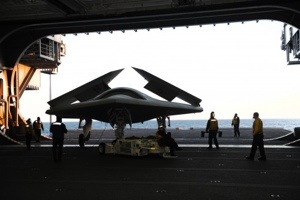
as in many engineering projects the Navy’s UCAV X-47B flight testing and carrier qual seems to have suddenly jumped from baby steps to hyper speed.

Navy officers are very clear on a distinction between the Navy and the Air Force, which insists on talking about remotely piloted aircraft: Navy “unmanned air systems” have operators, not pilots. Of course, the Navy hasn’t been forced to divert a large number of qualified pilots into UAVs, as the USAF has been (Predators and Reapers are the USAF’s second-largest pilot force after the F-16), and will not have to do so for a long time. But the fact remains that flying a UAV with a stick and rudder or any semblance thereof is (to quote an Airbus guy’s comment on the Boeing 777’s back-driven yoke) like putting a steering wheel on a horse. “Pilot” is a bit of a misnomer.
Speaking of pilots, the Navy’s attitude towards adopting the X-47B’s automatic landing technology for manned operations is quite positive. The potential benefits — less wear and tear on airframes and less training time for the air group, along with improved safety — are substantial.

Read more at: http://www.aviationweek.com/Blogs
Wired has a different set of thoughts and more questions here. Wired sometimes seems to confuse the world of war with the world of tech and the world in general with the blue coasts of the US but they do a good job of tracking the tech and monitoring for hubris.

MIT TR | Synthetic Biology Could Speed Flu Vaccine Production

Read more at: http://www.technologyreview.com/news/514661/synthetic-biology-could-speed-flu-vaccine-production/

….researchers are hoping to engineer entirely new circuits into cells to help diabetes patients. Martin Fussenegger, a bioengineer at the Swiss Federal Institute of Technology, described a molecular system in which cells are modified with genes that can detect low pH levels in the blood, a sign of a diabetic state. In response, he says, the engineered cells will produce insulin to better regulate blood sugar levels and calm the diabetic state.
This kind of engineering typically depends on viruses to modify genes so that cells will perform useful tasks. But that method is risky: the introduced DNA could integrate into the genome at an unfortunate location that might lead to cancer. Harvey Lodish, a cell biologist at MIT, is working on a technology that could avoid that problem: lab-made red blood cells. After these cells are modified, they will kick out the virus in the course of their natural development process.
“The beauty of red blood cells is they are pretty much the only cell in body without a nucleus,” says Lodish. “By the time they get into circulation, they have lost their DNA and are stable for 120 days with no risk of tumors.”
In Lodish’s method, a retrovirus carries a new gene into the genome of progenitor cells that will eventually produce red blood cells. The cell uses that new gene to produce a modified version of proteins that sit on the surface of the mature red blood cell even after the cell has lost its DNA. The modified surface protein has been engineered so that other compounds can easily be attached to it—antibodies that could mop up toxic substances in the blood, or small-molecule drugs to attack cancers or other diseased cells. Lodish believes the technology is a safer approach to putting synthetic biology to use in the human body.

As Glenn Reynolds of Instapundit says, “faster please”

A distant Kablaam!

20130515-180026.jpg

This image shows one of many fresh impact craters spotted by the UA-led HiRISE camera, orbiting the Red Planet on board NASA’s Mars Reconnaissance Orbiter since 2006. Credit: NASA/JPL-Caltech/MSSS/UA
Scientists using images from NASA’s Mars Reconnaissance Orbiter, or MRO, have estimated that the planet is bombarded by more than 200 small asteroids or bits of comets per year forming craters at least 12.8 feet (3.9 meters) across.

Read more at: http://phys.org/news/2013-05-hirise-mars-camera-reveals-hundreds.html#jCp

Three armed smartphone enabled robotic mixologist (bartender)

20130515-174215.jpg

‘want some WD40 with that?’

We’re told it’s the wave of the future. Design, make, enjoy. Beyond home-based 3-D printers, there will be new machines and display screens and apps that will invite you to have day to day products just the way you want them. Digital buffets await and not surprisingly the time is now to contemplate robot bartender systems. Such a system is on display now, which can serve the cocktail of your latest twist of imagination. Makr Shakr is the name of the new system which goes on display at the Google I/O conference in San Francisco, starting Wednesday. The drink-making robotic system made its debut during Milan Design Week 2013, and is making a debut in its final configuration at the Google event. The system can make the cocktail you want with its three robotic arms, which mimic the actions of a bartender. Shaking a Martini and slicing lemon garnishes are part of its repertoire. A smartphone app allows users create their cocktail concoctions from scratch.

Read more at: http://phys.org/news/2013-05-makr-shakr-arms-drink-recipe-collabs.html#jCp

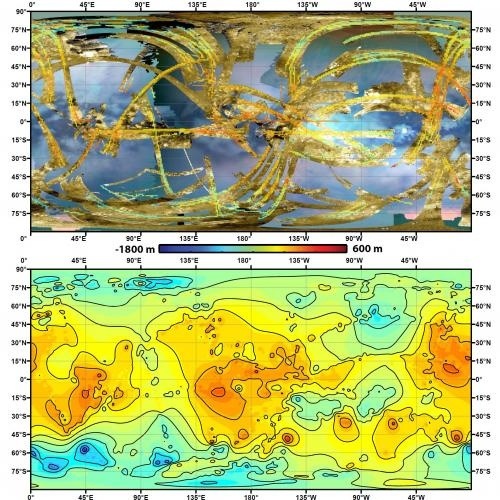
Titan, Cassini still exploring the moons of Saturn

20130515-172924.jpg

To create the first global, topographic map of Saturn’s moon Titan, scientists analyzed data from NASA’s Cassini spacecraft and a mathematical process called splining. This method effectively uses smooth curved surfaces to “join” the areas between grids of existing topography profiles obtained by Cassini’s radar instrument. In the upper panel of this graphic, gold colors show where radar images have been obtained over almost half of Titan’s surface. Image credit: NASA/JPL-Caltech/ASI/JHUAPL/Cornell/Weizmann

Read more at: http://phys.org/news/2013-05-cassini-global-topographic-titan.html#jCp

Planet hunting techniques expand

Planet hunting techniques expand:http://phys.org/news/2013-05-method-planets-scores-discovery.html
20130513-091049.jpg

The new method looks for three small effects that occur simultaneously as a planet orbits the star. Einstein’s “beaming” effect causes the star to brighten as it moves toward us, tugged by the planet, and dim as it moves away. The brightening results from photons “piling up” in energy, as well as light getting focused in the direction of the star’s motion due to relativistic effects.
“This is the first time that this aspect of Einstein’s theory of relativity has been used to discover a planet,” said co-author Tsevi Mazeh of Tel Aviv University.
The team also looked for signs that the star was stretched into a football shape by gravitational tides from the orbiting planet. The star would appear brighter when we observe the “football” from the side, due to more visible surface area, and fainter when viewed end-on. The third small effect was due to starlight reflected by the planet itself.