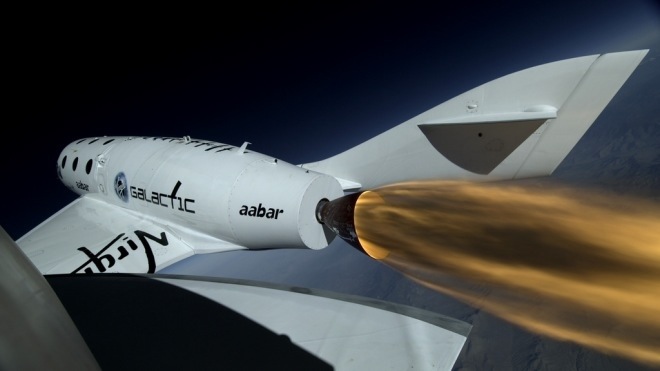
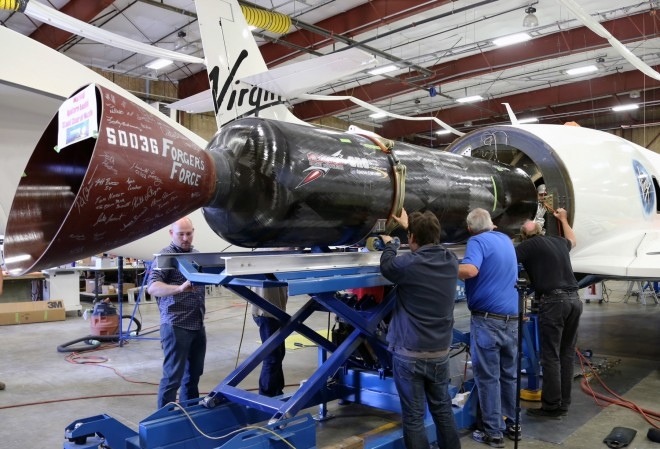

More at: http://www.wired.com/autopia/2013/04/spaceshiptwo-powered-flight/

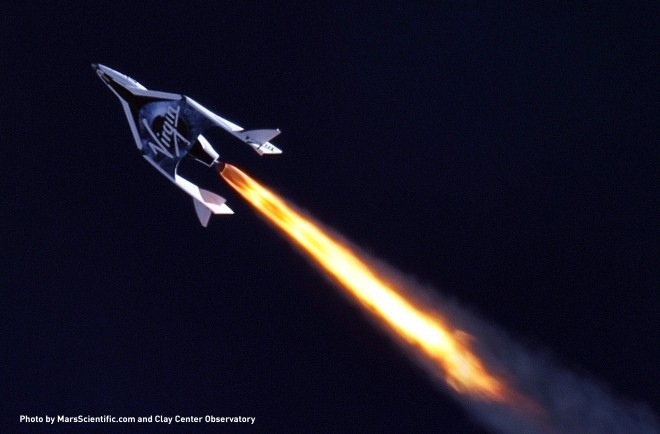
Love the Logo-shot! The space ship’s pretty simple really, it’s biggest downside would seem to be no fly around capacity if one misses the runway line up, but 1) how often does that happen theses days? 2) if theirs any juice left in the oxidizer tank a short burn would do the trick. Anyone know the plan: depend on getting it right every time or lighting ‘er up for the go-round?


This plan is getting pushback because its not a return to the moon or a Mars landing plan. But the reality is that this idea is all NASA can afford given the cost involved with the Senatorial ( or Space, take your pick) Launch System A Saturn V + class heavy lift direct ascent launch system
The lack of resistance is tied to Senate support of the Space Launch System. Senators from key NASA states – Florida, Texas and Alabama – pushed President Barack Obama to build it, and the asteroid mission is seen as a way to give purpose to the rocket, once criticized as a “rocket to nowhere.”
Illustrative of that point was the initial reaction of Sen. Richard Shelby, R-Ala.
“NASA should continue to explore the universe and challenge scientific and technical boundaries,” he said in a statement. “However, NASA should maintain focus on its core mission and continue development of the Space Launch System so that it will be ready for any future NASA mission.”
So my question is, why the SLS, don’t get me wrong some of the SLS related work like resurrecting the Saturn V F1 engine (as I pointed to a few days ago) is a good thing, but reality is it should be part of getting a commercial venture to back development. NASA shoulddevelop Orion and its support module, but the booster should be gov’t sponsored / stimulated effort as part of a get to the moon, Mars, big asteroids plan, in support of the commercial civilian space efforts.
If you look at all the recently proposed and ongoing civilian efforts and roll in appropriate gov’mnt support you can see a very robust human and robotic space development plan emerge.
Read more at: http://phys.org/news/2013-04-nasa-chief-asteroid-agency.html/


This is the family, an interesting thing about the Heavy is the plan to have the strap-ons share fuel with the core, consequently when they separate the core is still fully fueled, a big performance increase.
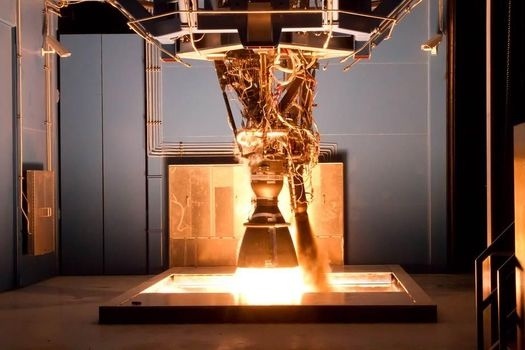
The engines have been run far harder than standard rating regimes require, 1) to solidify their ‘man rating’ for future crew lofting flights, 2) because SpaceX wants to reuse them, 3) because SpaceX wants top line insurance rates for their customers even while brining new approaches to the party.

Rocket engines, so ugly you just know they’re powerful!
Cool videos at the Verge article.

Held at height and then landed straight down unaffected by what looks like a reasonable breeze.
Second gen Falcon this year, possibly Falcon Heavy first flight, soft water return for a booster this year and ground return next year! Each demonstrates fundamental capabilities and the power of a committed commercial / civilian play with tech and team unfettered by bull crap FARS oversight dead weight. But each is advancing tech at a rate that seems more reminiscent of the sixties NASA and aviation tech| 2nd gen Falcon: new improved engines, Heavy: buddy tank w/ common boosters engines, any of the above: fly back boosters w/ powered soft landing first at sea then on land. Each step something daring and commercially valuable. I’m not sure how some of the competitors keep from going into terminal depression, if Musk’s SpaceX team nails the string the old guard are toast.

File photo of the NK-33 engine firing on a test stand. Credit: Aerojet
From space flight now an article on Orbital Science’s Anteres launcher, specifically the rocket engines. It’s interesting that the Soviets were so good at some things and awful at others.
But then engineering is a very neutral endeavor and one that can adsorb your passion and develop your stoic nature…very good things in Stalinist Russia.
One should also remember that while ‘the west’ got the ‘brains’ of the Nazi German Rocket cadre (like Werner vonBraun) the Russian’s got the great majority, the working engineer types, who in the end have to slog through the agony of turning strokes of genius into real hardware, and it’s the slog that gets you deep capability not the strokes.

Xaero B vertical landing rocket demonstrator completed first hot fire tests at Mojave, Calif, on April 9.
From AWST space blog this picture and a short piece on Masten Space Systems Xaero B vertical landing rocket demonstrator
The Xaero is a re-configured, more powerful, higher-altitude version of Masten’s Xombie which has been demonstrating precision flight control and landing. This craft should be capable of 6km hops, an even larger upgrade could do 200 km! They will carry various NASA sponsored payloads.
Xombie has demonstrated cm accuracy at touchdown, there is discussion of doing away with the landing legs and coming down into a landing cradle! That would be a big weight savings. If proven here then it would be viable for all of the V-V (Vertical take off Vertical landing) programs such as Blue Origin, SpaceXs fly back Falcons…
What I find interesting is this progress juxtaposed with a piece regarding the AF reusable Booster program, canceled last year. Of course the demo program was ambitious, leap ahead and risky + expensive. Perhaps it shows that the more incremental commercial approach is superior; more robust, affordable and supportable especially with todays design, analysis and fabrication technology.

Orbitec vortex motor launching a heavy sounding rocket.
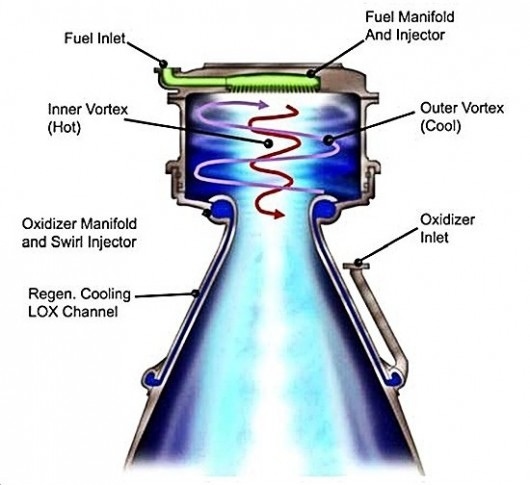
Simple, so very simple and so very elegant.
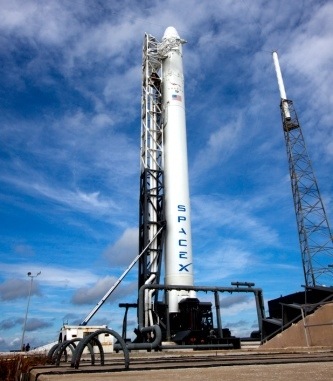
Had not realized this was progressing as fast as it appears to be, still it is years not months, but neither is it decades.
Short Wired piece with a fantastic video of a precision take off flight and landing of the Xombie test vehicle.

 This World and Others