The Future of War

The future of war is taking form all around and it is not a vision of super battleships and death rays, though they may exist in infinitesimal numbers the real fighting will be done by tiny groups of specialists (SOCOM, the SEALs and an array of similar highly trained, expensively equipped and lethally effective troops.) Weapons like one discussed in Wired recently, a Proposed program to develop a missile capable of hitting and destroying small targets like SUV’s (60 miles away) that can be fired from another SUV.

SUV being unloaded from a C-17

There is a bit of spy v spy in this and the Wired article is a bit ironic in tone but the truth is this is the future, and in most ways it will continue the trend of things getting better for the majority of humans, it will kill its target without killing hundreds of others and could lead to a ‘decapitation’ strike where the warmaker is taken out of the picture so peace can find a way.  And of course it will be misused, and ill-used and those of good heart and hope will deplore it all.

Of course the use of discrete platforms is nothing new, the recent tragedy in Africa involved a U28.  This is a single engine utility turboprop, built by Pilatus and used all over the world but very intensively in Africa where its low cost of acquisition and operation along with the high reliability of the single turboprop airframe make it highly coveted.  You can think of an SUV as being in the same vein really.

Pilatus, U28

Of course drones will be a big part of future war, though how big and how are interesting questions. If both sides are aggressive users of technology with combat hackers or the like as well as jammers, radio direction finding/ranging and guys (and gals) with skeet shooting guns and skills it should get ‘interesting.’

Here’s a piece of drone related news where things got ‘interesting’ for some bystanders when a crashed drone was given the coup de grâce by one of its robotic compatriots.


Historical Perspective and Narrative

20120221-220832.jpg

Walter Russell Mead’s blog serial Beyond Blue, currently at #5, Jobs, Jobs, Jobs (from which the pictures in this piece come) is a fascinating monograph putting the changes our society/economy is going through into perspective. Dr. Mead’s explanation goes back to the 19th century:

In the 19th century, government promoted the rise of the family farm, selling cheaply and ultimately giving away millions of acres of farmland, and promoting the rise of railroads (which could carry the produce of western farms to world markets). In the 20th century the government promoted the rise of large, stable corporate employers that offered armies of white and blue collar employees lifetime employment and a bevy of benefits.

And later this:

Currently, the American legal and regulatory system is set up to bind as many people to employers as possible. The government wants you to be a wage slave and sets up a regulatory framework that keeps as many of us as possible yoked to bosses and management. The IRS doesn’t like the self-employed, fearing they many conceal income. Banks and credit card companies view such people with suspicion, and it is notoriously difficult for start ups and part time enterprises to have access to formal finance. Many services are hard for the self-employed to get on terms like those made available to employees of large corporations: from health insurance to retirement planning, many things are harder and more expensive for the self-employed. The payroll tax system is brutal: the self-employed pay both the employer and employee halves of Social Security and Medicare taxes, almost 20 percent of income and likely to go higher. Many cities will tack on unincorporated business taxes, mass transit taxes, and other interesting feudal exactions and dues.

The gov’t used(s) the current ‘Blue Model’ in some senses as a social damping mechanism because it provides for a more hierarchical top down command system (of interest in the Cold War climate of the 50’s to80’s) while also providing a relatively efficient economy and outlets for frustration from the masses. This model has worked since the collapse of the 19th century model….the great depression…but itself is now becoming unstable/unaffordable in its turn because it requires too much command and control.

Too much how? Well now that a high percentage (all high value) workers have been amplified by basic literacy, information systems and other technology, they are capable of much more than the drudge work they used to perform at the command of a ‘supervisor’ and demand / need more autonomy. Many organizations accommodate and move on and up. Others keep the older structure or some bastardized version and sink into the muck. Companies that almost have to operate in the old mode because they deliver one sort of highly regulated good or another, get radically more expensive compared to near peers operating outside the penumbra of regulation and lose relevance and competitiveness at a steadily increasing speed. Look at the post office, once the epitome of efficiency.

The iPad, Pandora and life

pandora-ipad-landscape

iPad, Pandora App

I’ve said it before but want to  reiterate that Pandora + iPad have made a deeper impact on how I live my life more quickly than any other technology change.  And in some ways that change is more ‘SciFi-ish’ than any other change I have experienced.

Don’t get me wrong other things have had more impact but they were much more profound in and of themselves.

  • Smashing my ankle
  • First Car
  • First Real Job
  • First House
  • Getting Married
  • First Child
  • Second Child
  • First Child going to college….

How can I even compare two pieces of Triviachology like the iPad and Pandora you ask?

Well I have worked from home a significant amount of time since 1997 and I have very consciously tried to limit the amount of paper I generate and find ways to get information in electronic rather than paper form.  I have felt that the eReader was going to reach takeoff eventually and while the pundits always poo poohed it I saw a steady decrease in the Paper load in the engineering world probably a leading edge in the utilization of information that had made it paper heavy for a very long time. When the piles on young and not so young engineers desks began to collect dust I figured it was because they weren’t shuffling through them so often any longer because the primary sources were in electronic not paper form.  The paper was for reference and for making notes on (BtW Paper / print / writing / reading is a fantastic intricate and powerful technology if you stop for a moment to think about it.)

Now I can carry around a single small compact rugged and handsome slab of Al and Glass that is book, magazine, note taking device (typing or hand writing, I take copious ‘ink’ notes on my iPad, Check out the Penultimate app if you want to try it.) calculator with some of the calculators capable of solving and displaying very complex systems of equations (MathStudio or SymCalc HD) and I do some quite complex artwork for fun and other purposes using ArtStudio.  I load a lot of papers and other tech pups (pdf) onto my iPad (iBooks) so I can read them at my leisure. 

Now the iPad is no replacement for a laptop (for me.) But unlike many commentators I do not see that as anything but a special case. It is a fabulous adjunct, extender, even amplifier, but I see it as a reasonable laptop replacement for certain users, especially those who are more interested in consumption than creation.  To be honest I think the combination of an iPad and a smart TV may be all that an even larger cadre of users need.  But that does not denigrate the iPad as a consumption device, it’s an adjunct amplifier to your digital life, that can be a replacement under certain limited circumstances.

So…there you go the iPad as significant life changer, what about Pandora?

Well here my story is a bit weaker and it’s really the combination of Pandora and the iPad and to an extent Netflix streaming service.  And let me tell you right now that I hate TV’s in the bedroom and my wife is addicted to the BBC versions of many US TV procedural cop shows..and insistes on watching them (on her iPad) late at night if she can’t get to sleep……I must have been bad in a very twisted way in some previous life…! Anyway Pandora in itself was a revelation, as I have said before it mix of being able to select music you like and then let it go off and find things similar in ‘feeling’ has opened me up to huge swaths of music I had never heard before.  Add that to the ability to have that music with me most of the time with the iPad and one can feel a bit like one is living in a movie with your own sound track, though I found this soundtrack doesn’t do a good job of foreshadowing the next scene.   And even though I curse Netflix fairly regularly it is nice to be able to browse in ‘the long tail’ of shows, see things I never had a chance to watch, like BBC’s Primeval, or some Nova or History Channel programs. 

So while those two services are not responsible for as profound a change as the iPad is in itself, added to the iPad they are a very profound change in my and my family’s habits…and as one would expect not always for the good.

IPad Neflix App

iPad Netflix App

From Defense Tech

20120218-215324.jpg
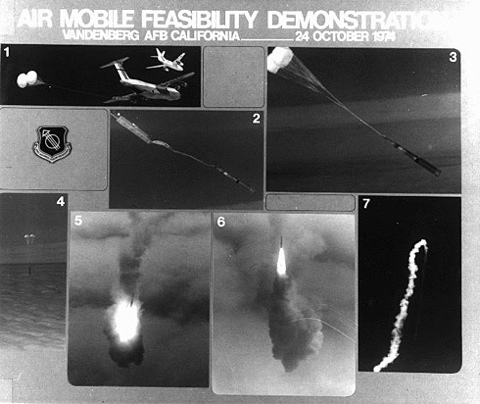
This reminder of fun times past, though one wonders about the prayers of the C5 pilot prior to ignition. I remember seeing this as one of the options explored for the Peacekeeper ICBM follow on to The Minuteman. Must admit that it seems pretty crazy cost wise and if you kept them on the ground most of the time little different from the bomber force. Maybe it made some sense, fly as close to the border as you want then toss in at a shallow angle, mixing up the attack as it were. Of course by the time this was really feasible, there was no point…and history seems to say that much of this kind of thinking was wasted time and energy, the BOOGEYMAN, was only ever a boogeyman, and probably more worried about what we might do to him than what he could do to us.

What a New Model education would Disrupt

Megan McArdle’s take on change in higher Ed. Ms McArdle blogs and writes for ForbesThe Atlantic and has a lot of interesting insights on economics, politics and societal change, more libertarian than conservative her opinions are well reasoned with a dash of humility.

(corrected don’t know what I was thinking. Ms McArdle is at The Atlantic not Forbes, sorry about that)

New and abused

This StratPage article on the LCSs is very good, but has a negative tone that is disappointing.  As the article notes with a bit of hyperbole the LCS is a pretty radical break with the past, LCS 2, Independence being by far the more radical and perhaps deserving of the hyperbole.  Where has our patience gone, whenever something radically new is tried there are problems and with LCS even with LCS 2 the problems seem relatively minor in the big picture.  Also the fact that LCS went from concept to hulls in the water in less than a decade is tribute to sensible expectation setting on the part of the Admiral(s) who have pushed this family forward.  Though tying hull and weapon system together may make sense for the battleships (carriers and cruisers of our age) it makes small craft too expensive and obsolescent before launch. 

The Radical Sister

LCS 2 Independence The Radical Sister

The trimaran LCS 2 is essentially all aluminum built by Austral (relocated Australian fast ferry company.) She was launched later and has had a lot more or at least more serious issues than her fraternal sister LCS 1.  Most pictures of Independence are either slow speed or docked, far fewer deployment pictures than of LCS 1.  This should have been expected (and was by most) when you have this radical a departure its bound to collect a lot of baggage.   But the ship has a huge flight deck and is highly stable in rough weather, as well as being fast.   In the end its possible the Independence will be the more successful sister, though it’s just as likely that both will be considered successful but better at certain missions than the other.  
 By the way the concept of a trimaran warship was originally raised by the Royal Navy and as above the builder is an Australian company experienced in building catamaran ferries (which have had their own issues.) Who says the US doesn’t take good ideas from abroad?
Just as a matter of interest I had the honor of getting a tour of the LCS3 the Freedoms sister ship Fort Worth at her builder Marintte Marine.  The ship has huge empty spaces but the ‘fixed’ facilities are pretty tight . The bridges of these ships remind one more of something out of a Star Trek movie than a WWII flick. 
And while the hull is the size of a WWII destroyer they are (when geared up for the mission) vastly more lethal the crew size is more in line with a WWII PT boat than the Tin Cans of yore. 
The idea behind LCS is for a capable craft that is available in the numbers needed for dealing with busy coastal waters. These are the modern equivalent of the Gunboats of the nineteenth century. They are not the modern cruiser (called destroyers) battleships (called cruisers) or battleliners (carriers.)  These ships are the corvettes, the torpedo boat destroyer, the frigate, of today and with their vast flexibility and high power they will most likely find uses far beyond those envisaged today.


 Mark

Charge Your Phone (and Your Car) from Afar

Charge Your Phone (and Your Car) from Afar – Technology Review.

This has been coming for some time but as the tag line says at the end, “…It’s going to catch on superfast…”  This may well be the technology that electric cars were looking for. Think about it coils at stop signs and stop lights, etc, or even in charging lanes.  With the technology of the battery and electric propulsion at its current level this should make the electric car a reasonable investment.  The problem is the deployment, investment, but spread out over time and geography and with the expectation that you’re going to have diesel, gas and LNG vehicles around for a long time I think you can see a realistic road to electric nirvanah.

George Washington, A Human for the Ages

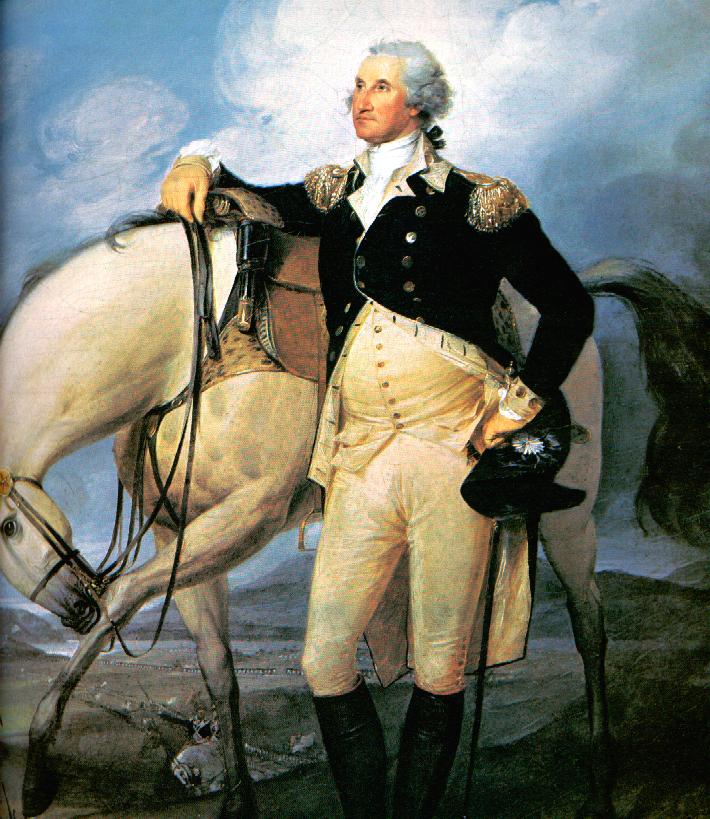
George Washington Circa 1782

Labour to keep alive in your breast that little spark of celestial fire, called conscience.

GEORGE WASHINGTON, Rules of Behavior

A man’s intentions should be allowed in some respects to plead for his actions.

 WASHINGTON, letter to the Speaker of the House of Burgesses, Dec 1756

There is a Destiny which has the control of our actions, not to be resisted by the strongest efforts of Human Nature.

GEORGE WASHINGTON, letter to Mrs. George William Fairfax, Sep. 12, 1758

I shall not be deprived … of a comfort in the worst event, if I retain a consciousness of having acted to the best of my judgment.

GEORGE WASHINGTON, letter to Colonel Bassett, Jun. 19, 1775

It is with pleasure I receive reproof, when reproof is due, because no person can be readier to accuse me, than I am to acknowledge an error, when I am guilty of one; nor more desirous of atoning for a crime, when I am sensible of having committed it.

GEORGE WASHINGTON, letter to Governor Dinwiddie, Aug. 27, 1757

Some quotes to think about in these days of chaos that are also potent with opportunities for renewal and change, they are words of a human as true today as then.  The man who spoke or wrote them would not recognize the world of  today.   Those living today might have the same trouble with the world twenty years hence,  but the quotes will be as true then as they are now and were in the eighteenth century.