3rd Power Law, 0 Complexity premium, working memes for 3D Printing

20130528-112826.jpg

A 3-D printed table … with holes and all. Photo: rosemarybeetle / Flickr

WIRED http://www.wired.com/opinion/2013/05/an-insiders-view-of-the-hype-and-realities-of-3-d-printing/

3-D printing is indeed an important fabrication technology, because it has the marvelous ability to make anything regardless of the complexity of the form.

BUT

Everything from cost and time to amount of material increases exponentially: specifically, to the third power. So if we want something twice as big, it will cost 8 times as much and take 8 times as long to print. If we want something three times as big, it will cost about 27 times more and takes 27 times longer to print. And so on.

Love simplifying memes, these are two great ones that help the mind focus on the issues involved when ‘discussions’ dealing with potentials are taking place.

Also in the article:
The reminder that these are not replicators, not yet anyway.

AND

That many of the technologies enabling 3D printing are enabling CNC machining, laser-cutting, robotics and more, at DIY / hobbyist scale.

Now this Really Is Rocket Science

New research key to revolutionary ‘green’ spacecraft propellant at Phys.org
Got me interested in this new material…liquid…which is REALLY cool, in a hot sort of way, look at this briefing by the Air Force Research Lab…this Rocket Fuel burns at 1600degC but it just sort of fizzles if thrown on a fire, sits there when hit by a hammer, does not create clouds of toxic fumes and while not a great ice cream topping is not wildly poisonous either…and this stuff was actively developed, not just stumbled across. Such is the power of modern research tools and materials knowledge.

20130507-211124.jpg

The GPIM project aims to introduce AF-M315E as a green alternative to hydrazine (Credits: NASA).

phys.org | Do-it-yourself invisibility with 3-D printing

20130506-220828.jpg

“I would argue that essentially anyone who can spend a couple thousand dollars on a non-industry grade 3-D printer can literally make a plastic cloak overnight,” said Yaroslav Urzhumov, assistant research professor in electrical and computer engineering at Duke’s Pratt School of Engineering.
Urzhumov said that producing a cloak in this fashion is inexpensive and easy. He and his team made a small one at Duke which looks like a Frisbee™ disc made out of Swiss cheese. Algorithms determined the location, size and shape of the holes to deflect microwave beams. The fabrication process takes from three to seven hours.
“Computer simulations make me believe that it is possible to create a similar polymer-based cloaking layer as thin as one inch wrapped around a massive object several meters in diameter,” he said. “I have run some simulations that seem to confirm this point.”

Read more at: http://phys.org/news/2013-05-do-it-yourself-invisibility-d.html

Well ain’t that just Harry Potter cool?

Meta material technique allows for high efficiency coupling of light on a surface AND the ability to switch direction via polarization

20130428-161227.jpg
An electron micrograph shows the nanoscale perforations at the surface of the plasmonic coupler. Credit: Jiao Lin and Balthasar Müller.
(Phys.org) —A Harvard-led team of researchers has created a new type of nanoscale device that converts an optical signal into waves that travel along a metal surface. Significantly, the device can recognize specific kinds of polarized light and accordingly send the signal in one direction or another.

Read more at: http://phys.org/news/2013-04-physicists-left-solution-on-chip-optics.html

Pretty important stuff, ducting light around on chips is an important ability for future electronics…or maybe one should say, nano- electro- optic- systems. Cool stuff…

Graphene conductor is ink-jet-able, flexible, what about 3D enabled?

Inkjet-printed graphene electrodes may lead to low-cost, large-area, possibly foldable devices at phys.org by Lisa Zyga

This is the sort of technology that could enable 3D electronics for all sorts of applications from industrial and maker shops.

20130424-214235.jpg

‘Just’ eye candy

Wind vs. Solar … Advantage … Solar

To me it looks like wind power is a long term loser, I think the capital intensive and land intensive technology may be overtaken by solar…partly because solar seems much more amenable to new nanotechnology ‘helpers’ in comparison to the relatively old school large scale engineering materials tech that dominate wind … And it seems like their are many more complex scaling issues with wind in comparison to solar.20130420-131727.jpg

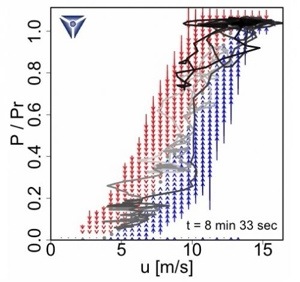
Screenshot … showing the power output vs. wind speed signals for a wind turbine. Credit: Patrick Milan, et al. ©2013 American Physical Society

20130420-132025.jpg

Shifting winds: A simulation shows the effects of turbulent wakes on downstream wind turbines. The turbulence affects air as high as a kilometer above the ground.
20130420-132339.jpg

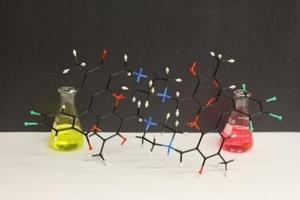
University of Chicago researchers have created a synthetic compound that mimics the complex quantum dynamics observed in photosynthesis. The compound may enable fundamentally new routes to creative solar light harvesting technologies. Credit: Graham Griffin

20130420-132625.jpg

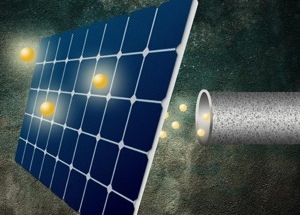
In a standard photovoltaic (PV) cell, each photon knocks loose exactly one electron inside the PV material. That loose electron then can be harnessed through wires to provide an electrical current. But in the new technique, each photon can instead knock two electrons loose. This makes the process much more efficient: In a standard cell, any excess energy carried by a photon is wasted as heat, whereas in the new system the extra energy goes into producing two electrons instead of one.

20130420-132902.jpg

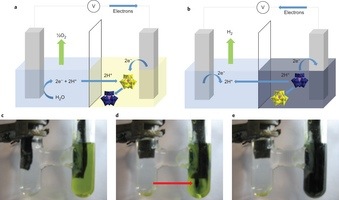
Schematic of the ECPB-based approach to water splitting. Credit: Nature Chemistry.
The process by which plants convert energy from the sun’s rays into chemical ‘fuel’ has inspired a new way of generating clean, cheap, renewable hydrogen
20130420-133252.jpg

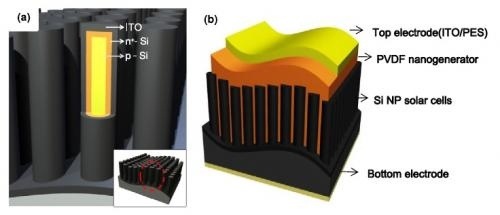
(a) Diagram of the silicon nanopillar solar cell. (b) Diagram of the hybrid energy harvester consisting of a piezoelectric nanogenerator integrated on to of a silicon nanopillar solar cell. Credit: Dae-Yeong Lee, et al. ©2013 IOP Publishing Ltd
20130420-133719.jpg

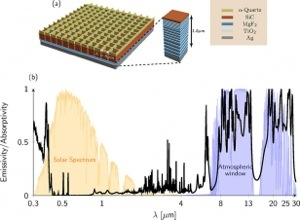
Stanford researchers are developing rooftop panels that cool buildings by sending heat back into space, a technique that could be more efficient than running an air conditioner from solar panels.

And if you look you will find much more of the same…in some areas of the world Solar is more cost effective than other albeit expensive sources and the tech tends to be small scale he scale-able and independent of higher level infrastructure, be it a national grid link or capital level finance, and it tends towards robust systems with local failures isolated … It seems likely this is the future and wind will be relegated to niche plays. Which could still be important…. 20130420-134815.jpg
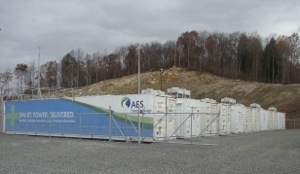
Batteries: Cheapest Form of Grid Power? Using a wind energy and expensive lithium-ion batteries, AES Energy Storage is making money by stabilizing the grid.