
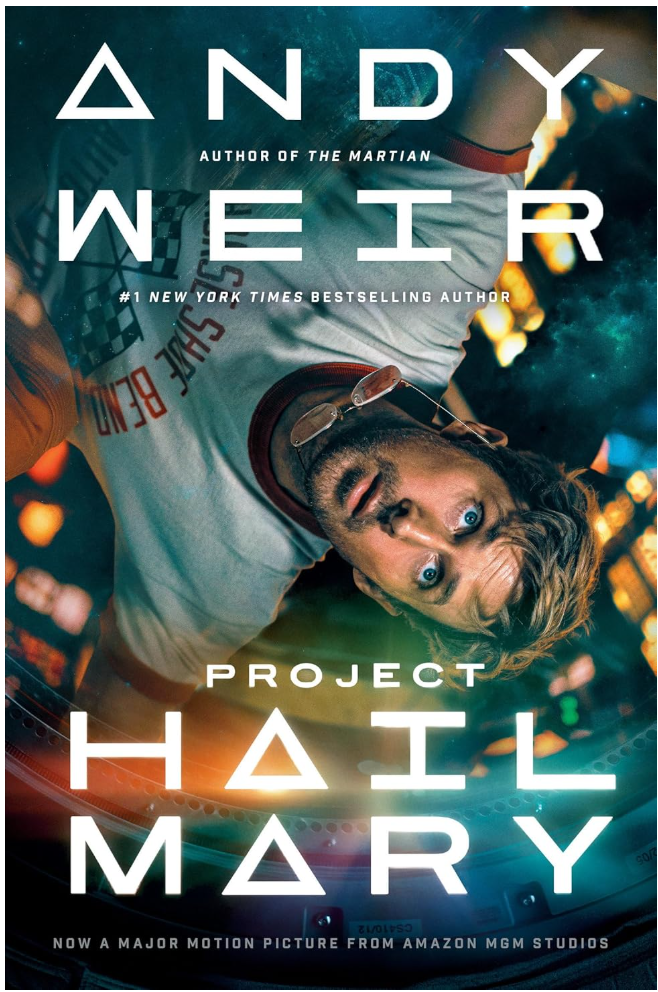
Andy Weir has a rare gift: he writes ordinary people — genuinely, recognizably ordinary — who have a skill that is also recognizable, and then puts them in situations where their one extraordinary competence is the only thing standing between them and death (in the case of Project Hail Mary, the extinction of the Human race.) The heroism is quiet and technical and you could almost believe that you could do that in the right circumstances.
You believe it because he’s made you believe in the person first. I saw the movie. I read the book years ago. Both are excellent, and the movie is one of the most faithful book-to-screen adaptations in recent memory.
Like The Martian before it, the film sticks closely to the book in both thesis and spirit. That fidelity matters: both stories rely on the reader/viewer trusting that the protagonist’s problem-solving is real, not movie-magic. Break that contract and the whole thing collapses. Weir earns it on the page; the filmmakers preserved it on screen.
The one genuine gap between novel and film is interior monologue. Novels handle internal states naturally; movies almost cannot. But Weir constructs scenes that externalize internal conflict visually — and those translate superbly.
A couple of minor side arcs from the book are absent, and I think those were wise cuts. They deepened the protagonist on the page but would have felt excessive at feature length.
One thread that bothered me in the book and still bugs me in the movie: Ryland Grace is pulled into the program because in his post-doctoral research he had proposed that alien life does not require water and carbon — and had defended that position to a career-ending degree. When the AstroPhage is first discovered it appears very alien, so Grace is brought in for initial analysis. He then finds it’s made of the same materials as Earth life — which undercuts his entire reason for being there and threatens to sideline him. That it doesn’t is a good twist; go see the movie or read the book for how it resolves.
Here’s where my engineering brain creates further friction. The AstroPhage’s energy density is extraordinary, and the novel acknowledges this and hand-waves it away. I cannot see how any life form built on biology similar to our own could handle those energy levels — it feels bolted in, even if it probably wasn’t. Similarly, Rocky — the alien Grace meets at the target sun — turns out to be exactly what Grace originally proposed: a non-water/carbon life form, which feels a little convenient in vindicating him.
There are complaints about Rocky delivering a specific thematic point about first contact and communication. My view is the opposite (other than the niggle above) that whole piece is brilliantly on point and there would not have been much of a story without it.
None of that diminishes what Weir achieves. He takes relatable people with very human quirks and puts them in situations where they have to fight to survive — and we root for them completely. And here i put the very alien Rocky in the bucket of people…he is about the best alien I have seen in a move ever. I wish I were half the author he is, and I say that as someone who is trying. Project Hail Mary is the rare book where you finish it and immediately want someone else to read it so you can talk about it. The movie earns the same feeling. Go see it.
 This World and Others