Review: Man of Steel

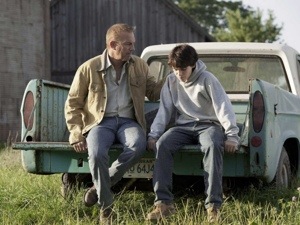
20130623-130611.jpgMy son and I went to see Man of Steel yesterday and thoroughly enjoyed it. In my opinion ‘Hollywood’ for all the damning it/they take these days is/are in fact incredibly good at making movies that the ‘public’ like me enjoy, see: Star Trek into Darkness, Iron Man III, Oblivion, etc, etc….I will agree that they are not so good at making movies that spark movements, deep introspection, change hearts, etc but the working stiffs out here in the real world can only take so much of that (near zero in my case since I suffer internet news triggered navel starring disorder class one to begin with and go to the movies to get away from the world not to get hammered from one more angle by it .)
Other reviews:
http://booksforkidsblog.blogspot.com/search?q=Man+of+Steel
http://www.npr.org/2013/06/13/189284063/steel-trap-snyders-superman-between-worlds
http://arstechnica.com/gaming/2013/06/man-of-steel-review-a-surprisingly-human-superhuman-story/
Henry Cavil …Clark Kent / Kal-El. Great choice
Amy Adams …Lois Lane. Fun to see
Michael Shannon …General Zod Great choice, great part, good man in evil cause
Diane Lane …Martha Kent Yes!
Russell Crowe …Jor-El Wow!
Harry Lennix …General Swanwick Good pick
Richard Schiff …Dr. Emil Hamilton Good pick
Christopher Meloni…Colonel Nathan Hardy Good pick
Kevin Costner …Jonathan Kent Oh Yeah!
Laurence Fishburne …Perry White Great supporting role

This is a very good movie despite what some say, though things that I think make it stand out perhaps ruin it for others. It has now been said many times, this is, at its core, a Science Fiction, not a genre Super Hero, movie and that core is very, very good. Man of Steel takes the Superman back story, fleshes it out and draws it out into a fully imagined prequel to the superhero of our childhood. This story of his birth and orphaning to Earth is striking and heart felt.

An artist without the commercial drivers of movie making and IP dollarization might have been able to stop there without much, if any, Super Hero baggage, leaving us with what might have been a timeless piece of work.

What I see as the problem is that the ‘execs’ felt they needed more than a good science fiction movie based on the Superman back story. They wanted a summer blockbuster super hero movie. So the creators gave them a summer blockbuster SciFi blow em up of the Independence Day sub genre and a Super Hero movie of the Spider-Man genre. They then proceeded to lace these pieces together with the science fiction piece, quite successfully mind you, into Man of Steel.

The three movies in one do actually make an entertaining whole with the core Science Fiction story providing gravitas. The other two parts do their thing though too often when two or three of the ‘bits’ have to overlay, things seem to get spoiled.

As said elsewhere some of the action sequences particularly around the Kent’s home town are too drawn out and there is something almost bug like about the super speed fighting that takes you out of the moment.

In the long battle scenes in ‘Smallville,’ Metropolis, even on Krypton, the humans and normal Kryptonians in the battle zone get squished/slaughtered in bushel lots with very little comment. Yet when Zod forces superman to kill him, Cal-El seems incredibly distraught, as distraught as when his adoptive father stops Clark from saving him thus revealing his super powers during late adolescence.

Related side note: My son said he was glad that the creators had not ruined the ‘reality’ of the action sequences by showing repeated miraculous saves. And though from one view it’s a bit cold from my writers perspective he is absolutely right.

There’s a lot one could say about this movie, my bottom line, if you have hesitated to go due to one review or another my suggestion is go, (see the cheap regular version like we did, it’s excellent and I’ve come to the conclusion that 3D, IMAX3D, etc are not really worth the extra price.) The theater we went to was quite well filled for mid afternoon second week with other new starts, and the folks behind us had seen the movie at least once and perhaps twice before and still seemed ready to see it again after the show.

Cheers

Scared Stupid, the US in the post 9/11 world

Read the whole thing, if you can take the blood pressure spike:
Scared Tactics: Why America will be paying for decades for a foreign policy based on fear.
BY DAVID ROTHKOPF | JUNE 18, 2013

Prudence is a term often invoked by the fearful for doing too much or too little. But it shouldn’t obscure what is really happening. Our insecurity rather than our goals is too often playing too great a role in driving our actions. Whether this is a momentary anomaly or longer-term symptom common to declining nations that have lost confidence in important aspects of themselves remains to be seen.

Sorry to say it but every day I see more evidence of our craven collapse in the face of a dangerous but far from existential threat. Our whole damned political class has lost the ability to stand straight, speak straight, be straight. To understand fundamentals like human nature and human societies outside our bubble, economics, social dynamics, technology, etc except in the narrowest most self serving way.

Dr Ben Carson, conservative health system

BY JOHN HINDERAKER IN CONSERVATISM
DR. BEN CARSON
Last Thursday’s Annual Dinner of the Center of the American Experiment. This year’s speaker fDr. Benjamin Carson, one of the most eminent physicians in the United States, whose speech at the National Prayer Breakfast made him a household name. There was a lot of excitement about Dr. Carson’s appearance, and 1,000 people, a sellout crowd, attended the dinner.

a market-based, consumer-oriented alternative that starts with expanded health savings accounts. Carson points out that 80% of an individual’s encounters with the health care system need not, and should not, involve insurance. That would be the realm of HSAs. Then, with respect to insurance, better information and the simplest forms of incentives can easily bring down costs. The truth is–this is me speaking–it wouldn’t be difficult to improve the health care system, if health care was your real concern, and you weren’t motivated mostly by a desire to increase government power.

Interesting perspective piece, this was a great statement of what I think we need for health care in the US. Just add a very basic safety net for those who are not able to save enough or unable to plan well enough for themselves, and this might not be pretty for those too lazy to do the minimal work they should to ensure coverage.

Syria, the ugly truth is its not going to get better

Syria (like Egypt) as presently constituted simply is not viable as a country. Iraq might be viable, because it has enough oil to subsidize a largely uneducated, pre-modern population. As an economist and risk analyst (I ran Credit Strategy for Credit Suisse and all fixed income research for Bank of America), I do not believe that there is any way to stabilize either country

Read more @:http://pjmedia.com/spengler/2013/06/05/muslim-civil-wars-stem-from-a-crisis-of-civilization

The Romans did it

20130604-223315.jpg

This image shows a drill core of volcanic ash-hydrated lime mortar from the ancient port of Baiae in Pozzuloi Bay. Yellowish inclusions are pumice, dark stony fragments are lava, gray areas consist of other volcanic crystalline materials, and white spots are lime. The inset is a scanning electron microscope image of the special Al-tobermorite crystals that are key to the superior quality of Roman seawater concrete. (Credit: Lawrence Berkeley National Laboratory and University of California at Berkeley)

read more at: http://www.sciencedaily.com/releases/2013/06/130604135409.htm

Roman technology was very advanced, their society collapsed due to political and social forces not for a lack of tools.

Entrepreneurial Drought Limiting job and wealth creation

20130604-210243.jpgWhere are the entrepreneurs? More evidence the very heart of the US economy is failing
James Pethokoukis | June 3, 2013

In my opinion the culprits are easy to discern…..

  1. Uncertainty
  2. Regulation
  3. Taxes
  4. intellectual property law breakdown ( too much, too long, too easy)
  5. Healthcare
  6. Retirement
  7. Risk aversion by banks

I am also thinking that:

  1. the informal economy is more active than is accounted for
  2. people who are paid can in fact support more hangers on than one might expect
  3. especially away from the ‘urbs’
  4. significant numbers are hidden on disability of one sort or another

Which may be hiding lots of small scale entrepreneurial efforts.

But in the main what we are seeing is the aggregate effect of the first list which significantly suppresses the urge to grow. Many commentators miss that the way so much regulation is structured once you reach a certain size it suddenly becomes asymptotically more difficult / expensive / stressful to operate. This makes even starting much less attractive. It also means that we are suppressing companies just as they start to kick up into a realm where they could potentially quickly accelerate out of small business land into middle sized and become more consequential.

This is a socio-economic problem that has to be solved on a broad scale:

  1. Lower but still progressive taxes
  2. Brute simple tax code
  3. Individual focused health care
  4. Individual focused retirement
  5. Small business non interference focus in government rules setting
  6. Standards setting and supporting organizations for: health, safety, financial stability, etc, instead of regulatory administrations
  7. Return IP law to its small creator anti monopoly roots
  8. Support a couple of ‘international’ banks but return banking to moderate scale focus
  9. Eliminate subsidies
  10. Continue deep and wide science support with focus on stimulating commercial support like NASA’s ISS assured access program.

Both main parties need to develop their versions of this list, the massive scale, top down, big corporation supporting model both have devolved into has come to the end of its efficacy and we need to go back to our roots. Those roots are individuals acting on, in and through the small scale collective, which both Dem and Rep should be able to support. Of course the downside is that large scale pandering and petty corruption are less hide-able in such a polity.

Libertarianism – Syria, Iraq, Afghanistan… – non intervention may not be the lowest cost option

Richard A. Epstein, the Peter and Kirsten Bedford Senior Fellow at the Hoover Institution
The las paragraph:

No Libertarian Panacea
There are larger lessons to learn from these foreign policy issues. The first is that libertarians, like Chapman and myself, can both be faithful to their basic principles, yet differ strongly on what should be done. The basic principle of libertarian thought is its blanket prohibition against the use of force (including the threat of force) and fraud to achieve personal gain at the expense of others. That principle translates easily into the international context to say that one nation cannot wage war against another.
However easy it is to state that basic principle, it is just that hard to implement it, especially in a world of self-help where there is no common sovereign to stop the use of force. It is easy to allow the use of force in self-defense, but difficult to prevent that excuse from being used by scoundrels for their own ends.
It is even harder to get to the bottom of the simple question of when and where one person (or nation) should come to the assistance of another. The basic legal rule is that such intervention is permissible but not obligatory, and only on behalf of the victim of the attack. The general private law rule that there is no duty to rescue a stranger in a condition of imminent peril from natural forces, even though there is an obvious right to do, carries over to the matter of self-defense.
The great tragedy then is that the clear moral principle can easily become overwhelmed by a series of subsidiary conflicts that extend from difficult factual disputes about the past to uncertain predictions about the future, all set against a background that allows for the exercise of good faith judgment without clear guidelines on how it is best exercised. I do hope that I am wrong, and that the President is doing the right thing. But all things considered, I think that there is a serious risk that his policy of studied disengagement may well turn out, down the road, to drag us into some larger conflict against our will.

More at: http://www.hoover.org/publications/defining-ideas/article/148476
Essentially the little wars and conquests prior to WWII made that war an inevitability. Whereas earlier action by the major powers might have prevented its occurrence though I have to say that it’s unlikely to have had a happy ending, war and civil war were inevitable. It might even have lead to a less pleasant world than the one we live in, fascism might have lasted longer, communism might as well, and lord knows the ‘west’ was not what we would see as freedom loving and inclusive.

Tyranny of Data, McNamara’s whiz kids to Google’s geek culture

20130602-174541.jpg

Body count: U.S. Defense Secretary Robert McNamara briefing the press on Vietnam at the Pentagon in 1965.

Read more: http://www.technologyreview.com/news/514591/the-dictatorship-of-data/#ixzz2V67sF8kO From MIT Technology Review
Seems to me that McNamara epitomized the dark heart of the blue model industrialization, he was trying to make central planning work using the tools of capitalism. Big data has the the potential to make Stalinist (central planned top down industrial society) real like no tool before it. But at the same time the underlying technology will make centralization ever less attractive overall, ever less economically efficient. Some nations may fall to Big Data / Big Brother but they are not likely to become conquerors by economic or military coercion because the Maker States will be so much more resilient and efficient. Of course that assumes short sighted politicians/bureaucrats don’t take us all down some ‘consensus’ path because of short term returns that fools take as structural not ephemeral.