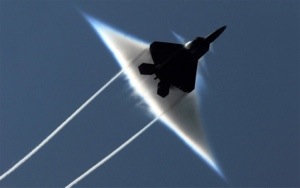
One Two Three Four, We Could Get A Nuclear War

One Two Three Four, We Could Get A Nuclear War.

ARES a AWST blog….

“money quotes:”

Watts argued that many countries are no longer pursuing nuclear weapons as a direct counter to U.S. nuclear power, but to compensate for relatively weak conventional forces. That includes Russia, where Watts cites president Vladimir Putin’s emphasis on the importance of nuclear weapons, and post-Cold-War doctrinal writings that talk about using limited nuclear attacks as “demonstration and de-escalation” strikes, to deter or terminate a large-scale nuclear war.

…it’s like a police department whose only force option is to blow up the entire block where the perpetrator lives.

Indeed, U.S. extended deterrence is something that not enough people think about when they advocate further cuts in U.S. nuclear forces. The American “umbrella” covers nations such as South Korea, Japan and Turkey, which have the industrial and technological capability to go nuclear very quickly if they feel that they can no longer rely on the U.S.

Watts warns, “limited use of low-yield nuclear weapons will become the new normal and give rise to a second nuclear age whose dangers and uncertainties will dwarf those of the first.”

20130418-213438.jpg

Crap!

Soviet era rocket tech powers Anteres

20130418-202818.jpg

File photo of the NK-33 engine firing on a test stand. Credit: Aerojet

From space flight now an article on Orbital Science’s Anteres launcher, specifically the rocket engines. It’s interesting that the Soviets were so good at some things and awful at others.

But then engineering is a very neutral endeavor and one that can adsorb your passion and develop your stoic nature…very good things in Stalinist Russia.

One should also remember that while ‘the west’ got the ‘brains’ of the Nazi German Rocket cadre (like Werner vonBraun) the Russian’s got the great majority, the working engineer types, who in the end have to slog through the agony of turning strokes of genius into real hardware, and it’s the slog that gets you deep capability not the strokes.

Rocket Romance

20130415-055808.jpg

ars technica article on the F1B engine the derivative of the Saturn 5 main engines competing for the strap on for the Senatorial Launch System… I don’t love the SLS but the F1B is exciting and worthy, I just wish it were part of a more commercially driven program.

2nd page has a great explanation of the difference between kerosene and liquid hydrogen as a fuel for first stage engines, fun for the rocket scientist in all of us…or at least me.

20130415-060156.jpg

The thousand yard stare

20130414-232724.jpg
Another ars technica article on the computer guided rifle. Though really cool tech and something I’d like to try out at the range, it’s a pretty creepy concept when thought about in a little detail (and its obvious that Lee Hutchinson the writer had some qualms.) But every advance in hunting tech has been seen that way … ‘hey Oog that clubs really unfair you ought to use rocks like the rest of the guys!’ … even the barely socially conscious among we advanced (maybe) apes know that killing should not be too easy.

US Air Force = ‘hollow force’ ?

20130414-134725.jpg

20130414-134734.jpg

20130414-134746.jpg

20130414-134756.jpg

20130414-134813.jpg

20130414-134821.jpg

20130414-134831.jpg

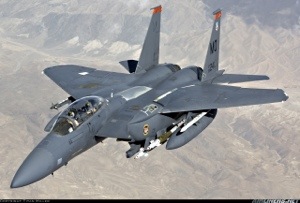
This article on the USAirForce in The American Interest is part of a series, incomplete as of this writing, on the US Armed Forces, and the road forward in this period of draw back and draw down. The ones on the Army and Marines are worthy and insightful but don’t get to the nitty gritty level required for me at least. While this AF article could be argued to be in the same vein I think it’s stronger and that may be because the technology and mission of the AF are very tightly interwoven making it simpler to see the overall threat.

The argument is that the AF has been all but static in the past 20+ years since Desert Storm. That a combination of victors-hubris along with techno-hubris and perhaps political ineptness have left us with a hollow force at the sharp end. The AF is arguably all over its technological mission in support of communication, reconnaissance, threat detection, navigation, etc, and has been shown to be king of battle in low intensity conflict (a turnaround of epic proportions from Vietnam.) But this camouflages the fact that if we had to do Desert Storm against a foe withe the modern equivalent of Saddam’s air defenses we would suffer vastly higher casualty rates, to the point of perhaps not being able to dominate the air space to anything like the same degree, perhaps pushing us back to an earlier era’s loss ratio’s.

There is a call to back the F35 and the NGB (next gen bomber) which I agree with since all other platforms are wearing and aging out (aging out happens as old tech ( particularly electronic and electromechanical) gets impossibly expensive to support because the devices and materials used are obsolete and no longer available sometimes even illegal due to toxicity or country of origin.)

I’m not bought in on the hollowness, yet. Yes the AF / DoD bolloxed the F35 and its now causing the above wear/age issue but does it matter? The first wave B2, B1 and cruise and strike missiles from B52’s etc would take down any known threat’s air defenses long enough for the channel to be cauterized by strike aircraft and special forces…which is what happened in DS. Yes some might have ability to hang tough with fighters, for a few hours, yes some might have backup lines and reserves, but having them and using them are two very different propositions once the AF is in their backfield.

What about a peer / near peer you ask? What peer / near peer I ask? Not NorK NorK, not Iran, not Russia or China either…a limited war against either is essentially the scenario above. Anything more in those two cases and sheer area would provide a huge force multiplier on their side. Thats ignoring the fact that both are serious nuclear powers and serious world diplomatic players who we are Never Going to War With directly until nuclear weapons are off the table…though of course you have to game the doomsday scenarios…but in those cases the war can never expected to be winnable or lovable in a conventional way.

Cool solution to a real problem

20130412-144208.jpg

Wired Autopia Piece

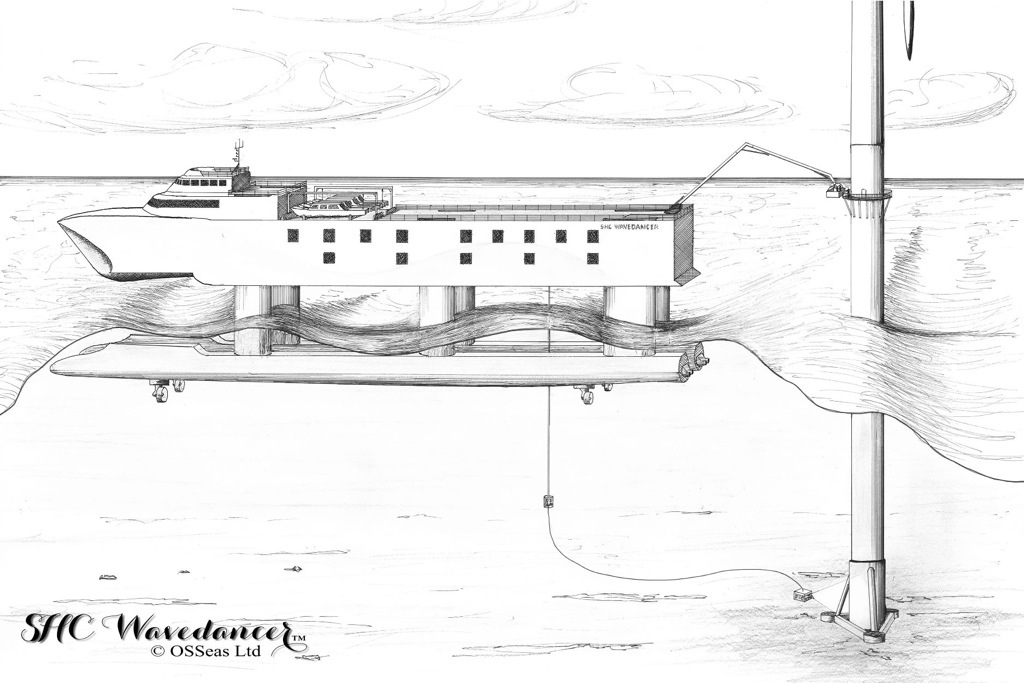
Safe comfortable service offshore service craft are a very real need with the growth of offshore infrastructure. Bigger conventional hull forms hare being built but in reality bigger is not a good option for service craft. This is a traditionally, and rightly, conservative industry but its also one where big break throughs can ignite rapid change.

The proposed craft is what is generically called a SWATH( small waterplain hull) design, and the proposer has it right about the advantages. Though a SWATH is usually intended for best transit performance ( ride, efficiency, safety and speed) the proposed ability to change the ‘ride height’ is different, in line with some mored rigs ability to ballast down for best ‘ride’ in a particular area or sea state.

Regarding transit, I think the writer may have misunderstood the concept creator, fast ferries are generally catamarans and these days often SWATH or SWATHlike craft. I think the lower hulls would be brought up to some intermediate depth for high speed transit not retracted into a hull riding form, which is both rough riding and less efficient. Either that or there is some patent/IP gamesmanship going on…which would not be surprising.

Optical Research equipment via 3D Printing, signs of things to come.

20130409-212711.jpg
Perhaps not sexy but Right On! Article discusses the huge reduction in cost enabled by fabbing ones own optical components. Once scientists were the smart and the curious exploring the world with tools they made themselves. The wave of design software and fabrication tools, much like the wave of page design software and color printers of two decades ago, presage an utter change in the ability of the Everyman ( either, any sex, age) to explore to build/create and add to the sum of Mankind’s repository of knowledge / value.