
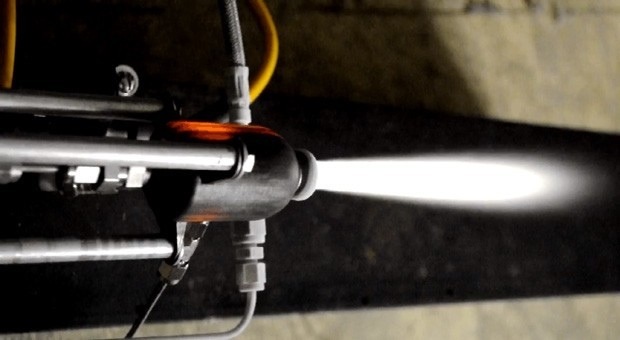
Article in wired but others as well ultra cool use the knowledge, vision, wisdom of those who come to do.

Article in wired but others as well ultra cool use the knowledge, vision, wisdom of those who come to do.
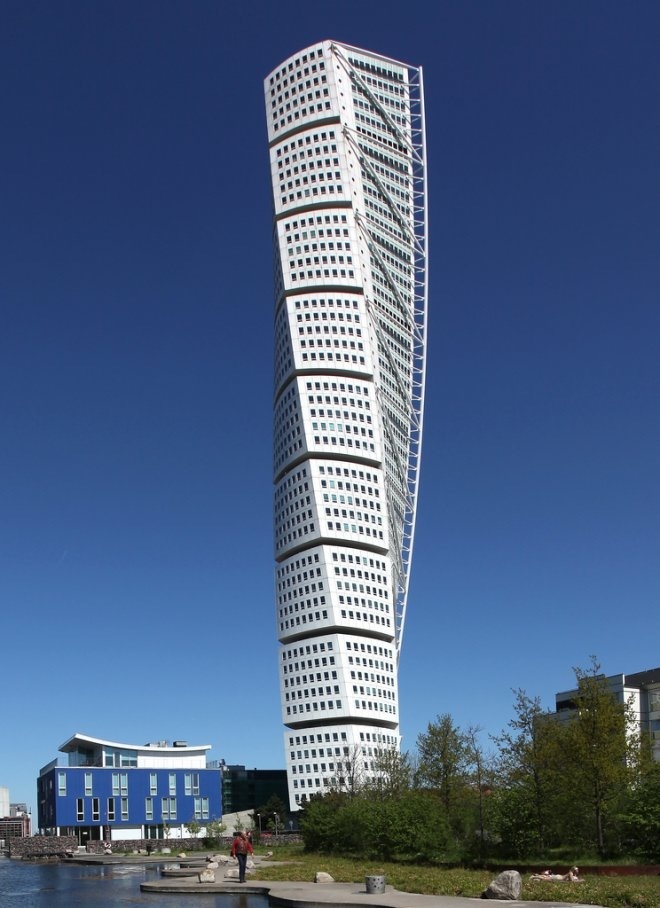
Wired’s building of the week, have got to say this makes me glad I’m not an office worker.
And a great reason to show a picture of a beautiful woman ( “muse and model” Dita Von Teese),
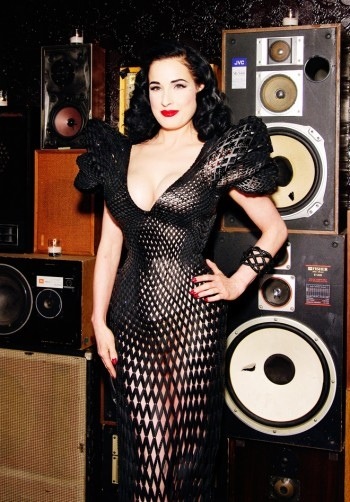
Photo: Andrew Tingle/Wired
Article in Wired, clothes cusomized to you are coming. The dress was made from several panels of laser sintered nylon giving the dress the ability to conform to the wearers body, cool and slinky sexy, if a bit Metro Goth.


The Verge | I rode the ZBoard in Las Vegas and it changed my life

Read the article, this is what Kickstarter is all about.

Wired | The Common Space Fleet (1968) BY DAVID S. F. PORTREE 12.26.12 7:50 AM
Even as the moon landing was approaching futurists were looking to what should follow. They were looking at manned multi year missions based on the technology they had, reuse and incremental development of Apollo – Saturn technology. Just reading this article sent me of into a dream of what could have been. Just thinking about it made me sad, mad, glad: sad for what might have been, mad at those who sidelined the dream because of shortsightedness, glad that at least some had the sense to think-dream based on common sense.
Today Elon Musk and a few others are dreaming similar dreams maybe having read a few of the NASA documents though the basics are so common sense they do not have to have.
An interesting discussion, at least for a futurist / SciFi writer.
If you know someone is x years old then you can know (generally) that they will almost certainly live y more years and will be almost certainly dead in z years.
However if you know a technology (defined almost as you like but embodying knowledge) is x years old then you can (generally) expect it to last at least x more years.
So as x gets larger Tlife gets longer but Plife stays the same…so aging, that is the rough measure of, age/life, is opposite for tech vs us biotypes… An interesting idea to roll into a story sometime.
The iPad is the premier tablet and it’s probably nearly the perfect size and weight for its form factor. That’s not to say that within the form factor there is no room for improvement. A screen that takes up most of the face should be a near term target, as should an auxiliary screen on the back face that provides bright light reading and low power / speed interactivity for those who don’t live indoors all the time. To support the iPad as a companion device, multi level security is a growing need.
Make the bezel the same on the iPad as minimal as possible (get rid of the push button) push the screen out to the edge, don’t change the shell size. This with continued pixel densification will put the screen on another level altogether. Make thumb and palm detection native and intelligent enough to enable me to rest my palm on the screen and write with a stylus as if the screen were regular paper.
Put an eInk reader panel on the back to enable the display of text and graphic art, this will enable high light low power reading applications and some other limited visual bandwidth applications such as phone etc. (This will be accomplished with a smart cover but it would be cool if it were integral with the iPad.)
The radio suite & battery life along with the camera, face time, GPS, and other built in sensors are probably good enough not to call for increases in size weight, but neither should they be decremented.
The iPad is far to big a part of many people’s eLives to leave to the pitiful protection it has today. We need multi level security, enable me to turn the iPad on as if there is no security for consuming web pages, playing games, and using certain apps. But for other functions use face recognition, symbolic coding other than a number pad, voice recognition, retina image recognition and even finger print recognition in combination to protect various levels of data in the unit.
Enable cyber security with one or more over watch processors that is not linked to the outside world for some level of checking to make sure that the tablet has not been compromised. A version of this ‘chip’ may be linked to a secure remote system (short-range) so businesses or organizations can disable certain functions of the iPad remotely to make sure that pictures, audio, or other data cannot be put into memory without authorization. This Big Brother functionality is a bit daunting but at least the over watch processor is probably going to be needed. The full BB may be an external attachment and not integral so one can shed it easily….
3D / Additive Manufacture in Space! Two favorites in one!
And its an SBIR…Small Business Innovative Research, program, how cool is that on top? The SBIR program is a personal favorite of mine. It basically provides entrepreneurs and engineers with ideas with funds to develop a concept and put together a prototype then helps them either commercialize it or work with a big company to bring to the market or to NASA, USAF, Navy, Army, DoE, DoT, DHS etc. When done right which NASA, the Navy and to some extent the AirForce and Army have done this can provide fantastic bang for the buck. Its only downside is that it can be seen as a substitute for bigger development programs and it’s not. SBIR works for initial concepts, for components, basic materials, small-scale projects (App scale maybe) but it’s not enough bucks to do anything major. The only program that does something similar on a larger scale is DARPA, which is also a world leading organization in this area.

On Thursday, NASA announced the selection of 39 proposals for Small Business Innovation Research (SBIR) Phase II awards. …… Made in Space, a Silicon Valley company working on 3-D manufacturing in space.
Made in Space, Inc.
Moffett Field, CA
PROPOSAL TITLE: ISS Additive Manufacturing Facility for On-Demand Fabrication in Space
SUBTOPIC TITLE: ISS Utilization
Estimated Technology Readiness Level (TRL) Begin: 6 End: 8
TECHNICAL ABSTRACT
Made in Space has completed a preliminary design review of the Additive Manufacturing Facility. During the first half of Phase 1, the design went through conceptual development, simulation testing, cost analysis, and comparison testing of which off-the-shelf parts can be used. The deliverables for Phase I include a written report detailing evidence of demonstrated technology (TRL 5) in the laboratory and will outline in detail the path taken toward hardware demonstration for Phase II (TRL 6). The preliminary design is ready to be manufactured as an engineering test unit in Phase II. A feasibility study was created to demonstrate what could be fabricated for the inside of the ISS (parts and spares) and for the outside (possible satellites). It is anticipated that many of the sample uses that the AMF will make possible on-orbit have not yet been envisioned.
 This World and Others