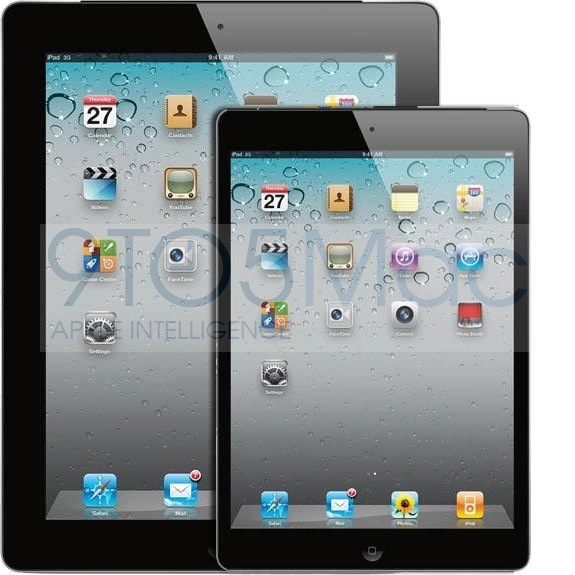
Apple’s iPad mini, its a steal…

There are arguments that Apples pricing power is limited and that the cost of making a premium small pad like the mini is something like 200 meaning that they break even at somewhere between 250 and 300 considering distribution and profit.  There were arguments for a 250ish (essentially subsidized) and 300ish (bare profit.)  Whereas the base 330 (ok 329 but don’t get me started on the last 9 pricing phenomenon!!) supposedly provides Apple with its traditional high profit margin.

Now this seems to beg the question how do these folks really know Apples costs?  Yes its a public company but to be honest there are a lot of details hidden in the financials that are really hard to parse. Apple is highly profitable but it also has very high costs relative to its competitors who are either one shot wonders or whose HW / OS work is subsidized by a primary line business which the machine; Google-Nexus tab, Amazon-Kindle, Barnes&Noble-Nook, are important marketing&sales outlets, not fundamental products as products…as much as some chattering set blowhards try to conflate the business models.

The iPad mini is something of a steal, if 200 is the cost of a good 7 in screened plastic housed small pad .  Why do I say this?:

  1. The above machine might have a higher resolution…but to be honest resolution is not the end of the matter, it enhances a screen, makes a small screen look better,  ut it does not solve the problem that you have to hold a smaller screen closer or display less info to make it readable at all.  And when you are a mature adult the eyes are not so good no more…so a 7.9 screen 40% greater area with the same resolution is (probably) a better deal.  And now one has to light up 40% more area so the battery has to have a bit more capacity, etc.
  2. The system has all the sensors including the reasonably good front and backside cameras of the bigger brother, which none of the smaller competitors match.
  3. It also offers a decent processor chip that has proven its chops on other machines making it a smooth and reliable operator
  4. It’s almost as light and compact as some of its smaller rivals because Apple traded bezel for screen to make it ‘handable’ and thus much more of a reading machine in competition with the near pure readers.
  5. It has universally praised design and build standard and remarkable ruggedness (that’s a projection obviously.)
  6. It has the AppStore infrastructure &
  7. It seamlessly integrates with all the other iGizmos from Apple (of which my family has many.)
  8. It’s a good size and capability set for children with their smaller fingers, lower strength, sharper eyes, etc.
  9. At 329 its a better deal for the K-12 educational market and oh by the way its big brother and the rest offer a grown up infrastructure for teachers.

I’m certainly going to buy one and it won’t be a low-end unit, though I will also in the near future buy one of the new-new-iPads, with the understanding that its possible if not likely that Apple will upgrade the product again in 6 months.

Why is Apple doing this? It wants to dominate the space in most people’s minds like it dominates the smart phone, standard tablet, one piece desktop, and ultra-portable markets. It has moved sharply into these markets (which were not at the time particularly active) and dominated with yearly product refreshes of significance reinforced with a masterful media circus strategy.  They are late to the game in the small pad market having at first seen it as a value only market, they stayed out till they figured out how to roll it up into the Apple iOs business, which I think they have as explained above.

New Post 1 iPad First

iPad Mini Breakout ideas that seem really unlikely:

  1. It should have 2 (two) screens, one on the back in e-ink for pure reading and the regular one of the front for all the other things one does with an iPad. The reading screen should be able to run when the front screen and the radios are all shut down due to low battery power.
  2. It should have the same screen ratio as the iPhone 5 making it newer and svelte. 

Two worst decisions the new management could have made:

  1. offer the Mini as a Touch Maxi, i.e. without 4G
  2. cheapen it by taking out bluetooth or the higher memory options

What I expect:

  1. iPad 2 resolution machine with retina pixel size.
  2. iPad 2 cpu and gpu maybe a bit better
  3. Light with narrower side bezel, making it look like a large iPod Touch
  4. A very inexpensive basic unit but a pretty much fully rigged top end model that will offer compact footprint as competition
  5. iPhone 4 level camera on the back or better (Apple has realized that they have the point and shoot market at this point.)
  6. iPad 2 will be phased out

Electric Ships Go DC –> DC Helps Electric Ships (SAE Post)

20120909-004934.jpg

dc grid cuts cost, size of electric propulsion systems

11-Apr-2012 09:32 GMT

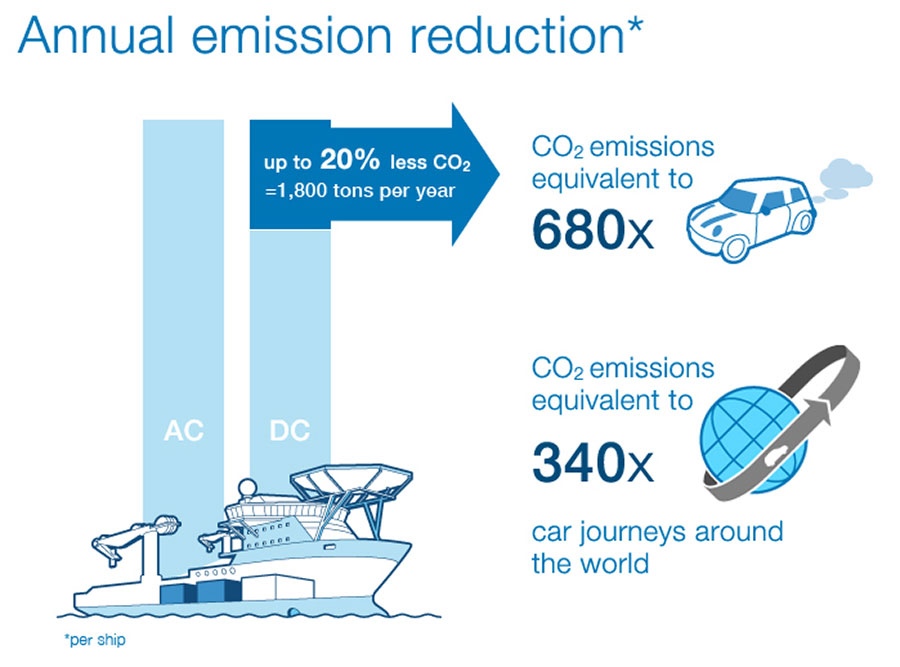
ABB’s dc grid trims the weight and size of the electrical system by nearly a third.

Norwegian ship owner Myklebusthaug Management plans to become the first company to employ a direct current (dc) power grid on board a ship. A 5000-ton (4535-t) offshore platform support vessel will deploy ABB’s Onboard DC Grid, which ABB says will improve efficiency and reduce emissions for ships with electrified propulsion.

In existing electrical propulsion vessels, more than 80% of electrical power consumption goes to thrusters and propulsion drives. They use dc connections derived from an alternating current circuit.

Rather than converting ac to dc, the Onboard DC Grid optimizes propulsion by distributing power through a single dc circuit, according to ABB. ABB predicts that once ship owners see the benefits of electric propulsion, dc grids will see rapid acceptance. Myklebusthaug Management’s 93-m (305-ft) oil field supply and construction vessel is scheduled for delivery in the first quarter of 2013.

“We believe that by 2020, approximately 20% of ships will be electrified, and quite a bit of that will be dc,” said Heikki Soljama, head of ABB’s business unit marine.

One key reason the Onboard DC Grid saves power is that the ship’s engines no longer have to run at a fixed speed. Engine speeds can be adjusted to optimize fuel consumption.

At the same time, bulky transformers and switchboards can be eliminated, reducing the footprint and weight of the electrical system by up to 30%. The main ac switchboards and transformers are no longer needed.

However, ABB’s system extends the many dc-links used in all propulsion and thruster drives. That lets shipbuilders retain the dc generators, inverter modules, ac motors, and other proven products.

The grid can be used for any electrical ship application up to at least 20 MW. It operates at a nominal voltage of 1000-V dc. The power distribution can be arranged with all cabinets in a single lineup using a multidrive approach or it can be distributed throughout the vessel by short-circuit proof dc busbars. That gives designers more freedom for locating electric components, which can result in a more functional vessel layout.

Terry Costlow

Good synopsis of why DC and to some degree why electric…this is the future but as always the path is long and takes odd jaunts that will ‘drive men(proponents) mad.’

iPad , iPad

Not sure what I think about the iPad these days, it’s still the single most used computing device I own but to be honest its the one that I would give up first as well.

Which seems odd.  But while I can do many things with the iPad (reader, Music, light blogging, internet addiction) even creative and work related if I have to, it is by its nature more limited in the depth of work that it supports.  It allows one to create a document and presentation or spreadsheet very well but linking them together is far harder than on a PC.  The scientific calculators I have worked with are simply remarkable but their results are hard to integrate with other packages.  Pictures etc are the same, it’s not that the iPad can’t it’s just that with the App model and its flat file structure you cannot organize or cross pollinate work like you can on a PC.

I am sure that many out there would argue with this, they probably feel that the iPad is liberating or does this or that better than any PC, and they could be right.  I also think that I could get used to using the iPad for many more things, but the effort to change over and figure out how to do things differently would be a very deep time sink.

Don’t get me wrong, the iPad is a remarkable development, the culmination of many attempts over a long time, but it’s not clear that it’s the be all that some, even I, thought it  to be.

That said you’d have to pry my iPad out of my cold dead fingers if you just wanted to take it away now (though if you’re thinking of mugging me for it, you can have it, gives me an excuse to go buy a newer one.)

I am disappointed that no one has developed a better stylus technology, for the iPad.  It needs a pen like system as well as the finger painting mode (the Blue Tiger device that was being hyped a few months ago seemed promising.)  And I also feel that the iPad could do with a daylight readable screen at the current or only slightly higher resolution, with a longer battery life, faster processing and graphics and better error handling (than my old iPad v1).  One cool idea would be a two-faced version.  One with eInk on one side and the existing screen on the other.  That way you could do what you most often want to do in daylight, read and interact with documents, and you still have all the capability of the main screen on the other side.

Ah well, who knows what’s to come in the months and years ahead.  Hopefully someone at Apple will think of a better way of doing the things I want the iPad to do.


Ship to Shore Connector… Landing Craft Air Cushion, only the Gov’t could make something this cool boooring

 These are the final stage of the powerful conveyor that is the Navy’s Gator Fleet, the numerous, rather ugly, remarkably capable ships that carry the Marines to the far ends of the world and deliver them on the beach when needed.  While this fleet has been mainly a humanitarian instrument for many years now it is one of the principal reasons for the US Navy to be as big and capable as it is.  The US Navy has many tasks the most obvious ones are to keep the sea lanes open for merchant traffic.  While air freight is important these days it is the vast cargo ships carrying oil, ore, containers, and vehicles that really undergird the world merchant economy.  The US Navy also provides our most secure strategic weapon the strategic missile submarine.  The US Navy and the Marines hold at risk every trouble maker with a maritime coast, providing the implicit or explicit threat that major combat boots (and tracks) can be on their ground if they provide the right (or is that wrong) stimulus.

So now I become a product shill for Logitech

I used to use MS mice and keyboards but have found over the years that they can be a bit iffy regarding quality, they always look nice but after a few weeks they either quit working or seem to require unplugging/replugging (rebooting) every few days or hours and then quit working altogether.  I also found that the early big wireless USB keys were annoying to damaging.  Then I found Logitechs ittle bitty USB keys, at first one per device but now they have a unifying key that works with up to six devices per ea, now every computer I own has one of the keys and one, two or three devices connected.  They just work and the software for managing the devices and the key system is simple intuitive and again just works.

I just bought my second set of wireless mice + Keyboards this evening, an M525 mouse I got for 24.99 and a K360 (compact) keyboard (29.99) to connect to my old ThinkPad T42 that I have just dual monitor connected to my big DELL 24 in monitor sharing it with my DELL psuedoUltrabook from work.  My work setup has a M515 mouse on a unifying key and they don’t bother each other a bit.

By the by, Dells are inexpensive but solid, easily managed machines for the working drudges in the world (like I me when thinking for a buck) but I bought a Leonovo ThinkPad for myself and my writing habit.  While I did not go overboard on hard drive (and maybe should have) I did put in a big dollop of main memory and paid for the upgraded graphics.  Those splurges plus the inherent ruggedness of the ThinkPad have served me well.  I have typed many hundreds of thousands of words on the world class keyboard (the A key plastic is word down so its ridged and the graphic has worn off) but it still boots up faster than any of my Dells, XP is still rock stable and II still love the trackpoint mouse knub in the middle of the keyboard.  It’s lighter than most of my Dells up until the latest little devil and the 14 in conventional aspect screen is better for a writer than the movie slot screens that are so popular today.

So anyway, there you have it, Logitech rocks, Thinkpads rock, Dell has its place in the scheme of things.

Cheers out there

Technology Review-high Frequency Soft Switching inverters could be a breakthrough enabler of small and mid scale Solar PV

Novel Electronics Could Speed Adoption of Solar Power – Technology Review.

Not a new technology but if these guys can bring it to market at a significantly lower total cost of ownership number they are going to ignite the market.

Biggest issue with SftSwt has always been complexity and consequent reliability issues.  If these guys have reduced the parts and interconnect count (in other words integrated the controls and sensors)they are on the right path.