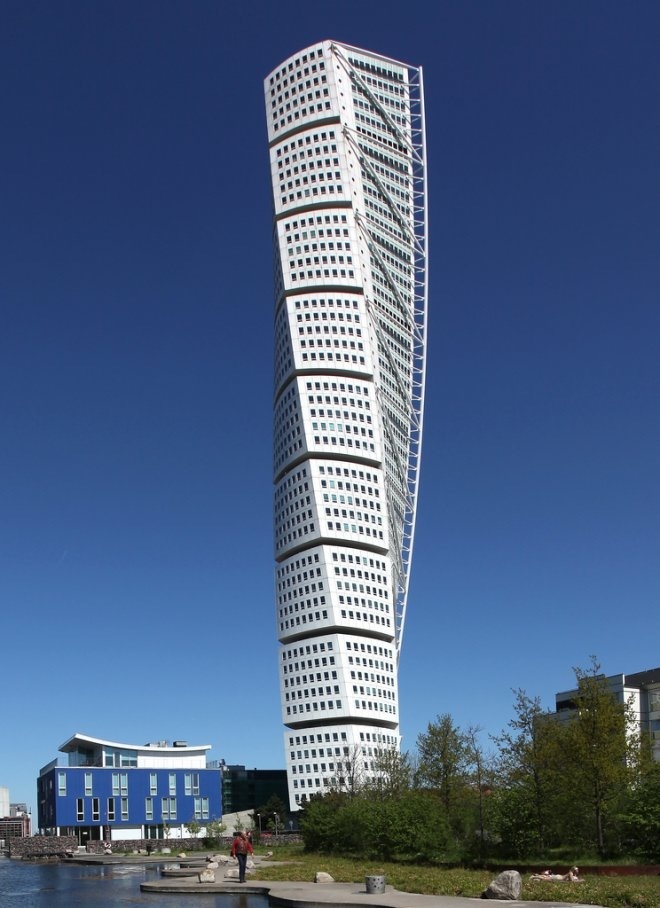
Wired’s building of the week, have got to say this makes me glad I’m not an office worker.

Wired’s building of the week, have got to say this makes me glad I’m not an office worker.
Typically thoughtful and thought provoking Via Meadia article on ‘the filibuster’ and it’s affects.
Small business, individualist, small govm’nt folks need a voice to….

Thanks to Eugen Volokh at the Volokh Conspiracy for this correction of the the Breitbart post I linked in the my last post.
The FBI Statistics:
| Murder Victims | |||||
| by Weapon, 2005-2009 | |||||
| Weapons | 2005 | 2006 | 2007 | 2008 | 2009 |
| Total | 14,965 | 15,087 | 14,916 | 14,224 | 13,636 |
| Total firearms: | 10,158 | 10,225 | 10,129 | 9,528 | 9,146 |
| Handguns | 7,565 | 7,836 | 7,398 | 6,800 | 6,452 |
| Rifles | 445 | 438 | 453 | 380 | 348 |
| Shotguns | 522 | 490 | 457 | 442 | 418 |
| Other guns | 138 | 107 | 116 | 81 | 94 |
| Firearms, type not stated | 1,488 | 1,354 | 1,705 | 1,825 | 1,834 |
| Knives or cutting instruments | 1,920 | 1,830 | 1,817 | 1,888 | 1,825 |
| Blunt objects (clubs, hammers, etc.) | 608 | 618 | 647 | 603 | 611 |
| Personal weapons (hands, fists, feet, etc.)1 | 905 | 841 | 869 | 875 | 801 |
| Poison | 9 | 12 | 10 | 9 | 6 |
| Explosives | 2 | 1 | 1 | 11 | 2 |
| Fire | 125 | 117 | 131 | 85 | 99 |
| Narcotics | 46 | 48 | 52 | 34 | 45 |
| Drowning | 20 | 12 | 12 | 16 | 8 |
| Strangulation | 118 | 137 | 134 | 89 | 121 |
| Asphyxiation | 96 | 106 | 109 | 87 | 77 |
| Other weapons or weapons not stated | 958 | 1,140 | 1,005 | 999 | 895 |
| 1 Pushed is included in personal weapons. | |||||
So the information was misleading but I was willing to be mislead. But it also says that ‘assault rifles’ per.se. are not a large scale threat, they’re just a red herring.
I have to say that I am not sure what this data tells me. If I were knee jerk anti gun and an idealist I am sure that I would immediately say that if I confiscated every gun then I would save most of the ten thousand lives taken per year by firearms. But being rather less impressed by the world I see around me I would suggest that the number would fall but not by anywhere near as much as you might think. 1) Most murders are by criminals and unless their were some magic that eliminated every gun in an instant (and there’s an interesting SciFi premise) you’re not going to get their weapons and they’d even start building their own since the tech’s pretty simple. 2) the number of other types of murder would go up since the term, ‘don’t bring a knife to a gunfight’ has a lot of harsh practicality behind it.
Then you have the problem that this is not Sweden, Denmark, France, or even England or Germany, this is America, a restless, dynamic, even volatile place with folks who own a car, a TV, in fact all the mod cons, and still figure they are owed more. So A)The number of thefts, robberies, home invasions, kidnappings, extortion by violence would break all records because again the innocent would be weaponless [n particular women and old folks would be very vulnerable.] and {Don’t give me fluff about the police,while most are hard-working and honest they are far in time and distance from you in times of need and are there by definition to catch bad guys AFTER the fact. And given modern expectations regarding training, equipping, paying and benefits there will be far too few if the crime rate explodes.} B) this then will increase the general level of lawlessness because no one will believe in the law as administered by the government. Many otherwise law-abiding will resort to guns and some will then be arrested for trying to protect themselves and the downward slope of trust in society will get steeper.

Economist Philosopher F.Hayek
The Road To Serfdom is often referenced and probably like many such books rarely read. This link goes to a real life Readers Digest version, that seems to hit hard and capture well his central thesis, at least it seems so from the references to his writing.
Its certainly making me think of buying a version either at Half Price books or more likely for Nook.
From the Post Referenced above a few key pieces:
From the preamble:
At that time it was a political philosophy that stood for progress through preserving the Autonomy of the INDIVIDUAL, and the protection of the INDIVIDUAL’S civil liberty. Oddly enough, today “liberalism” equals “socialism.” Equally as odd, conservatism (and in many instances, libertarianism) champions the independence of the individual.
From the first section:
Yet is there a greater tragedy imaginable than that, in our endeavor consciously to shape our future in accordance with high ideals, we should in fact unwittingly produce the very opposite of what we have been striving for?
Planning and Power
In order to achieve their ends, the planners must create power – power over men wielded by other men – of a magnitude never before known. Democracy is an obstacle to this suppression of freedom which the centralized direction of economic activity requires.
And despite the somewhat old fashioned and formal words this should have striking impact because it tells you exactly what is going on today and why so many fear it. It does not matter that we voted ‘the planners’ into place or that they are bureaucrats subject to dismissal. We are providing the keys to power and we are then likely to forget about them until they are far too entrenched to remove easily.
It is only because the control of the means of production is divided among many people acting independently that we as individuals can decide what to do with ourselves. When all the means of production are vested in a single hand, whether it be nominally that of “society” as a whole or that of a dictator, whoever exercises this control has complete power over us.
Now this sounds like Communism, Socialism or Fascism not the American way but the truth is that any major part of the social structure-economy in one groups hands creates a massive center of power, privilege and patronage, the 3P’s of tyranny writ small or large. The 3Ps lead to lawless, corrupt and ineffective organizations.
Individualism, in contrast to socialism and all other forms of totalitarianism, is based on the respect of Christianity for the individual man and the belief that it is desirable that men should be free to develop their own individual gifts and bents. This philosophy, first fully developed during the Renaissance, grew and spread into what we know as Western civilization. The general direction of social development was one of freeing the individual from the ties which bound him in feudal society.
This is not a theologian’s statement it is a philosopher’s recognition of the Christian-European (unstated but clear) understanding of the centrality of the individual as the basis of societies. That societies are are the emergent organization of many individuals interacting with each other. And societies that provide ‘room’ for people to find their own level and best place in the social fabric are vastly more fair and kind than ones organized in rigid hierarchies and treat or form the person as an interchangeable cog.
From the post script a quote from Frédéric Bastiat.:
Individualism, in contrast to socialism and all other forms of totalitarianism, is based on the respect for the individual man and the belief that it is desirable that men should be free to develop their own individual gifts and bents.
It was going to be the biggest, fastest and most heavily armed fighter in the air. The North American F-108 Rapier, designed in response to a U.S. Air Force preliminary study of Oct.
via The North American XF-108 Rapier | Defense Media Network.
This aircraft like many others died as the threat the Soviet Union represented became better understood. But the technology for this fighter went on, the missile and radar were the basis of the F14 Tomcat’s Phoenix fleet defense system, stil an amazing system even though the system, utterly compromised by the Iranian’s who had bought the system during the Shah’s reign, was rapidly retired as soon as the AMRAAM and newer airborn phased aray radars became available.

Tomcat on patrol
The Tomcat is in my opinion one of the iconic fighters of the twentieth century along with the F4 Phantom, the F86 Sabre, P51 and Spitfire…and no I’ve never found the fighters of WWI or pre WWII particularly attractive…though the Beechcraft Staggerwing is probably the most beautiful aircraft ever built.
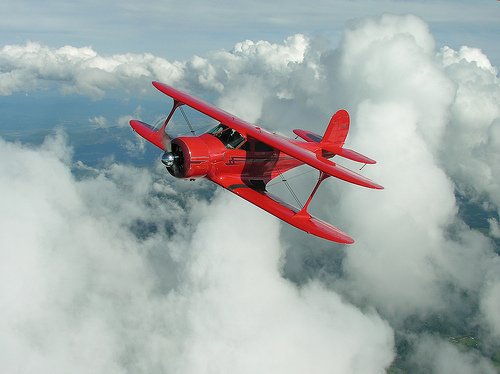
Beechcraft Staggerwing in Flight taken in 2005
Walter Russel Mead continues his Blue Model contextualization of the 19th, 20th century. A deeply thoughtful look at what was, why it was, and the beginning of a philosophical platform for looking at what is to come:
A family business circa 19th century model
American kids spent more time in school as a general rule than kids in other parts of the world in the 19th century, but their “book learning” was only one part of a much broader and richer education that prepared them to be productive citizens. Parents taught kids the fundamentals of agriculture and animal husbandry; they taught them the hundreds of skills that went into maintaining a family farm. In urban areas and sometimes on farms, adolescents went to work on nearby farms or serve as apprentices. There they found production units much like the one they came from: the husband and wife were the proprietors of a bustling family enterprise that might include a few hired hands but in which young people and older people lived, learned and worked side by side.
————————
In the 20th century, it became increasingly common for both parents to work in quite different jobs and professions, often many miles from home. Blue collar workers worked in factories and warehouses; pink collar workers in service and clerical positions; professionals and white collar workers in offices.
———————–
If we wonder why marriage isn’t as healthy today in many cases, one reason is surely that the increasing separation of the family from the vital currents of economic and social life dramatically reduces the importance of the bond to both spouses – and to the kids.
———————–
Repetitive factory work taught very little; to put ten-year-olds in a factory for a shift was to deprive them of learning and stunt their intellectual growth. On the other hand, office and administrative work often demanded skills that few children could acquire. It was cruel to put kids in the factories or coal mines; useless to put them in an office.
————————
As the educational system grew more complex and elaborate (without necessarily teaching some of the kids trapped in it very much) and as natural opportunities for appropriate work diminished, more and more young people spent the first twenty plus years of their lives with little or no serious exposure to the world of work.
————————-
In the absence of any meaningful connection to the world of work and production, many young people today develop identities through consumption and leisure activities alone. You are less what you do and make than what you buy and have: what music you listen to, what clothes you wear, what games you play, where you hang out and so forth. These are stunted, disempowering identities for the most part and tend to prolong adolescence in unhelpful ways. They contribute to some very stupid decisions and self-defeating attitudes. Young people often spend a quarter century primarily as critics of a life they know very little about: as consumers they feel powerful and secure, but production frightens and confuses them.
————————-
People often speak of the need to revive vocational and industrial education as a way of reaching students for whom the traditional academic classroom holds little appeal; more basically, education needs to be integrated with the priorities and purposes of life as these young people experience it.
As I said here, complexity and segregation of our lives drove many social changes.
In the 19th century, American communities were small and generally self-managed. Most Americans lived in small towns or in rural areas where government really was something people did for themselves. The “state” scarcely existed; outside port inspectors and postal officials, the federal government was largely invisible. And even at the state level, local communities were much more autonomous than they generally are now. Local mayors and selectmen had very few mandates coming down from on high; people managed their own schools and roads and other elements of their common life by their own lights.
In the 20th century Americans became more politically passive as the state grew. The citizen was less involved in making government and more involved in watching it, commenting on it, and picking candidates who were sold the way other consumer goods are marketed: you voted for which party and candidates you supported, but more and more of the business of government was carried on by permanent civil servants acting under expert guidance. Government did much more to you, and you did less of it yourself.
WRM discusses the urbanization and complexity of life in the 20th century and I think rightly points out that more gov’t was inevitable. I would also point out that the above description of the 19th century was largely true till something like the last thirty years. When I first emerged from my family in the 1980s the vast majority of the land in the US was still governed very lightly. In many ways the differences between Eastern Urban | West Coast Urban | and the light urban cities most other places, were quite extreme. But the basic thrust of the above is not affected one iota by that quibble.
Since work itself was so unrewarding for so many, satisfaction came from getting paid and being able to enjoy your free time in the car or the boat that you bought with your pay. It was a better deal than most people have gotten through history, but the loss of autonomy and engagement in work was a cost, and over time it took a greater and greater toll.
there was a feeling that we needed to keep:
up consumption so the economy could work. It was not just the experience of the Depression that led so many to the conclusion that under consumption was the characteristic problem of a capitalist economy. …… . Many businessmen promoted imperialism in European countries and to some degree in the US because they wanted …….. markets for their goods. When the age of imperialism came to an end, the intensive development of home markets replaced the extensive development of foreign markets in the eyes of many social thinkers and planners……
———————–
Another factor promoted the rise of a consumer economy: the development of new and much more expensive goods required a psychological and institutional shift. If people couldn’t buy cars and refrigerators — to say nothing of houses — on credit, the markets for these goods would be vanishingly small. Americans had traditionally been averse to debt, whether personal or governmental. They thought like producers, for whom debt is sometimes necessary but always a cost. Thrift mattered, and for many Americans it was a point of pride not to buy on credit; if you didn’t have the cash for something, you waited.
That kind of attitude wouldn’t keep the car factories humming. The blue social model involved an unprecedented expansion in the use of credit by private households, large companies and all levels of government. Debt was the mother’s milk of blue prosperity and John Maynard Keynes was the prophet of the blue age. While consumer finance has deep roots in Anglo-American history, with installment plans used to sell goods like furniture and sewing machines well back into the 19th century, the 2oth century became a golden age of consumer credit, and to carry large balances on credit cards, home mortgages and student loans came to seem normal and respectable in a way that would have shocked Americans living in the 19th century.
Between the 1930s and the 1970s this worked better than many of its critics expected. In a relatively closed economy like the US, if more people went into debt to buy more stuff, the demand would stimulate economic growth, which would tend to raise wages and employment. The additional income would offset the cost of carrying the debt and support additional consumption as well.
And so round and round the money went and it all worked. Until globalization began to derail the machine.
But the real problem with the debt-based, consumption-focused blue social model, the one that bothered many social critics even in the days when the blue model was working and looked sustainable, is one of values. A consumption-centered society is ultimately a hollow society. It makes people rich in stuff but poor in soul. In its worst aspects, consumer society is a society of bored couch potatoes seeking artificial stimulus and excitement. They watch programs on television about adventures they will never have. They try to change their consciousness through the consumption of products (entertainment, consumer goods, drugs) rather than by changing the world and accomplishing things. The massive use of recreational and mood altering drugs reflects and embodies the distortions that a passive, consumption-based society produces in human populations over time.

Ultimate Couch Potato Contestant(s)?
The above image could be seen as “The end”…but no its not…humans are only able to take so much passivity (at least at the sociatal level) look at what Putin is facing, 10 years of kleptocracy given a free hand because he has made the lives of more Russian’s better than they ever have been. But now they are sick and tired of the grinding corruption and the insults it produces at every turn. Now even though pretty well off many upper middle class citizens are beginning to look up and ask, ‘what else?’
WRM has been thinking about this for a long time, though not always as an eventually positive thing. In the 1980’s he perceived the oncoming wave of change as a potential tragedy. The competition from low wage countries, from our technical near peers in Europe and Japan, now China, India and elsewhere, along with the equally disruptive changes wrought by automation of all sorts have made the Blue Model unsustainable. The US Model that was the Beacon of the world from the 1950’s to the end of the century is no more and what comes next can only vaguely be seen.
The Blue Model was pretty coherently envisioned by the thinkers of the late 19th and early 20th century (socialists, communists, fascists.) In the long run we ended up pretty much where they thought we would. Unfortunately for their meme we ended up there as the seas of changed washed the foundations out from under the model.
Now we need a new model to strive for as the old one crumbles around us. I move forward by holding to the desire to leave the world a little richer for my passing, but I have no overweening image of the future, I am afraid that the rate of change of change has overcome the human imagination.
And perhaps we shouldn’t think in the grand sweeping, dehumanizing sweeps the great thinkers of the last interregnum did. Maybe we all need to think about things we need to do ourselves and for each other, not to each other. Maybe we should look to the simple guidance and not grand sweeps:

Puppy dog making big dog's life hell
This is a fun little program. ACTUV, Anti-submarine, Continuous Trail Unmanned Vessel. A not particularly tiny submerged craft that’s not really a submarine (its always got its snort up providing air for its diesel engines.} ACTUV is designed to folloow opposition submarines around instead of having dedicated manned plaforms like a destroyer or Anti Submarine Patrol Aircraft like a P-3 or P-8 do the job.
In certain circumstances ACTUV could probably be used as a form of cordon, spaced a few miles apart across a channel a submarine is or has to use they can wait patiently for days, weeks, months, until the spot something, whereupon they lock up and follow the target till something with more decision making authority comes along to deal with the matter.
ACTUV would be the end of the drug smuggling semi submersibles or even true submarines. They can probably greatly enhance and reduce the load on forces tracking bad actors with subs who we need to keep an eye on.
Even more, this is a way of dealing with the expanding threat of conventional submarines (SSKs) that have Air Independent Propulsion (AIP) and can operate nearly silently for many days at sea. These small vessels are devilishly hard for even modern Anti Submarine Systems to find and in shallow seas and near shore are deadly dangerous.
Once found if you can keep an asset ‘on’ them you can usually stay locked on to an SSK, but how do you do that if the asset you are using is a destroyer worth billions or an aircraft worth hundreds of millions with crews who need to go home sometime? ACTUV solves the problem, localize the target and send for the nearest ACTUV, it sprints to you and locks up on the target. Thereafter it follows the submarine around day after day after day, until the crew of the submarine, whose only real protection is hiding, give it up and go home for some sessions with the shrinks. There is even a game that was used to crowd source ideas on how to use ACTUV.




 This World and Others