Unknown's avatar

About Sci Fi Engineer

Husband Father Writer Engineer

An Electric Air about them

20130709-183459.jpg

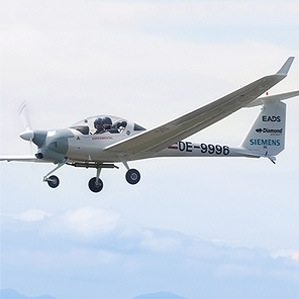
Flying hybrid: This two-seater electric-gas airplane may be the first of many to take to the skies

Read more at MIT TR :Once a Joke, Battery-Powered Airplanes Are Nearing Reality20130709-183958.jpg

UVa’s Sustinere design for a 50-seat jet eschews batteries in favor of a turboelectric distributed propulsion (TeDP) concept – two 2,500shp turboshaft engines under the wing generating electrical power to drive six 3,300lb-thrust fans arrayed in a duct that wraps around the upper fuselage.

Read more at AWST: Battery or Superconductor – FAA Picks Hybrid Winners20130709-184659.jpg

The EADS IW concept uses a single large turbine engine to generate electricity to power six ducted fans that provide thrust. This allows propulsive and thermal efficiency to be optimized separately. The turbine engine can be optimized for thermal efficiency (turning fuel into shaft power) while the ducted fans increase effective bypass ratio and therefore propulsion efficient (turning shaft power into thrust).

Read more at AWST : eConcept – EADS’s Hybrid-Electric Airliner20130709-185351.jpg

Two years after Honeywell and Safran announced plans to develop an electric-drive system, the team is preparing to demonstrate a proof-of-concept system on an Airbus A320 at this year’s Paris air show.

Read more at AWST : Electric Taxi Puts On A Show At Paris By Guy Norris20130709-190343.jpg

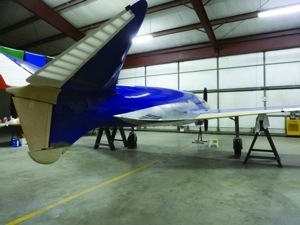
The result of close collaborations with Finmeccanica companies – Selex ES, Ansaldo Breda, and Ansaldo Energia – and partner companies from Italy, UK, U.S. and Japan, the aircraft embeds some unuque features: aesthetically pleasing styling and aerodynamically unique tiltrotor configuration; carbon graphite exterior surfaces; High-Integrity Flight Control Computer and Actuator Control Unit; custom produced electric motor inverter and motor control algorithm; axial flux permanent magnet electric motors.

Read more at : http://theaviationist.com/2013/03/21/project-zero-images/

SpaceYES!!

SpaceX continues to drive down the barriers like the aggressive but rationale organization they are and the world needs to move us to the next level of Earth to orbit operations. And having a dream and stretch goals are required elements.

From NASA Spaceflight: Dragon Roadmap: From domestic crew independence to humans on Mars
July 5, 2013 by Chris Bergin
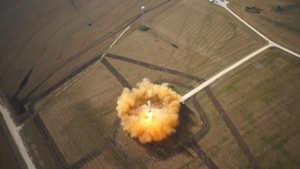
20130706-222213.jpg20130706-222206.jpgGrasshopper reaches a thousand feet in new nav test. Read more at: SpaceX shows off new nav gear with latest Grasshopper rocket launch-and-landing (video)
By Timothy J. Seppala posted Jul 6th, 2013 at 3:47 PM
20130706-222614.jpg

Rudimentary Liver from Stem Cell, 3D Printed Ear and 3D Printed micro Battery ? What does the future hold

Theres a huge amount of research going on in fields that don’t at first appear to have much to do with each other that could in the next few years to few decades lead to a world where the possibility of building new organs either as replacements or upgrades is possible, even common.

Read more at: MIT TR // A Rudimentary Liver Is Grown from Stem Cells
Read more at: Princeton Nano Letter // 3D Printed Bionic Ears
Read more at: MIT TR // A Battery and a “Bionic” Ear: a Hint of 3-D Printing’s Promise
From ViaMeadia:

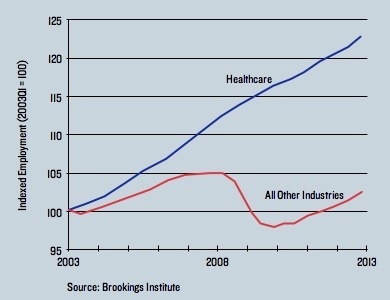
Those worried about the future of employment in America—for themselves or for the country as a whole—should look to this data. As of now, many of the jobs of the future are going to be health care jobs, and that will only become more true if Obamacare stands and the pool of insured patients expands dramatically. To understand what the jobs of the future will be (or to land one), go where the money is: services, and especially, according to this data, health services.
For those unlikely to take up health jobs, this graph might seem discouraging. After all, more doctors and health workers points to more health care costs, in a system that’s already vastly too expensive. As the Atlantic points out on its piece on the graph, “There are a couple stories that branch off from this graph. One is the unchecked growth in health care prices over the last few decades, which has made the medical industry the one truly recession-proof job engine of the economy.”
But there’s also a case of optimism here. The Atlantic notes that the two kinds of health care jobs most likely to grow in coming decades are personal health aides and home health workers. This is good news even on its own; achieving a better balance between hospital care and home care is an important task for health care reformers. Moreover, it means there’s a lot of room for entrepreneurial individualse to come up with new and creative ways to cater to a growing demand for personalized health care.

20130706-133823.jpg
Read more at: Jobs of the Future in One Astounding Graph

The American Interest // Egypt, we have no idea…

The American Interest /July 1, 2013 / Adam Garfinkle / Abdel Fattah al-Sisi—Memorize That Name
Read more at: http://blogs.the-american-interest.com/garfinkle/2013/07/01/note-to-clueless-msm-types-abdel-fattah-al-sisi-memorize-that-name/#sthash.aMzX3wZw.dpuf
Lots of deep insight for those who want it, along with a bit of ‘I told yo so.’

This was an interesting passage and a key to why this whole region is so utterly foreign to many of us who wish for better things:

Years ago a clever and truth-telling fellow named David Lamb devised what he called the IBM syndrome to describe political culture in Egypt and the Arab world. The “I” stands for “inshallah“, may God will it: in other words, fatalism. The “B” stands for “bokr“—tomorrow morning, or just tomorrow: suggestive of an extremely elastic, pre-modern perception of time, vaguely akin to some uses of the Spanish word mañana. The “M” stands for “malesh“, which is untranslatable, but which kind of means “whatever”, “never mind” or “fagetaboutit”: not my job, someone else will take care of it, or not, who cares? What difference does it make?

It is also a bit frightening to realize that there are examples of this sort of mindset in ‘the west’ and that it’s a plague…

Wisdom, eloquence and virtue

Wisdom, eloquence and virtue – these are the aims of a classical education. The patriarchs of western civilization understood that education was more than the acquisition of basic skills and mere competency. The purpose of education was to transform, to elevate, and to refine the mind and the soul. This was the standard, not the exception. At the center of classical education is an emphasis on the Good, the True, and the Beautiful. Because these universal values serve as the building blocks of classical learning, the classical arts are timeless and proven, and have been known to produce many eloquent confessors and wise leaders. Our communities today are in dire need of just these sorts of men and women. In an endless pursuit of the latest educational dogma, many schools no longer have the capacity to judge what is Good, True and Beautiful, much less teach it. In forsaking the soul for the mind, they have forgotten how to educate both. Classical Education is a holistic approach to education, and a return to excellence in teaching, curriculum and expectations.

Via: http://maggiesfarm.anotherdotcom.com/archives/22434-The-Rise-of-Classical-Education.html
From: http://ricochet.com/main-feed/The-Rise-of-Classical-Education
More at: http://www.immanuelalexandria.org/school/curriculum/what-is-classical-education
This triggered a flash of fierce agreement from me, we have debased education and muddled it with training. I think that many intellectuals from the middle twentieth century would say that the communists and their Nazi fellow travelers won. The left (which both Nazi and Communists are at core) managed to stain classical education as elitist and useless, whereas in reality it was at its core vastly more leveling and practical than what we have today. A classical education creates a society of citizens with a deep repository of common referents that are rooted outside our ephemeral now, it also trained the mind to think, to organize to pattern recognize across a range of topics in ways that are broadly useful and common without being straight jacketed.

We also straight jacket everyone into a lockstep industrialized system where homogeneity of outcome is vastly more important than quality and to a degree individuality. Why can’t many kids start near full time work at sixteen and spend some years figuring out what they want to do before continuing at part time or your time schooling. Why is it that high schools are not open to anyone wanting to work on their english or get a high school degree? Why is it so hard to get credit for class work and job experience, hobbies etc, the totality of which would make many overlooked folks true masters of their art?

From The ENGINEER: Bumble Bee Drones at War

The rise of the micro air vehicle
13 June 2013 | By Jon Excell
Read more: http://www.theengineer.co.uk/in-depth/the-rise-of-the-micro-air-vehicle/1016519.article#ixzz2XeLGHbVs
20130629-191151.jpg
20130629-191200.jpg

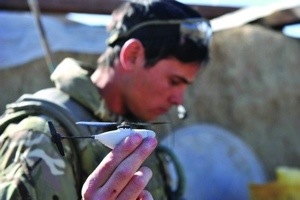
A soldier of The Queen’s Royal Lancers launches a Black Hornet, Nano UAV from a compound in Afghanistan during Operation QALB.

…one of the compelling advantages over larger surveillance UAVs such as the Reaper is that the system can ‘be tasked in a matter of seconds’, whereas a reaper might take half an hour to arrive at the scene.

…Prox Dynamics’ CEO and founder Petter Muren told The Engineer that the technology that appears on the PD100 is considerably more advanced than anything that would be found on a remote-controlled aircraft. The motors, servos and sensors are, he said, smaller and more efficient. The radio-link is more advanced, the system has fully integrated GPS, as well an autopilot system, and is far more robust.

And the beat, wing beat, goes on…
20130629-192043.jpg
20130629-192051.jpg20130629-192058.jpg

From The ENGINEER // What a Beauty! A Bugatti designed aircraft could soon fly

The ENGINEER :In the wings: recreating the Bugatti 100P
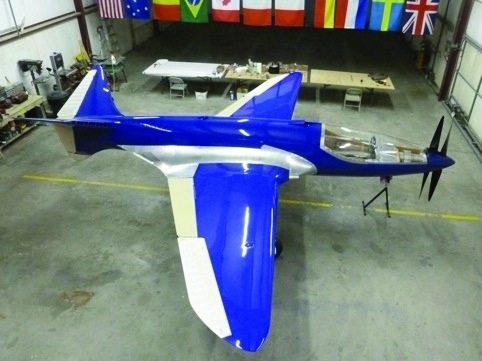
20130629-184925.jpg20130629-184939.jpgAlmost eighty years ago aircraft design was still more art than science and what science there was revolved around slide rules and mechanical, even human, calculators, but they took chances and pushed boundaries.

This aircraft used the period’s (late ’30’s early ’40’s) advanced composite, plywood, made of hardwood and balsa wood as well as sophisticated aerodynamics to achieve a remarkable projected performance, 500 MPH, at a time when 300 was fighter fast. This aircraft had a cooling system similar to the breakthrough one in the P51 mustang, a half decade earlier, and the composites were used in the famous British strike bomber the Mosquito, also a half decade later. But the original of this remarkable aircraft never flew, being shipped out of the path of the oncoming Nazi army and ending up as decayed parts in the Experimental Aircraft Associations museum in Oshkosh WI. Now a team of enthusiasts are building a replica they expect to fly soon.

What is and isn’t happening with the NSA phone surveillance

Read more at: http://pjmedia.com/lifestyle/2013/06/27/the-science-of-what-is-and-isnt-happening-with-the-nsas-phone-surveillance/
Excellent, readable medium length piece on what the NSA ‘thing’ is all about and why it matters.

So, there’s this NSA thing. Since the stories about the NSA, Edward Snowden, PRISM, and so on have broken, there has been more misinformation, disinformation, bad information, speculation, ignorant commentary and flat out nonsense going around than any topic in recent memory. And to tell you the truth, I’ve been working on this article for two weeks and never finishing because there is always one more howler. Let’s see if we can clear some of this up.

Motley Fool // Is Sony the Next Apple?

Is Sony the Next Apple?
By Leo Sun – June 26, 2013

There is a lot of evidence suggesting that Cook doesn’t know where to go from here – Apple’s stock buyback, dividend, and bond sale all indicate that the company could become a slow-growth tech stock like Microsoft and IBM. The iPad Mini and iOS 7 also suggested to investors that the road ahead would be reactionary, rather than revolutionary.

… Sony has expanded into is the phablets category, … a 6.4-inch screen …seriously pushing the acceptable size limit of a smartphone.

Although the Ultra seems like a goofy attempt to capture some of the phablet market from Samsung, I believe that it could gain some serious ground when used in tandem with the SmartWatch 2 and a Bluetooth headset. Many consumers could stow the Ultra in a bag, while using the SmartWatch to check on basic information and tasks while using a Bluetooth headset to make calls or listen to music. To view movies, make video calls or games, the Ultra could be brought out and used like a normal tablet.

I’m no sure Apple has lost it’s mojo but I agree there is evidence of it.

I think that the latest iteration of blue tooth and general tech advances definitely plays to the padPhone+smartWatch+headSet combo and maybe, maybe Apple missed it.

Apple IMO also has missed the stylus revolution, pads of all sizes need sophisticated hand writing, sketch, art input capability to jump another level of ubiquitous usefulness.

I hope Apple is looking at things like 3D Printing, scanning and model manipulation and creation, in the same way they took on the 2D Printing world, there would be a real break out stroke.

Ten thousandth near-Earth object unearthed in space

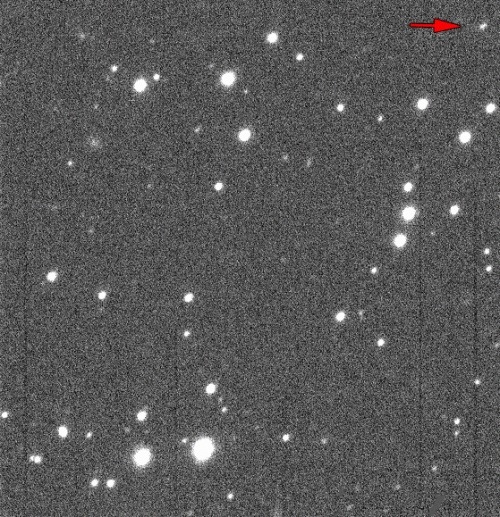
20130625-180902.jpgAsteroid 2013 MZ5 as seen in this University of Hawaii picture from the PanSTARR-1 telescope. The Asteroid is in the right of the image, towards the top, moving diagonally left/down. Credit: PS-1/UH
Read more at:Ten thousandth near-Earth object unearthed in space

“Finding 10,000 near-Earth objects is a significant milestone,” said Lindley Johnson, program executive for NASA’s Near-Earth Object Observations Program at NASA Headquarters, Washington. “But there are at least 10 times that many more to be found before we can be assured we will have found any and all that could impact and do significant harm to the citizens of Earth.” During Johnson’s decade-long tenure, 76 percent of the NEO discoveries have been made.

Near-Earth objects (NEOs) are asteroids and comets that can approach the Earth’s orbital distance to within about 28 million miles (45 million kilometers). They range in size from as small as a few feet to as large as 25 miles (41 kilometers) for the largest near-Earth asteroid, 1036 Ganymed.

Asteroid 2013 MZ5 is approximately 1,000 feet (300 meters) across. Its orbit is well understood and will not approach close enough to Earth to be considered potentially hazardous.

Lots of resources to be developed for the expansion of humanity in space and the reduction of our impact on Earth, in a half century or so, when we will really understand we need it.