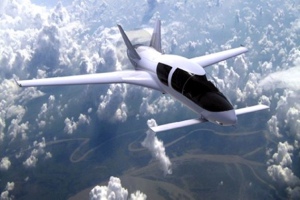
Started in France but now in Quebec, projected to start shipping in 2014, 4and a half seat, 220 MPH, 600 mile rang, only downside is its avgas but hopefully a diesel/kerosene fueled option will arrive. See more at this AWST blog.
Author Archives: Sci Fi Engineer
Earth Sized Exo Planets…
The smaller of the two planets, dubbed Kepler-20 e, is about the size of Venus, with a radius 0.87 times that of Earth. It orbits its star every 6 Earth days and sits at a temperature of 1,040 Kelvin — hot enough to vaporize any atmosphere and leave a solid hunk of silica- and iron-rich rock.
Kepler-20 f, the larger planet with a radius 1.03 times that of Earth, has a 20-day orbit. As a result, it is a bit less scorching, at 705 Kelvin. At that temperature, says Fressin, hydrogen and helium wouldn’t survive in the atmosphere, but a shroud of water vapour might.
Then there is this planet Alpha Centauri Bb
This planet orbits very close to its star, like Kepler-20 e, in fact its close enough that its surface is most likely molten. But its only 4 light years away and generally where there is one planet there are likely others. This planet was not discovered by the Kepler observatory and there is some discussion as to the data set used to derive its existence…but it seems likely that its there and it’s certainly cool….
A felt of stars
![]()
A rich collection of colourful astronomical objects is revealed in this picturesque image of the Rho Ophiuchi cloud complex from NASA’s Wide-field Infrared Explorer, or WISE. The Rho Ophiuchi cloud (pronounced ‘oh-fee-yoo-ki’ and named after a bright star in the region) is found rising above the plane of the Milky Way in the night sky, bordering the constellations Ophiuchus and Scorpius. It’s one of the nearest star-forming regions to Earth, allowing us to resolve much more detail than in more distant similar regions, like the Orion nebula.
The amazing variety of different colours seen in this image represents different wavelengths of infrared light. The bright white nebula in the centre of the image is glowing due to heating from nearby stars, resulting in what is called an emission nebula. The same is true for most of the multi-hued gas prevalent throughout the entire image, including the bluish bow-shaped feature near the bottom right. The bright red area in the bottom right is light from the star in the centre – Sigma Scorpii – that is reflected off of the dust surrounding it, creating what is called a reflection nebula. And the much darker areas scattered throughout the image are pockets of cool dense gas that block out the background light, resulting in absorption (or ‘dark’) nebulae. WISE’s longer wavelength detectors can typically see through dark nebulae, but these are exceptionally opaque.
The bright pink objects just left of centre are young stellar objects (YSOs). These baby stars are just now forming; many of them are still enveloped in their own tiny compact nebulae. In visible light, these YSOs are completely hidden in the dark nebula that surrounds them, which is sometimes referred to as their baby blanket. We can also see some of the oldest stars in our Milky Way Galaxy in this image, found in two separate (and much more distant) globular clusters. The first cluster, M80, is on the far right edge of the image towards the top. The second, NGC 6144, is found close to the bottom edge near the centre. They both appear as small densely compacted groups of blue stars. Globular clusters such as these typically harbour some of the oldest stars known, some as old as 13 billion years, born soon after the Universe formed.
There are two other items of interest in this image as well. At the 3 o’clock position, relative to the bright central region, and about two-thirds of the way from the centre to the edge, there is a small faint red dot. That dot is an entire galaxy far, far away known as PGC 090239. And, at the bottom left of the image, there are two lines emerging from the edge. These were not created by foreground satellites; they are diffraction spikes (optical artefacts from the space telescope) from the bright star Antares that is just out of the field of view.
Apple’s iPad mini, its a steal…
There are arguments that Apples pricing power is limited and that the cost of making a premium small pad like the mini is something like 200 meaning that they break even at somewhere between 250 and 300 considering distribution and profit. There were arguments for a 250ish (essentially subsidized) and 300ish (bare profit.) Whereas the base 330 (ok 329 but don’t get me started on the last 9 pricing phenomenon!!) supposedly provides Apple with its traditional high profit margin.
Now this seems to beg the question how do these folks really know Apples costs? Yes its a public company but to be honest there are a lot of details hidden in the financials that are really hard to parse. Apple is highly profitable but it also has very high costs relative to its competitors who are either one shot wonders or whose HW / OS work is subsidized by a primary line business which the machine; Google-Nexus tab, Amazon-Kindle, Barnes&Noble-Nook, are important marketing&sales outlets, not fundamental products as products…as much as some chattering set blowhards try to conflate the business models.
The iPad mini is something of a steal, if 200 is the cost of a good 7 in screened plastic housed small pad . Why do I say this?:
- The above machine might have a higher resolution…but to be honest resolution is not the end of the matter, it enhances a screen, makes a small screen look better, ut it does not solve the problem that you have to hold a smaller screen closer or display less info to make it readable at all. And when you are a mature adult the eyes are not so good no more…so a 7.9 screen 40% greater area with the same resolution is (probably) a better deal. And now one has to light up 40% more area so the battery has to have a bit more capacity, etc.
- The system has all the sensors including the reasonably good front and backside cameras of the bigger brother, which none of the smaller competitors match.
- It also offers a decent processor chip that has proven its chops on other machines making it a smooth and reliable operator
- It’s almost as light and compact as some of its smaller rivals because Apple traded bezel for screen to make it ‘handable’ and thus much more of a reading machine in competition with the near pure readers.
- It has universally praised design and build standard and remarkable ruggedness (that’s a projection obviously.)
- It has the AppStore infrastructure &
- It seamlessly integrates with all the other iGizmos from Apple (of which my family has many.)
- It’s a good size and capability set for children with their smaller fingers, lower strength, sharper eyes, etc.
- At 329 its a better deal for the K-12 educational market and oh by the way its big brother and the rest offer a grown up infrastructure for teachers.
I’m certainly going to buy one and it won’t be a low-end unit, though I will also in the near future buy one of the new-new-iPads, with the understanding that its possible if not likely that Apple will upgrade the product again in 6 months.
Why is Apple doing this? It wants to dominate the space in most people’s minds like it dominates the smart phone, standard tablet, one piece desktop, and ultra-portable markets. It has moved sharply into these markets (which were not at the time particularly active) and dominated with yearly product refreshes of significance reinforced with a masterful media circus strategy. They are late to the game in the small pad market having at first seen it as a value only market, they stayed out till they figured out how to roll it up into the Apple iOs business, which I think they have as explained above.
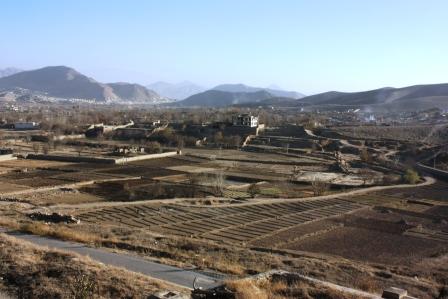
Green on Blue, Afghan Tribalism and Would Cyberdyne do better? (w/edits)
One of my favorite websites is StrategyPage it has a text only format news wire covering technical, tactical, strategic, operational, social, political aspects of the military. An ongoing thread has been the Blue on Green attacks (Afghan police or army members, killing US, NATO and other Afghans) . One of the basic issues Strat Page point to is that Afghan society is by modern standards pathologically dangerous. Most Afghans are probably clinically PTSD by our standards, and they few restraints on killing. Murder rates are vastly higher than in the west, the main reason we never hear about it is that there is no one to keep the statistics.
This should not come as a surprise, it has a lot to do with their culture and their state of development, particularly the latter. We used to be a lot more like them, except at the time it was bows and swords, not AK47s. The murder rate in the west has been decreasing precipitously for centuries. In feudal and pre-modern times, when the village, clan and tribe were the underpinnings of society, life was harsh anyway, honor was all a man or family had, and the weapons were knives, clubs and fists (which are often more about hurting than killing and death was a random though not infrequent occurrence) the killing/murder rate was many times what it is today. The violence in clan and tribal (familial not trust based) cultures is higher than in the nuclear family/trust based cultures. In fact I would argue that most of the US murder rate happen in sub cultures that never developed from or devolved back to clan / tribal structures. Murder in the sense of the gentile English tea garden variety is rare and probably getting ever rarer.
This article What the Western media doesn’t say about green on blue attacks in Afghanistan : goes much further and broadens the aperture:
Recalibrating our perspective
The enemy that we’re fighting in Afghanistan is tribal. Their notion of the nation-state is almost abstract and, outside of the major cities of Kabul and Kandahar, essentially irrelevant to the people of the provinces where the tribe has been the principal social unit since before recorded time. The CIA estimates the literacy rate in Afghanistan at a shockingly low 28.1% of the general population.[ii] The tribe doesn’t recognise international borders when its members have familial ties on both sides that go back for millennia. Nation states may come and go but the tribe remains and nowhere is this more apparent than southwest Asia as a region and Afghanistan in particular. Alexander learned this the hard way after three bloody incursions 329 years BCE. So did Genghis Khan in the 13thcentury, Tamerlane in the 14th, and Babur in the 16thcenturies CE……..
Tribal alignments are socio-politically complex arrangements that are driven by principles of defence and survival. Tribe and democracy are incompatible constructs, a reality the modern Western militaries would do well to accept and build policy around. Tribal leadership and honour is everything; people do as their chiefs direct. They fight with total commitment the enemy they are told to fight, stop fighting when they are told to stop, vote for whom they are told to vote, plant wheat or opium as directed, and demonstrate a degree of social cohesion that is simply unknown to Western cultures. War and conflict are incredibly personal things to tribal culture and the tribal affiliations transcend any external relationships. This may logically explain how 500 Taliban and Haqqani insurgents escaped from the Kandahar prison in early 2011 without a single ANSF casualty; clearly the ANSF didn’t want to challenge the insurgents or were told not to by their superiors.
In this environment fighting a war in the traditional sense is almost pointless unless you have a clear eyed view of the situation and a long term plan to eradicate the problem not by violence alone but by uprooting the social structure. Of course there are many who would see this as abhorrent on its face…though the lives of those affected would be improved it would not be self determination. It would also require decades and decades of money, toil and blood. In our 140 character society with its plethora of supposedly quick changes we lack the ability to see that doing a hard thing like this requires incremental change over time, a million little wins not a handful of big ones. This is the curse of our Big Bang mentality, and the failure of Westerners to understand that people from low development cultures are not ‘us; waiting to be released from some shell of dung. It takes decades of work to infuse the ‘memes’ that would underpin an Afghan society with the arrow of development going up rather than spinning down.
I’m not advocating this, I don’t think that humans have the ability to carry through the ‘plan.’ No society could wage peace-war for decade after decade maintaining the high moral and intellectual honesty as well as financial and material outflows that it would require while suffering the casualties and the continuing hatred of the the rest of the world. See the fate of the British Empire..
We are going to pull out of Afghanistan in the main, given the surrounding hostility we cannot maintain a large force in country without the risk of something bad happening. In a few years Afghanistan will be a near worthless wilderness patrolled by deadly drones ready to kill anyone who is seen to present a threat.

And…maybe Cyberdine is the solution. The Terminator…the flying Terminator, the Predator. With these reapers taking down any would be king Afghanistan might become a new frontier of wild east libertarian-ism. At first a place where the tribes can live if peace, or war, as they feel fit. But under the unblinking eye will they slowly be brought to heel by the chains of modern life, solar lighting, cell phone commerce, TV, Googlepads, etc.
Maybe this is the plan behind the plan in the Disposition Matrix…..

Elgin : what the heck is QuantPunk?
I have always loved Science Fiction, especially the ‘Hard’ sub genre (think Arthur C. Clark, Larry Niven, etc), as well as military and some adventure. I’ve also liked ‘Hard’ Fantasy and books that in some senses combine SciFi & Fantasy. I started out writing SciFi, relatively old-fashioned Hard SciFi (which I really think should be more common than it is) and semi military SciFi, but I’ve always played a bit with Fantasy.
And to be honest I find it impossible to write good Fantasy even though some of my favorite authors have easily spanned the gap. What I ended up writing every time was really SciFi in an Urban Fantasy or Steam Punk setting…and I kind of like the results though Elgin is the first that’s been completed. But this isn’t SciFi in the ‘Hard’ sense, nor is it SteamPunk, RetroPunk, Urban pr Contemporary Fantasy. It’s at an angle to all of those, I like to think of it as a type of SciFi, what I call Quantum Punk or QuantPunk based on the mind (and imagination) bending possibilities our quantum universe opens as a basis for something that is at once Science Fiction and Urban/Contemporary Fantasy.
Let me know what you think….its free try it.
————————————————————————————————————-
Elgin’s new life is….complicated.
Elgin’s old life was nothing much, Beauty Wyoming was as beautiful and remote as one could get, a town of cowboys and Indians, in a setting of rangeland, mountains and lakes. Elgin Chalmer’s was a cowboy and a part breed black-sheep slacker living with his huge Siamese cat Humph in a forty-year old trailer. Life was OK for Elgin, he didn’t want much and didn’t get any more. Then one raw snowy day he made the mistake of heading into the mountains with a gut full of whiskey and a head muddled by rotten drugs…death came easily considering.
And that was when things started to get really messy. A world of alien dangers and powers were waking up after two thousand years in hibernation and humanity’s protector needed a new helper. Now Elgin found himself dealing with flesh-eating lizard girls, ancient spider monsters, along with werewolves and vampires who didn’t always play by the rules. And on top of it all he had to get used to eating sharks, raw and still fighting.
But now of course he had a chance to meet up with the cool girls; The Wiccan proprietor of the local New-Age gift shop, with an ancient Indian totem in her basement, the pistol packing deputy with a secret, and the beautiful Russian spy with a heart of gold and the killer instincts of a she wolf.
This book was started as a submission for the National Novel Writing Month or NaNoWriMo, (www.nanowrimo.org) is run by a tiny nonprofit called he Office of Letters and Light, an organization that promotes writing in all its glorious permutations among the young, young at heart, and not so young (among whom I fall in the right hand distribution tail these days.) I wrote the first 60,000 words or so of Elgin in November 2011 and finished the remaining half by February 2012, since then, among many other things, my father and I have been editing so I can submit it for publication at Smashwords, iBooks, B&N, etc.
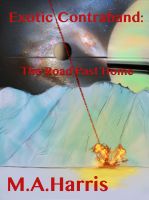
New Book Published at Smashwords | Exotic Contraband: The Road Past Home
The universe is infinite in extent and the Compact large beyond simple measurement. But the Starship Bostonian has found a road home for the few humans stolen from their home world. But the Compact has strict non interference rules and while returning the humans is allowed, contact beyond that is forbidden. The crew of an Air Force recon jet, kidnapped and sold as creature show exhibits want to go home though their commander, Major Sandra Sebastianii, might have made another decision if she had been alone.
The ancient human commander of the Compact Cartographic Cruiser Bostonian is less sure of his road home, because his birth world is an utterly unrecognizable and all he had once known is dust. Now his place and his friends all reside in the vastness of the Compact, all except for the one person he can’t live without.
Everyone starts out following the rules. But rules are meant to be bent especially when a civilization is on the edge of a war it does not understand the reason for. And while the Qang Smugglers might look cute and cuddly their ruthless arrogance is about to get them into deadly danger, and their stupidity may be the trigger needed to start an interstellar war of unthinkable destructiveness.
- Science Fiction
- Adventure
- Hard Science Fiction
- Romance
If you know we’re in trouble but can’t quite figure out why? Adam Garfinkle at American Interest has a key
Great Primer on why bureaucratic / regulatory purgatory has descended on our heads in this blog post at the American Interest site.
America’s political institutions are so fouled up at both the politics/decision-making and the bureaucratic/administrative levels that one can actually make a plausible case that all the variance we are trying to account for lives here. One can make this case regardless of political affinities, too. Liberals argue that our economic situation, touched off by the financial collapse of autumn 2008, is all the fault of anti-government, market-fundamentalist types obsessed with deregulation. Conservatives argue that our economic situation is what it is because we are hopelessly in debt thanks to the futile and counterproductive meliorist entitlement policies of bleeding-heart liberals who invariably care more about intentions than outcomes. Both are partly right, but also partly wrong or, better, incomplete, in their analysis—which brings us to part three, next time.
Couple of updates, Alan’s post really starts here with Section 1 which provides background, that points back to Walter Russell Meade’s The Collapse of the Blue Model series I’ve posted about earlier. Read it all, Alan says much more clearly and with more background what I have tried to say in various small ways for almost a year now.
The system is systematically broken, it has become so broken that it is self reinforcing and is pointing the nose of the ship of state down, harder and harder as we try to fix it.
Free Syrian Army | Counterpoint
As a counterpoint to Huriyet Daily’s Point of view this article; Guerrilla Country I linked to in Foreign Policy has a different take. The article is fascinating in its details but the money item is this:
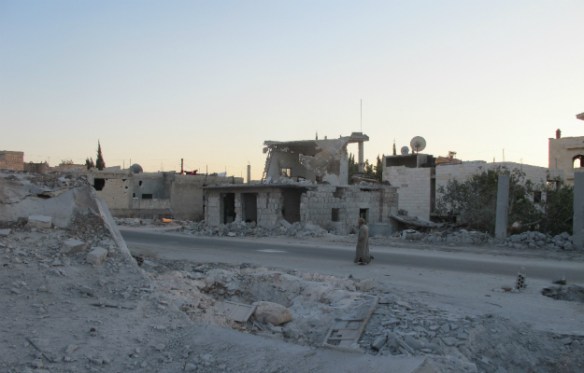
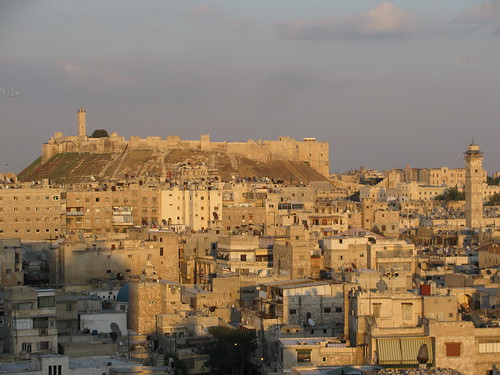
As a no-holds-barred battle rages to the east in the city of Aleppo, the pulse of the Syrian insurrection can be taken in Jabal al-Zawiya. This complex region of hills covered in olive groves and plains entwined with narrow roads of asphalt or dirt is the homeland of Hussein Harmoush, the first officer to publicly defect in 2011, and of Riad al-Asaad, the leading figure of the Free Syrian Army (FSA). Here, the insurrection is deeply rooted in the social fabric: The war these men are waging is always present, and its path is inseparable from their identities.
The FSA’s lack of formal hierarchy appears to be an asset here, as it allows the citizens of the region to organize the insurgency locally and tailor their military response to their environment. Although the rebels in Jabal al-Zawiya recognize a general leadership above them — and though they place themselves under the FSA’s umbrella — these semiautonomous groups of fighters are organized along village and family lines. That gives them several advantages: They have natural intelligence-gathering networks, and they know the terrain like the palms of their hands, having relied on back roads for supplies and secret meetings for many months. These assets, coupled with basic military skills, have allowed them to drive a far superior foe out of the towns.
Now I am far from the sound of guns and have never had the ill luck to be any closer than in an airliner on the original 9/11 but this piece rings true to me. That is not to say it’s a good thing or bad thing, it is a reasonable facsimile of a fact on the ground. What it says is that the FSA is probably a lot more effective than numbers and weaponry might indicate.
The FSA does not need to have its boots on the ground everywhere as it has co-opted the local fighting age inhabitants into a cell based ground holding force. This ground holding force is self-supporting, motivated and dangerous because of its local knowledge and backing.
The FSA assault groups can stay very lean and relatively disbursed and yet have considerable military effect They can move through the held ground quickly even if on foot because they will have local guides, support and not need a significant logistics tail or carry a lot of food and ammo. Of course that means they cannot carry out a stand up fight from the move but that should happen rarely since they have eyes everywhere.
That’s not to say the situation sounds good. The picture and the description are unsettling. This is a war very much like those in the Balkans during the partisan wars associated with WWI, WWII and the ColdWar. A war of sects who until the dogs were loosed had lived interlaced with each other for decades if not centuries (not always at peace mind you.) Now with the emperors (dictators) military police no longer suppress all, distrust and pent-up hate is unleashed and leads down an ever tighter and more destructive spiral.
This is what the US and others should have been trying to prevent, the fragmentation and violation of the populace to a point where their natural distrust of ‘the other’ will make it all but impossible to put a working multi-cultural society back together again.
Lebanon (Syria’s neighbor and sometime satrap) is another multicultural nation in name only, but it has learned to live with its divisions, hopefully it can teach Syrians how to live with theirs when the dogs of war grow sated.
Which Is Worse: To Help the Syrian Rebels or to Do Nothing? | WALTER RUSSELL MEAD
From the Huriyet Daily News:
There are more than 30 different rebel groups, including the most prominent rebel group, the “Free Syrian Army” (FSA), fighting in Syria, according to officials from the most prominent Syrian opposition group, the Syrian National Council (SNC).
The Jihadists, Islamists, pro-al-Qaida and secular groups that are not under the control of the FSA and which are fighting in different areas of Syria against the Syrian regime forces prove how fragmented and disorganized the Syrian rebel groups were in Syria.
According to the SNC media officer, Ahmad al-Halabi, there are more than 30 opposition groups fighting in Syria – of whom only 15 could be identified by Hürriyet Daily News research. “Fifty armed men come together and they form a rebel group. They generally give their groups names from the Quran or the names the towns and areas they are coming from,” Ahmad al-Halabi told the Daily News.
According to SNC officials, there were between 70,000 and 100,000 rebels fighting against the Syrian regime in Syria. The most prominent rebel group, the “Free Syrian Army” (FSA) – who listed its main base as in the southern Turkish city of Hatay on its website – is the best connected with the SNC.
From WRM’s Via Meadia Post:
Syria is a lot like Lebanon’s bigger, uglier, and meaner brother. The ethnic and religious tensions that produced decades of civil war in Lebanon are also present in Syria. The Assad dictatorship imposed a rigid order on Syria, but as the dictatorship crumbles the divisions are coming back into public view. Unless we were willing to put tens, maybe hundreds of thousands of troops in Syria and keep them there for a long time, often fighting bad guys and getting attacked by suicide bombers, we don’t stand much chance of building and orderly and stable society there, much less an open and free one.
And:
Aiding the less ugly, less bad guys in the Syrian resistance, and even finding a few actual good guys to support, isn’t about installing a pro-American government in post civil war Syria. It’s about minimizing the prospects for a worst-case scenario—by shortening the era of conflict and so, hopefully, reducing the radicalization of the population and limiting the prospects that Syrian society – – – will descend into all-out chaotic massacres and civil conflict.
Understand and agree with this next with a big but…
If the United States hadn’t gotten itself distracted by the ill-considered intervention in Libya, we might have acted in Syria at an earlier stage, when there were some better options on the table. But we are past that now; the White House humanitarians did what humanitarians often do—inadvertently promoting a worse disaster in one place (in this case, Syria) by failing to integrate their humanitarian impulses (in Libya) with strategic reflection. This kind of strategic incompetence is the greatest single flaw in the humanitarian approach to foreign policy. It has led to untold misery in the past and will likely lead to many more bloodbaths in the future. Unfortunately, warm hearted fuzzy brained humanitarianism is one of the world’s greatest killers.
BUT: There is really no reason we could not have done something earlier and more aggressively in Syria except that it is Silly Time (otherwise known as Presidential Election Quarter) in America.
One hopes that this is not the future for all of Syria, which has already succeeded in bombing its economy and infrastructure back decades. Somehow when the dogs of war are unleashed the destruction seems immaterial. Someday the dogs are impounded again and then the red haze recedes leaving behind only tears.