Book reviews…Cities, roads, history, society…

I have as always been reading a lot on a broad range of topics. Here are three very worthwhile reads that have some things in common and might give you some interesting insight into society history, cities, transportation.

Metropolis: A History of the City, Humankind’s Greatest Invention Kindle Edition
by Ben Wilson

Saw this at Barnes and Nobles but bought the kindle edition. The physical book is nice but was not sure it was a real keeper. This is a good book, probably written before 2020 and Covid-19 raised questions about ‘the urban’ but I think either well thought out and thus an argument against the Anti-Urban angst right now, or edited well to address it without being too pointed.

This is an interesting read going back to pre history and even pre town/village to show that mankind was building monuments long before cities and that the typical early city surrounding religious/social centers was not an after thought but the genesis of the city. Also pointed out that when Mesopotamia was originally ‘urbanized’ it was more like Tenochtitlan, a wetland/jungle, not a desert as it is today. This actually points to a minor theme about natural climate change in this book and how it enabled then destroyed many early societies and their cities.

Dr. White works up from Uruk (probably oldest major city) through the more well known Mesopotamian city states to the coastal city states of the Mediterranean and Asia and how these cities lived and died by trade as much as by being centers of power. That usually the power came after economic power. Each city is put in its own context but that context extended to today. A city on the monsoon trade routs of the Middle Ages compared to modern Singapore. The trashing of Medieval Paris by Napoleon the II’s city planer (in the 1850’s) to build todays ‘city of lights’ is compared to the trashing of many other city centers in the name of modernity and the car.

But throughout the dynamism of the city, its inventiveness and its beating heart at the center of economic power is stressed. And above all that cities are human creations and habitats that are rebuilt and rehabilitated by the human spirits that enliven them. And despite wandering into and even making a strong case for the maleness and misogynistic tendencies of cities and the anti other tendencies Dr. White pulls back and strongly supports the case that cities are centers of diversity and new ways of living and new ways of empowering the downtrodden. While at the same time pointing out again and again that the elite urge to ‘clean up’ slums and old sections invariably destroys as much or more that is strong and beautiful as ‘helps.’ That the humans that give the city heart and power are the lower and middle classes not the elites and that elite re-planning is generally destructive of the human in the city. Again and again slums and ghettos are shown as a horror to the elites that is utterly at odds with the dynamic creativity that they hide in back alleys. Even in Mumbai and Lagos today the power of the slum is at odds with its image as presented by the largely ignorant elite.

The chapter on Warsaw in WWII is hard to read, but again and again points to the humanity of the urban core and its draw on the human soul for those it has become home to.

This book is an eye opening read and an excellent piece of work with a different view of the urban and the city. Not the least because it even deals with the suburbs and the suburban city (LA) and shows that it is in many ways just part of the continuum of development over something like ten thousand years.

I grew up in what I would call metro-suburbs of England and the Suburbs of the US and find that this book provides a much more solid base for thinking about the city than any article or techno dissection of the city vs suburbs vs rural…. Read the book, don’t miss some fascinating images and the use the author puts them to to explain times and places in some depth.

The effect of Covid-19 and the internet (one cannot be dealt with without the other) the coming impact of electric and autonomous cars and then personal air transport should be thought of AFTER you have read this book. It gives one pause and a new way to address what a city is and its draw to and repulse from the human spirit.

Ravenna: Capital of Empire, Crucible of Europe Kindle Edition
by Judith Herrin

Ravenna on the Adriatic (the sea between Italy and the start of Eastern Europe is not a city one has heard of. Rome, Venice, Pisa, these cities of the Middle Ages and Renaissance are famous but a city that was for some hundreds of years the Capital of the Western Empire is simply not mentioned in most history books. Largely because its history started when Rome fell for the first time to the invaders and the Roman capital moved to what we call Constantinople. This was the start of the dark ages as first the barbarians and then Islam destroyed the Roman Empire. But that empire took a great deal of killing and our simple view of Rome the City = Rome the Empire, reinforced by Gibbons and others is simply false.

The city was important in Roman times, a city on an estuary that was much like we might imagine Venice a few hundred years later. The romans built/dredged a large harbor next to the city and it became the main sea link from Rome to the East, Anatolia, Greece, etc.

As Rome as Rome fell Ravenna became a center of gov’t and it also became a center of Christian faith, usually linked to the Abbot of Rome but also linking to the Eastern Faith, it was often at odds with the Abbot of Rome and or the Abbot (Patriarch) of Constantinople, where the later emperors tried to control the universal (Catholic) faith and failed.

Because of its link to the Eastern Church and Greece its Churches were richly decorated with mosaics, some of the most startling survivals of a period of history little remembered in the west.

Over the period of the barabarian invasions and later Empire the Emperors in Constantinople used Ravenna as their Western center of Government from where famous generals led army after army out to defend or recapture Roman lands. But in the end the powerful warrior tribes out of Germany, etc beat down the empire and took it as their own and Italy splintered into the city states that enliven the story of the Renaissance.

This history is rich and interesting, politics, religion, sociology, art, woven together. Dr Herrin uses a lot of first sources and actual peoples words to weave the story. Photographs of the wonderful mosaics makes one want to visit this historic city. The details of this ‘missing’ period are deeply interesting and helps explain the rise of Catholicism and the split with Orthodoxy. Another great read if you are interested in the history of Rome, Europe, the Middle Ages.

The Big Roads: The Untold Story of the Engineers, Visionaries, and Trailblazers Who Created the American Superhighways Kindle Edition
by Earl Swift

Earl Swift’s The Big Roads starts at the beginning, in the nineteenth century with dirt tracks and cobbled lanes of the towns, cities and rural expanses and leads through their evolution over time. It is interesting that so much of the early work was more about associations building assets for commerce and the socialization of the automobile, prior to its becoming a power in its own right. And that the bicycle had a part to play before the automobile was big.

The story of the US routes, Route 66, Route 31, Route 71 etc etc and then the genesis of the interstate system are fascinating tales of time, place and actors.

A very human story interwoven with fascinating people and lacing in stories of places and times that you had heard elsewhere but never linked into the creation of the highways and now byways across the US.

As with the books above, particularly Metropolis this book talks about the hubris of the elites and of the blinders that technical leaders can have and the damage they can do while believing they are in the right and having the best interest of the people they are displacing at heart.

A fun book with fun side stories that especially resonate with me as I grew up as the Interstate system really came into its own and the knock on effects it had became visible, mostly for good but too often at a cost to various neighborhoods and towns.

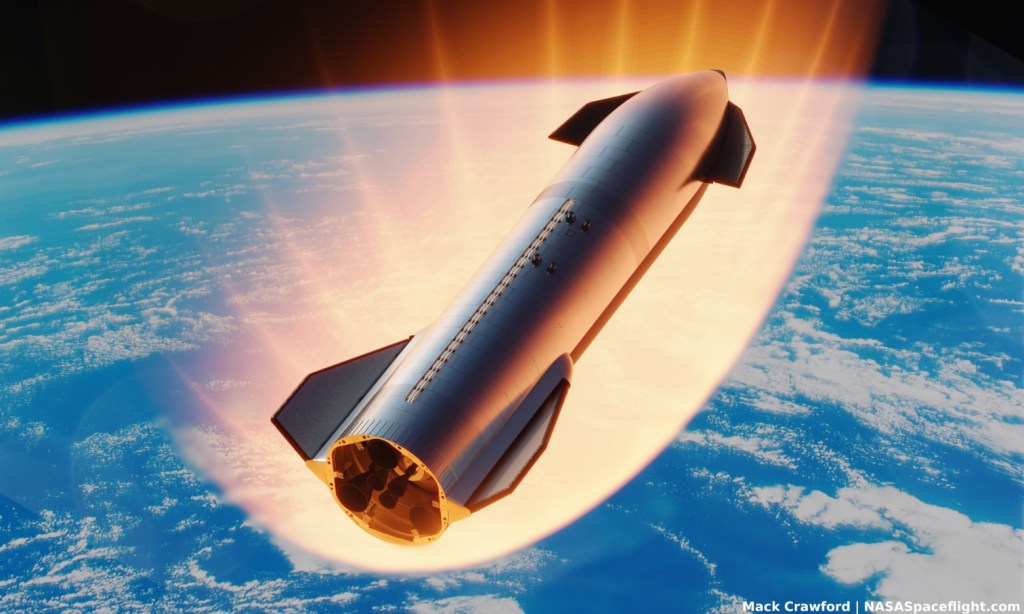
Point to point sub orbital

Preparing for “Earth to Earth” space travel and a competition with supersonic airliners From NASASpaceFlight.Com an important and fun source on space activity all around the world not just NASA/US

So this seems crazy but in all honesty it has actually been a thing for a long time. It is mentioned in a lot of sixties/seventies SF not focused on space flight. It was seriously studied several times as a sort of replacement for parachute insertion of military force. And like most of those sorts of efforts there was a commercial concept to support the technology since the folks in the defense industry understood that military programs cannot support a robust industry on its own.

Just look at nuclear power, there was a reason that nuclear power stations evolved as the Navy came to realize they wanted nuclear ships. And there is a reason that small aircraft carriers and non nuclear submarines are anathema to certain parts of the Naval establishment. They know that if non nuclear CVs and SSs became common the industry required to support the nuclear fleet would become unaffordable.

https://thehighfrontier.blog/2016/03/20/straight-back-down-to-earth-a-history-of-the-vertical-takeoffvertical-landing-rocket-part-1/

People have already talked about the DoD buying Starships and using them as bombers / hypersonic weapons platforms. This is just turning the model above around.

Back in medieval times freighters and warships were the same thing, they just tacked on some fighting platforms and went at it with bows, crossbows, catapults, swords, etc. Even the Vikings probably started out as traders though always ready to ‘raise the black flag and slit a few throats’ if that looked like the right business strategy.

Anyway…sorry for the side commentary, it’s evening and I had a good dinner so I’m wandering a bit.

So, again anyway…if you look at it, a craft like the Starship, which has the performance as a single stage vehicle to haul 100 tons 10,000 miles in less than an hour has some attraction on its face….but in reality?

  • To my mind the most value dense time sensitive cargo is people but that’s years out at the least.
  • In the meantime are there cargos that are so time sensitive that something like a starship might make sense?
    • Couriered documents. Maybe
    • Mail. Does not seem like it.
    • Medical supplies only if the ship could land almost anywhere and take off again.
    • High value tech like chips? Maybe but 100 tons is overkill.
    • In fact most of the above are not 100 ton class cargos and frequency and flexibility of landing seem critical.

So dead on arrival? No there are customers who might pay for a a limited 100 ton capability. I think it would need to be anywhere in the world which is more than 10,000 miles but is probably within the capability of a modified Starship with more fuel and less cargo…or maybe an extended tank Starship could do 100 tons out to 18,000 miles (my wag of anywhere in the world from anywhere in the world.)

A somewhat smaller starship could do 10 tons 18,000 miles and probably land at just about any port or airfield as long as you can supply LOx and LNG, which is not that uncommon.

Go back to the start. If you burn a couple of hundred tons of LOx/LNG what is the cost? Does it make economic sense? Is it safe, is it going to be acceptable?

  • Economics:
    • LOx/LNG are in the same $/ton range as Jet fuel, you are burning a couple of times the fuel since you have to haul up the oxidizer with you and pay for that as well so say 4x the fuel bill.
    • The hull is in line with a modern airline.
    • If you can do a trip a day or so with support costs in the same range as a jet, it would appear to me that for the right cargo you could make it work.
  • Is it safe?
    • Well not right now but once the tech is wrung out ?? I think so.
    • the big difference is much higher energies than a jet.
    • But…your exposure time is a fraction of that of a jet over the same range. Accidents in mid flight are rare but generally lead to complete loss. Exposure time is probably the most important difference…advantage Point to Point
    • Ok so the major threat time is when you are near the ground around take off and landing, Those are shorter for the Point to Pointer.
    • And to me the difference in energy involved is immaterial…dead is dead and most of the time accidents of any magnitude in those phases are not survivable.
    • Accidents on the runway often have survivors but that is eliminated in the Point to Point case…up and down…no in between…
  • Acceptable?
    • Only time will tell, my guess is YES.
    • It will be a bit like the glamor days of the early airliners I would expect point to point for certain segments to be a real elite punch card
    • Especially as near earth space becomes an exotic but achievable location.

Exciting times indeed.

Observation re. Sunburst Hack

An act of cyberwar is usually not like a bomb, which causes immediate, well-understood damage. Rather, it is more like a cancer – it’s slow to detect, difficult to eradicate, and it causes ongoing and significant damage over a long period of time. Here are five points that cybersecurity experts – the oncologists in the cancer analogy – can make with what’s known so far.

The Sunburst hack was massive and devastating – 5 observations from a cybersecurity expert by Paulo Shakarian From The Conversation

Description of who, how, what at least in general terms and a thoughtful overview of how to start thinking about the impact and meaning.

To me this attack seems just part of the reality we live in. As discussed in Modes of War, this is one of the modern modes that are more about gains and pains than blood and gore. This sort of strike, ignored and multiplied, could bring a nation down and given the context of reality today, direct kinetic action is highly unlikely.

Meaning of Liberty

Triggered in the best possible way by the following, Benjamin Constant, writing on meanings of liberty, ancient vs modern, in 1819 France. Read the whole thing it is shockingly applicable today.

This is related to the idea of todays forming Neo Feudalism and to a degree the concept of the Individual and sovereignty.

Constant lays out that in ancient times liberty (for the tightly defined citizen) was extremely broad and powerful, in Greece and early on in Rome, the citizens as a body had essentially unlimited power to wage war, make piece, expel, execute, as far as their power extended. But as individuals they were controlled, watched, forced to conform. This was possible because the citizens were a smallish percentage of the total population and well enough off to spend a huge part of their time debating.

In a practical sense these citizen assemblies were more like our Legislators than our citizens, though with arbitrary and absolute power. But Constant follows the traditional line and does not make this distinction. In part because he still lived in a world of urban aristocratic elites supported by a huge rural underclass.

In counter to ancient liberty he explains modern liberty as about the individual vs. arbitrary power of any kind. Essentially it is about the individual and their ‘happiness’ in the sense of controlling their own life and own concerns with the expectation that society and the hand of society (the government) has strictly limited power to interfere.

He points out that individual liberty is what humans really want but in the case of the ancients were willing to sacrifice for collective liberty since in their small and always threatened polities it was glaringly obvious that it was cooperate or be enslaved.

That stark choice is still there but hidden by the immensity and generally good living of the modern world. Governments span continents not little seaside towns and in the developed world we never want for goods unless we are ‘unlucky’ in some way. So the real power of gov’t is far from obvious to most, if you go along you get along and only criminals or sociopaths get in trouble…right? If everyone is on the same page maybe, but in a world of oligarchs, elites, yeomen, plebs and deplorables everyone is not on the same page any longer.

During the later 19th and through the 20th century there was, in the west and US, in retrospect, a fairly concerted effort to keep everyone on ‘the same page ‘ But as the echoes of WWI reverberated, the liberal republican concepts came under increasing threat from political philosophies we call communism, socialism, marxism, fascism, and their social outreaches of materialism, deconstructionism, etc. The ‘conservative-liberal’ mainstream dealt with the geo political threats fairly well but the social political attacks came through chinks in the armor that ‘freedom of expression and thought’ leave wide open. Children and Intellectuals are particularly attracted to the avant-garde, new, kind, progressive, and while many of them grew out of it as they moved through life ,all too many became entrapped in the mind fog if they did meet the real world of real people and real trade offs that the schools of hard knocks provide.

And so we are today a country, a civilization under threat of our own success. The varigated liberty of the constitutional republic has been hollowed out due to pragmatic, lazy, risk averse decisions by the interlocking social, fiscal, judicial, etc elites.

We deconstructed education, society, civility in the name of equality but without a consensus of what was going to replace those things and others. Deconstruction occurred in the shadows, the termites were at work on the frame with no replacement under construction because no one could agree on even a need as long as the old structure was there. Unfortunately no one told the termites to stop.

As this became somewhat obvious there were those, maybe many, who said, ‘let it crash,’ ‘let it burn,’ ‘tear it down’ because it represented something that they defined as completely evil, even if the same underpinnings being eaten away kept the roof over their head and provided protection for their food and defined their safety from the wild.

The problem is that the people who most want it torn down least understand what it took to create and what it protects them from.

If you look at things a certain way you can see the US, the West sliding towards something all too like the Chinese model. Perhaps a kinder gentler version but that is no certainty.

Is there a way out? ?

Was there a way in?

My view is that we stumbled and mumbled our way here. Reality is that nothing here was planned. We live with the contingent outcomes of unplanned inputs. it is possible that this outcome was expected by some but they are unlikely to have had any ability to direct it.

It does not really appear possible to plan anything like a society any longer unless it is a subset of self selected actors. And since humans are human no such society will last longer than about half an average human lifetime.

So?

It is what it is.

Don’t see evil around every corner, there is evil in the world but it is rare in the wild. Most people just believe what they believe they learned somewhere. They are most likely wrong (as am i.).

And remember this, over the sweep of time things have been getting better for more and more (in absolute and relative terms) people across time. There have been crashes and horrors but most people most of the time were relatively happy. The up slope was ver, very low ten thousand years ago but it has been steepening as it goes. While the whiners all see disaster ahead the reality is that there are solutions for every problem we (as a world civilization) have. Where we are going in any one part at any one time is always a bit of a random walk but that walk is usually uphill (in the best sense.)

Stay strong, be happy, work at making a difference.

Oligarchic Jousting vs republicanism

The IM-1776 review Neo Feudalism or New Class War is ,as good non fiction book reviews should be, a thoughtful look at the books and discussion of the core thesis.

Michael Lind in The New Class War and Joel Kotkin in The Coming of Neo-Feudalism both demonstrate the defunct nature of the ‘socially liberal, fiscally conservative’ worldview that dominated post-Cold War politics. Lind’s central contention is that, because it creates vast power inequalities, class matters as much now as in pre-modern politics, in spite of our democratic aspirations. Kotkin, on the other hand, argues that class divisions now resemble the Middle Ages specifically. Both books herald a society we should strive to avoid.

IM-1776, Neo Feudalism or New Class War, Henry George

As a side note IM-1776, an online magazine, appears to be a very promising source of thoughtful discussion on society from a somewhat acerbic point of view.

Have not read either book, but have them on the list of possible future reads. Possible because from Mr. George’s review I have to say that I have absorbed much of what they think from a broad swath of other reading and my own thinking on the topic of where we are and where we might be going. It is also interesting that Scott Adams (of Dilbert fame) our populist public philosopher seems to be paralleling the threads woven here but I see his perceptions as being driven from dynamic understanding of the online gestalt rather than analytical sourcing.

Put rather bluntly the gestalt of the populace regarding their own nation is largely illusory. That while the theory and form of gov’t is one thing the reality is largely different. While we think this is a republic where the ‘will of the people’ rules the reality is that a small number of people establish what that ‘will’ is through control of the focus of the media and the ‘rules of the game’ via law and regulation.

If you look beyond America, at some extreme examples, you may see a distorted mirror of this. That in places like the Soviet Union, China, North Korea, the ‘people’ who could rise up and blot out the ‘establishment’ don’t. Because the ‘hive mind’ that is our base perception is convinced that the status quo is as good as it gets or at worst is so ingrained with everyone else that your rising against would be useless.

Recently Scott Adams pointed out that Mark Zuckerberg of Facebook invested 10’s of millions in changing the voting rules in many places to increase the % of people voting. That you might see this as a driving factor in why certain places saw unprecedented voting, which tipped the balance to Zombie Joe instead of Orange Man Bad. (Now I happen to think that unprecedented levels of cheating had something to do with this as well but am willing to see MZ’s contribution as having a large, perhaps overwhelming effect… perhaps by making cheating easier?)

So Scott Adams said, (roughly) maybe Mark Zuckerberg’s is really the only vote that counted in this last election. Please note that Scott Adam’s is purposefully hyperbolic in many cases to get his thoughts to stick ‘directionally’ (which is how he sees a lot of Trump’s messaging on Twitter.)

What has evolved in the Post Cold War west is a form of Oligarchy with a surface wash of Republican representative democracy. The forms that Japan, Korea, Europe, even Russia and China took on are in essence what we have evolved to. You could say that the US was ALWAYS this way to some significant extent. With the Oligarchs jousting, politely’ each other and to a large extent, ‘following the will of the people.’ And if that then those other states maybe saw this more clearly than ‘we’ did and followed along since it clearly left the Oligarchs in charge while also providing them a safety buffer against the pitchforks and tiki torches.

If this is the future (and maybe it explains the past?) then one has to hope that the oligarchs who manipulate (for that is what it is) the people’s thinking have the best interests of the country in mind and are smart enough to know what that is before the results of past actions come to fruition. Because the rest of us are going to be suffering when the ‘best minds’ screw up.

Noble Intention = Elite Pretension Elites, intentions, nobility, lies

I do not know the answer to the question: What can we do to slow the the spread of an airborne disease such as COVID 19. What I do know is that approaches with some history have been massively abused. Often with ‘noble’ intentions but to the detriment of the populace.

  • Quarantine – traditionally the people who have the disease. In this case the people most obviously at risk, the elderly. Where this has been implemented it seems to help, BUT the negative impact on the individuals and their family are significant. In the end will this be shown to have been a disaster because of the isolation killing tens of thousands by suicide and drug overdose? Also abuse of this by sending infected into ‘isolation’ wards that weren’t sufficiently isolated killed thousands.
    • The ultimate abuse of quarantine is the tyrannical lock downs, has damaged the economy to the detriment of everyone and in all likelihood killed tens of thousands if not more through overdose, suicide and delay of medical attention to lethal but treatable medical problems.
  • Social Distancing – a modern form of soft quarantine (needs very specific circumstances to mean much.) Where companies implemented for critical staff it appears reasonable, its bland plastering on ever floor in every stored seems silly.
  • Masks – traditional but misunderstood: It stops you from spreading vastly more than catching. Along with social distancing it is reasonable for limiting spread if followed well enough.
  • Crowds indoors – known bad BUT: space and air handling is very important, driving many gatherings into homes was a stupidly obvious result of stopping certain types of events.
  • Crowds outdoors – People need to get out and sunlight and exercise, good feelings are seriously helpful. And the chances of spreading especially in the day is near nil. Health enhancements massively outweigh risks for most. Of course then supporting rioting at night made the rules look political and stupid.
  • Restaurants/bars – Obvious targets of concern. But crowd limitations and rules about cleaning and masking mitigate issues. The ability to get out and mingle in reasonably controlled environment along with the support of the economy outweigh risks.

At the start of all this if the elite (gov’t, medical, media) had acted with open clarity about what was known and unknown. There might have been a chance to get through the last nine months without the breakdown we are seeing.

Politics, especially ‘orange man bad’ was a starting point for the majority of the elite, spin, narcissism and gotcha were key issues especially in what was seen as an existential election year. Lies, more lies and counter lies to control of information, opinion and public activity spun out so that the general populace at this point pretty much ignores whatever is said other than as a sort of televised comedy/drama.

The following and at the link is a fairly mild analysis of the issue from the CATO institute via Instapundit

The main political conflict in recent years is between experts or elites and non‐experts. For lack of a better word, the non‐experts are called populists. Their complaints have been specific: Elites and experts are arrogant, they have different values, they condescend in annoying ways, they ignore the sometimes legitimate concerns of populists, among others. Experts say that they should be listened to because they’re more knowledgeable. We see it in debates on every issue from climate change to trade, immigration, and everything in between.

CATO Institute: Against the Noble Lie – COVID 19s Edition (March of 2020)

Noble intention = Elite pretension

Modes of War

War in the western civilian mind has been debased and fetishized. And these ways of ‘seeing’ war limit our perspective on the reality.

Huh? You may say, what the heck does that mean? So let me expand:

War has been debased in the common vernacular by declaring war on the depression, then poverty, drugs now on inequality, racism, etc (mainly by progressives riffing on their First World War success .) Here the mental model of war is the turning of the states blunt tools of expropriation and exploitation to the ‘good’ of raising some group or suppressing some evil. The thing they overlook is that the tools are authoritarian and often counter productive, destroying on one end while delivering ‘something’ at the other. In the original meaning of war, (at least the good war of self protection, not war of aggression) the destruction on your end is acceptable since your expectation is that the ‘other’ will cause far greater damage if they win. But when used in this self targeted context you are essentially damaging/destroying something you do not value (for whatever reason) to provide some ‘good’ to another (for some other reason.)

And war has been fetishized in the minds of most by the recent American experience of essentially total battlefield domination and near bloodless success (those who bleed are mostly ‘the bad guys.’) This has been metastasized by military video games that while they make clear the messiness of the battlefield also make it glamorous and episodic. Exotic weapons and robotic precision make things look all very neat. But also there is our memory of WWI and WWII and Desert Storm and even the first months in Afghanistan and Iraq. Domination and victory, spoiled by purported lies and then stupidity of trying to change cultures we do not understand.

So war is debased to massive government intervention on one hand and on the other the fetishized ability to break the other’s toys and make them do what we want. But these views of war, government directed war, war with parades and victories and tragedies and stories we can tell each other’s, providing historians and anthropologists grist for their mills may be relics of the past in our globalized age.

What if war is no long any of that? Properly envisioned it was/is never something you turn on yourself. Seen clearly it is never something that you can predictably win. No war in the modern era been what governments tell their populace it is, nor are they what the memories of the participants remember them being.

Clausewitz is famous for ‘War is diplomacy carried on by other means,’ Sun Tzu pointed out that misdirection is the heart of war. What if real war today outside of the fratricidal, is non kinetic and never ending?

What are the modes of war today. Strategic, Cyber, Economic, Kinetic, Propaganda, Tactical, Commercial, Geographic, Genocide, Civil, Bio, Nuclear, Chemical, Political…

Huh? Some of these things are not like the other you say? And maybe you are right but I say that war has broken the bounds of the geographic/naval/aerial field of battle and has bled out into the world in general.

I will close with a thought…. What if an enemy realized that they could make use something as unexciting as a novel disease and modern media’s defining need for ‘bad news’ to terrify populations into ‘a crouch’ that would make political control easier. And by use of basic propaganda and twisted truths could make the politicians of their unsuspecting opponent break their own economy and even break down the social trust that is required in a modern open cultural polity.

The above does not require any particularly lethal bug, or any large scale distribution of battle plans. All the enemy needs is a leadership willing to make use of the ‘main chance’ and a cadre of workers willing to take direction. Nothing needs to be said, ever.

You do not win a war this way but you win a battle this way. Maybe you win several battles. Damage an enemies economy, damage their self confidence, maybe bring down their most effective leadership with some directed propaganda and a few tools.

Now maybe a more compliant government comes into power. You have been pushing on some geographic restrictions but have been held back by your adversaries strong leadership. With that leadership gone now you can push more heavily and gain some more ground.

Maybe your aggression causes more reaction and eventually the ridiculously erratic opponent once more selects a more trenchant government and puts the brakes on. But one more nibble has been taken, an enemy has been weakened a little bit. All that is required is time and constant purpose to win, and a nation with a multi thousand year history can take the long view.

Grid growth and wealth

A recent article about the impact of electric grid power expansion in India and Africa peaked my interest and so reviewed some of the papers on the topic spanning decades. While I obviously can’t declare definite conclusions they seem to point to problems with base assumptions made by advocates of broad electrification.

The blog post was a quick review of a couple of recent studies discussing the expansion of electric power to villagers in rural India and Kenya. The studies are very different looking for different things. But they both show that the expected economic boost from the build out of the electrical power grid has not arrived, at least not yet, and some of the data indicates a net negative impact.

In general it appears that the cost of the service is too high to pay off for these poor farmers/villagers is modest at best and in some ways is a net negative.

This is contrary the experience in places and times, most specifically the US where rural electrification was a vast boost to the economy.

The situation needs study but the thing that comes to my mind is that the served populace needs a certain amount of wealth to make use of electricity.  On its own electricity does nothing, its what it enables that is the important thing.  Many of the areas that have already electrified were both relatively wealthy and had existing in service infrastructure that could be made more productive powered by electricity rather than the prior human, animal, steam or wind power.

Today the urge is to spread the grid out into the poorest rural areas, these are subsistence farmers not commercial farmers and these people have little or no infrastructure to make more productive. Not to say that they cannot move up the chain with time but the move from subsistence to commercial farming is non trivial. Transportation infrastructure and marketing/sales infrastructure are critical while cell phones are a huge enabler the rest of the picture is still fuzzy at best.

Also one has to wonder if this uplift isn’t facing a very stiff counter wind from the global economy. It is very cheap to move products in bulk across the major transport networks it could be that farmers, selling a local staple product will find it very hard to compete even if the distance to market is relatively short.

Though this is only one data point, it seems to point out that implementation of small scale solar/battery systems for light and telecom are the most important stepping stone for these subsistence farming communities.  That the improvement of transportation infrastructure might be of value before a major build out of electrical grids.

Limitations of Pay Pal and how it’s side stepping them

I’ve used PayPal for several years now on my iDevices and PC’s, mostly for paying a few monthly subscriptions and moving money between bank and credit union. It also enables me to pay for my minor excesses out of my ‘monthly money’ rather than the family general account. I have bought a couple of big-ticket ‘toy’ items using the credit account and then paying back over a few months, or better saving up then using PP to buy the lusted after item over the net. I think PP is a useful service and I trust it more than I do big bank credit card services though that’s a little player vs. mongo player preference rather than real in-depth analysis.

Pay Pals weakness has been the network effect. In general the more members any network has the more useful it is. While PP is pretty widely spread these days it’s not getting bigger quickly enough and I have continued to use other methods of paying for most things.

PP has solved at least part of this growth problem by moving into the credit card world. Establishing a PayPal Master card in place of its own credit account. This enables users to pay through the immense existing credit card infrastructure but use the PP ‘back office.’

In one sense it’s a bit sad that PP had to just become another credit card. But they do provide a lot of other services and a way to manage and move your money around in the banking system.