

SAE: cool tech, cooler route market

20130830-103643.jpg

The M-KERS flywheel hybrid system is an example of small innovation business R&D that can be readied for volume production by a global manufacturer.

“We have identified that the biggest barrier to commercialization of an innovation is confirming the competitive advantage for a customer when every factor is taken into account,” Deering told AEI. “So we refocused our engineering capability to provide precisely the expertise and resources required during this critical stage.”

Being small can be an advantage for the innovators. Torotrak itself doesn’t have volume manufacturing capability, but it has greatly increased its ability to supply prototype and pilot volumes to help its Tier 1 customers bridge this gap. “This helps a Tier 1 establish the technical and commercial viability of the technology while also creating a growing income stream for Torotrak,” explained company Chairman John Weston. “It’s an approach based on the commercial needs of Tier 1s, moving away from the traditional approach of trying to sell them a relatively unproven idea.”

But the tech applications are cool:

(1)For car applications, Torotrak’s technologies are aimed at downsized engine solutions and hybridization (via flywheel systems) where the designs offer cost and packaging benefits. Its V-Charge variable-drive supercharger for gasoline and diesel engines, now entering a new test and demonstration phase of the latest V2 version, is claimed to be capable of boosting torque from zero to 95% in less than 400 ms, which overcomes one of the liabilities of engine downsizing.

(2)A flywheel-based energy storage system developed by Flybrid Automotive, a company in which Torotrak holds a 20% share, is claimed to deliver performance that is similar to established HEV powertrains with superior packaging, at about one-third the cost.

…(though) “An electric system typically has a large battery and a useful range with the IC engine completely switched off; a flywheel application does not.”

… Flybrid’s flywheel system will propel a vehicle for about half a mile – not impressive per se but very useful in managing the engine operating point. The flywheel could be used to power the car in parts of the drive cycle where the engine would be inefficient…

Spiders in Space! SpiderFab, a fabulous NASA initiative

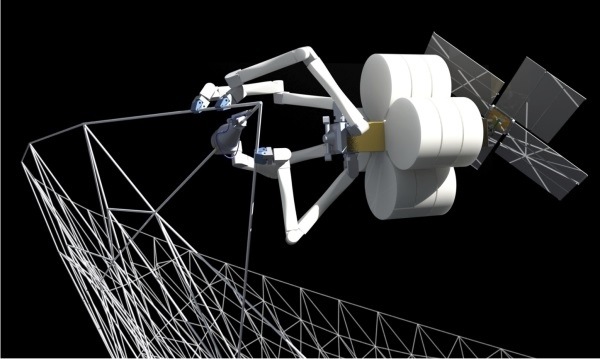
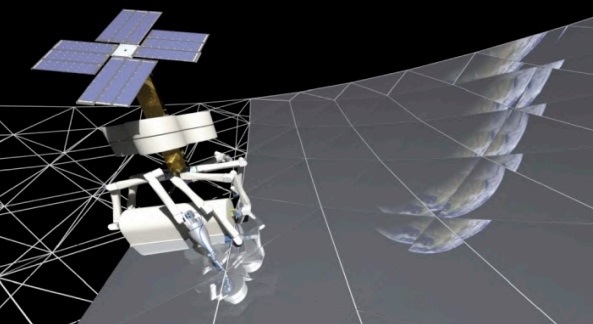
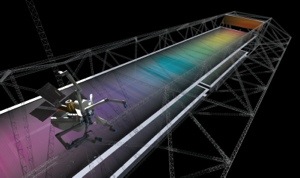
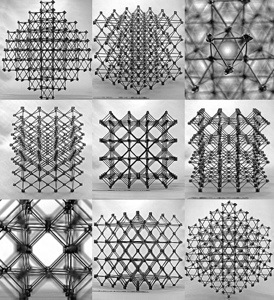
3ders.org a great 3 D printing site has this up…..TUI, a space technology development company based in Bothell, WA is currently developing “SpiderFab” to provide order-of-magnitude packing- and mass- efficiency improvements over current deployable structures and enables construction of kilometer-scale apertures within current launch vehicle capabilities.
20130830-101220.jpg20130830-101230.jpg
Trusselator
20130830-101401.jpg20130830-101411.jpg

SpiderFab project (credit: Tethers.com)

Go NASA!

Here is the TUI SpiderFab site

And remember this, Lego for the MIT set20130830-102928.jpg20130830-102946.jpg

Design, fab, test, iterate…. NASA gets 3D Printing’s advantages

Ars techica: NASA test-fires 3D printed rocket parts: low cost, high power innovation
Propulsion engineers focus on R&D and pushing new tech into private industry.20130828-222007.jpg

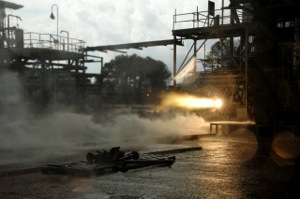
A 3D-printed injector plate delivers 20,000 lbs of thrust in a hot-fire test on August 22.
NASA

Fidelity is an issue with 3D printed parts, even using advanced techniques like DMLS. (direct metal laser sintering) Greg Barnett, the lead propulsion engineer on the project, … “The surface is a little rougher,” he explained; however, those variations are within a consistent range and can be compensated for in the design. …

The test results on the 3D printed components have been extremely positive; Barnett and Williams told Ars that the 3D printed injector is equivalent in performance to the traditional machined one. The next step is to move on to an injector with more elements, which will mean testing with more power.

3D printing—or “additive manufacturing,” as it’s called when you get industrial like this—is seen by NASA as a vital way to keep rocket component development costs down. In a lot of ways, the ability to rapidly prototype via DMLS harkens back to the Apollo-era development method of fast physical iteration. Rather than spending a tremendous amount of time performing deep, computer-based analyses of rocket components, NASA can rough in a design and then print and test a component within hours or days.

The deep analysis and simulation tools are still available and still used, but the months- or years-long physical manufacturing time is drastically reduced. This gives engineers the flexibility to design and build in the most optimal fashion. They can use complex software analysis where necessary, but they don’t have to rely solely on computer modeling.

In the days of Apollo, NASA operated with effectively unlimited funding, which it used to create a nation-wide army of contractors with tremendous manufacturing capabilities. Design-by-iteration was feasible because there was so much design going on. These days, the picture is entirely different. “It’s almost a cultural issue,” explained Williams, “where a part can cost so much, you get into what I call ‘analysis paralysis.'” Without additive manufacturing, prototype rocket parts that can withstand actual hot-firing can cost so much and take so long to produce that when you finally get a physical component to test, you’re already hoping the tests show that it’s perfect—otherwise it would take too long to redesign. With additive manufacturing, that paralysis goes away, and engineers can iterate as needed on actual physical components.

Ingenuity unleashed, development accelerated, designs simplified…the power of 3D printing.

Stupid…back at the beginning and today

20130827-065512.jpg 20130827-065540.jpgFrom StrategyPage.com: The USAF Stands Like A Rock

August 26, 2013: The U.S. Air Force continues to come up short in its effort to supply enough pilots for its growing UAV fleet. Currently the air force has about 1,300 operators for its 280 large UAVs (about half of them Predators, nearly 40 percent Reapers and the rest Global Hawks). UAV operators are now nearly nine percent of all air force pilots, triple the percentage in 2008. But now the air force is unable to get enough manned aircraft pilots to volunteer to do a three year tour as a UAV operator and cannot train non-pilots fast enough to be career UAV operators. Another problem is dissatisfaction with the job. UAV operators leave the air force at three times the rate of pilots of manned aircraft. There are several reasons for this. UAV operators have a heaver workload than pilots of manned aircraft and less time to study and prepare for promotion opportunities. As a result UAV operators are promoted at a rate 13 percent lower than pilots of manned aircraft. Worst of all, UAV operators are not shown the same respect as pilots who go into the air aboard their aircraft. All this would go away if the air force allowed NCOs (sergeants) to be operators of the larger UAVs but the air force leadership is very hostile to that idea.

Absolutely certain that the AirForce and Navy can come up with highly articulate rationales for their systems but it’s all politics and tradition. In the end stupid since it damages the very ‘institutions’ the ‘traditionalists’ think they are protecting.

Sometimes you’ve got to do it yourself to get it right…

Google is laying the groundwork to build its own self-driving car—without a major auto manufacturer as partner
By Christopher Mims August 23, 201320130825-123815.jpgGoogle Ventures reportedly invests $250 million in Uber By Jacob Kastrenakes on August 23, 2013
Just think……

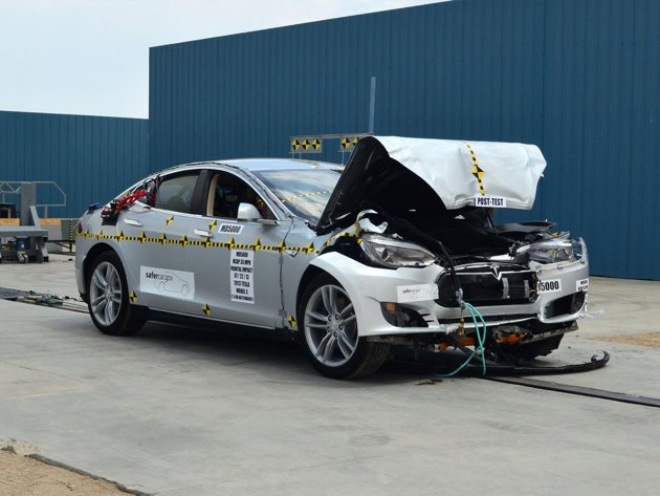
The Tesla Model S Is So Safe It Broke the Crash-Testing Gear
BY DAMON LAVRINC 08.20.1320130825-123928.jpgTesla California sales beat Chrysler, Volvo, Cadillac, other big names
Electric car maker snatches 12 percent of luxury sports category in first half of 2013.
by Lee Hutchinson – Aug 23 201320130825-124049.jpg Will the success of Tesla’s Model S speed along a $35k model with a 200-mile range?
By Amir Iliaifar — August 13, 2013

Autonomous electric taxi’s ( call them Charles) can (like a regular taxi) drop off and pick up at the curb, dense pack park, and get a range extending charge…or go pick up another fare, while the original call is shopping, chatting, exercising, etc. They make a huge amount of sense for two user demographics, the elderly who are still able to get around but perhaps are no longer safe drivers or even more likely don’t want to or cannot justify owning a personal vehicle. Second, the urbanite non driver of whom their are many, Charles provides the same service the hordes of yellow taxis do today, with reduced emissions and probably cost along with improved safety. Charles can also provide a vastly more personalized limo type service to elder home clusters in the ‘burbs. Even for suburbanites Charles makes a one car or no car life style thinkable.

Sometimes old & reliable is far better than new and shiney

20130823-202452.jpgAt: http://breakingdefense.com/ Stick With The Tomahawk, Forget LRASM
on July 12, 2013
By Steve Russell

In America’s culture of optimism and innovation, there is always the desire for the better mouse trap. Sometimes, traps are needed to catch rats and not mice, so the mouse traps must be replaced. Sometimes, the existing traps can be modified to more than do the job against the actual threat they face. But we must be intellectually honest and ask, “Can what we have already get it done?”
.
.
.
For example, the .50 caliber Machine Gun was designed in 1919. That’s right, just after the First World War. It has been successfully upgraded and is still used today by all the armed services. It is efficient, deadly and respected by all of us who have used it in battle to defeat America’s enemies. Why? It simply works. America has protected thousands of lives and saved billions of dollars by resisting the calls for a potentially better mouse trap.

Too many times the urge to build new vs. incremental upgrade is hard to resist especially if a clique of advisors is captured by an aggressive sell of shinny new technology. ( Though alternately it can be hard to tell when an old war horse needs to be put out to pasture.)

But…if the shinny new blivet is only incrementally better and many or all of its advantages can be spun onto the old gray tiger you really have to consider incrementalism.

Speed, stealth or smaller, are often sold as the key advantage of a new frame…but most of the time the advantage so bought costs in $’s and in lost capability, flexibility, or maybe even reluctance to pull the trigger given a fear that the shinny new tech will be revealed to the oppo…

Especially in a world of rapid change the urge for the new is not necessarily a good one. Too many times a brilliant idea today is obsolescent before it’s out of development and can get caught in a horrifically expensive dollar death spiral chasing evolving requirements.

Also remember that the old guard primes have huge infrastructures (and stockholders) they have to support. And upgrading old systems will not fill the pipeline. So they have a strong motivation to denigrate the old and laud the new, so do many in the DoD bureaucracy.

Unfortunately for the new platforms, most technologies coming down the affordability curve are as good for, or better at upgrading older platforms or capabilities, than providing big step changes at the platform level.

Not to say that this won’t doom some old war horses. I’m not confident that the CVN is anything more than an admiral’s yacht and diplomat’s crutch these days.

Dream Chaser you have to like the name

20130822-221818.jpg

Dream Chaser in a captive carry flight over the Mojave. (Credit: Sierra Nevada Corporation

EDWARDS, Calif. (NASA PR) – NASA partner Sierra Nevada Corporation (SNC) of Louisville, Colo., successfully completed a captive-carry test of the Dream Chaser spacecraft Thursday, Aug. 22, at the agency’s Dryden Flight Research Center in Edwards, Calif.

Puny Titan, giant idea, solar powered pseudo satellite

20130820-221844.jpg

Artist’s rendering of Solara 50 at high altitude.
Titan Aerospace

20130820-222128.jpg

The coverage area of a Solara 50, superimposed over New York.

From ars technica:

Almost orbital
Titan’s aircraft plans are … modest and … ambitious at the same time. Solara 50 will have a payload of just 70 pounds—though depending on the time of year and location of the flight, longer daylight hours could sustain flights with heavier payloads. The next design, the Solara 60, will carry up to 250 pounds. Instead of using hydrogen fuel cells, the Solara aircraft use batteries charged from solar panels to power flight at night and provide about 100 watts of power to the aircraft’s payload, as well.

The Solara 50 has a 50 m (164 feet) wingspan. The upper surfaces of its wings and tail are packed with over 3,000 photovoltaic cells capable of generating up to 7 kilowatts. It is launched by catapult and can land (when it has to) by skidding on its Kevlar-coated underside. Unlike the giant flying-wing configurations of the Helios and Zephyr, which had large numbers of propellers, the Solara has a single, high-efficiency motor.

In theory, a solar-powered drone capable of withstanding long flights at high altitude—in what Titan executives call the “sweet spot” in the Earth’s atmosphere between 60,000 and 70,000 feet, above nearly all weather patterns in a zone where winds are typically less than 5 knots (5.75 miles/hour)—would be able to perform tasks usually reserved for satellites at a much lower cost.

Several orders on the books, reasonable objectives, good idea, what’s not to like?

Gartner’s 2013 Hype Cycle for Emerging Technologies, via 3ders

20130819-104724.jpg

Gartner’s 2013 Hype Cycle for Emerging Technologies features Humans and Machines

The cycle is one of those eye opening ideas, a meme that explains while also laying out a way to look forward. Like disruptive vs evolutionary technology, the 80/20 rule and others.

3ders noted it because several things on it this year that are near and dear to their hearts. Personally Gartner’s timeline for consumer 3d printing, from the peak of hype (this years tip) to the plateau of acceptance is to conservative (5-10years). I think more like 3 to 5 years, but we shall just have to wait and see.

Someone got carried away with their QuadRotor project! Gas Electric Propulsion and battle gray!

AWST Ares Blog: New Ways To Fly by Bill Sweetman
20130818-210217.jpg

New at AUVSI was a variation on the quadcopter from Latitude Engineering of Tucson – the hybrid quadrotor, or possibly octorotor. A piston engine drives a generator, turning four electrically powered rotors (on the prototype). The next generation vehicle, weighing 60 lb, will have eight lift rotors installed in pairs, above and below the booms. Latitude says that three of the latter vehicles have been ordered by Naval Air Systems Command for a test program.