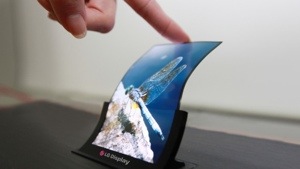
 @ TechRadar:IN DEPTH Will pliable displays ever take off? :Want to know when your phone will become your flexible friend?
Good survey of the oncoming tech…

@ TechRadar:IN DEPTH Will pliable displays ever take off? :Want to know when your phone will become your flexible friend?
Good survey of the oncoming tech…

Read more at: FPGAs, LEDs, tools and wearables, new products in the Maker Shed
…FPGAs are intimidating beasts to most makers, including myself. Thankfully, Justin Rajewski’s insanely popular Kickstarter project caught our eye. The entire goal of the Mojo is to make getting started with FPGA and digital design as easy as possible. An FPGA allows you to design digital circuits (basically a bunch of logic gates connected together to perform a specific task). The designs that you create can range from something as simple as a counter to blink an LED to something as complex as a multi-core processor (or an Audio Visualizer).
With a microcontroller (like an Arduino), you write software that gives you control of the the built-in peripherals but is limiting in that you can often only complete one action at a time. With FPGAs you are not creating software; you’re designing the hardware. Instead of writing code to run on a fixed processor with fixed peripherals, you get to design your own circuit.
Justin’s done a fantastic job of releasing new tutorials for getting started with Electronics, Logic and the Mojo on the Embedded Micro website. He’s also began work on an IDE specifically for the board, to make it even easier to develop for. Read more about this flexible, powerful board and pick one up from the product page. …
…and the other stuff they highlight is cool to!
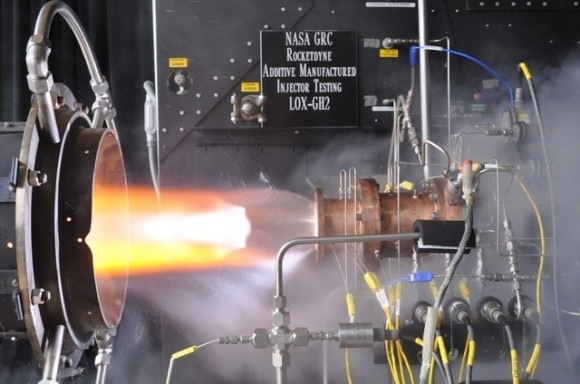
…NASA didn’t use ABS plastic that most 3D-printers use. Instead, the agency used custom 3D printers to spray layers of metallic powder using lasers. The lasers spray the powder in a specific pattern in order to come up with the desired shape for an object. In this case: a rocket engine injector.
Read more at: Slash/Gear http://www.slashgear.com/nasa-3d-printed-rocket-injector-undergoes-first-test-firing-12290238/
Wired: ‘Holographic Duality’ Hints at Hidden Subatomic World

The holographic duality, discovered in 1997 by Juan Maldacena, says that events inside a region of space that involve gravity and are described by string theory are mathematically equivalent to events on the surface of that region that involve particles and are gravity-free. Illustration: Annenberg Lerner 2013
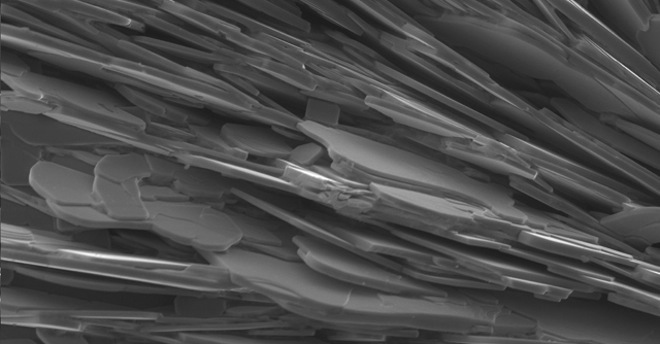
In the mathematical parlance of the holographic duality, certain strongly correlated matter in 2-D [such as in cuprate hi temp superconductors shown above; editors note] corresponds, in 3-D, to a black hole — an infinitely dense object with an inescapable gravitational pull, which is mathematically simple. “These very complicated quantum mechanical collective effects are beautifully captured by black hole physics,” said Hong Liu, an associate professor of physics at the Massachusetts Institute of Technology. “For strongly correlated systems, if you put an electron into the system, it will immediately ‘disappear’ — you can no longer track it.” It’s like an object falling into a black hole.

Flying hybrid: This two-seater electric-gas airplane may be the first of many to take to the skies
Read more at MIT TR :Once a Joke, Battery-Powered Airplanes Are Nearing Reality
UVa’s Sustinere design for a 50-seat jet eschews batteries in favor of a turboelectric distributed propulsion (TeDP) concept – two 2,500shp turboshaft engines under the wing generating electrical power to drive six 3,300lb-thrust fans arrayed in a duct that wraps around the upper fuselage.
Read more at AWST: Battery or Superconductor – FAA Picks Hybrid Winners
The EADS IW concept uses a single large turbine engine to generate electricity to power six ducted fans that provide thrust. This allows propulsive and thermal efficiency to be optimized separately. The turbine engine can be optimized for thermal efficiency (turning fuel into shaft power) while the ducted fans increase effective bypass ratio and therefore propulsion efficient (turning shaft power into thrust).
Read more at AWST : eConcept – EADS’s Hybrid-Electric Airliner
Two years after Honeywell and Safran announced plans to develop an electric-drive system, the team is preparing to demonstrate a proof-of-concept system on an Airbus A320 at this year’s Paris air show.
Read more at AWST : Electric Taxi Puts On A Show At Paris By Guy Norris
The result of close collaborations with Finmeccanica companies – Selex ES, Ansaldo Breda, and Ansaldo Energia – and partner companies from Italy, UK, U.S. and Japan, the aircraft embeds some unuque features: aesthetically pleasing styling and aerodynamically unique tiltrotor configuration; carbon graphite exterior surfaces; High-Integrity Flight Control Computer and Actuator Control Unit; custom produced electric motor inverter and motor control algorithm; axial flux permanent magnet electric motors.
Read more at : http://theaviationist.com/2013/03/21/project-zero-images/
SpaceX continues to drive down the barriers like the aggressive but rationale organization they are and the world needs to move us to the next level of Earth to orbit operations. And having a dream and stretch goals are required elements.
From NASA Spaceflight: Dragon Roadmap: From domestic crew independence to humans on Mars
July 5, 2013 by Chris Bergin

 Grasshopper reaches a thousand feet in new nav test. Read more at: SpaceX shows off new nav gear with latest Grasshopper rocket launch-and-landing (video)
By Timothy J. Seppala posted Jul 6th, 2013 at 3:47 PM

The rise of the micro air vehicle
13 June 2013 | By Jon Excell
Read more: http://www.theengineer.co.uk/in-depth/the-rise-of-the-micro-air-vehicle/1016519.article#ixzz2XeLGHbVs


A soldier of The Queen’s Royal Lancers launches a Black Hornet, Nano UAV from a compound in Afghanistan during Operation QALB.
…one of the compelling advantages over larger surveillance UAVs such as the Reaper is that the system can ‘be tasked in a matter of seconds’, whereas a reaper might take half an hour to arrive at the scene.
…Prox Dynamics’ CEO and founder Petter Muren told The Engineer that the technology that appears on the PD100 is considerably more advanced than anything that would be found on a remote-controlled aircraft. The motors, servos and sensors are, he said, smaller and more efficient. The radio-link is more advanced, the system has fully integrated GPS, as well an autopilot system, and is far more robust.
And the beat, wing beat, goes on…


The ENGINEER :In the wings: recreating the Bugatti 100P
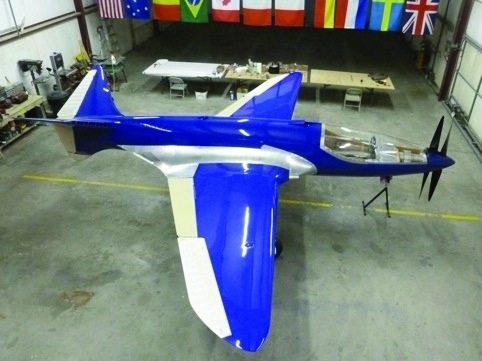
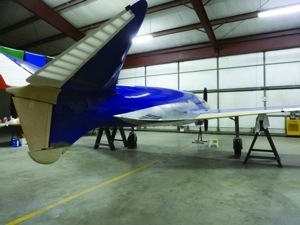 Almost eighty years ago aircraft design was still more art than science and what science there was revolved around slide rules and mechanical, even human, calculators, but they took chances and pushed boundaries.
This aircraft used the period’s (late ’30’s early ’40’s) advanced composite, plywood, made of hardwood and balsa wood as well as sophisticated aerodynamics to achieve a remarkable projected performance, 500 MPH, at a time when 300 was fighter fast. This aircraft had a cooling system similar to the breakthrough one in the P51 mustang, a half decade earlier, and the composites were used in the famous British strike bomber the Mosquito, also a half decade later. But the original of this remarkable aircraft never flew, being shipped out of the path of the oncoming Nazi army and ending up as decayed parts in the Experimental Aircraft Associations museum in Oshkosh WI. Now a team of enthusiasts are building a replica they expect to fly soon.
Is Sony the Next Apple?
By Leo Sun – June 26, 2013
There is a lot of evidence suggesting that Cook doesn’t know where to go from here – Apple’s stock buyback, dividend, and bond sale all indicate that the company could become a slow-growth tech stock like Microsoft and IBM. The iPad Mini and iOS 7 also suggested to investors that the road ahead would be reactionary, rather than revolutionary.
… Sony has expanded into is the phablets category, … a 6.4-inch screen …seriously pushing the acceptable size limit of a smartphone.
Although the Ultra seems like a goofy attempt to capture some of the phablet market from Samsung, I believe that it could gain some serious ground when used in tandem with the SmartWatch 2 and a Bluetooth headset. Many consumers could stow the Ultra in a bag, while using the SmartWatch to check on basic information and tasks while using a Bluetooth headset to make calls or listen to music. To view movies, make video calls or games, the Ultra could be brought out and used like a normal tablet.
I’m no sure Apple has lost it’s mojo but I agree there is evidence of it.
I think that the latest iteration of blue tooth and general tech advances definitely plays to the padPhone+smartWatch+headSet combo and maybe, maybe Apple missed it.
Apple IMO also has missed the stylus revolution, pads of all sizes need sophisticated hand writing, sketch, art input capability to jump another level of ubiquitous usefulness.
I hope Apple is looking at things like 3D Printing, scanning and model manipulation and creation, in the same way they took on the 2D Printing world, there would be a real break out stroke.
 Shiver me timbers. Architects plan wood skyscraper for resident life
Jun 21, 2013 by Nancy Owano
The wooden skyscraper is gaining attention as “green” news because of the wood factor proposed. A number of points in wood’s favor: C. F. Møller’s team noted how timber production releases less carbon dioxide than steel or concrete production, at a time where construction accounts for 30 to 40 percent of the world’s carbon dioxide generated from humans. Concrete and steel command a large part of the market, but wood-supporters note that wood is a lightweight, renewable material that can bear heavy loads in relation to its weight.
In general, the word “wood” makes some people nervous because of fears of fire. Architects who favor wood, however, argue that wood is safer than other types of building materials and can be more fire resistant than both steel and concrete. Earlier this year, an article in the Toronto Sun took note of what Geoff Triggs, building code consultants expert, had to say about the use of wood in high-rise construction. Rather than using small two-by-fours super-compressed mass timber is used to make very large panels. The compressed lumber is as strong as concrete but lighter. The compression process creates dense wood blocks that are difficult to burn.
Read more at: http://phys.org/news/2013-06-timbers-architects-wood-skyscraper-resident.html#jCp
 This World and Others