Printing tactile images for the blind

3D Printer | Exploring the world of 3D printing | Printing tactile images for the blind
by Cameron Naramore on April 25, 2013
20130425-190348.jpg

A “relief” is an example of what a 3D printed picture could look like.


Etchings, reliefs, contoured renderings of images. But what would a blind Rembrandt create with the right tools, ways for the sighted to gain concept for the inner perceptions of the blind? In the end this will become a new art form.

Ice Giant’s make water exotic

New phase of water could dominate the interiors of Uranus and Neptune : phys.org: by Lisa Zyga

20130425-181811.jpg
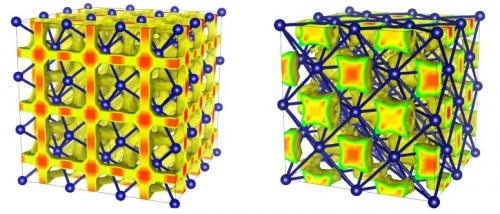
Structure of superionic ice in (left) the bcc phase and (right) the newly discovered and more stable fcc phase. Credit: Hugh F. Wilson, et al. ©2013 American Physical Society
Read more at: http://phys.org/news/2013-04-phase-dominate-interiors-uranus-neptune.html/

Mysterious planets
Although superionic ice doesn’t exist under normal conditions on Earth, the high pressures and temperatures where it is thought to exist are very similar to the predicted conditions in the interiors of Uranus and Neptune.
“Uranus and Neptune are called ice giants because their interiors consist primarily of water, along with ammonia and methane,” Wilson said. “Since the pressure and temperature conditions of the predicted new phase just happen to line up with the pressure and temperature conditions of the interiors of these planets, our new fcc superionic phase may very well be the single most prevalent component of these planets.”
The researchers predict that understanding superionic ice—particularly the stable fcc phase—will offer insight into these ice giants.
“Uranus and Neptune remain very poorly understood at this stage, and their interiors are deeply mysterious,” Wilson said. “The observations we have are very limited—every other planet in the solar system we’ve visited multiple times, but Uranus and Neptune we’ve just done brief flybys with Voyager 2. What we do know is that they have bizarre non-axisymmetric non-dipolar magnetic fields, totally unlike any other planet in our solar system. We also know that they’re extremely similar in mass, density and composition, yet somehow fundamentally different, because Neptune has a significant internal heat source and Uranus hardly emits any heat at all.”
It’s possible that the predicted bcc-to-fcc phase transition may explain the planets’ unusual magnetic fields, although more research is needed in this area.
“Our results imply that Uranus’s and Neptune’s interiors are a bit denser and have an electrical conductivity that is slightly reduced compared to previous models,” Militzer added.
Understanding Uranus and Neptune’s interiors could have implications far beyond our solar system, as well.
“One thing we’re learning from the Kepler mission is that Uranus-like or Neptune-like exoplanets are extremely common,” Wilson said. “They appear to be more common than Jupiter-like gas giants. So understanding our local ice giants is important, because they’re an archetypal example for a huge class of planets out there in the universe.”

20130425-182306.jpg

Graphene conductor is ink-jet-able, flexible, what about 3D enabled?

Inkjet-printed graphene electrodes may lead to low-cost, large-area, possibly foldable devices at phys.org by Lisa Zyga

This is the sort of technology that could enable 3D electronics for all sorts of applications from industrial and maker shops.

20130424-214235.jpg

‘Just’ eye candy

Engineering, science, technology, art

From molecules to gallons: Scaling up fuels created by artificial photosynthesis: Sabin Russell @ :phys.org
Ok so I’m a geek but I see this a neat and a form of artistry.

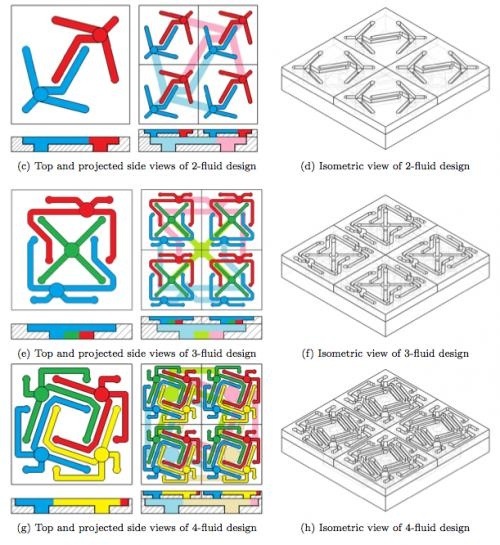
Self similar patterns, derived from nature’s models, provide a route to scale from meters to sub micron with features of self assembly and ‘natural’ scaling. Allowing fluids to flow in and out of a microscopic reaction site at macro-scales.

20130424-074717.jpg

20130424-074730.jpg

Merlin 1D engine ready for space

The SpaceX Merlin 1D engine, the more powerful, more robust and less expensive
follow on to the operational 1C, has been certified for flight.

20130423-232802.jpg
This is the family, an interesting thing about the Heavy is the plan to have the strap-ons share fuel with the core, consequently when they separate the core is still fully fueled, a big performance increase.

20130423-232817.jpg
The engines have been run far harder than standard rating regimes require, 1) to solidify their ‘man rating’ for future crew lofting flights, 2) because SpaceX wants to reuse them, 3) because SpaceX wants top line insurance rates for their customers even while brining new approaches to the party.

20130423-232832.jpg
Rocket engines, so ugly you just know they’re powerful!

SpaceX Grasshopper, hops up 820ft

Cool videos at the Verge article.

20130423-224330.jpg
Held at height and then landed straight down unaffected by what looks like a reasonable breeze.

Second gen Falcon this year, possibly Falcon Heavy first flight, soft water return for a booster this year and ground return next year! Each demonstrates fundamental capabilities and the power of a committed commercial / civilian play with tech and team unfettered by bull crap FARS oversight dead weight. But each is advancing tech at a rate that seems more reminiscent of the sixties NASA and aviation tech| 2nd gen Falcon: new improved engines, Heavy: buddy tank w/ common boosters engines, any of the above: fly back boosters w/ powered soft landing first at sea then on land. Each step something daring and commercially valuable. I’m not sure how some of the competitors keep from going into terminal depression, if Musk’s SpaceX team nails the string the old guard are toast.

1968

20130423-081645.jpg

20130423-081544.jpg
A long post on a turning point year.

Interesting that Mad Men, the iconic cable TV show about admen in that pivotal era seems to cause so much introspection.

Many reasons, many of today’s thinkers were young then, TV was really getting its legs, technology was vaulting forward but was now seen as a mixed blessing rather than untrammeled good, the almost unlimited growth of industry and regulation…or regulated industry was sputtering as the dead hands of regulation, unionization, corporatist over-reach, the limits of top down management and aging leadership (and infrastructure) began to run up against emergent back pressure from a rising Japan/Asia, Germany/Europe, Communism as an apparently proven long term competitor/threat.

20130423-082324.jpg

20130423-081701.jpg

20130423-081712.jpg

20130423-081741.jpg

20130423-081753.jpg

20130423-081800.jpg

20130423-082822.jpg

20130423-082832.jpg

Zero DS || Wired

20130422-091351.jpg
Article:Alexander George, Photo: Alex Washburn/Wired

When the light turns green and the two-lane road begins an ess turn, it’s clear the Zero DS is a true motorcycle, not just a scooter with sport bike pretensions. This is an electric hoon machine that will put you ahead of almost anything on four wheels. Going from a standstill to 60 mph takes a tick over five seconds, and high-end torque slings the bike through on-ramps with aplomb. The Zero has the power to inspire that smirk of speed euphoria I crave from a bike — something that hasn’t been lost with the removal of a traditional internal combustion engine.

20130422-091619.jpg

As a two-wheeled electric vehicle, the Zero DS is perfect. The engineering has accounted for everything important in a transportation vehicle. Riding the Zero, you think, this is how a civilized society should move about. This is a lithe and efficient vehicle, and an exemplar of what motorized travel should be: four-hundred pounds of weight moving between destinations silently, parking unobtrusively, and most of all, forcing the rider to be deliberate and unwasteful. Take only what can fit in the storage space and travel knowing that you have a finite range and must act resourcefully. Those restrictions, again, keep the Zero from being a true all-around motorcycle, but I like the idea of noble asceticism so long as the thrill of speed remains.