By Jason Dorrier – Dec 13, 2020

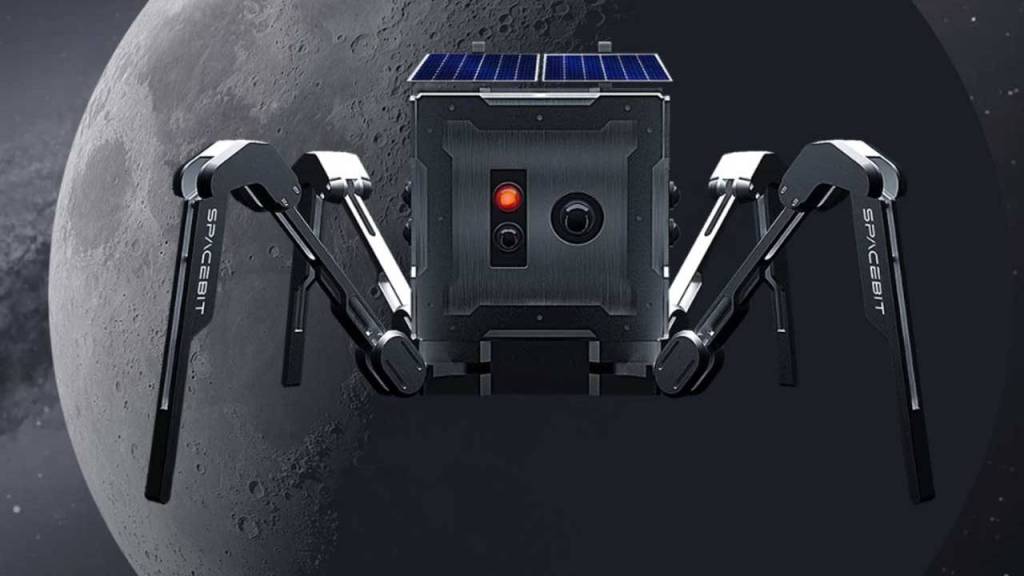
A really cool concept. Miniature walking rovers that can explore tiny spaces, a single test to the moon this year with plans for swarms (small ones) in the not too distant future. Tbe video animation from Spacebit is worth a couple of minutes.
Two items run across recently the emphasize the huge progress that robotics and Artificial intelligence has made in the last couple of years.
From Robot Reports a somewhat frightening video:Watch Boston Dynamics Robots Tear up the Dance Floor.

The Boston Dynamics robots are at the point that they can do most things a human can in regards to locomotion. It is unclear how much beyond balance and moving is local to the robots as the thoroughly bounded arena makes clear but the basics of the body frame is there. Ability to manipulate the environment other than in the most basic way has not been demonstrated by Boston Dynamics but other companies are making huge strides in manipulators. Ability to sense and understand the environment is another huge step. Except that the sensors exist (autonomous cars etc). Leaving understanding the environment beyond a very limited ‘world.’ And that takes a brain, and that seemed a long way off….except is it?
Hat tip Maggies Farm, in Towards Data Science: the article; GPT-3: The First Artificial General Intelligence?

GPT3 would appear to be on the threshold of general purpose artificial intelligence. In the article it is noted that GPT3 is a brain in a box with no ability to sense or manipulate the environment without human intervention. But ‘wrapping’ those abilities ‘around’ GPT3 appears all but trivial. Given its ability to learn on its own would a Boston Dynamic’s wrapped GPT3 become something close to the robot of our dreams and nightmares. It certainly appears so.
Atlas’s is battery powered, I think, to the tune of an hour or so. GPT3 is instantiated on a huge computer network but both of those limitations are receding every day as computing power and battery storage continue to improve driven by their broad application across the tech scene.
Five years from now it would seem likely that the general purpose android robot will be a real thing. If built in quantity like say a Tesla 3 are you looking at $30K a pop? What does that lead to?
I want to make sure they understand that I for one welcome our dancing robot overlords.

An act of cyberwar is usually not like a bomb, which causes immediate, well-understood damage. Rather, it is more like a cancer – it’s slow to detect, difficult to eradicate, and it causes ongoing and significant damage over a long period of time. Here are five points that cybersecurity experts – the oncologists in the cancer analogy – can make with what’s known so far.
The Sunburst hack was massive and devastating – 5 observations from a cybersecurity expert by Paulo Shakarian From The Conversation
Description of who, how, what at least in general terms and a thoughtful overview of how to start thinking about the impact and meaning.
To me this attack seems just part of the reality we live in. As discussed in Modes of War, this is one of the modern modes that are more about gains and pains than blood and gore. This sort of strike, ignored and multiplied, could bring a nation down and given the context of reality today, direct kinetic action is highly unlikely.

So one of the things that has kept me a little bit sane this last 9 months is SpaceX, Starship, and 24 Falcon launches… All I have to say is WOW and thank you Elon!
I’m in the periphery of the electric car business and have been for over twenty years now. The only thing that made me a believer was Tesla.
I’ve been watching space since I sat in front of the telly as Armstrong stepped off the lunar lander. The first time I believed that the final frontier finally within grasp was watching SpaceX doggedly pursuing landing Falcon boosters.
I’ve been a big believer in sub surface transportation, in particular for cargo and rapid medium distance, since high school! And the first time I saw it really taken seriously was Elon’s Boring Company.
It is really hard to think of another great innovator who had such a broad impact in the world. Brunel maybe (Victorian England) Edison, Tesla, Marconi, the Wrights, Sikorsky, Johnson…they all did great things only Brunel had as broad as Elon Musk. Maybe some of the other engineer entrepreneurs of the 1850’s to 1950’s working in what would become industrial powerhouses might have been similar but a different time and public culture hid them…maybe it’s just that Elon’s working today and as a geek I gravitate to him and the search engines feed my observer bias.
So linked at the bottom is a file by the congressional research service regarding the progress the Navy is making on laser weapons, rail guns and hyper velocity smart munitions. Not the best topic for Christmas Season but oh well.
A series of articles in the Drive and elsewhere have discussed the progress in laser weapons over the last few years. To recap, a technology that was discovered as a fairly early practical application of quantum theory evolved into an important digital communications tool where the demand for longer distance between repeaters drove the power up to a point where cutting material like paper was practical that evolved into cutting steel which provided the basis for weapons grade systems although the military R&D complex had been exploring alternative paths for decades.
Now real systems (in the sense of shooting down light weight drones or setting outboard motors on fire, as well as dazzling or spotting) are being deployed and fairly aggressive plans are being made. There still remain problems with the technology though many of them are resolvable. And like earlier many pieces are being worked on for civilian reason, not the least in the field of astronomy where light transmission through the atmosphere is important and the brain power is deep and unfettered by military R&D issues.
In the end it is not clear that at sea is the best place to locate a laser weapon but ships are (relatively) big and have (relatively) large power systems so they are a good early trial. If lasers can be of value there they are going to make it other places as the technology improves.
Rail guns…what can you say (I could say a fair amount but won’t) they are the technology of the future and have been my whole adult life. I spent a couple of years involved with them and that is enough to tell me that there are a lot of fundamental problems that appear surmountable in early hand waving but are practically insurmountable as you get closer and closer to reality.
The ‘rail’ part of the gun has most of the problems of a powder gun barrel of erosion, fatigue, stress, compounded by huge electromagnetic forces in the metal itself. Vastly more complex than a simple bang tube. The energy required is huge but not only that it has to be released in a controlled manner at several times the rate of an explosion since the energy and the power are both higher than the propellant ‘burn’ of a powder weapon. Modern power electronics can handled this but they are not light and the resultant waste heat instead of exiting the barrel in a plume of plasma is retained in the energy storage device and switching system, none of which can be dowsed with water like you can do with a gun barrel.
Every 5 years or so since the seventies the rail gun has popped up as a candidate to replace the powder cannon of the day. Each time more of the hurdles identified in the last round are knocked down. But then new hurdles appear, often more complex than those dealt with and hidden by the earlier barriers.
And at the end of the day is the result worth the price? In WWI and WWII guns of prodigious range were developed but made no difference in the end. Mostly filling in for fighter bombers when the weather was crappy or the target too diffuse to be worth risking a pilot/aircraft.
In the early days (the 1970’s) of the rail gun its potential range and rate of fire appeared very attractive especially for Naval support gunfire. 100 miles and 10 rounds a minute of lethal kinetic punch were very much of interest to the amphibious forces. Since they were powered by electricity and fuel is relatively cheap + plentiful and the rounds compact, the ‘depth of magazine’ was fantastic. And all of this is still deeply interesting. But. In the end is this really what you need? In WWII through Desert Storm this capability set would have been game changing. Today? Maybe not.
The round designed (successfully) for the rail gun, can fit in any of our current 155mm class cannons. These guns with their 52 caliber barrels can punch the round out to 40 miles or more. The round is guided and has shown the ability to shoot down a cruise missile ! So it is as accurate as you like. It’s ‘shortfall’ in modern ops game theory is that it is a bit slow for shooting down ballistic missiles or reaching the outer theater to shoot down other high performance targets. But there are missiles that can do that and the attrition cost of a missile on that sort of target is worth it.
40 miles is not 100 miles, some targets are out of reach, you cannot stand off as far or reach in as far to destroy targets. But in reality is that an issue? If you think that you are going into amphibious war against hostile beaches maybe. But you have to assume that you can destroy the enemies area denial defenses (Because otherwise why worry about 100mile standoff?) so you can get the amphibious forces in close enough to get on and over the beach at acceptable cost. None of that appears realistic today. While some kind of Eurasian Fascist Empire and air tight anti strategic defenses might create an existential threat that triggered WWIII and the concomitant bloodbath this scenario is simply not on the table now or foreseeable in the next twenty years.
For now we have Taiwan and the South China Sea as the most likely battleground for near peer conflict. ——— OK no one ever really KNOWS what is coming next, the Med, the Baltic, maybe somewhere in Oceana might go south with zingers but none of those have the deep resources required to cause an existential threat or survive an attrition campaign long enough to make the rail gun a potential player——
To continue, while T and SCS are both in their way an argument for that extended range neither is going to be resolved in any way by one weapon. Neither are any other scenarios one might game other that EFE+ATSD above and that ain’t goin to happen (yet.)
So? Lasers…full speed ahead, look to the sky, 150kW on a fighter is a game changer. Rail guns…spend some money, let the Chinese trial their barge, see if they have solved the problems, they haven’t but what do I know? Hyper (or High) velocity smart munitions,…go, go, go power rangers !
I’ve used PayPal for several years now on my iDevices and PC’s, mostly for paying a few monthly subscriptions and moving money between bank and credit union. It also enables me to pay for my minor excesses out of my ‘monthly money’ rather than the family general account. I have bought a couple of big-ticket ‘toy’ items using the credit account and then paying back over a few months, or better saving up then using PP to buy the lusted after item over the net. I think PP is a useful service and I trust it more than I do big bank credit card services though that’s a little player vs. mongo player preference rather than real in-depth analysis.
Pay Pals weakness has been the network effect. In general the more members any network has the more useful it is. While PP is pretty widely spread these days it’s not getting bigger quickly enough and I have continued to use other methods of paying for most things.
PP has solved at least part of this growth problem by moving into the credit card world. Establishing a PayPal Master card in place of its own credit account. This enables users to pay through the immense existing credit card infrastructure but use the PP ‘back office.’
In one sense it’s a bit sad that PP had to just become another credit card. But they do provide a lot of other services and a way to manage and move your money around in the banking system.

The Verge | I rode the ZBoard in Las Vegas and it changed my life

Read the article, this is what Kickstarter is all about.
The iPad is the premier tablet and it’s probably nearly the perfect size and weight for its form factor. That’s not to say that within the form factor there is no room for improvement. A screen that takes up most of the face should be a near term target, as should an auxiliary screen on the back face that provides bright light reading and low power / speed interactivity for those who don’t live indoors all the time. To support the iPad as a companion device, multi level security is a growing need.
Make the bezel the same on the iPad as minimal as possible (get rid of the push button) push the screen out to the edge, don’t change the shell size. This with continued pixel densification will put the screen on another level altogether. Make thumb and palm detection native and intelligent enough to enable me to rest my palm on the screen and write with a stylus as if the screen were regular paper.
Put an eInk reader panel on the back to enable the display of text and graphic art, this will enable high light low power reading applications and some other limited visual bandwidth applications such as phone etc. (This will be accomplished with a smart cover but it would be cool if it were integral with the iPad.)
The radio suite & battery life along with the camera, face time, GPS, and other built in sensors are probably good enough not to call for increases in size weight, but neither should they be decremented.
The iPad is far to big a part of many people’s eLives to leave to the pitiful protection it has today. We need multi level security, enable me to turn the iPad on as if there is no security for consuming web pages, playing games, and using certain apps. But for other functions use face recognition, symbolic coding other than a number pad, voice recognition, retina image recognition and even finger print recognition in combination to protect various levels of data in the unit.
Enable cyber security with one or more over watch processors that is not linked to the outside world for some level of checking to make sure that the tablet has not been compromised. A version of this ‘chip’ may be linked to a secure remote system (short-range) so businesses or organizations can disable certain functions of the iPad remotely to make sure that pictures, audio, or other data cannot be put into memory without authorization. This Big Brother functionality is a bit daunting but at least the over watch processor is probably going to be needed. The full BB may be an external attachment and not integral so one can shed it easily….
Cover art Draft: