Typically thoughtful and thought provoking Via Meadia article on ‘the filibuster’ and it’s affects.
Small business, individualist, small govm’nt folks need a voice to….

Typically thoughtful and thought provoking Via Meadia article on ‘the filibuster’ and it’s affects.
Small business, individualist, small govm’nt folks need a voice to….
This seems to say it all and Tragically this looks like an I told you so from a huge number of angles, and perhaps it need not have been so.

Seen in Wired (best society of tech pup ever.)

The Verge | I rode the ZBoard in Las Vegas and it changed my life

Read the article, this is what Kickstarter is all about.

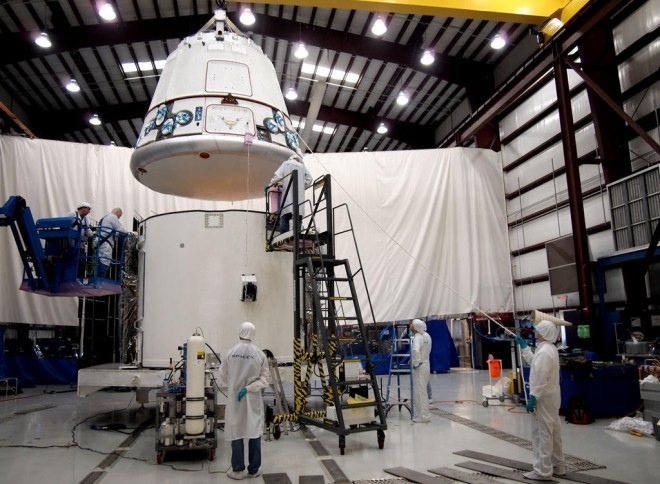
Wired | The Common Space Fleet (1968) BY DAVID S. F. PORTREE 12.26.12 7:50 AM
Even as the moon landing was approaching futurists were looking to what should follow. They were looking at manned multi year missions based on the technology they had, reuse and incremental development of Apollo – Saturn technology. Just reading this article sent me of into a dream of what could have been. Just thinking about it made me sad, mad, glad: sad for what might have been, mad at those who sidelined the dream because of shortsightedness, glad that at least some had the sense to think-dream based on common sense.
Today Elon Musk and a few others are dreaming similar dreams maybe having read a few of the NASA documents though the basics are so common sense they do not have to have.
The iPad is the premier tablet and it’s probably nearly the perfect size and weight for its form factor. That’s not to say that within the form factor there is no room for improvement. A screen that takes up most of the face should be a near term target, as should an auxiliary screen on the back face that provides bright light reading and low power / speed interactivity for those who don’t live indoors all the time. To support the iPad as a companion device, multi level security is a growing need.
Make the bezel the same on the iPad as minimal as possible (get rid of the push button) push the screen out to the edge, don’t change the shell size. This with continued pixel densification will put the screen on another level altogether. Make thumb and palm detection native and intelligent enough to enable me to rest my palm on the screen and write with a stylus as if the screen were regular paper.
Put an eInk reader panel on the back to enable the display of text and graphic art, this will enable high light low power reading applications and some other limited visual bandwidth applications such as phone etc. (This will be accomplished with a smart cover but it would be cool if it were integral with the iPad.)
The radio suite & battery life along with the camera, face time, GPS, and other built in sensors are probably good enough not to call for increases in size weight, but neither should they be decremented.
The iPad is far to big a part of many people’s eLives to leave to the pitiful protection it has today. We need multi level security, enable me to turn the iPad on as if there is no security for consuming web pages, playing games, and using certain apps. But for other functions use face recognition, symbolic coding other than a number pad, voice recognition, retina image recognition and even finger print recognition in combination to protect various levels of data in the unit.
Enable cyber security with one or more over watch processors that is not linked to the outside world for some level of checking to make sure that the tablet has not been compromised. A version of this ‘chip’ may be linked to a secure remote system (short-range) so businesses or organizations can disable certain functions of the iPad remotely to make sure that pictures, audio, or other data cannot be put into memory without authorization. This Big Brother functionality is a bit daunting but at least the over watch processor is probably going to be needed. The full BB may be an external attachment and not integral so one can shed it easily….
Onwards and upwards into the black!
So someone might ask what is the world like in the 2060’s and how do I know? To which I reply I obviously cannot know, look at what the smart futurists in 1960 thought the world would be like in the 21st century…for example 2001 (still the best(only) ‘hard’ sci fi movie ever.)
Turn the question around, what was the world like in 1960, transistor just invented, first men in space. But those who were adults in the think of it had grown up during an incredible step change in technology over twenty years and they expected it to continue.. Of course many of the technologies that had gone through that step change had pretty much peaked out (the 737 flew first time only a few years later, the B52 was in service.) But technology they thought was peaking (computers, radios, etc) were really only on the ramp towards immense changes. Then if you look twenty years on 1980 and twenty years on again 2000, you get some idea of the ramps of change in tech and society. You also get the randomization of events in the real world; tsunami’s, revolutions, wars, demagogues, political movements, etc.
What I try to do is pick the tech, economic social and political ramps looking at 10,15,20 year slices and wrap that all up and come up with a history that makes some sense of the background of the story I am telling. It’s not perfect and I do not expect any of my predictions to come true, but its fun and interesting to think about.
Ripped apart by financial crisis, Greek society in free-fall
This could happen to parts of the US if we do not fix our fiscal house. And that does not mean higher tax rates. It means reduced special deals for everyone, like a cap on mortgage interest tax relief at the average home price in the country etc.
Also this is in some ways a pointer to the effects of a corrupt and ineffective tax authority, Greece’s is awful, the IRS is quite good if not perfect, just remember taxes are a necessary evil, make sure the taxman is competent and fare or things can get ugly.
Good pep talk from the Wall Street Journal
Mr. Obama’s campaign stitched together a shrunken but still decisive version of his 2008 coalition—single women, the young and culturally liberal, government and other unions workers, and especially minority voters.
He said little during the campaign about his first term and even less about his plans for a second. Instead his strategy was to portray Mitt Romney as a plutocrat and intolerant threat to each of those voting blocs. No contraception for women. No green cards for immigrants. A return to Jim Crow via voter ID laws. No Pell grants for college.
This was all a caricature even by the standards of modern politics. But it worked with brutal efficiency—the definition of winning ugly. Mr. Obama was able to patch together just enough of these voting groups to prevail even as he lost independents and won only 40% of the overall white vote, according to the exit polls. His campaign’s turnout machine was as effective as advertised in getting Democratic partisans to the polls.
There were several other pieces today that said some of the same things, essentially you cannot win against the progressive / liberal patchwork with a pure social conservative / fiscal conservative mantra.
The Republican side was made up of:
The problem seems to be similar to one that the democrats used to lay claim to, Big Tentism…trying to pander to too many one topic interests to the detriment of a centralizing theme. No party can offer blanket coverage for all the rather distantly touched special interests without weakening itself.
The centralizing theme of the Republican party is, personal responsibility and non intrusive government, based on the rule of law centered on a relatively strong reference to the Constitution.
The centralizing theme of the Democratic party might be seen as common responsibility, government central mediator, based on the interpretation of law referring to the constitution among other iconic law systems.
A key problematic special interests in the Republican party today is Big Business (as a themed entity not as the people in the companies,) not because Big Business is evil but because its interests are really more in line with the Democratic Party centralizing themes, not the Republican party’s. The only reason Big Business tents in the Republican camp is because the Democrats demonize it, and the actual ‘People’ (i.e. agents) who are the cells of the Big Business are generally very much aligned with the centralizing theme of the Republican party. But the Players and the Companies when operating in aggregate (or for the company) are much more likely to support the Democratic baseline than the Republican one.
Various single issues activists, particularly the semi organized Tea Party activists of various sub stripes, have pushed their way and their interests into the Republican party. As above providing huge clubs to beat the overall party to death with. The TP has tried to remake the Republican party in its image…which purposely does not exist. This has again and again wrecked the chances of the party by putting up candidates who are very easily caricatured by their opponents and driven into defeat.
That’s not to say that some of the single issues activists are not right and that they all should be driven out. The gun lobby while demonized is a strength in the party as long as it sticks to the line it has in recent years, this resonates well with personal responsibility and non-interference. Anti tax when not carried to caricature. Pro life, when not carried to the level of stupid anti-abortion extremism (as I’ve said before almost everyone is pro-life, most are modestly anti-abortion, but the paternalistic-extremism of an Akin or a Mourdock is nuts in this day.)
Consistency to theme should be considered strongly: For example: Pro-Life –>anti-abortion, anti death penalty, limits to the pursuit of extra territorial murder (drone wars.) pro scientific medical advances (with ethical limits.) In other words limit very tightly the ability of the government to kill anyone unless they pose an immediate threat to the US, which of course has to be defined pretty damned broadly but still consistently. (i.e. OBL raid was a perfectly reasonable action.)
If you look at the paragraph above you would realize that the Catholic Church while staying out of politics is going to support the Republican theme much more strongly than it did,does today.
Same goes for immigration, we are a nation of immigrants, and the nation needs the flow of immigrants because population growth is inherently good for the US economy in every way for the foreseeable future. Yes borders should be protected from military incursion (which I think we do pretty well) but no country with a border as long and open (no geographic obstacles like seas, cliffs or rivers) as the US’s can seal its borders without imposing a police state, which largely stops people coming because there is no reason for them to want to go into bondage, who really wants to go to North Korea, all their walls are to keep people in, not out. Like abortion this is a sore point with fundamentalists but at the end of the day I have never seen anti-immigration sentiment that is not at base about fear of the other or of having to compete.
One of the biggest most fundamental issues that the Republican majority has to come to grips with is that the US has always been about creative destruction and that nothing can stay the same in an evolving world. We have to compete on the global stage in every venue and that means that in some niches we go up and others we go down. At the end of the day nothing can protect you as a person from the winds of economic and social change and trying to do so just fosters tyranny. The only thing that provides you a shield is flexibility and the willingness to learn and adapt, which in general the average American has been better at than the rest of humanity, partly because of the freedoms that the country provides to fail and try again.
The Republican party needs to focus on the themes I think it stands for: personal responsibility and non intrusive government, based on the rule of law centered on a relatively strong reference to the Constitution.
Then you have my dreams:

 This World and Others