The Double Tap, not just for Assassins anymore

20130713-134015.jpgRead more: It Is Now Common Knowledge That US Drones Bomb Civilian Rescuers
The title’s misleading, actually what it’s reporting is the supposed common tactic of striking first responders to a missile strike with a second strike. This tactic called the Double Tap after the Assassins supposed rule of always putting two bullets in the kill zone to ensure the ‘client’ is ‘terminated’ is/was supposed to be a preferred TERRORIST tactic.

From a very cold metric it does many ‘good’ things from the view of the ‘operator.’

    • Increased kill % of those targeted
    • Kill those who might have been ‘shielded in some way
    • Kill shocked/ wounded target wandering around looking for compatriots
    • Kill fellow travelers who flock in from nearby to help
    • Kill sympathizers who come to help
    • Reduce the likelihood of good Samaritans leaping in to save dying ‘baduns’ ( let the bad guy bleed out)
    • Increase the ‘cost’ of letting (however reluctantly) militants use ‘your’ village as shelter
    • Increase the image of US war fighting ferocity
None of the above means our use of the tactic is: lawful, moral, ethical, or well reasoned. I would say that in general it makes the Drone Campaign vastly more repugnant, and degrading to the side (us) using the tactic if it is indeed used to strike those who have not been narrowly targeted, used in the sense of a standard non specific sweep up practice.

The use of drones in general outside of the battlefield to me becomes more and more problematic the further it moves from an area of active combat. However, with strict targeting it may just be necessary if distasteful tactic. And, If Double Tap is used in a combat zone then I’d see it as acceptable, little or no different from artillery. But if used for covert assassination strikes the DT used indiscriminately without specific targets may be a crime, it certainly is antithetical to our ( or what should be our ) moral standing in the world.

So I see DT as a real problem, but I have to point out that the trembling mention/implication that drone strikes are some how more indiscriminately lethal than manned aircraft strikes is laughable. The issue is that there are vastly more drone strikes these days and while drones are used in close battle, manned aircraft are more frequently tasked for that support. The weapons used are the same except that manned aircraft can and do carry larger more indiscriminate weapons, but generally in combat situations were the civilians are under cover or absent. The drones far from the battlefield are bound to get more ‘collaterals’ and as the enemy avoid all out battle and the effort is mainly about interdiction/suppression we are going to get this disturbing apparent trend.

Once more showing that it is easy for activists to use statistics to make an ugly truth worse than it is. It also points out why the broad drone campaign is problematic as it draws on and why DT beyond the battlefield may be as stupid as as it is abhorrent.

What Me Worry? The Economist puts the problem with NSA, FISA, etc in a clear light

The Secret police—the NSA, the CIA, et al—are by their very nature antithetical to those ideals, because openness and transparency about rules are essential to democratic public justification, and therefore to the legitimacy of state power. What must be secret cannot be fully democratic. One may well worry whether we can afford such a demanding standard of legitimate government in such a dangerous world. Perhaps we cannot. Perhaps it is foolish to be too good. But in that case we need to be clear-headed about it, and understand that secret police are a straightforwardly anti-democratic concession we make to a dangerous world. And we ought to accept that any strengthening of the powers of the secret police—especially the secret strengthening of the powers of the secret police—is a further blow to democracy and the legitimacy of our laws. The NSA’s digital dragnet is a silent coup. The filibuster is rain on election day.

Read more : Economist : Democracy in America-American Politics

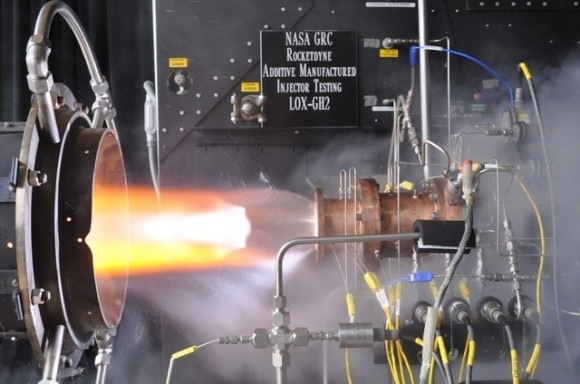
Slash/Gear NASA 3D printed rocket injector test firing

20130712-183124.jpg

…NASA didn’t use ABS plastic that most 3D-printers use. Instead, the agency used custom 3D printers to spray layers of metallic powder using lasers. The lasers spray the powder in a specific pattern in order to come up with the desired shape for an object. In this case: a rocket engine injector.

Read more at: Slash/Gear http://www.slashgear.com/nasa-3d-printed-rocket-injector-undergoes-first-test-firing-12290238/

Is it zeitgeist? Hadn’t seen this when I ranted a bit on MBA’s

Read more at : MeganMcardle.com: Is the MBA Going Away? 9July 2013

… it is the graduate schools that the collapse has begun. That doesn’t mean that graduate education will go away (after all, neither tulip bulbs nor stock exchanges went away when those bubbles collapsed); rather, the market will get dramatically smaller, with the shakiest programs going bust, others retrenching, and the top ones continuing to draw more students than they can enroll. If it spreads to college, we should expect to see the same pattern: top tier schools surviving and even thriving, while lesser ranked schools pitched into financial crises by declining enrollment.

Also: Don’t Go to Business School! by Megan McArdle at The Daily Beast Jan 9, 2013 10:36 AM

Unless you can get into a top program, professional school may cause more problems than it solves

ViaMeadia // The Miracles Wrought by Price Transparency

Read more at: The Miracles Wrought by Price Transparency

A surgery center in Oklahoma has started a bidding war by offering drastically lower prices than other providers and posting them online. The center describes itself as “free-market loving”—an unorthodox but welcome branding for a health care provider. The evidence of its success, however, is eye-popping. Where some hospitals charge more than $16,000 for a breast biopsy, Oklahoma Surgery Center charges $3, 500, according to a local Oklahoma news station. And that’s just one of many impressive examples.

Read more at: IndyStar: Abdul: Why our health-care system needs a single-payer – you

The recent move by the Obama administration to delay implementation of the employer mandate portion of the Affordable Care Act means this is the perfect time to have a grown-up discussion about how we deliver health care in this country. As a free market-conservative, social-libertarian political pundit, I am convinced more than ever that it is time in this country for a single-payer health care system.

Get rid of employer ‘health insurance’ go with health savings plans and catastrophic medical insurance AND PUBLISHED PRICING then we at least know what the real price is and stop paying for so many empty suites…

On a very related note, at least in my mind: There is a great debate about the collapse of the demand for lawyers and the issues with ‘Higher Ed’ payoff vs price in general outside of core STEM. But as a practicing engineer, business development type I have to tell you that one of the most pernicious problems in today’s world is an over supply of pure play MBA’s, business school PhD’s, Operations consultants, etc, etc, et-bloody-cettera. I’m not saying that the tech types know all, do all, but when they are ignored the company ( practice, clinic,….. ) in which they work becomes a zombie…and as we all know zombies can win in the short run, even proliferate, but in the end they either rot out or pull down the society (economy) around them.

WIRED, way, way weird, and oh so cool!

Wired: ‘Holographic Duality’ Hints at Hidden Subatomic World
20130709-191214.jpg

The holographic duality, discovered in 1997 by Juan Maldacena, says that events inside a region of space that involve gravity and are described by string theory are mathematically equivalent to events on the surface of that region that involve particles and are gravity-free. Illustration: Annenberg Lerner 2013

20130709-191624.jpg

In the mathematical parlance of the holographic duality, certain strongly correlated matter in 2-D [such as in cuprate hi temp superconductors shown above; editors note] corresponds, in 3-D, to a black hole — an infinitely dense object with an inescapable gravitational pull, which is mathematically simple. “These very complicated quantum mechanical collective effects are beautifully captured by black hole physics,” said Hong Liu, an associate professor of physics at the Massachusetts Institute of Technology. “For strongly correlated systems, if you put an electron into the system, it will immediately ‘disappear’ — you can no longer track it.” It’s like an object falling into a black hole.

An Electric Air about them

20130709-183459.jpg

Flying hybrid: This two-seater electric-gas airplane may be the first of many to take to the skies

Read more at MIT TR :Once a Joke, Battery-Powered Airplanes Are Nearing Reality20130709-183958.jpg

UVa’s Sustinere design for a 50-seat jet eschews batteries in favor of a turboelectric distributed propulsion (TeDP) concept – two 2,500shp turboshaft engines under the wing generating electrical power to drive six 3,300lb-thrust fans arrayed in a duct that wraps around the upper fuselage.

Read more at AWST: Battery or Superconductor – FAA Picks Hybrid Winners20130709-184659.jpg

The EADS IW concept uses a single large turbine engine to generate electricity to power six ducted fans that provide thrust. This allows propulsive and thermal efficiency to be optimized separately. The turbine engine can be optimized for thermal efficiency (turning fuel into shaft power) while the ducted fans increase effective bypass ratio and therefore propulsion efficient (turning shaft power into thrust).

Read more at AWST : eConcept – EADS’s Hybrid-Electric Airliner20130709-185351.jpg

Two years after Honeywell and Safran announced plans to develop an electric-drive system, the team is preparing to demonstrate a proof-of-concept system on an Airbus A320 at this year’s Paris air show.

Read more at AWST : Electric Taxi Puts On A Show At Paris By Guy Norris20130709-190343.jpg

The result of close collaborations with Finmeccanica companies – Selex ES, Ansaldo Breda, and Ansaldo Energia – and partner companies from Italy, UK, U.S. and Japan, the aircraft embeds some unuque features: aesthetically pleasing styling and aerodynamically unique tiltrotor configuration; carbon graphite exterior surfaces; High-Integrity Flight Control Computer and Actuator Control Unit; custom produced electric motor inverter and motor control algorithm; axial flux permanent magnet electric motors.

Read more at : http://theaviationist.com/2013/03/21/project-zero-images/

SpaceYES!!

SpaceX continues to drive down the barriers like the aggressive but rationale organization they are and the world needs to move us to the next level of Earth to orbit operations. And having a dream and stretch goals are required elements.

From NASA Spaceflight: Dragon Roadmap: From domestic crew independence to humans on Mars
July 5, 2013 by Chris Bergin
20130706-222213.jpg20130706-222206.jpgGrasshopper reaches a thousand feet in new nav test. Read more at: SpaceX shows off new nav gear with latest Grasshopper rocket launch-and-landing (video)
By Timothy J. Seppala posted Jul 6th, 2013 at 3:47 PM
20130706-222614.jpg

Rudimentary Liver from Stem Cell, 3D Printed Ear and 3D Printed micro Battery ? What does the future hold

Theres a huge amount of research going on in fields that don’t at first appear to have much to do with each other that could in the next few years to few decades lead to a world where the possibility of building new organs either as replacements or upgrades is possible, even common.

Read more at: MIT TR // A Rudimentary Liver Is Grown from Stem Cells
Read more at: Princeton Nano Letter // 3D Printed Bionic Ears
Read more at: MIT TR // A Battery and a “Bionic” Ear: a Hint of 3-D Printing’s Promise
From ViaMeadia:

Those worried about the future of employment in America—for themselves or for the country as a whole—should look to this data. As of now, many of the jobs of the future are going to be health care jobs, and that will only become more true if Obamacare stands and the pool of insured patients expands dramatically. To understand what the jobs of the future will be (or to land one), go where the money is: services, and especially, according to this data, health services.
For those unlikely to take up health jobs, this graph might seem discouraging. After all, more doctors and health workers points to more health care costs, in a system that’s already vastly too expensive. As the Atlantic points out on its piece on the graph, “There are a couple stories that branch off from this graph. One is the unchecked growth in health care prices over the last few decades, which has made the medical industry the one truly recession-proof job engine of the economy.”
But there’s also a case of optimism here. The Atlantic notes that the two kinds of health care jobs most likely to grow in coming decades are personal health aides and home health workers. This is good news even on its own; achieving a better balance between hospital care and home care is an important task for health care reformers. Moreover, it means there’s a lot of room for entrepreneurial individualse to come up with new and creative ways to cater to a growing demand for personalized health care.

20130706-133823.jpg
Read more at: Jobs of the Future in One Astounding Graph

The American Interest // Egypt, we have no idea…

The American Interest /July 1, 2013 / Adam Garfinkle / Abdel Fattah al-Sisi—Memorize That Name
Read more at: http://blogs.the-american-interest.com/garfinkle/2013/07/01/note-to-clueless-msm-types-abdel-fattah-al-sisi-memorize-that-name/#sthash.aMzX3wZw.dpuf
Lots of deep insight for those who want it, along with a bit of ‘I told yo so.’

This was an interesting passage and a key to why this whole region is so utterly foreign to many of us who wish for better things:

Years ago a clever and truth-telling fellow named David Lamb devised what he called the IBM syndrome to describe political culture in Egypt and the Arab world. The “I” stands for “inshallah“, may God will it: in other words, fatalism. The “B” stands for “bokr“—tomorrow morning, or just tomorrow: suggestive of an extremely elastic, pre-modern perception of time, vaguely akin to some uses of the Spanish word mañana. The “M” stands for “malesh“, which is untranslatable, but which kind of means “whatever”, “never mind” or “fagetaboutit”: not my job, someone else will take care of it, or not, who cares? What difference does it make?

It is also a bit frightening to realize that there are examples of this sort of mindset in ‘the west’ and that it’s a plague…