The Senatorial Launch System | Asteroid Capture | Clueless Politicians | Pork | Engineering Jobs + Corporate Welfare

20130427-221407.jpg

Broadly, the administration envisions sending a probe as soon as 2017 to capture a 25-foot, 500-ton asteroid and tug it near the moon – possibly to a spot about 277,000 miles from Earth that would use competing gravitational forces to allow it to “sit” there. Astronauts flying NASA’s new Orion capsule and Space Launch System rocket then would visit it to take samples and possibly set foot on its surface.

This plan is getting pushback because its not a return to the moon or a Mars landing plan. But the reality is that this idea is all NASA can afford given the cost involved with the Senatorial ( or Space, take your pick) Launch System A Saturn V + class heavy lift direct ascent launch system

The lack of resistance is tied to Senate support of the Space Launch System. Senators from key NASA states – Florida, Texas and Alabama – pushed President Barack Obama to build it, and the asteroid mission is seen as a way to give purpose to the rocket, once criticized as a “rocket to nowhere.”
Illustrative of that point was the initial reaction of Sen. Richard Shelby, R-Ala.
“NASA should continue to explore the universe and challenge scientific and technical boundaries,” he said in a statement. “However, NASA should maintain focus on its core mission and continue development of the Space Launch System so that it will be ready for any future NASA mission.”

So my question is, why the SLS, don’t get me wrong some of the SLS related work like resurrecting the Saturn V F1 engine (as I pointed to a few days ago) is a good thing, but reality is it should be part of getting a commercial venture to back development. NASA shoulddevelop Orion and its support module, but the booster should be gov’t sponsored / stimulated effort as part of a get to the moon, Mars, big asteroids plan, in support of the commercial civilian space efforts.
If you look at all the recently proposed and ongoing civilian efforts and roll in appropriate gov’mnt support you can see a very robust human and robotic space development plan emerge.
Read more at: http://phys.org/news/2013-04-nasa-chief-asteroid-agency.html/

20130427-221747.jpg

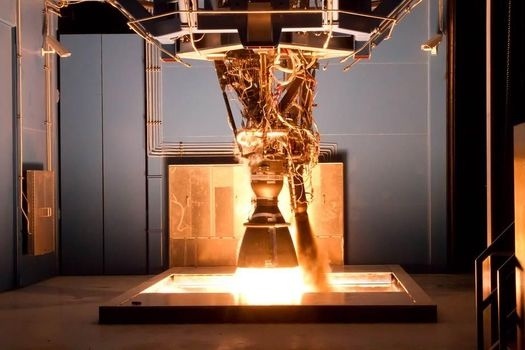
Merlin 1D engine ready for space

The SpaceX Merlin 1D engine, the more powerful, more robust and less expensive
follow on to the operational 1C, has been certified for flight.

20130423-232802.jpg
This is the family, an interesting thing about the Heavy is the plan to have the strap-ons share fuel with the core, consequently when they separate the core is still fully fueled, a big performance increase.

20130423-232817.jpg
The engines have been run far harder than standard rating regimes require, 1) to solidify their ‘man rating’ for future crew lofting flights, 2) because SpaceX wants to reuse them, 3) because SpaceX wants top line insurance rates for their customers even while brining new approaches to the party.

20130423-232832.jpg
Rocket engines, so ugly you just know they’re powerful!

SpaceX Grasshopper, hops up 820ft

Cool videos at the Verge article.

20130423-224330.jpg
Held at height and then landed straight down unaffected by what looks like a reasonable breeze.

Second gen Falcon this year, possibly Falcon Heavy first flight, soft water return for a booster this year and ground return next year! Each demonstrates fundamental capabilities and the power of a committed commercial / civilian play with tech and team unfettered by bull crap FARS oversight dead weight. But each is advancing tech at a rate that seems more reminiscent of the sixties NASA and aviation tech| 2nd gen Falcon: new improved engines, Heavy: buddy tank w/ common boosters engines, any of the above: fly back boosters w/ powered soft landing first at sea then on land. Each step something daring and commercially valuable. I’m not sure how some of the competitors keep from going into terminal depression, if Musk’s SpaceX team nails the string the old guard are toast.

1968

20130423-081645.jpg

20130423-081544.jpg
A long post on a turning point year.

Interesting that Mad Men, the iconic cable TV show about admen in that pivotal era seems to cause so much introspection.

Many reasons, many of today’s thinkers were young then, TV was really getting its legs, technology was vaulting forward but was now seen as a mixed blessing rather than untrammeled good, the almost unlimited growth of industry and regulation…or regulated industry was sputtering as the dead hands of regulation, unionization, corporatist over-reach, the limits of top down management and aging leadership (and infrastructure) began to run up against emergent back pressure from a rising Japan/Asia, Germany/Europe, Communism as an apparently proven long term competitor/threat.

20130423-082324.jpg

20130423-081701.jpg

20130423-081712.jpg

20130423-081741.jpg

20130423-081753.jpg

20130423-081800.jpg

20130423-082822.jpg

20130423-082832.jpg

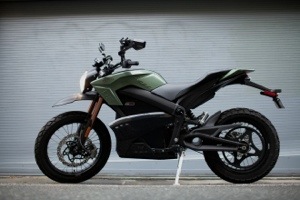
Zero DS || Wired

20130422-091351.jpg
Article:Alexander George, Photo: Alex Washburn/Wired

When the light turns green and the two-lane road begins an ess turn, it’s clear the Zero DS is a true motorcycle, not just a scooter with sport bike pretensions. This is an electric hoon machine that will put you ahead of almost anything on four wheels. Going from a standstill to 60 mph takes a tick over five seconds, and high-end torque slings the bike through on-ramps with aplomb. The Zero has the power to inspire that smirk of speed euphoria I crave from a bike — something that hasn’t been lost with the removal of a traditional internal combustion engine.

20130422-091619.jpg

As a two-wheeled electric vehicle, the Zero DS is perfect. The engineering has accounted for everything important in a transportation vehicle. Riding the Zero, you think, this is how a civilized society should move about. This is a lithe and efficient vehicle, and an exemplar of what motorized travel should be: four-hundred pounds of weight moving between destinations silently, parking unobtrusively, and most of all, forcing the rider to be deliberate and unwasteful. Take only what can fit in the storage space and travel knowing that you have a finite range and must act resourcefully. Those restrictions, again, keep the Zero from being a true all-around motorcycle, but I like the idea of noble asceticism so long as the thrill of speed remains.

The Danes, Maybe too Nice? NYT article

20130421-113948.jpgJan Grarup for The New York Times || Robert Nielsen, 45, said proudly last year that he had basically been on welfare since 2001.
Danes Rethink a Welfare State Ample to a Fault
By SUZANNE DALEY
Published: April 20, 2013

I’ve always found the NYT generally more nuanced than it rock ribbed critics make it out to be.

And you could say that this article supports welfare reform, tax reasonableness, fairness etc … Until you think a bit more deeply.

“Denmark is what progressive New Yorkers want to be even if they don’t know it,” the ‘Smithsonian’ liberal in me jeers. The Danes start from such incredible heights of social redistribution it would take huge changes to get it down to the fondest dream of leftish US liberals. In regards to this article, a progressive could comfortingly say “yes welfare can go to far” and then finish with “but we ain’t even close yet.”

This is a tiny, densely populated and historically rich and educate European nation. The Danish welfare state, the Danish tax regime, the Danish government, the country of Denmark…are simply impossible to compare to the US equivalents. It has no real international borders, a proportionally huge and productive coast (the US would count the whole country as a coastal region) it’s comparable to New York City and environs in size and population, it’s highly educated, pretty homogeneous and highly protected from outside threat. Things that work in Denmark simply cannot work in the US because of scale…and even in Denmark the Danish system is tottering.

Five worlds, some almost right…

20130421-094407.jpg
The newly discovered planets named Kepler-62e and -f are super-Earths in the habitable zone of a distant sun-like star. The largest planet in the image, Kepler-62f, is farthest from its star and covered by ice. Kepler-62e, in the foreground, is nearer to its star and covered by dense clouds. Closer in orbits a Neptune-size ice giant with another small planet transiting its star. Both habitable-zone planets may be capable of supporting life. Credit: David A. Aguilar (CfA)

Read more at: http://phys.org/news/2013-04-astrophysicists-five-planet-earth-like-exoplanet.html#jCp

Wind vs. Solar … Advantage … Solar

To me it looks like wind power is a long term loser, I think the capital intensive and land intensive technology may be overtaken by solar…partly because solar seems much more amenable to new nanotechnology ‘helpers’ in comparison to the relatively old school large scale engineering materials tech that dominate wind … And it seems like their are many more complex scaling issues with wind in comparison to solar.20130420-131727.jpg

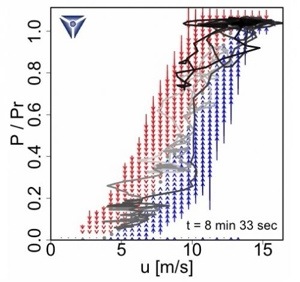
Screenshot … showing the power output vs. wind speed signals for a wind turbine. Credit: Patrick Milan, et al. ©2013 American Physical Society

20130420-132025.jpg

Shifting winds: A simulation shows the effects of turbulent wakes on downstream wind turbines. The turbulence affects air as high as a kilometer above the ground.

20130420-132339.jpg

University of Chicago researchers have created a synthetic compound that mimics the complex quantum dynamics observed in photosynthesis. The compound may enable fundamentally new routes to creative solar light harvesting technologies. Credit: Graham Griffin

20130420-132625.jpg

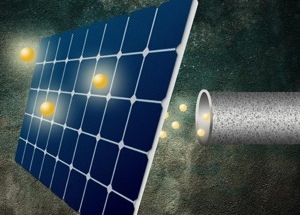
In a standard photovoltaic (PV) cell, each photon knocks loose exactly one electron inside the PV material. That loose electron then can be harnessed through wires to provide an electrical current. But in the new technique, each photon can instead knock two electrons loose. This makes the process much more efficient: In a standard cell, any excess energy carried by a photon is wasted as heat, whereas in the new system the extra energy goes into producing two electrons instead of one.

20130420-132902.jpg

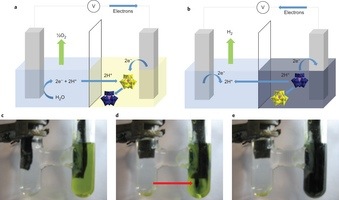
Schematic of the ECPB-based approach to water splitting. Credit: Nature Chemistry.
The process by which plants convert energy from the sun’s rays into chemical ‘fuel’ has inspired a new way of generating clean, cheap, renewable hydrogen
20130420-133252.jpg

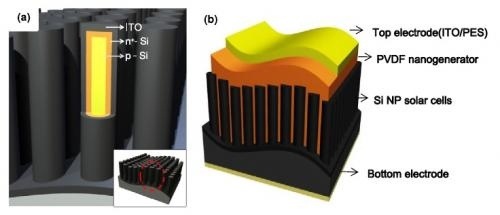
(a) Diagram of the silicon nanopillar solar cell. (b) Diagram of the hybrid energy harvester consisting of a piezoelectric nanogenerator integrated on to of a silicon nanopillar solar cell. Credit: Dae-Yeong Lee, et al. ©2013 IOP Publishing Ltd
20130420-133719.jpg

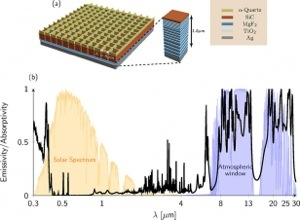
Stanford researchers are developing rooftop panels that cool buildings by sending heat back into space, a technique that could be more efficient than running an air conditioner from solar panels.

And if you look you will find much more of the same…in some areas of the world Solar is more cost effective than other albeit expensive sources and the tech tends to be small scale he scale-able and independent of higher level infrastructure, be it a national grid link or capital level finance, and it tends towards robust systems with local failures isolated … It seems likely this is the future and wind will be relegated to niche plays. Which could still be important…. 20130420-134815.jpg
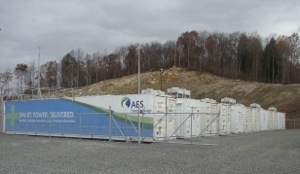
Batteries: Cheapest Form of Grid Power? Using a wind energy and expensive lithium-ion batteries, AES Energy Storage is making money by stabilizing the grid.

Smart Rock(ets)

20130420-120653.jpg

Classic shot of the classic, classy, grungy, so ugly it’s cute, A10 Warthog dropping a flare I think

The new family of 70mm laser guidance plug on warheads are another tick of the game precision warfare revolution.

What caught my eye:

While the APKWS, designed for maximum precision, has a Circular Error Probable (CEP) of about 2-meters, the round has exceeded this benchmark in testing and come within inches of targets at ranges up to 5 kilometers, according to BAE Systems officials.

Think about that … this is a WW II weapon and in the big picture inexpensive trending to dirt cheap. The guidance package-warhead replaces the dumb warhead, it has a trick laser based guidance system that is precise while leaving room for an effective warhead. The guidance system has an inertial reference platform and range finder…about the smarts and sensing of the original iPhone. In the future I see no reason it couldn’t have the ability to switch to pattern recognition guidance in the last few meters to go from inches to millimeters … At which point some targets don’t need an explosive ‘after.’