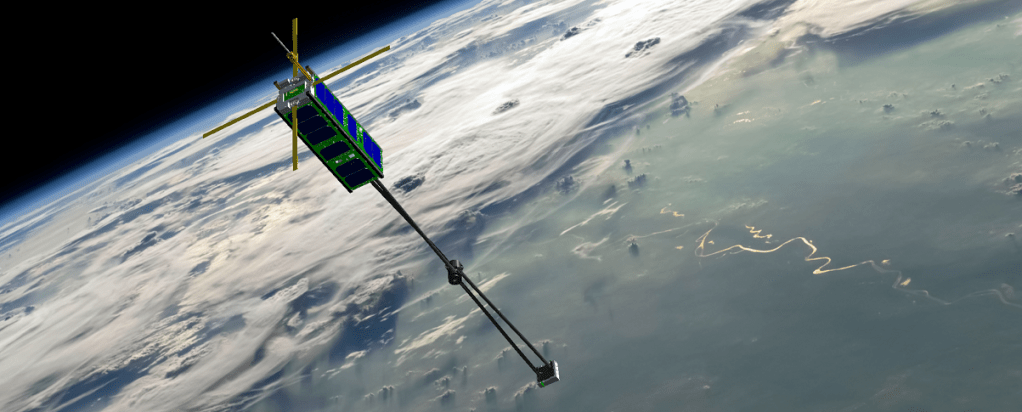
MiTEE is a cool space experiment out of the University of Michigan. Faculty led, undergraduate, graduate and PhD student team, developed and got launched a cube (stack) satellite that is demonstrating the use of tethers for de orbiting spacecraft, a serious need in this day of thousand plus satellite constellations.
As a note of interest this was on the first successful Virgin Orbit launch.
I used to be an IEEE member though I am an ME. IEEE spectrum is a great tech magazine and site. They have an article up Why Aren’t COVID Tracing Apps More Widely Used? , that seems a bit clueless, it starts…..
a new study suggests that trust and transparency are barriers for broader acceptance of the apps
Sub head of above
So…they needed a study to find this out? A type of app that tracks your location at all times and provides that to an cloud AI so it can figure out who you have been talking to, has trust issues, given what we KNOW about big tech?
A blog tag to an article I did not read set me to thinking today. Read on if you think that the Net today is fraught with societal risk.
I have been using the WWW, Internet, since a couple of years after its start as ARPANET and MilNet for email and data transmission. Following it through the years I saw the slow exploration then the exuberant exploitation through the 80’s and 90’s even the 0ughts.
One of the things I had a hard time understanding was the effervescent froth about how this was freedom and that governments could never control it. When governments where the entity that installed it and ran it in many places. There are arguments in support of a weakish case for net freedom but for the masses it is not and will never be a truly open commons.
A big part of this is because of the way most people interface with the Net. They use it like they use a car, get in and drive, many times not knowing a thing about internal combustion engines, transmissions, etc. They are not technically savvy people, but then even people like me, an engineer, thirty plus year user of the Net, do not understand the ‘stacks’ on ‘stacks’ that are the interwoven hardware, firmware, protocols and software that makes the Net hum.
In the early days the Net was about Protocols, eMail and Hyperlink were two critical protocols that enabled communication and the creation of documents (Still, though they are called, Blogs, or Sites) that could be read out of sequence and include incredible depths of information that were simply impossible with a book or the like.
This early Net was dynamic and boisterous but largely a land of technical folks, academics, geeks and nerds. It was a natural environment for them in a way only the still evolving desktop computer had been until then.
After a while businesses started to move in and the media started to look at this as a way of distributing their content without the cost and logistic drag of newsprint, TV stations or even radio. Of course what most did not see coming was that the net would make their old advertiser supported business model very difficult to support over the long term while giving new Platforms (AOL and their ilk, now TWITTER, FACEBOOK etc) a leg up as essentially the new middle man between the consumer and ‘the content.’
But even at the start with AOL et al, some philosopher technical types pointed out that these Platforms ,while they gave Joe User an easy path to the internet, put a barrier between the user and the broader Net. Some like me never went down the platform path because we wanted the depth of the Net in the raw as it were but we pay the penalty of having to work harder to get things that Platform users get for free.
Twenty years on Facebook and Twitter have paved over the Net to a very significant degree. They started as just social networks with different focuses. But they have become the principle distributor of news and opinion. They have sucked up adjacent Net onramps in their fight to gain share and suppress competition. Now they lust after your data so they can sell it to the highest bidder, while using it, somewhat unintentionally to wrap the users in ever thicker cocoons of confirmation bias. They have also strangled the legacy media in its bed by stripping away the advertiser revenue.
Why?
I see 3 main reasons, ease of use, addictive content and the network affect. Ease of Use: You might argue that some of them are not that easy today but in the beginning essentially each of them was drop dead simple, so simple a tweener cheerleader could use it in ten seconds or less. Addictive Content: Most of these tools make something you want to do easy and provide reinforcing feedback, if your tweet goes viral to a 1000 people, woohooo! If your facebook post gets a like from a dozen friends, charge UP! This is addiction. Network affect: Simply stated, a network of 10 people has 100 interconnects, 100 people have 10,000 interconnects, the more people on a platform the more valuable it is to the user as well as the owner. Since you have limited time in your life, you cannot copy identical on multiple platforms going along. Then the platforms will make it hard for you to migrate from them with your list of friends, follows, photos, blogs, whatever.
So?
The title of the article I mentioned at the start said something about Protocols vs Platforms and this was one of those epiphany things you hear about. AHA!
Platforms are largely just Net hubs and they hate open protocols because it will reduce them to pipes and strip away their ability to siphon off value from the users, both consumer and creator.
Facebook or Twitter are just Protocols of Protocols with a software wrapper. Their core are proprietary protocols & software, not open protocols so that competition is impossible. The network affect and the users addiction to the particular flavor of Platform makes changing essentially impossible.
But if the Platforms are required to open their protocols and enable users to migrate their core identity the monopoly would be broken without destroying the user side value. One could even see an anti monopoly order that required some kind of Baby Twitter / Baby Facebook disaggregation that requires the ‘Babies’ interlink and compete.
This seems relatively clear cut process . It would provide the users with competition for their core value that is simply not there today. And while it will hurt the stockholders (who are earning monopolist profits today) it does not strip their assets while providing the opportunity to earn significant returns going forward.
The NonCommons of today, the Platforms, are a tragedy for the users in that their value is stripped without much recompense beyond ease of use. If we go back to the roots of the Net, open protocols, and user value, we have a chance to build back better….and make the Net great again.
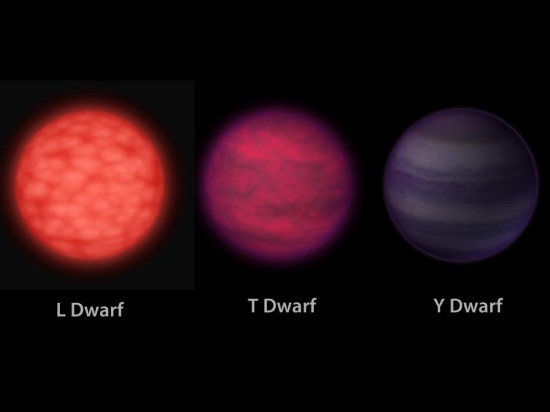
Image: This artist’s conception illustrates what brown dwarfs of different types might look like to a hypothetical interstellar traveler who has flown a spaceship to each one…. Credit: NASA/JPL-Caltech.
There are a class of celestial objects much heavier than our systems Jupiter but about the same size. They are not really planets just balls of dense hot gas, but they are not really stars because they lack the mass to collapse and heat their core to ignite sustained fusion. These Brown Dwarves are probably one of the most common objects in our universe but little is known about them because until recently they were essentially impossible to find. With new tools and new techniques this fascinating class of in between are coming into focus.
“Thus, gene therapy treatment of only a few nervecells stimulated the axonal regeneration of various nerve cells in the brain and several motor tracts in the spinal cord simultaneously,” says Dietmar Fischer. “Ultimately, this enabled the previously paralyzed animals that received this treatment to start walking after two to three weeks. This came as a great surprise to us at the beginning, as it had never been shown to be possible before after full paraplegia.”
The proposed Juno extended mission (EM) would take advantage of the natural northward progression of the periapsis of the spacecraft’s orbit and the consequent lowering of spacecraft altitudes over Jupiter’s high northern latitudes. The EM would run until the end of the mission, with an expected duration of approximately four years. Under the High and Medium Scenarios, propulsive maneuvers would be utilized not only to target Jupiter-crossing longitude and perijove altitude, as during the prime mission, but also to target close flybys of Ganymede, Europa, and Io. The flyby maneuvers would act to shorten the spacecraft orbital period, yielding more close passes of Jupiter within a given time interval, and increase the rate of northward movement of spacecraft perijove. Under the Low scenario for EM operation, the satellite gravity assists and close satellite flybys would not be attempted.
from the Senior Review
Exciting new data from Jupiter inbound over the next 5 years. Just in time for this….
So the Naval Strike Missile, a middle weight anti ship missile will be mounted on an Amphib to provide integral defense and a little bit of offense capacity. The main purpose of this deployment is for experimentation with the fleet, to see if it changes the nature of the game when at sea. The Amphib is a big ship but is in essence a sea going ferry for the marines, a fast freighter. But these ships are big and impressive and sometimes used to show the flag. They have defensive weapons but nothing to ‘shoot the archer’ usually that is left to an escort. Having some rounds on board would change the dynamics and utility perhaps in a positive way.
While the preliminary deployment will have the missile amidships like a warship might. But the missile could be mounted on a truck that is being transported, just drive it out onto the flight deck, lock it down and shoot. With all sorts of truck mounted ordinance such as Hellfire, 155mm Cannons, HIMARS GPS Guided Rockets, there are a lot of options that this could provide for protection or force projection.
With the continued growing cost of specialized warships this sort of flexible tactical utilization looks like a good use of modern precision weapons. One can and should argue that it does not provide any kind of one for one replacement for a warship. But is a warship; a frigate, destroyer, cruiser… really what we need? Maybe its a combination of gnat weight autonomous missile slingers supporting heavy flex fighters like this Amphib.
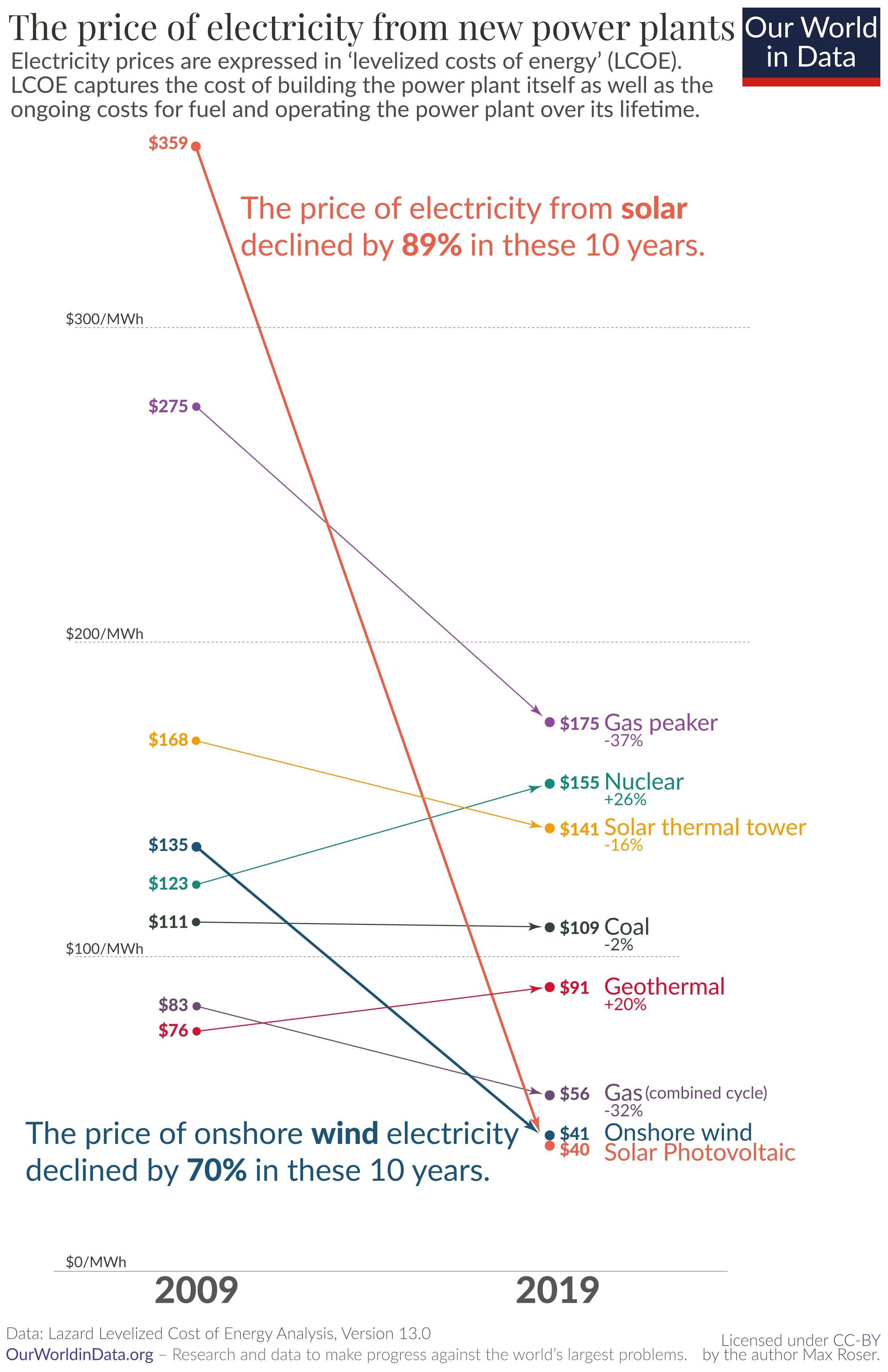
Our World In Data chart, via SingularityHub By Jason Dorrier – Dec 13, 2020This has been in the news but discounted in some ways utility side issues still make this a success story the utilities could do without. A couple of general downside views. Solar modules are a troubling refuse stream until recycling tech hits new highs. The cell modules wear out over time, the wear out and $payback often overlap in the wrong way. Both of these issues should ease in the coming years but you cannot discount them yet. Still this is amazing and it seemed obvious at least 5 years ago, nice that it kept on trend.
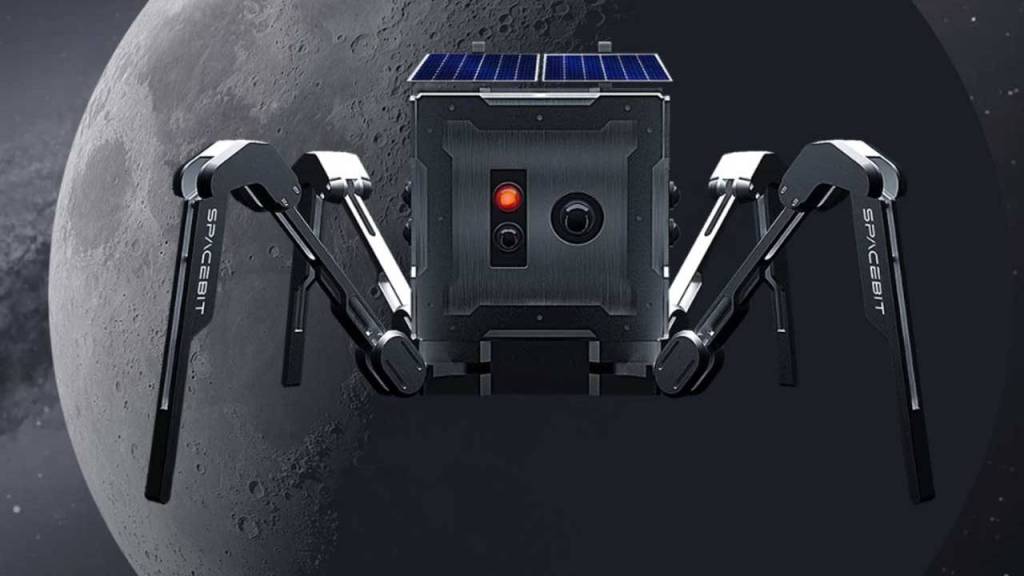
A really cool concept. Miniature walking rovers that can explore tiny spaces, a single test to the moon this year with plans for swarms (small ones) in the not too distant future. Tbe video animation from Spacebit is worth a couple of minutes.







 This World and Others