Living tissue 3D printed

First fully-cellular liver tissue 3D bioprinted at Organovo

20130503-232416.jpg

Bioprinted human liver with CD31+ microvessels (green) forming within the tissue.

Since liver cells are used in labs to test the toxicity and efficacy of drugs, these printed tissues will first serve that purpose. Soon though, a larger liver will be printed, and it won’t be long after that that printed organs will be tested in animals. It’s a short hop from there to humans.

Does it whistle in the wind?

20130503-213449.jpg

The Met, Bangkok, Photo: Aga Khan Award for Architecture/Patrick Bingham-Hall, Each week, Wired Design brings us a photo of one of their favorite buildings

Completed in 2009, Bangkok’s 66-story Met Tower is an attempt to build an apartment complex uniquely suited to its surroundings, rather than adapting temperate techniques to a tropical location. WOHA Architects did this by incorporating elements of more traditional tropical housing, and the results have been shortlisted for Aga Khan’s 2013 Award for Architecture. The perforated 748-foot structure is actually six columns connected by breezeways that promote cross ventilation — each unit is exposed on all four sides. The facade is inspired by traditional Thai architecture and materials, with shade and vegetation screens reaching all the way to the top.

Cool! Hopefully in all the right ways.

Modeling distant Earths

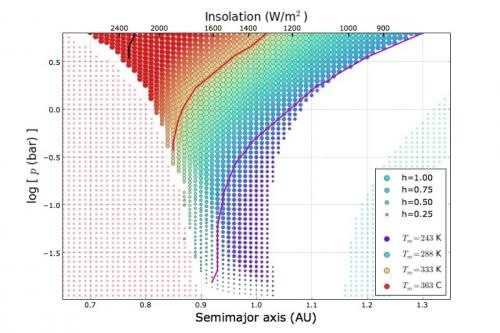
20130503-210339.jpgModeling of various atmospheric pressures shows that Exo earths could have life friendly atmospheres across a broader range of orbital distances than our thin aired original. Since we are ‘seeing’ a lot of big worlds out there this is promising, though of course too much of a good thing is bad, as our sister world Venus shows.

20130503-210351.jpg

A figure from Vladilo’s paper summarizing the general findings. The area of the circles is proportional to their habitability. The bottom axis shows the virtual worlds’ distance from their Sun-like star, with 1 AU (astronomical unit) representing the average Sun-Earth distance of approximately 150 million kilometers (93 million miles). The top axis (insolation) shows solar radiation (in watts) received on a unit area (a square meter). Surface pressure is on the y axis to the left. Credit: Vladilo et al. 2013, ApJ, 767, 65; http://wwwuser.oats.inaf.it/astrobiology/planhab/

Read more at: http://phys.org/news/2013-05-pressure-density-exoplanets-atmospheres-odds.html#jCp

Eyeball Earths…Red or Brown Dwarf Life Worlds?

20130503-210405.jpg

Artist’s concept of a planet where one side always faces its star, with the dark side covered in ice. Credit: Beau.TheConsortium

Red dwarfs are small, faint stars about one-fifth as massive as the Sun and up to 50 times dimmer. They are the most common stars in the galaxy and make up to 70 percent of the stars in the universe, vast numbers that potentially make them valuable places to look for extraterrestrial life. Indeed, the latest results from NASA’s Kepler space observatory reveal that at least half of these stars host rocky planets that are half to four times the mass of Earth.

Read more at: http://phys.org/news/2013-05-eyeball-earths.html#jCp

DARPA Finaly got the X51 to successfully ride its wave

20130503-204016.jpg

Tucked under the B-52H’s port wing, the X-51A is pictured prior to launch on May 1

At www.aviationweek.com

The U.S. Air Force has released new details of the record-breaking hypersonic test flight conducted by the Boeing-built X-51A Waverider demonstrator on May 1. The diminutive scramjet-powered vehicle achieved a blistering Mach 5.1, covering 230 naut. miles in just over six minutes (240 seconds!) over the Point Mugu Naval Air Warfare Center Sea Range in the Pacific.

This technology could be the next breakthrough for space booster technology…next as in ten to twenty years. In the meantime it could fuel a new arms race in rapid strike weapons. This is not a US first move, the Russians, Australians, the Europeans, maybe even the Chinese have been leading in this speed regime up to this point.

NASA may support SST x-plane

20130503-201749.jpg

An artist’s concept shows Lockheed Martin’s low-boom supersonic airliner. (Courtesy: NASA)
At www.flightglobal.com
Science and resultant technology may well have made Low Boom supersonic flight practical. A 100 to 150 passenger aircraft could fly NY to LA in something like 2 hours, making one day two way coast to coast trips a practical comfortable reality for premium passengers. This has been impossible because of the glass breaking, cattle disturbing sonic boom, but now aerodynamics and aircraft technology have shown a road forward.

With the ending of NASA’s last ‘five year plan’ on ultra efficient airliners, money will be available to build a scale but largish (fighter sized I’d guess) x-plane to make test flights provingthe boom mitigating design techniques. This sounds like a great idea, the sort of thing that NASA should be doing, has been doing, quietly, since its founding as NACA all those decades ago.

3D printed Camera accessories for cool effects

20130430-231840.jpg

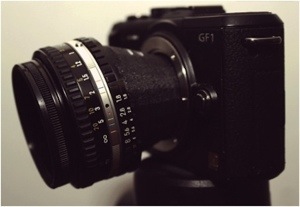
Here is a simple Tilt-Shift adapter which will attach to any micro four thirds camera body and hold a Nikon Series E 50mm lens. This adapter will creates a tilt-shift effect or miniature effect in your photos (see examples below). This is intended to be a more durable and cheaper solution than both DIY and commercial lens adapters ($2100).

20130430-231849.jpg

Galactic Virgin Rockets Away!

20130429-215041.jpg
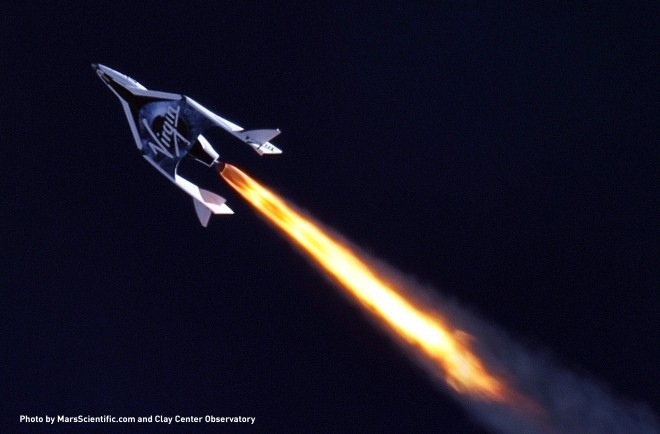
Love the Logo-shot! The space ship’s pretty simple really, it’s biggest downside would seem to be no fly around capacity if one misses the runway line up, but 1) how often does that happen theses days? 2) if theirs any juice left in the oxidizer tank a short burn would do the trick. Anyone know the plan: depend on getting it right every time or lighting ‘er up for the go-round?

20130429-215802.jpg

Meta material technique allows for high efficiency coupling of light on a surface AND the ability to switch direction via polarization

20130428-161227.jpg
An electron micrograph shows the nanoscale perforations at the surface of the plasmonic coupler. Credit: Jiao Lin and Balthasar Müller.
(Phys.org) —A Harvard-led team of researchers has created a new type of nanoscale device that converts an optical signal into waves that travel along a metal surface. Significantly, the device can recognize specific kinds of polarized light and accordingly send the signal in one direction or another.

Read more at: http://phys.org/news/2013-04-physicists-left-solution-on-chip-optics.html

Pretty important stuff, ducting light around on chips is an important ability for future electronics…or maybe one should say, nano- electro- optic- systems. Cool stuff…

RADICAL SCIENCE | GETMYO.COM | motion interpretation by reading muscle signaling and position

Cool stuff

20130428-141503.jpg
(Phys.org) —”Wave goodbye to camera-based gesture control.” That is the confident directive coming from a one-year-old Waterloo, Ontario, startup called Thalmic Labs. The company is prepared to ship its next batch of wearable-computing armbands for device controls early next year. The $149 armbands called MYO do not require cameras in order to track hand or arm movements. The armbands can wirelessly control and interact with computers and other digital consumer products by recognizing the electric impulses in users’ muscles.
Read more at: http://phys.org/news/2013-04-myo-armband-muscle-video.html#jCp
Using groundbreaking technology, MYO is able to measure electrical activity in your muscles instantly. The result is a seamless way to interact with computers, and a truly magical sense of control.
Read more at: https://getmyo.com/

20130428-141510.jpg

The Senatorial Launch System | Asteroid Capture | Clueless Politicians | Pork | Engineering Jobs + Corporate Welfare

20130427-221407.jpg

Broadly, the administration envisions sending a probe as soon as 2017 to capture a 25-foot, 500-ton asteroid and tug it near the moon – possibly to a spot about 277,000 miles from Earth that would use competing gravitational forces to allow it to “sit” there. Astronauts flying NASA’s new Orion capsule and Space Launch System rocket then would visit it to take samples and possibly set foot on its surface.

This plan is getting pushback because its not a return to the moon or a Mars landing plan. But the reality is that this idea is all NASA can afford given the cost involved with the Senatorial ( or Space, take your pick) Launch System A Saturn V + class heavy lift direct ascent launch system

The lack of resistance is tied to Senate support of the Space Launch System. Senators from key NASA states – Florida, Texas and Alabama – pushed President Barack Obama to build it, and the asteroid mission is seen as a way to give purpose to the rocket, once criticized as a “rocket to nowhere.”
Illustrative of that point was the initial reaction of Sen. Richard Shelby, R-Ala.
“NASA should continue to explore the universe and challenge scientific and technical boundaries,” he said in a statement. “However, NASA should maintain focus on its core mission and continue development of the Space Launch System so that it will be ready for any future NASA mission.”

So my question is, why the SLS, don’t get me wrong some of the SLS related work like resurrecting the Saturn V F1 engine (as I pointed to a few days ago) is a good thing, but reality is it should be part of getting a commercial venture to back development. NASA shoulddevelop Orion and its support module, but the booster should be gov’t sponsored / stimulated effort as part of a get to the moon, Mars, big asteroids plan, in support of the commercial civilian space efforts.
If you look at all the recently proposed and ongoing civilian efforts and roll in appropriate gov’mnt support you can see a very robust human and robotic space development plan emerge.
Read more at: http://phys.org/news/2013-04-nasa-chief-asteroid-agency.html/

20130427-221747.jpg