I think this says a lot about the ability of this autonomous system, robot, to do what it could to mitigate what was to come. RIP SN9 we thank you for your service.

I think this says a lot about the ability of this autonomous system, robot, to do what it could to mitigate what was to come. RIP SN9 we thank you for your service.
Articles at Space.Com, SpaceNews, etc.
NASA Has decided to launch one of its astrophysics craft on Falcon Heavy as well as the first parts of Lunar GateWay. These had putatively been ‘assigned’ by congress to the Senate Launch System also known as the Space Launch System (SLS) or what I call the Big Boeing Boondoggle (B3). Hopefully this is a sign of NASA and congressional common sense (I known! Who’d’a thought?) The B3 made some sense until Falcon Heavy was proven now it’s a vast resource ($ and brains) sink that we could do without.
So Boeing is also screwing us because NASA once more has to go to Russia to buy seats to the space station. The notes all imply SpaceX Dragon could cause this…but the reality it is only because Boeing Starliner is late and still in question.
On other Boeing Space Crap, why is it that we have paid billions for the Orion spacecraft for ‘ ‘ Deep SPACE Exploration’ ‘ and that looks a lot like the StarLiner which we paid some towards as well? OK Boeing put up something towards StarLiner…but look I work(ed) in this sector for a long time. Companies in it rarely really put much if anything up in reality. They game money and work are fungible. The contractors make the money coming in for one program cover work that they use on others, calling it ‘in kind contribution.’ And it is, in a green eye-shady way but not in any sense like work coming from the real cSpace sector.
Looking at SLS and new push into space, and the SLS and Orion craft, Boeing and NASA have evolved into a ‘married couple.’ Congressional parsimony and special interest driven oversight cause this all the time. NASA cannot really compete anything in the system because once Boeing got the main contract they could make it far too expensive for anyone else to get the work. Boeing then pulls in subs from all over the country (with political weight as important as technical or cost) to make sure that congress stays satiated. This is a negative way of looking at it and you can spin it positive with some ‘necessary’ downsides. The reality is that for large government programs (due to regulation, oversight and parsimony) you get very very little choice once the program is past early concept. Costs are baked in and out of control almost as soon as metal starts getting bent.
It’s cold and I’m cranky…nuff said…cheers
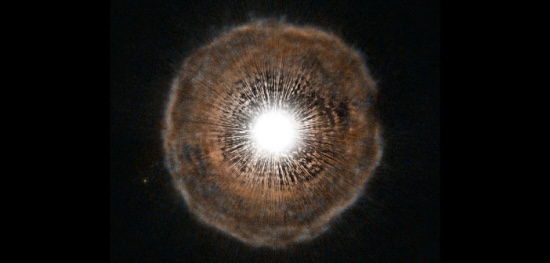
Wow

Nuff said

Private Space Missions Multiplying Like Rabbits
by Douglas Messier
Managing Editor (Parabolic Arc)
With the spate of announcements about private space missions over the past year, it’s easy to lose track of the who, what, where, when, why and how of the flights.
As a public service, Parabolic Arc has collected information about all five of the announced missions.
Nuff said

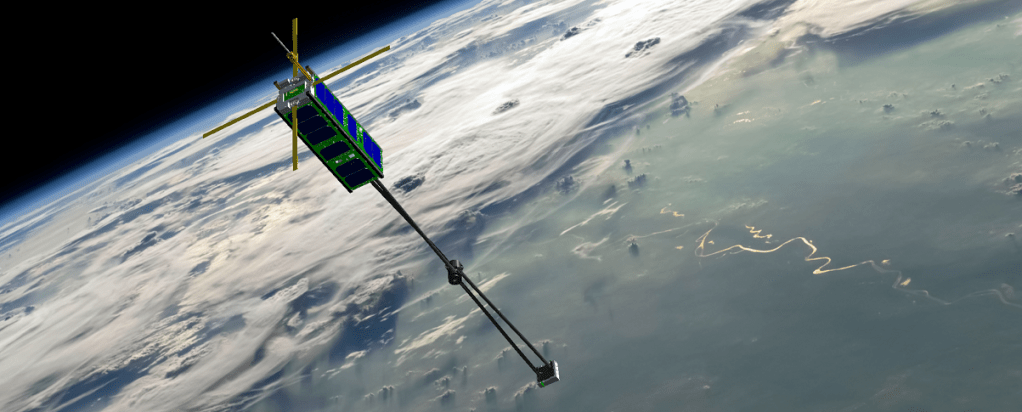
MiTEE is a cool space experiment out of the University of Michigan. Faculty led, undergraduate, graduate and PhD student team, developed and got launched a cube (stack) satellite that is demonstrating the use of tethers for de orbiting spacecraft, a serious need in this day of thousand plus satellite constellations.
As a note of interest this was on the first successful Virgin Orbit launch.

Not much more to be said so I post the intro to the article from Centauri Dreams, about an article/Theory by James Benford. Cool…
by PAUL GILSTER on JANUARY 22, 2021
The Wow! signal has a storied history in the SETI community, a one-off detection at the Ohio State ‘Big Ear’ observatory in 1977 that Jim Benford, among others, considers the most interesting candidate signal ever received. A plasma physicist and CEO of Microwave Sciences, Benford returns to Centauri Dreams today with a closer look at the signal and its striking characteristics, which admit to a variety of explanations, though only one that the author believes fits all the parameters. A second reception of the Wow! might tell us a great deal, but is such an event likely? So far all repeat observations have failed and, as Benford points out, there may be reason to assume they must. The essay below is a shorter version of the paper Jim has submitted to Astrobiology.