The Physics Produced the Ship

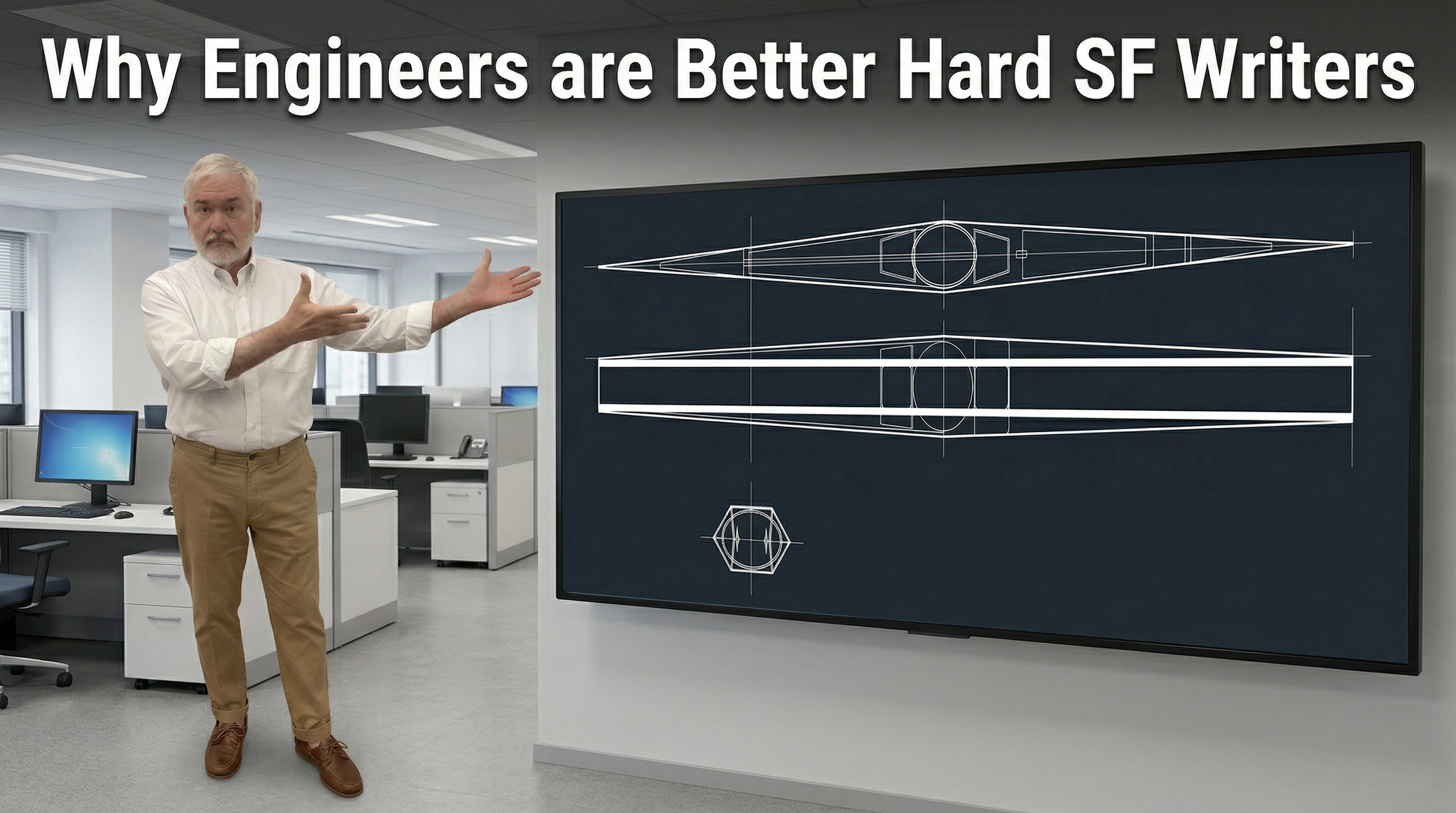
The Dagger Design

Most fictional spacecraft are designed backwards. The writer decides what the ship needs to do dramatically, then invents a reason it can do that. The result is technology that serves the plot. Which is fine, until you need it to do something different in book three, at which point you quietly bend the rules and hope no one notices.

Engineers don’t do that. Not because we’re more disciplined — because we can’t. You don’t change the spec because the schedule is tight. You re-examine the architecture or you live with the constraint.

That instinct, applied to fiction, produces something different.


The principal auxiliary warship in the Sea of Suns universe is called a Dagger. Here’s how it got its name — and it wasn’t because I thought “dagger” sounded good.

The Transit system — the FTL drive in this universe — works through a rail. The rail is a linear gravity generator that manipulates quantum foam to open a wormhole large enough for the ship to pass through. The rail controls volume you can push through: the more mass you want to move between stars, the more rails you need. Compute controls speed: the transit step is a calculation, and the faster you want to step, the more computing capacity you need.

That trade-off isn’t decoration. It’s the architecture.

An auxiliary warship needs to be fast. In this universe, fast means compute capacity. Compute capacity takes up volume inside the vessel. So a fast warship is, almost by definition, a ship that has traded its interior for processors. Twin rails — enough to move a meaningful crew and weapons load — with almost every remaining cubic metre given over to compute. Crew of two to five on a thousand-foot vessel. Not much else aboard.

Now you have a ship that’s fast, carries almost no cargo, and spends all its operational time in real space. Real space means it’s detectable. A detectable warship needs stealth. The most effective passive stealth for a vessel in this universe is minimising cross-section — flat surfaces, minimal radar return. You sheath the hull in flat panels that force the profile into a long, slender blade shape.

The name isn’t metaphor. It’s a description of what the physics produced.

I didn’t design a cool warship and retrofit a justification. The constraints generated the vessel, and then the vessel generated scenes I hadn’t planned, because once you know what a Dagger can and can’t do, certain tactical situations become inevitable.


That’s the engineer’s advantage in hard SF, and it’s not what most people think it is.

It’s not technical accuracy. You’ve invented the technology — accuracy isn’t really the point. It’s that engineering training gives you a specific habit of mind: ask what the constraints produce, not what you need them to produce. Follow the logic. Let the system build itself.

When the system is honest, the world it generates is consistent without effort, because everything follows from the same rules. The Dagger’s tactical role, its crew size, its limitations, the scenarios it enables — none of that required invention. It came out of the trade-off.

The reader doesn’t need to understand the Transit physics to feel that the Dagger is real. They just need to encounter it behaving consistently with itself across the whole story. That consistency is what creates the texture that makes a fictional universe feel inhabited rather than constructed.

Thirty years of engineering taught me that coherent systems generate their own logic. Turns out that works in fiction too.


Why Engineers Write Better Hard SF is on The Unretired Engineer YouTube channel —

Stranded in the Stars, Book One of the Sea of Suns Trilogy, is available on Kindle. The Dagger appears early and often. https://www.amazon.com/Stranded-Stars-M-Harris-ebook/dp/B0GT123PLP

The Problem With AI Answers Is That They’re Almost Right

AI slop isn’t obvious. That’s what makes it dangerous.

If an AI gave you complete nonsense, you’d catch it. The problem is when it gives you something fluent, confident, and “mostly” correct — with a flaw buried in the middle that you’ll only find if you already know the answer.

That’s the thing about AI as a research tool: it will give you the consensus view, coherently expressed, at the level of resolution that the training data supports. Where the training data is thin, ambiguous, or where real expertise requires distinguishing between things that *look* similar but aren’t — that’s where it fails. And it fails confidently.

Even when you use the deep research tools there are problems. When I was developing some content for my YouTube channel, The Unretired Engineer I ran into this doing research on Wolfspeed’s financial situation and the SiC power electronics market. I asked a deep research tool to pull together an analysis. What came back looked thorough. The problem was that it took a lot of information that had gone out about the future of the fab and future plans for markets and conflated them with what had happened and what was likely to happen in the near future.

To someone without a background with Wolfspeed and the real status of the SiC, the analysis would have read as authoritative. It wasn’t. It had serious timing errors delivered with confidence. I knew it was wrong because I’d spent years in that space. If I hadn’t, I might have taken it as written.

The fix isn’t to stop using it. The fix is to put yourself into it.

When I work with AI on my engineering writing, or on the physics underlying my novels, I’m not asking it to do the thinking. I’m using my domain knowledge to steer it, to catch the near-misses, and to push it past the consensus into territory where the expertise actually matters. The AI amplifies what I bring. Without that, it’s just averaging.

Use it as a tool. But know what it can’t know — and that’s usually the thing that matters most.


https://youtube.com/shorts/mbmKm_JcHQ0?feature=share

Mark Harris is a system and mechanical engineer and the author of “Stranded in the Stars” (Book One, The Sea of Suns Trilogy), available now on [Amazon](https://www.amazon.com/Stranded-Stars-M-Harris-ebook/dp/B0GT123PLP)
 

The Engineer’ Return to the Keyboard

Optimization, Systems, and Storytelling: Why I’m Back

It has been a while—twenty years by some counts—since I first sat down to bridge the gap between “This World” of high-tech engineering and the “Others” I build in my fiction.

For four decades, my world was defined by electronic packaging, power electronics, and project engineering for EVs in both the commercial and defense sectors. I’ve spent my time in the trenches of “Dilbert’s world,” working the real details that make everything from electromagnetic guns to nuclear electric space probes real. But as any engineer knows, a system is only as good as its last optimization.

During those 40-plus years, I was an intermittent author of fiction and science fiction, though at times the projects I worked on felt like fiction as well.

At 68, I was “unretired.” (You can see the genesis of this in my YouTube video, EVs Ate My Job.) Through my channel, The Unretired Engineer, I explore how a lifetime of technical rigor applies to the modern world. Now, I am bringing that same focus back to this blog and my novels. Writing is, after all, the ultimate engineering challenge: building a world from scratch that doesn’t collapse under the weight of its own physics.

What to Expect Moving Forward:

Technical Deep Dives: The “how-to” behind the tech in my books, like the propulsion systems in The Sea of Suns.

The Editing Trench: Updates on my current copy-editing passes for The Sea of Suns and the structural work on Under Siege.

System Reflections: Thoughts on remote work, optimization theory, and the reality of a 40-year career.

World Reflections: Perspectives on technology, civilization, and war based on four decades of study.

The Workshop: Occasional updates on making with wood, resin, and whatever else I’m tinkering with.

I’m no longer just “tinkering.” I’m building. Whether you followed me here from YouTube or found my work on Smashwords, I’m glad you’re part of the system.

Let’s see what we can build next.

Stealing the Lede

eye4dtail

So 2 of our most obnoxious ‘organizationoids’ Black Lives Matter (the Org not the concept) and Antifa (Anti-fascist, which is technically anybody not International Socialist[communist-marxist]) essentially stole the lede as I think of that term, which is essentially something like ‘mind share tag.’

When you steal the lede, that mind share tag, you make it very difficult for others to use certain symbols, words, phrases, ideas, against you. For Black Lives Matter it made it very difficult for the majority to point out that they were destroying little B black, little L lives, by destroying their neighborhoods and local businesses. As has been pointed out elsewhere, it made pointing out that Antifa is exactly fascistic in its heart and operations, impossible to make stick.

In both of those cases i think the evidence clearly shows that if you seal off some of our ability to communicate things clearly it in fact makes it very difficult to combat actions and ideas until the damage is obvious enough not to be obfuscated by ‘mere’ words.

Mutant Ninja Turtles 2014

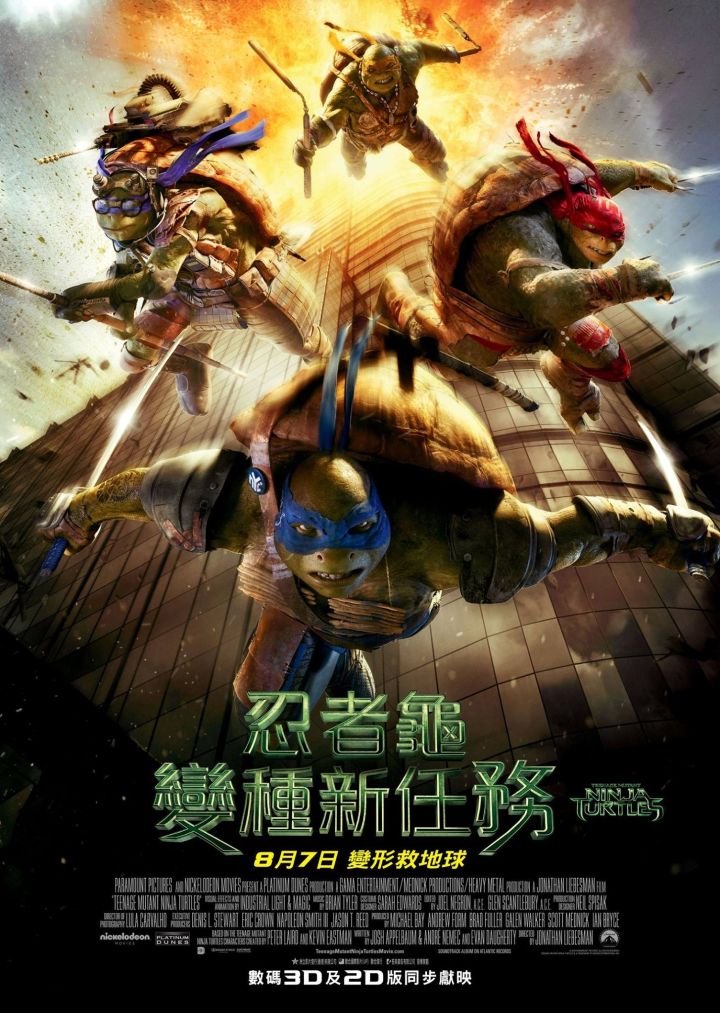
teenage_mutant_ninja_turtles_ver14_xxlg-720x1013OK so Rotten Tomatoes gives it a grilling but its a fun movie and pretty well done.  I’d be lying if I say its worth full price or 3D, but cor a matinee, which is all I and my son go to, its…well…fun.    It gets the tone right, neither too campy or too serious and the characters are, uh, well what can you say about a near seven foot, bipedal rat and turtles? The characters have to have lay it on thick personalities that was the way they always have been.  The TNMT’s are fun loving reasonably serious young guys.  The bad guys are villains with goons what can you add?  Megan Fox’s character is central, and she held the movie together.   Her O’Neal is not a shrinking violet, victim or Mz KickAss, for the plot she had to be a bit pig headed and very naive, but she was well cast and played it well.

We’d certainly go and see a sequel if it’s done as well and doesn’t have much competition.


Guardians of the Galaxy, go and see it!

hr_Guardians_of_the_Galaxy_film posterSo Marvel’s Guardians of the Galaxy is a fun movie.  If you want a fun afternoon or night out, go a see it, you’ll laugh and be amazed.  I love Groot and Rocket Raccoon the two CGI characters shown  in their own movie poster below.

There are many who are over the top about this movie, I think because it could have been awful and isn’t.  There is something about the movie that makes me hold back from saying Fantastic, but it is very, very good. There may be other things playing in, but  the pace was too frenetic the cutting too staccato for me to fully enjoy.   Also a lot of characters seemed to intimate some link to a deeper story that we didn’t get to see. An introductory movie set in a deep universe like Marvel’s may be prone to this and my ‘author’s bump’ maybe too sensitive to these things but these ‘issues’ kept me from getting as deeply engrossed as I did in Edge of Tomorrow and some of the other Marvel films.

But its a fun movie, go and root for Groot, Rocket and their pets.


grootrocketraccoon1


Lucy the Movie

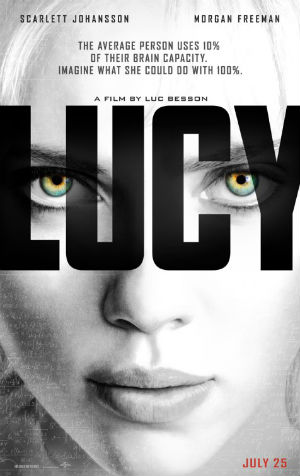
Lucy_(2014_film)_posterLucy is a disappointing movie. That is not to say it is awful, but I could not argue with someone who said that it was awful.  For me the movie started out very well and was watchable throughout but it left me feeling like I had seen a Hollywood Horror, not the child of the Luc Besson, director of the movie The Fifth Element.   The movie feels like it was cut short.  Started out on a path like, if a bit less out there than, TFE but then got chopped short.  It as if the script was written around a very tight plot but instead of spending time fleshing out the story and the characters it was decided to just get something out the door as cheaply and quickly as possible.  I suppose that Johansson or others were not available for the time Besson needed to do a TFE like work.   Whatever it was this is a very disappointing movie, mainly because it had great potential.

The details:  the violence is what some called ‘over the top’ but unfortunately it’s what I call pseudo realistic; Lucy starts out as a believable type…and ends equally believable but without an audience leading transition ; while the Lucy UberHuman [LUH]is believable I think a more relate-able version was possible ; the LUH’s abilities are fantastical, over the top, a creepier, more understated version was  possible ; the plot is ultra simple and while the plot holes are there they don’t derail the movie ; [SPOILER ALERT] the bad guys are workmanlike if a bit too Bond-Goon-Squadish, but I really really wanted to evil surgeon from the early scenes to get terminated with prejudice ; the end is utterly anticlimactic the ‘happy’ ending wasn’t cheery and had no punch, the LUH metastasizes to another plane leaving behind the USB key fob to the universe, the confused boy toy police guy gets a text message from the beyond and the world goes on…meh.

Details of the details:

LUH’s creation: The crap about the utilization of the human brain was good as a way of thinking about human capacity but its scientific bunk, which spoiled the movie a bit for me.  The drug was TFE Beeson over the top (as was its introduction) but its derivation and supposed affect were not very convincing.  I’d have bought a material that increases intelligence by accelerating and reorganizing the brain, but requires constant new fill-ups or the user becomes a vegetable, it’s the first of a new family of bio-nanotech human enhancement drugs the Chinese mob has stolen, one vial of the stuff could infect hundreds or thousands, who would all become vegetables if they cannot get the fix… a trope matrix that could have been much more scary.

Violence:  I think that LUH had to use violence she had no time to explain.  The emotionless LUH had no compunction about using it which was funny the first time but troubling with no context.  Also the violence was too risk free, humans react to violence, modern training makes us hesitate but there are many among us who would react almost instinctively.  LUH did to some extent explain herself to the surgeon but the hole here was their reaction to her and the lack of a police response in the time it took to take out the bag etc…A couple of soliloquies or appologetic explanations to victims (even dead ones) would have helped and could even have been funny….

Emotionless: Emotions are chemical and triggered by autonomous systems, LUH could suppress them…believable.  But I lost any real human interest in the whole story when I knew she was essentially a machine with a hard stop use by date.  The appearance of the hurting, frightened, grieving old Lucy would not have been hard or out of place, her goodbye to her mother was only part of what should have been a thread through to the end.

LUH powers: Telekinesis, really? Mental control of electronics plays into my idea for LUH abilities but its just magical crap with the trope used.  With ability to control her physiology, and ultra fast processing she could have senses and reactions and strength way beyond the norm, and would have needed to eat like a horse (that was consistent in a way) she might be able to exude skin oils or pheromones with powerful effects, could heal herself fast, maybe even read minds if in contact with the target, etc, etc.  These effects and her having to think her way out of dead ends would have supported the simple story line.  The magical powers she exhibited should have been part of a movie with more complexity / depth in other areas, where those powers play are a way to keep the story moving fast….here they just truncated this already too simple movie.

Bad Guys: OK pretty good in a Bond Villain Goon Squad sort of way but still.  And what about the evil surgeon? he really needed his own poetic if gory end.

The ending:  A more effective ending would have been failure…the bad guys kill her, the bad guy’s die, maybe science guy and boy toy survive to grieve Lucy’s death.  Then maybe a hint that she did not fail but that she had made sure that the bad guys got sucked in and destroyed while the drug or whatever that created LUH will be treated like a mixture of nuclear weapon and Ebola.


XUBUNTU, what’s a XUBUNTU?

It’s a flavor of Linux, Ubuntu one of the big cat’s in the Linux pride these days with a little mousy desktop called xfce as the front end. It’s not exactly Windows or MAC OS but it’s a bit like both in some ways and different in others.

So why do I care? Well I have this old Thinkpad T42 I have done millions of words on (the A key is etched down into the plastic the S and D are mostly gone and the backspace is a bit finicky these days.  The Battery is long gone.  It’s run Window’s XP its whole life up till now.  But it and Office 03 ran slower and slower and slower as time progressed.  Around six months ago I got so fed up that I shut down the WiFi and stripped out all the superflous software anti virus, firewalls etc, etc.

This brought the T42 back up to being a very nice writing tool. But I had to sneaker net it and use my iPad as my web research link. This worked but I found that I was doing less writing since I have a life and getting into the frame of mind to write and keep at it can be a chore.  Any (even trivial) bump tends to make it feel less worthwhile which starts a viscous cycle.  Any one who has followed this log will have noticed my blogging has decreased over the past half year or so…this is the reason for that tapering off since the T42 is where 90% of my blogging got done (it’s where this is being written.)

I love computers but hate having to fiddle any more than I want to (ego centric I know) so have read about and wondered about converting to Linux for years.  So with a machine I love but was about to become a brick, I finally figured I would give it a hack.

Tried Ubuntu straight up but my processor is so old it is no longer compatible with the loader.  Saw some suggestions about XUBUNTU and gave it a wack.  Worked first time out of the box, even handles my beloved trackpoint mouse knob in the keyboard.

XUBUNTU loads a working computer’s tool set aboard as part of the install (this is actually part of xfce desktop) the choices come from the UBUNTU ‘app’ store.  Which also loads.   The Software Center looks a lot like the old Windows Software load/remove utility but its remote + local, tracking what is available as well as what you have loaded.  Really clean interface and the load of programs are useful full function tools.
xubuntu-logoIn fact I have only loaded a couple of other pieces of software.  One was CaligraWords to see if it was better at editing huge Word03 documents than AbiWord (it isn’t as far as I can see.) As well as a mind mapping tool, Feeplane, I want to try out for organizing some of my thoughts and ideas for my novels and posts.  But the best things so far is Variety, a live desktop picture system, it pulls photos off free sites on the Web and displays them as the background.  You can do all sorts of things, from leaving them as found to making them line drawings, but what I have found is that setting it as ‘oil’ brush stroke provides a remarkably pleasant but non-distracting background.  I contributed a bit to the jar on that one (and will be doing the same for xubuntu, AbiWord and others.)

I am not totally sold on Linux yet, but I have to admit that it has been a far simpler quicker and fun process than I had expected so far.  I hope it keep up.

National Novel Writing Month…

If you follow me and glance over ThisWoldAndOthers you will realize, I hope, that I write SciFi, not for a living but for relaxation and as an outlet. I have mentioned NaNoWriMo before but forgot to mention it this year, just in case someone passing by might be interested but not know about it. November is/was the month and I have participated in (and become a winner once more!)

National Novel Writing Month (NaNoWriMo) is a fun, seat-of-your-pants approach to creative writing. On November 1, participants begin working towards the goal of writing a 50,000-word novel by 11:59 p.m. on November 30. Valuing enthusiasm, determination, and a deadline, NaNoWriMo is for anyone who has ever thought fleetingly about writing a novel. Here’s a little more about how it all works.

National Novel Writing Month is also a 501(c)(3) nonprofit that believes your story matters. You know how writing makes the world a more creative, vibrant place. Through NaNoWriMo—as well as our Young Writers Program, the Come Write In program, and Camp NaNoWriMo—we work hard to empower and encourage that vibrant creativity around the world. We can’t do it without writers like you.

NaNoWriMo 2012 at a Glance

341,375 participants started the month as auto mechanics, out-of-work actors, and middle school English teachers. They walked away novelists.

648 volunteer Municipal Liaisons guided 586 regions on six continents.

82,554 students and educators created worlds with the Young Writers Program.

615 libraries opened their doors to novelists through the Come Write In program.

And in 2013, 44,919 Campers participated in Camp NaNoWriMo’s online writing retreat.

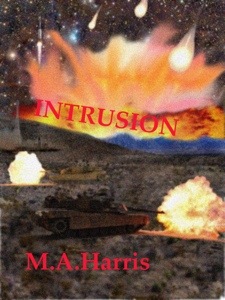
The novels not done even at 50k+ words its about 1/2 way, but here is the draft cover….and synopsis…20131201-100915.jpg

War of the Worlds?

It’s a Black Swan event, a disaster no one was looking for, despite decades of discussion. A killer asteroid slingshots around the sun and is heading straight for the heart of the US.

A desperate shot with an experimental space plane and obsolete nation killer bomb may save the day. Except worse turns to weird when it becomes obvious that the incoming hundred thousand tons is not an asteroid but a derelict starship.

Weird turns to near certain war when the ‘derelict’ starts spinning out landing craft, does the President destroy it, do the aliens come in peace?

The story of the men and woman who get to put the answers together and live…if they survive…with the consequences.

20131201-100934.jpg