
CPU’s the Universe and Everything

The image from an interesting article on the ultimate in cloud computing. Hubble image of the asymptotic giant branch star U Camelopardalis. This star, nearing the end of its life, is losing mass as it coughs out shells of gas. Credit: ESA/Hubble, NASA and H. Olofsson (Onsala Space Observatory).

Seems like there must have been a mash up of astrophysics/cosmology/cybernetics a couple of weeks ago there have been a series of articles about computers and the universe. One series pointing out that once could conceive of using the AGB stars in their ‘dusting mode’ (above) as a computing engine.

But on the other side there have been a couple of articles that touch on the metaphysical (philosophical basis of reality) concept that we and our universe, are one vast simulation.

…Oxford philosopher Nick Bostrom’s philosophical thought experiment that the universe is a computer simulation. If that were true, then fundamental physical laws should reveal that the universe consists of individual chunks of space-time, like pixels in a video game. “If we live in a simulation, our world has to be discrete,”….

From: New machine learning theory raises questions about nature of science

….a discrete field theory, which views the universe as composed of individual bits and differs from the theories that people normally create. While scientists typically devise overarching concepts of how the physical world behaves, computers just assemble a collection of data points…..

From: New machine learning theory raises questions about nature of science

…A novel computer algorithm, or set of rules, that accurately predicts the orbits of planets in the solar system….

… devised by a scientist at the U.S. Department of Energy’s (DOE) Princeton Plasma Physics Laboratory (PPPL), applies machine learning, the form of artificial intelligence (AI) that learns from experience, to develop the predictions.

Qin (pronounced Chin) created a computer program into which he fed data from past observations of the orbits of Mercury, Venus, Earth, Mars, Jupiter, and the dwarf planet Ceres. This program, along with an additional program known as a ‘serving algorithm,’ then made accurate predictions of the orbits of other planets in the solar system without using Newton’s laws of motion and gravitation. “Essentially, I bypassed all the fundamental ingredients of physics. I go directly from data to data,” Qin said. “There is no law of physics in the middle…

…”Usually in physics, you make observations, create a theory based on those observations, and then use that theory to predict new observations,” said PPPL physicist Hong Qin, author of a paper detailing the concept in Scientific Reports. “What I’m doing is replacing this process with a type of black box that can produce accurate predictions without using a traditional theory or law.”…

From: New machine learning theory raises questions about nature of science

Ok so now I am going to go a bit sideways and you may want to just go on about your internet day. But while I laude Qin and his team I have a bit of an issue with what he claims re the basis is Philosophy. Not the claim that the discrete field theory sparked his concept exploration. But that the actual system he developed has anything to say about that metaphysical theory.

Taking nothing away from the team what I see seems like a straightforward application of machine learning. In fact a relatively simple one though I would laude the whole idea of applying it to physics in general. A very interesting though, like many interesting insights, oddly obvious is retrospect. (Sorry for the repeated Though clauses…I absolutely see this as fascinating insight…and possibly extremely important…it just seems like D’oh in retrospect.)

As physics is very much aligned with mathematics (I think because the discovery of each was feedback on the other) and mathematics and cybernetics are also deeply intwined it should come as no surprise that computer systems designed to create black box solutions, when fed the right kind of data, will create a black box model of physical phenomena.

The output of science are tools that allow us to predict finite things about the universe we live in, repeatably and accurately. These tools are often used by engineers to enable technologyy that make life better for everyone.

But in many ways this is an engineers (relatively narrow) viewpoint. To some large degree an engineer does not care why the tool works, only that it does and how accurately. Counter to that, a strength of the theory based + mathematical model approach is that it gives you a tool to link the rest of reality to the ‘discrete’ piece you are working on right now. A jumping off point or a linking point to other theories that allows us to move onto other problems and link the

And/But (you knew it was coming) i wonder if this has anything to do with discrete field theory per se. Maybe if the learning algorithm used had that in it this would show something of that nature, but otherwise I do not see this as showing anything in particular other than the ability of learning systems which are in some sense continuous not discrete systems to develop predictive models directly from the data (as Qin says) rather than through the labor intensive methods of theory extraction and proof that has been the basis for scientific exploration since it first evolved in the Middle Ages.

Again BUT, it has been getting harder to develop these ‘deep’ theories. Look at the colliders and other tools that physicists use these days to probe the depths of our reality. In this world there are many things, like Qin’s next test with Nuclear Fusion, where an engineering model might be much more valuable than a ‘theory of this’ if it can be captured and used in a fraction of the time.

It’s all good, fascinating, wonderful…but let’s not get ahead of ourselves.

Space, a little at a time

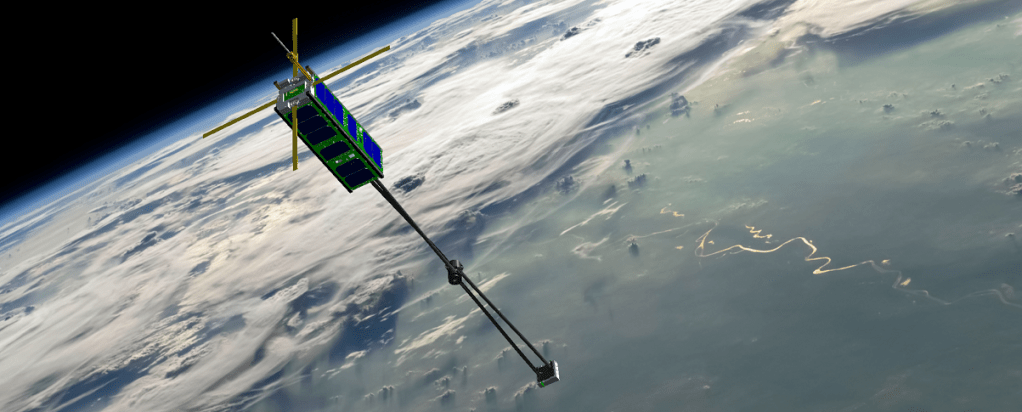
Miniature Tethered Electrodynamics Experiment MiTEE

MiTEE is a cool space experiment out of the University of Michigan. Faculty led, undergraduate, graduate and PhD student team, developed and got launched a cube (stack) satellite that is demonstrating the use of tethers for de orbiting spacecraft, a serious need in this day of thousand plus satellite constellations.

As a note of interest this was on the first successful Virgin Orbit launch.

OK, if Hornady says it’s so,I guess….

GunsAmerica’s Digest is a good general guns and ammo site picking up articles and topics from all over. Suggested.

The Truth About Ammo – GunsAmerica Exclusive Interview With Hornady

by JORDAN MICHAELS on JANUARY 23, 2021

The emails and social media messages to Hornady’s customer service team haven’t let up in months;

“Where’s all the ammo?”

”Are you still making hunting cartridges?”

“Have you shut down due to COVID?”

“Why are you making T-shirts and not ammunition?”

“Are you hoarding ammunition?

“Are you selling all the ammunition to the government?”

A quick survey of Hornady’s Facebook page reveals of few of these missives.

So I even muttered under my breath, ‘only the Feds have the resources to buy up all the ammo, real people can’t be buying it all.’ Even if I know that’s bat shit crazy.

It was easy to sense the frustration and fatigue in Jason Hornady’s voice when he sat down with GunsAmerica last week. As the vice president of one of the nation’s largest ammunition manufacturers, Hornady has captained the company through the greatest surge in demand in the industry’s history, …

….they increased production by 30 percent last year, when they usually only grow five or ten percent each year. They ran through their entire inventory 18 times in 2020, when a normal year only sees six inventory turnarounds…. “Anything we make yesterday is shipping today,”

“Normally, a guy would buy one or two boxes. Instead, they’re buying cases,” Hornady said.

“Anyone who thinks that ammo companies aren’t trying to make and sell as much as they can, doesn’t understand capitalism,” he said. “We all like money. Nobody wants to ever make less.”

“It’s shipping all the time. We’re all shipping more all the time,” Hornady said. “The biggest thing is, be patient.”

Bottom line? Hornady and other manufacturers are working as hard as they can to meet today’s unprecedented demand.

So there you have it.

There are some supply restrictions on the input side, primer I hear is a big issue. It’s dangerous stuff and a lot is imported because it’s hard to build plant in the US. But even stuff like cardboard boxes are getting hard to get…So…. be patient, soldier on. Don’t burn through your practice stock too fast.

WOW! A cool SETI theory…

Figure: The Wow! Signal. The peak is 32 times the signal to noise ratio of the observations. Courtesy of Sam Morrell. (From the article)

Not much more to be said so I post the intro to the article from Centauri Dreams, about an article/Theory by James Benford. Cool…

Was the Wow! Signal Due to Power Beaming Leakage?

by PAUL GILSTER on JANUARY 22, 2021

The Wow! signal has a storied history in the SETI community, a one-off detection at the Ohio State ‘Big Ear’ observatory in 1977 that Jim Benford, among others, considers the most interesting candidate signal ever received. A plasma physicist and CEO of Microwave Sciences, Benford returns to Centauri Dreams today with a closer look at the signal and its striking characteristics, which admit to a variety of explanations, though only one that the author believes fits all the parameters. A second reception of the Wow! might tell us a great deal, but is such an event likely? So far all repeat observations have failed and, as Benford points out, there may be reason to assume they must. The essay below is a shorter version of the paper Jim has submitted to Astrobiology.

Our space science Economy has assets

An artist’s depiction of the OSIRIS-REx spacecraft at work at the asteroid Bennu. (Image: © NASA/Goddard Space Flight Center)

NASA’s OSIRIS-REx probe could make a 2nd stop at infamous asteroid Apophis, at Space.com, and noted in several space related blogs, eMags. This sounds like a fantastic use of a remarkable space asset.

The Japanese asteroid prospector Hayabusa2 dropped off its samples from Ryugu at Earth and is on its way for more exploration last year: Farewell, Ryugu! Japan’s Hayabusa2 Probe Leaves Asteroid for Journey Home

These craft and others such as craft like the voyagers continue to return immensely valuable data long after their primary mission is complete. One of the things NASA and other space science organizations struggle with is supporting these ships long after the original funding timeline is past. This is a great problem to have and by and large the money is found since these are very cheap deep space projects in the big picture.

So my title, the economy of ‘outer space’ is all about data, science, prospecting right now. These are valuable assets that we need to support to provide returns orders of magnitude greater than the cost in the sense of other ways of getting that data, data that is both live affirming in its fascination and valuable as part of the bedrock of our understanding of the universe.

Cheers

Cool Stars, Kinda Literally

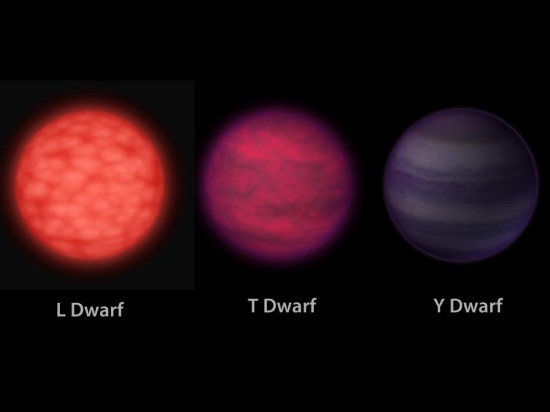
Image: This artist’s conception illustrates what brown dwarfs of different types might look like to a hypothetical interstellar traveler who has flown a spaceship to each one…. Credit: NASA/JPL-Caltech.

There are a class of celestial objects much heavier than our systems Jupiter but about the same size. They are not really planets just balls of dense hot gas, but they are not really stars because they lack the mass to collapse and heat their core to ignite sustained fusion. These Brown Dwarves are probably one of the most common objects in our universe but little is known about them because until recently they were essentially impossible to find. With new tools and new techniques this fascinating class of in between are coming into focus.

Another fascinating article from Centauri Dreams.

Mice with damaged spine, enabled to walk again…Faster Please…

Credit: CC0 Public Domain

JANUARY 15, 2021
Designer cytokine makes paralyzed mice walk again

by

“Thus, gene therapy treatment of only a few nerve cells stimulated the axonal regeneration of various nerve cells in the brain and several motor tracts in the spinal cord simultaneously,” says Dietmar Fischer. “Ultimately, this enabled the previously paralyzed animals that received this treatment to start walking after two to three weeks. This came as a great surprise to us at the beginning, as it had never been shown to be possible before after full paraplegia.”

Above article in MedicalXPress via Phys.org

Let’s hope this paves the way for human treatment. Not that I don’t love cyborg exoskeletons in their place, but this is far better.

Lethal load out

U.S. Navy Amphibious Warship To Deploy With Anti-Ship Missiles Next Year
Containerized missile launchers would give amphibious warfare ships a new way to protect against hostile warships, as well as engage other threats.
BY JOSEPH TREVITHICK JANUARY 11, 2021

Article in The Drive’s WarZone.

So the Naval Strike Missile, a middle weight anti ship missile will be mounted on an Amphib to provide integral defense and a little bit of offense capacity. The main purpose of this deployment is for experimentation with the fleet, to see if it changes the nature of the game when at sea. The Amphib is a big ship but is in essence a sea going ferry for the marines, a fast freighter. But these ships are big and impressive and sometimes used to show the flag. They have defensive weapons but nothing to ‘shoot the archer’ usually that is left to an escort. Having some rounds on board would change the dynamics and utility perhaps in a positive way.

While the preliminary deployment will have the missile amidships like a warship might. But the missile could be mounted on a truck that is being transported, just drive it out onto the flight deck, lock it down and shoot. With all sorts of truck mounted ordinance such as Hellfire, 155mm Cannons, HIMARS GPS Guided Rockets, there are a lot of options that this could provide for protection or force projection.

With the continued growing cost of specialized warships this sort of flexible tactical utilization looks like a good use of modern precision weapons. One can and should argue that it does not provide any kind of one for one replacement for a warship. But is a warship; a frigate, destroyer, cruiser… really what we need? Maybe its a combination of gnat weight autonomous missile slingers supporting heavy flex fighters like this Amphib.