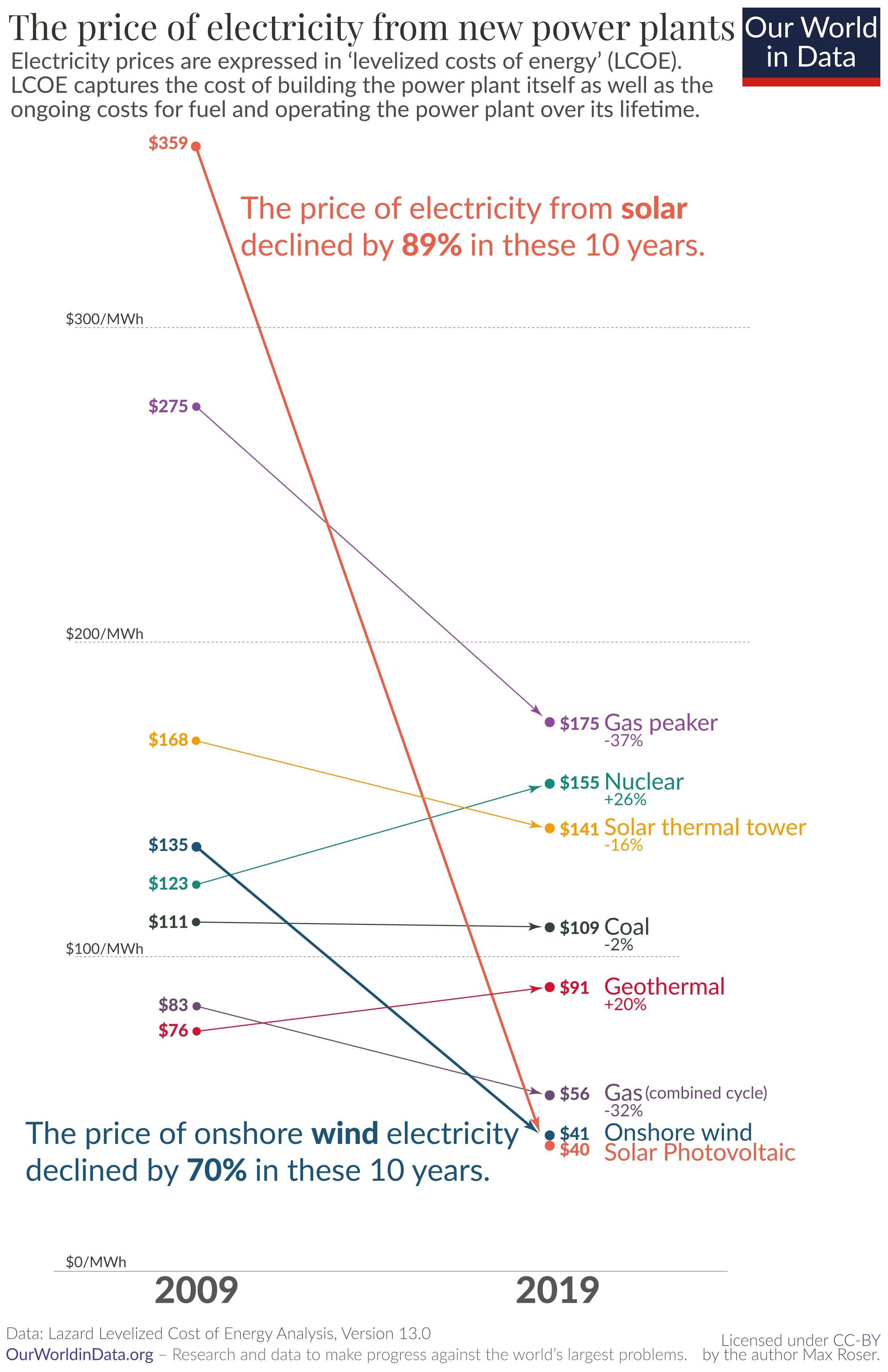
Photovoltaic…as I said, it’s real and getting more real.——Why the Price of New Solar Electricity Fell an Incredible 89% in the Last Decade

Our World In Data chart, via SingularityHub
By Jason Dorrier – Dec 13, 2020
This has been in the news but discounted in some ways utility side issues still make this a success story the utilities could do without. A couple of general downside views. Solar modules are a troubling refuse stream until recycling tech hits new highs. The cell modules wear out over time, the wear out and $payback often overlap in the wrong way. Both of these issues should ease in the coming years but you cannot discount them yet. Still this is amazing and it seemed obvious at least 5 years ago, nice that it kept on trend.

Spider Mite Robots from the UK

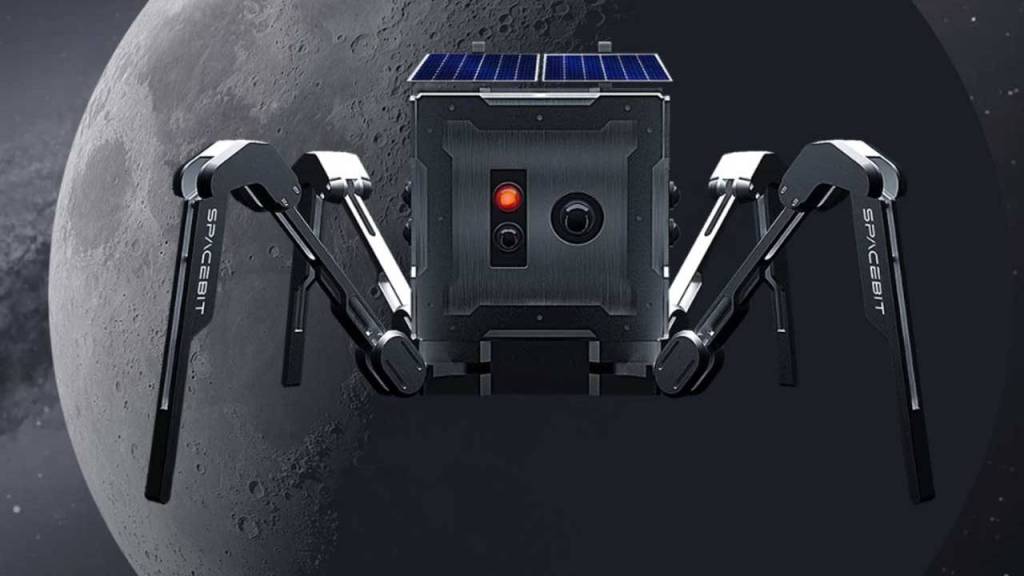
UK company Spacebit is sending a spider-like rover to the moon
at slashgear.com

A really cool concept. Miniature walking rovers that can explore tiny spaces, a single test to the moon this year with plans for swarms (small ones) in the not too distant future. Tbe video animation from Spacebit is worth a couple of minutes.

More on Politics sorry, got to get it out…of me..out there…something

It’s fascinating that the razors edge of revolution is often young women

The Challenge of Marxism
written by Yoram Hazony
Published on August 16, 2020

This well written and insightful article lays out the fundamental problem that ‘liberal-society’ has with Marxism, it is fundamental and insurmountable without stepping back and being able to address the core intellectual attraction of Marxism.

The article also points out clearly that the challenge to the liberal-capitalist society today is a dispersed network of Neo-Marxist follow ons not the International Communist Marxism of the soviet era.

The current rag bag liberal street agitation groups espouse Neo-Marxism in the form of defining the world as made up of human association groups (once classes now identity groups) who have natural affiliation and self awareness, organized in society into a hierarchy of oppressors and oppressed. Where the oppressors form a web of custom, law and history that supports this oppression largely hidden from most of the oppressed.

  • In this theory:
    • there is nothing but oppression and
    • that when seen this can and should be attacked in all ways possible up to and including direct violence. That there is
    • one true view of the world, that of the woke (or Marxist, SJW, etc) and
    • any other view is false and that
    • defending other views is violence and
    • can be addressed with physical violence up to and including death.

The basis of liberalism are enlightenment values of freedom, liberty, human worth… which can be argued are actually conservative values expanded to the masses without much of a rational argument.

The Marxist analysis of class, oppressor and oppressed is clean, rationale and expansive enough to cover most situations if the area of regard if defined clearly. The liberal while depreciating the marxists’ absolutist tendencies can understand the analysis and is forced to agree since they rarely have a good counter argument that does not require them negating marxist truisms and engendering attacks on their racism, classism, elitism, misogyny, etc. Over time one article of liberal faith or piece of history, has it’s context distorted to the Neo Marxist account and is then pulled down by the rabble no one can deny.

And so the Marxist cadre, not calling themselves that but acting in swarming semi accord have captured the elite institutions which were largely liberal and now are largely controlled by Neo-Marxists with the reins of power in their hands.

  • So I say that the Marxist analysis makes sense right?
  • No I said that the Marxist analysis is clean and rational.
    • But it purposefully limits the definition of ‘the problem.’
  • The basic analysis of self aware human groups is true.
    • But the abstraction of the definition is taken to extremes to sharply define a ‘class’ such as mobility, demographics, etc are limited
    • The other abstraction; of oppression, also goes to extremes to ignore countervailing facts, social cohesion, economics, even the availability of violence to both sides
  • In Marx’s time, while the Imperial Russian autocratic-oligarchy vs serf appeared to have some relationship to the Owner-Manager vs worker in capitalist free holds like Victorian England, the reality was that in all cases each side had its risks and its pains as well as advantages and pleasures.
    • And at the end of the day the masses always had the pitchfork and torch if things got bad enough. While peasant rebellions rarely ended well for the rebel leadership it usually had a positive long term effect on the survivors because the upper class wanted to avoid reoccurrences.

Ok so I have wandered on for some time, and off topic really, the article is very good, much better than my rough handling of a few of it’s very clear points. Read it.

American Fascism, Political-Industrial-Oligarchic

The Threat of Authoritarianism in the U.S. is Very Real, and Has Nothing To Do With Trump

Glenn Greenwald
Journalist; co-founder, The Intercept; author, No Place to Hide and forthcoming book on Brazil; animal fanatic & founder of HOPE Shelter.
(L-R): Facebook CEO Mark Zuckerberg, Google CEO Sundar Pichai, Apple CEO Tim Cook and Amazon Founder and CEO Jeff Bezos (Photo by BERTRAND GUAY,TOBIAS SCHWARZ,ANGELA WEISS,MARK RALSTON/AFP via Getty Images)

Unfortunately on the nose. We do not have a representative democracy we have and probably have had an Oligarchic Republic. This only becomes more obvious as the Republic (power split down to and exercised at various geographic/social sub units) is over run by the federal (central) government where the oligarchs can focus their power to get the biggest bang for their bucks.

The confusion and purposeful distortion of the words/meanings of-democracy, representative-democracy, republic, federal…and others is probably more important than the issues with the presidency. The more centralized power is the more important controlling the levers on that power becomes.

Book reviews…Cities, roads, history, society…

I have as always been reading a lot on a broad range of topics. Here are three very worthwhile reads that have some things in common and might give you some interesting insight into society history, cities, transportation.

Metropolis: A History of the City, Humankind’s Greatest Invention Kindle Edition
by Ben Wilson

Saw this at Barnes and Nobles but bought the kindle edition. The physical book is nice but was not sure it was a real keeper. This is a good book, probably written before 2020 and Covid-19 raised questions about ‘the urban’ but I think either well thought out and thus an argument against the Anti-Urban angst right now, or edited well to address it without being too pointed.

This is an interesting read going back to pre history and even pre town/village to show that mankind was building monuments long before cities and that the typical early city surrounding religious/social centers was not an after thought but the genesis of the city. Also pointed out that when Mesopotamia was originally ‘urbanized’ it was more like Tenochtitlan, a wetland/jungle, not a desert as it is today. This actually points to a minor theme about natural climate change in this book and how it enabled then destroyed many early societies and their cities.

Dr. White works up from Uruk (probably oldest major city) through the more well known Mesopotamian city states to the coastal city states of the Mediterranean and Asia and how these cities lived and died by trade as much as by being centers of power. That usually the power came after economic power. Each city is put in its own context but that context extended to today. A city on the monsoon trade routs of the Middle Ages compared to modern Singapore. The trashing of Medieval Paris by Napoleon the II’s city planer (in the 1850’s) to build todays ‘city of lights’ is compared to the trashing of many other city centers in the name of modernity and the car.

But throughout the dynamism of the city, its inventiveness and its beating heart at the center of economic power is stressed. And above all that cities are human creations and habitats that are rebuilt and rehabilitated by the human spirits that enliven them. And despite wandering into and even making a strong case for the maleness and misogynistic tendencies of cities and the anti other tendencies Dr. White pulls back and strongly supports the case that cities are centers of diversity and new ways of living and new ways of empowering the downtrodden. While at the same time pointing out again and again that the elite urge to ‘clean up’ slums and old sections invariably destroys as much or more that is strong and beautiful as ‘helps.’ That the humans that give the city heart and power are the lower and middle classes not the elites and that elite re-planning is generally destructive of the human in the city. Again and again slums and ghettos are shown as a horror to the elites that is utterly at odds with the dynamic creativity that they hide in back alleys. Even in Mumbai and Lagos today the power of the slum is at odds with its image as presented by the largely ignorant elite.

The chapter on Warsaw in WWII is hard to read, but again and again points to the humanity of the urban core and its draw on the human soul for those it has become home to.

This book is an eye opening read and an excellent piece of work with a different view of the urban and the city. Not the least because it even deals with the suburbs and the suburban city (LA) and shows that it is in many ways just part of the continuum of development over something like ten thousand years.

I grew up in what I would call metro-suburbs of England and the Suburbs of the US and find that this book provides a much more solid base for thinking about the city than any article or techno dissection of the city vs suburbs vs rural…. Read the book, don’t miss some fascinating images and the use the author puts them to to explain times and places in some depth.

The effect of Covid-19 and the internet (one cannot be dealt with without the other) the coming impact of electric and autonomous cars and then personal air transport should be thought of AFTER you have read this book. It gives one pause and a new way to address what a city is and its draw to and repulse from the human spirit.

Ravenna: Capital of Empire, Crucible of Europe Kindle Edition
by Judith Herrin

Ravenna on the Adriatic (the sea between Italy and the start of Eastern Europe is not a city one has heard of. Rome, Venice, Pisa, these cities of the Middle Ages and Renaissance are famous but a city that was for some hundreds of years the Capital of the Western Empire is simply not mentioned in most history books. Largely because its history started when Rome fell for the first time to the invaders and the Roman capital moved to what we call Constantinople. This was the start of the dark ages as first the barbarians and then Islam destroyed the Roman Empire. But that empire took a great deal of killing and our simple view of Rome the City = Rome the Empire, reinforced by Gibbons and others is simply false.

The city was important in Roman times, a city on an estuary that was much like we might imagine Venice a few hundred years later. The romans built/dredged a large harbor next to the city and it became the main sea link from Rome to the East, Anatolia, Greece, etc.

As Rome as Rome fell Ravenna became a center of gov’t and it also became a center of Christian faith, usually linked to the Abbot of Rome but also linking to the Eastern Faith, it was often at odds with the Abbot of Rome and or the Abbot (Patriarch) of Constantinople, where the later emperors tried to control the universal (Catholic) faith and failed.

Because of its link to the Eastern Church and Greece its Churches were richly decorated with mosaics, some of the most startling survivals of a period of history little remembered in the west.

Over the period of the barabarian invasions and later Empire the Emperors in Constantinople used Ravenna as their Western center of Government from where famous generals led army after army out to defend or recapture Roman lands. But in the end the powerful warrior tribes out of Germany, etc beat down the empire and took it as their own and Italy splintered into the city states that enliven the story of the Renaissance.

This history is rich and interesting, politics, religion, sociology, art, woven together. Dr Herrin uses a lot of first sources and actual peoples words to weave the story. Photographs of the wonderful mosaics makes one want to visit this historic city. The details of this ‘missing’ period are deeply interesting and helps explain the rise of Catholicism and the split with Orthodoxy. Another great read if you are interested in the history of Rome, Europe, the Middle Ages.

The Big Roads: The Untold Story of the Engineers, Visionaries, and Trailblazers Who Created the American Superhighways Kindle Edition
by Earl Swift

Earl Swift’s The Big Roads starts at the beginning, in the nineteenth century with dirt tracks and cobbled lanes of the towns, cities and rural expanses and leads through their evolution over time. It is interesting that so much of the early work was more about associations building assets for commerce and the socialization of the automobile, prior to its becoming a power in its own right. And that the bicycle had a part to play before the automobile was big.

The story of the US routes, Route 66, Route 31, Route 71 etc etc and then the genesis of the interstate system are fascinating tales of time, place and actors.

A very human story interwoven with fascinating people and lacing in stories of places and times that you had heard elsewhere but never linked into the creation of the highways and now byways across the US.

As with the books above, particularly Metropolis this book talks about the hubris of the elites and of the blinders that technical leaders can have and the damage they can do while believing they are in the right and having the best interest of the people they are displacing at heart.

A fun book with fun side stories that especially resonate with me as I grew up as the Interstate system really came into its own and the knock on effects it had became visible, mostly for good but too often at a cost to various neighborhoods and towns.

Artificial…uh, dance partners?

Two items run across recently the emphasize the huge progress that robotics and Artificial intelligence has made in the last couple of years.

From Robot Reports a somewhat frightening video:Watch Boston Dynamics Robots Tear up the Dance Floor.

Boston Dynamics Atlas doing parcur from an article in The Verge

The Boston Dynamics robots are at the point that they can do most things a human can in regards to locomotion. It is unclear how much beyond balance and moving is local to the robots as the thoroughly bounded arena makes clear but the basics of the body frame is there. Ability to manipulate the environment other than in the most basic way has not been demonstrated by Boston Dynamics but other companies are making huge strides in manipulators. Ability to sense and understand the environment is another huge step. Except that the sensors exist (autonomous cars etc). Leaving understanding the environment beyond a very limited ‘world.’ And that takes a brain, and that seemed a long way off….except is it?

Hat tip Maggies Farm, in Towards Data Science: the article; GPT-3: The First Artificial General Intelligence?

From the article
The picture above shows an inverted dome with a waterfall at is base pouring water into another circular waterfall. An interesting visual metaphor for the reinforced learning of many modern AI systems.

GPT3 would appear to be on the threshold of general purpose artificial intelligence. In the article it is noted that GPT3 is a brain in a box with no ability to sense or manipulate the environment without human intervention. But ‘wrapping’ those abilities ‘around’ GPT3 appears all but trivial. Given its ability to learn on its own would a Boston Dynamic’s wrapped GPT3 become something close to the robot of our dreams and nightmares. It certainly appears so.

Atlas’s is battery powered, I think, to the tune of an hour or so. GPT3 is instantiated on a huge computer network but both of those limitations are receding every day as computing power and battery storage continue to improve driven by their broad application across the tech scene.

Five years from now it would seem likely that the general purpose android robot will be a real thing. If built in quantity like say a Tesla 3 are you looking at $30K a pop? What does that lead to?

I want to make sure they understand that I for one welcome our dancing robot overlords.

Point to point sub orbital

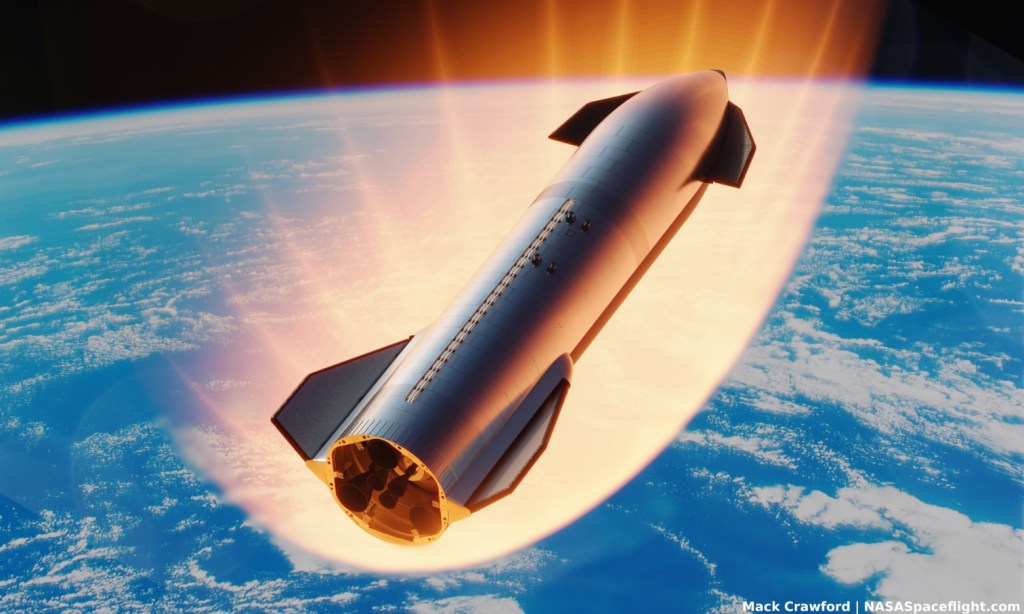
Preparing for “Earth to Earth” space travel and a competition with supersonic airliners From NASASpaceFlight.Com an important and fun source on space activity all around the world not just NASA/US

So this seems crazy but in all honesty it has actually been a thing for a long time. It is mentioned in a lot of sixties/seventies SF not focused on space flight. It was seriously studied several times as a sort of replacement for parachute insertion of military force. And like most of those sorts of efforts there was a commercial concept to support the technology since the folks in the defense industry understood that military programs cannot support a robust industry on its own.

Just look at nuclear power, there was a reason that nuclear power stations evolved as the Navy came to realize they wanted nuclear ships. And there is a reason that small aircraft carriers and non nuclear submarines are anathema to certain parts of the Naval establishment. They know that if non nuclear CVs and SSs became common the industry required to support the nuclear fleet would become unaffordable.

https://thehighfrontier.blog/2016/03/20/straight-back-down-to-earth-a-history-of-the-vertical-takeoffvertical-landing-rocket-part-1/

People have already talked about the DoD buying Starships and using them as bombers / hypersonic weapons platforms. This is just turning the model above around.

Back in medieval times freighters and warships were the same thing, they just tacked on some fighting platforms and went at it with bows, crossbows, catapults, swords, etc. Even the Vikings probably started out as traders though always ready to ‘raise the black flag and slit a few throats’ if that looked like the right business strategy.

Anyway…sorry for the side commentary, it’s evening and I had a good dinner so I’m wandering a bit.

So, again anyway…if you look at it, a craft like the Starship, which has the performance as a single stage vehicle to haul 100 tons 10,000 miles in less than an hour has some attraction on its face….but in reality?

  • To my mind the most value dense time sensitive cargo is people but that’s years out at the least.
  • In the meantime are there cargos that are so time sensitive that something like a starship might make sense?
    • Couriered documents. Maybe
    • Mail. Does not seem like it.
    • Medical supplies only if the ship could land almost anywhere and take off again.
    • High value tech like chips? Maybe but 100 tons is overkill.
    • In fact most of the above are not 100 ton class cargos and frequency and flexibility of landing seem critical.

So dead on arrival? No there are customers who might pay for a a limited 100 ton capability. I think it would need to be anywhere in the world which is more than 10,000 miles but is probably within the capability of a modified Starship with more fuel and less cargo…or maybe an extended tank Starship could do 100 tons out to 18,000 miles (my wag of anywhere in the world from anywhere in the world.)

A somewhat smaller starship could do 10 tons 18,000 miles and probably land at just about any port or airfield as long as you can supply LOx and LNG, which is not that uncommon.

Go back to the start. If you burn a couple of hundred tons of LOx/LNG what is the cost? Does it make economic sense? Is it safe, is it going to be acceptable?

  • Economics:
    • LOx/LNG are in the same $/ton range as Jet fuel, you are burning a couple of times the fuel since you have to haul up the oxidizer with you and pay for that as well so say 4x the fuel bill.
    • The hull is in line with a modern airline.
    • If you can do a trip a day or so with support costs in the same range as a jet, it would appear to me that for the right cargo you could make it work.
  • Is it safe?
    • Well not right now but once the tech is wrung out ?? I think so.
    • the big difference is much higher energies than a jet.
    • But…your exposure time is a fraction of that of a jet over the same range. Accidents in mid flight are rare but generally lead to complete loss. Exposure time is probably the most important difference…advantage Point to Point
    • Ok so the major threat time is when you are near the ground around take off and landing, Those are shorter for the Point to Pointer.
    • And to me the difference in energy involved is immaterial…dead is dead and most of the time accidents of any magnitude in those phases are not survivable.
    • Accidents on the runway often have survivors but that is eliminated in the Point to Point case…up and down…no in between…
  • Acceptable?
    • Only time will tell, my guess is YES.
    • It will be a bit like the glamor days of the early airliners I would expect point to point for certain segments to be a real elite punch card
    • Especially as near earth space becomes an exotic but achievable location.

Exciting times indeed.

Observation re. Sunburst Hack

An act of cyberwar is usually not like a bomb, which causes immediate, well-understood damage. Rather, it is more like a cancer – it’s slow to detect, difficult to eradicate, and it causes ongoing and significant damage over a long period of time. Here are five points that cybersecurity experts – the oncologists in the cancer analogy – can make with what’s known so far.

The Sunburst hack was massive and devastating – 5 observations from a cybersecurity expert by Paulo Shakarian From The Conversation

Description of who, how, what at least in general terms and a thoughtful overview of how to start thinking about the impact and meaning.

To me this attack seems just part of the reality we live in. As discussed in Modes of War, this is one of the modern modes that are more about gains and pains than blood and gore. This sort of strike, ignored and multiplied, could bring a nation down and given the context of reality today, direct kinetic action is highly unlikely.

Meaning of Liberty

Triggered in the best possible way by the following, Benjamin Constant, writing on meanings of liberty, ancient vs modern, in 1819 France. Read the whole thing it is shockingly applicable today.

This is related to the idea of todays forming Neo Feudalism and to a degree the concept of the Individual and sovereignty.

Constant lays out that in ancient times liberty (for the tightly defined citizen) was extremely broad and powerful, in Greece and early on in Rome, the citizens as a body had essentially unlimited power to wage war, make piece, expel, execute, as far as their power extended. But as individuals they were controlled, watched, forced to conform. This was possible because the citizens were a smallish percentage of the total population and well enough off to spend a huge part of their time debating.

In a practical sense these citizen assemblies were more like our Legislators than our citizens, though with arbitrary and absolute power. But Constant follows the traditional line and does not make this distinction. In part because he still lived in a world of urban aristocratic elites supported by a huge rural underclass.

In counter to ancient liberty he explains modern liberty as about the individual vs. arbitrary power of any kind. Essentially it is about the individual and their ‘happiness’ in the sense of controlling their own life and own concerns with the expectation that society and the hand of society (the government) has strictly limited power to interfere.

He points out that individual liberty is what humans really want but in the case of the ancients were willing to sacrifice for collective liberty since in their small and always threatened polities it was glaringly obvious that it was cooperate or be enslaved.

That stark choice is still there but hidden by the immensity and generally good living of the modern world. Governments span continents not little seaside towns and in the developed world we never want for goods unless we are ‘unlucky’ in some way. So the real power of gov’t is far from obvious to most, if you go along you get along and only criminals or sociopaths get in trouble…right? If everyone is on the same page maybe, but in a world of oligarchs, elites, yeomen, plebs and deplorables everyone is not on the same page any longer.

During the later 19th and through the 20th century there was, in the west and US, in retrospect, a fairly concerted effort to keep everyone on ‘the same page ‘ But as the echoes of WWI reverberated, the liberal republican concepts came under increasing threat from political philosophies we call communism, socialism, marxism, fascism, and their social outreaches of materialism, deconstructionism, etc. The ‘conservative-liberal’ mainstream dealt with the geo political threats fairly well but the social political attacks came through chinks in the armor that ‘freedom of expression and thought’ leave wide open. Children and Intellectuals are particularly attracted to the avant-garde, new, kind, progressive, and while many of them grew out of it as they moved through life ,all too many became entrapped in the mind fog if they did meet the real world of real people and real trade offs that the schools of hard knocks provide.

And so we are today a country, a civilization under threat of our own success. The varigated liberty of the constitutional republic has been hollowed out due to pragmatic, lazy, risk averse decisions by the interlocking social, fiscal, judicial, etc elites.

We deconstructed education, society, civility in the name of equality but without a consensus of what was going to replace those things and others. Deconstruction occurred in the shadows, the termites were at work on the frame with no replacement under construction because no one could agree on even a need as long as the old structure was there. Unfortunately no one told the termites to stop.

As this became somewhat obvious there were those, maybe many, who said, ‘let it crash,’ ‘let it burn,’ ‘tear it down’ because it represented something that they defined as completely evil, even if the same underpinnings being eaten away kept the roof over their head and provided protection for their food and defined their safety from the wild.

The problem is that the people who most want it torn down least understand what it took to create and what it protects them from.

If you look at things a certain way you can see the US, the West sliding towards something all too like the Chinese model. Perhaps a kinder gentler version but that is no certainty.

Is there a way out? ?

Was there a way in?

My view is that we stumbled and mumbled our way here. Reality is that nothing here was planned. We live with the contingent outcomes of unplanned inputs. it is possible that this outcome was expected by some but they are unlikely to have had any ability to direct it.

It does not really appear possible to plan anything like a society any longer unless it is a subset of self selected actors. And since humans are human no such society will last longer than about half an average human lifetime.

So?

It is what it is.

Don’t see evil around every corner, there is evil in the world but it is rare in the wild. Most people just believe what they believe they learned somewhere. They are most likely wrong (as am i.).

And remember this, over the sweep of time things have been getting better for more and more (in absolute and relative terms) people across time. There have been crashes and horrors but most people most of the time were relatively happy. The up slope was ver, very low ten thousand years ago but it has been steepening as it goes. While the whiners all see disaster ahead the reality is that there are solutions for every problem we (as a world civilization) have. Where we are going in any one part at any one time is always a bit of a random walk but that walk is usually uphill (in the best sense.)

Stay strong, be happy, work at making a difference.

SpaceX and COVID 19 Relief

Sunrise at Boca Chica, SN9 on Launch Mount B being readied for the test campaign. Thanks to Mary and all the gang for keeping me sane.

So one of the things that has kept me a little bit sane this last 9 months is SpaceX, Starship, and 24 Falcon launches… All I have to say is WOW and thank you Elon!

I’m in the periphery of the electric car business and have been for over twenty years now. The only thing that made me a believer was Tesla.

I’ve been watching space since I sat in front of the telly as Armstrong stepped off the lunar lander. The first time I believed that the final frontier finally within grasp was watching SpaceX doggedly pursuing landing Falcon boosters.

I’ve been a big believer in sub surface transportation, in particular for cargo and rapid medium distance, since high school! And the first time I saw it really taken seriously was Elon’s Boring Company.

It is really hard to think of another great innovator who had such a broad impact in the world. Brunel maybe (Victorian England) Edison, Tesla, Marconi, the Wrights, Sikorsky, Johnson…they all did great things only Brunel had as broad as Elon Musk. Maybe some of the other engineer entrepreneurs of the 1850’s to 1950’s working in what would become industrial powerhouses might have been similar but a different time and public culture hid them…maybe it’s just that Elon’s working today and as a geek I gravitate to him and the search engines feed my observer bias.